As #neurotechnology advances, who helps shape the rules around it? A new @frontiersin editorial explores #neuroethics and governance, highlighting evidence, equitable access, and meaningful participation by affected communities. Read it now at: https://t.co/6RmpoGNBQI #brain
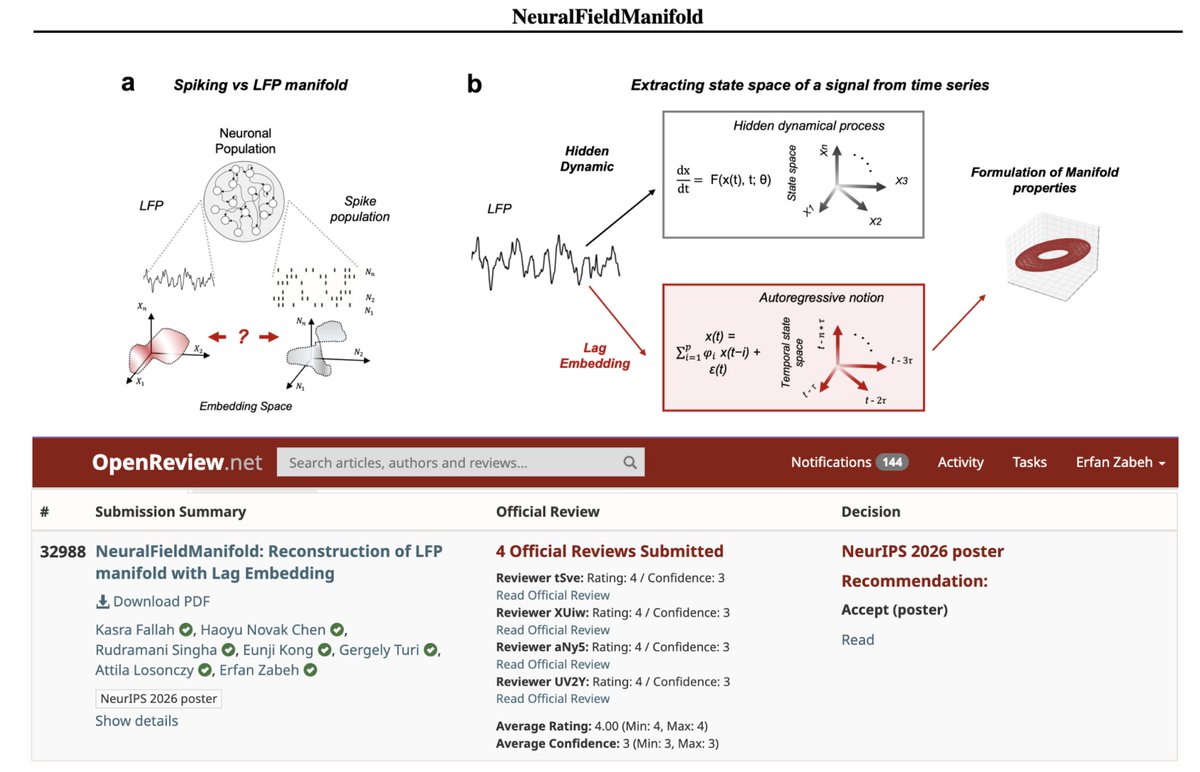
Now accepted at @NeurIPSConf 2026: NeuralFieldManifold 🎉
#NeuralManifolds have transformed how neuroscientists think about population activity—but almost all of that story has been built around spikes. We extend that doctrine to the world of subthreshold brain activity (LFP, EEG, ...).
Camera-ready + tutorials coming out soon.
Great work by @KasraFlh , @NovakHChen , and @RudramaniSingha , with @eunji_kkong , @gergelyturi1 , and @attila_losonczy helping the formulation comes to real brain data.
Come check us out at NeurIPS 2026, I guess in #Atlanta …
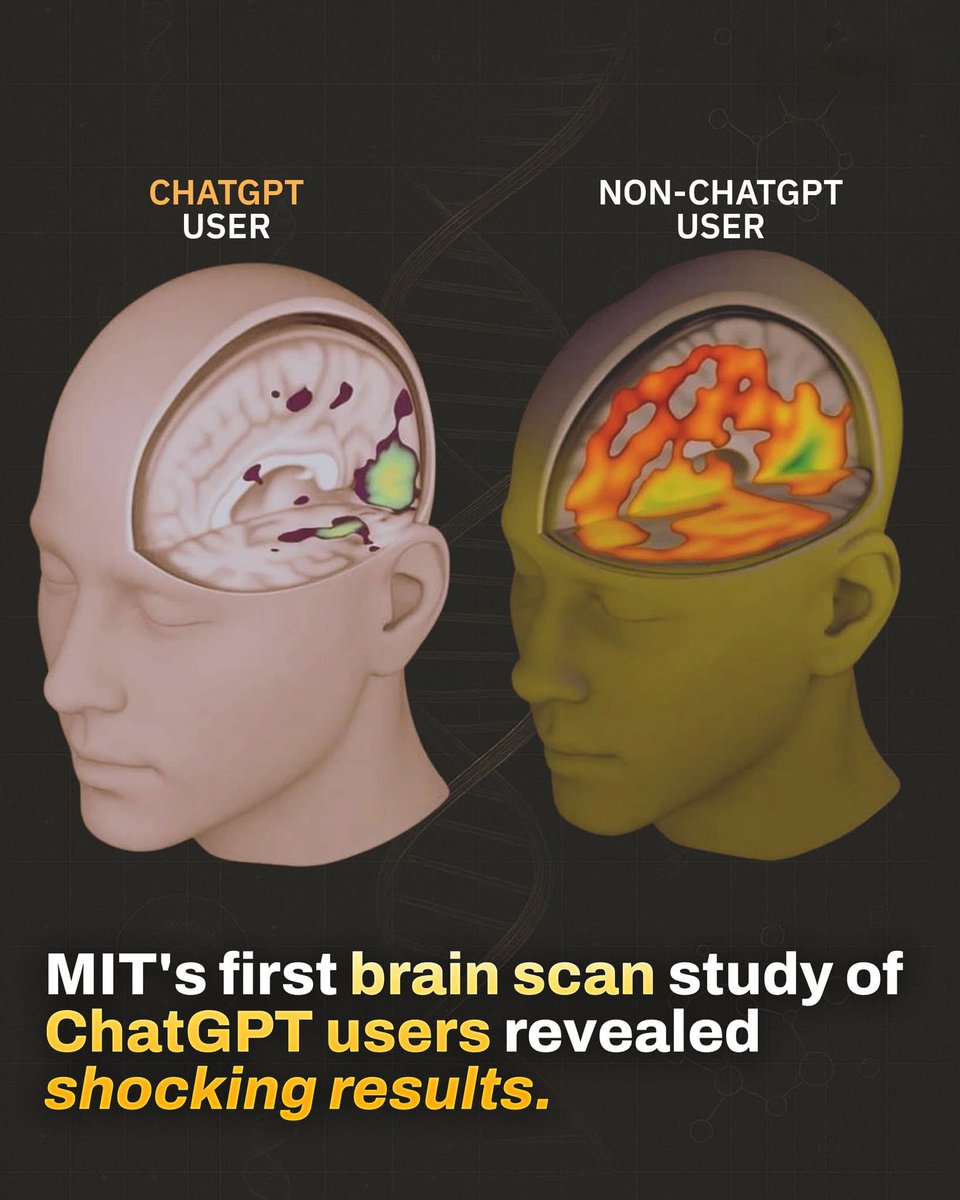
🧠 MIT recently completed the first brain-scan study on ChatGPT users—and the results are deeply revealing.
Rather than boosting brain function, prolonged AI use may be dulling it.
Over four months of cognitive data suggest we might be measuring productivity all wrong ⤵️
In MIT’s study, participants had their brains scanned while using ChatGPT.
→ 83.3% of users couldn’t recall a single sentence they’d written just minutes earlier.
→ In contrast, those writing without AI had no trouble remembering.
Brain connectivity dropped sharply—from 79 to 42 points.
→ That’s a 47% drop in neural engagement.
→ The lowest cognitive performance among all user groups.
Even after stopping ChatGPT use in later sessions, these users showed continued under-engagement.
→ Their performance remained lower than those who never used AI.
→ This suggests more than dependency—it’s cognitive weakening.
Beyond the scans, educators flagged the writing itself.
→ Essays were technically solid, but often called “robotic,” “soulless,” and “lacking depth.”
Here’s the paradox:
→ ChatGPT makes you 60% faster at completing tasks…
→ But it reduces the mental effort required for learning by 32%.
The top-performing group?
→ Those who began without AI and added it later.
→ They retained the best memory, brain activity, and overall scores.
Using ChatGPT can feel empowering—but it may quietly offload your thinking.
→ You gain speed, but lose engagement.
→ You get answers, but stop learning how to think.
The takeaway isn’t to avoid AI—but to use it intentionally.
→ Use it to assist, not replace your mind.
→ Build cognitive strength—not dependency.
MIT’s early study on AI and the brain lays out the stakes. The way we use these tools matters more than ever.
Interesting #brain–computer interface breakthrough - researchers now have a way to auto-recalibrate #iBCIs using a hidden #MarkovModel, keeping cursor control stable for months with no manual tuning. It may enable long-term BCI use. Details at @natBME: https://t.co/5e8le5oNkr
New #research alert! A non-invasive #BCI breakthrough shows imagined handwriting can be decoded from #EEG signals in real time on a portable edge device. It could be a major leap toward practical communication technologies. Details at @SciReports: https://t.co/AnqfZaihQT #brain
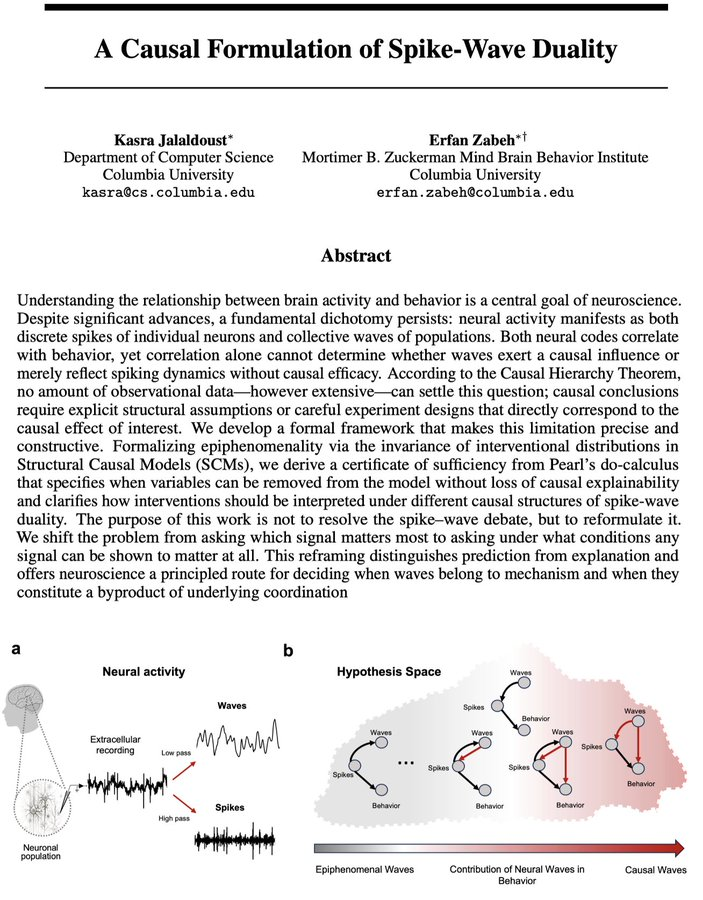
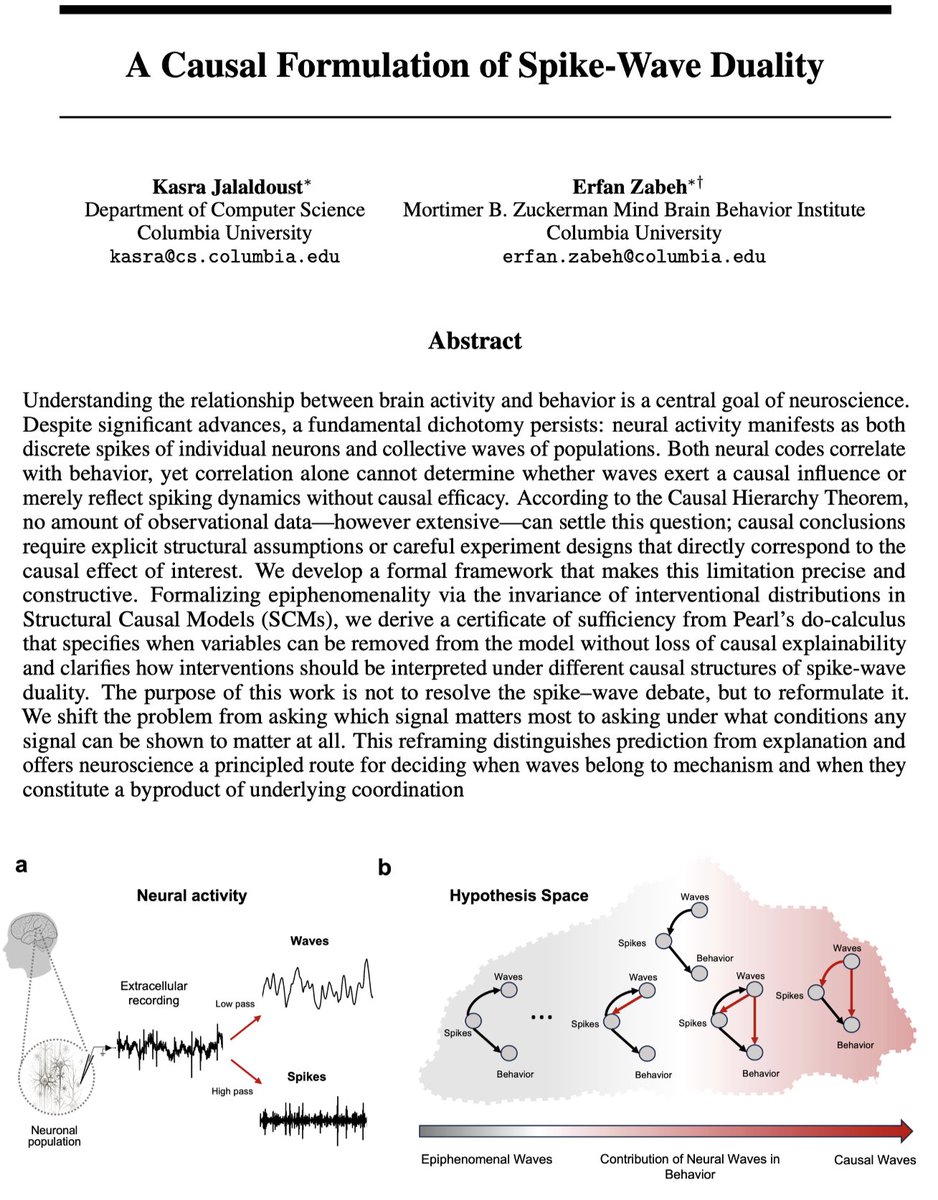
Finally a causal formulation of spike-wave duality.
Over the past couple of years I have been constantly asked about causality of brain waves.
After two years of spontaneously thinking about this, I dared to put this "baby" out.
Shout out to my talented collaborator @causalkasra whom perfected the causal machinery behind this work.
If you are at @NeurIPSConf come to our poster and let’s chat. https://t.co/T7akP33kWK
There's a new #AI model that can transcribe thoughts by analyzing #brain scans, turning neural activity into detailed text descriptions. “Mind captioning” may give those who can’t speak a voice...or challenge the idea of mental #privacy. More at @futurism: https://t.co/3NbVPHvLVt
🧠 New preprint!
We used human intracranial EEG + pharmacology to test a core question in memory research: is hippocampal theta required for retrieval?
Turns out it’s not—and may instead reflect a reinstated encoding mode.
👇 Thread
https://t.co/HX9cvmOuda
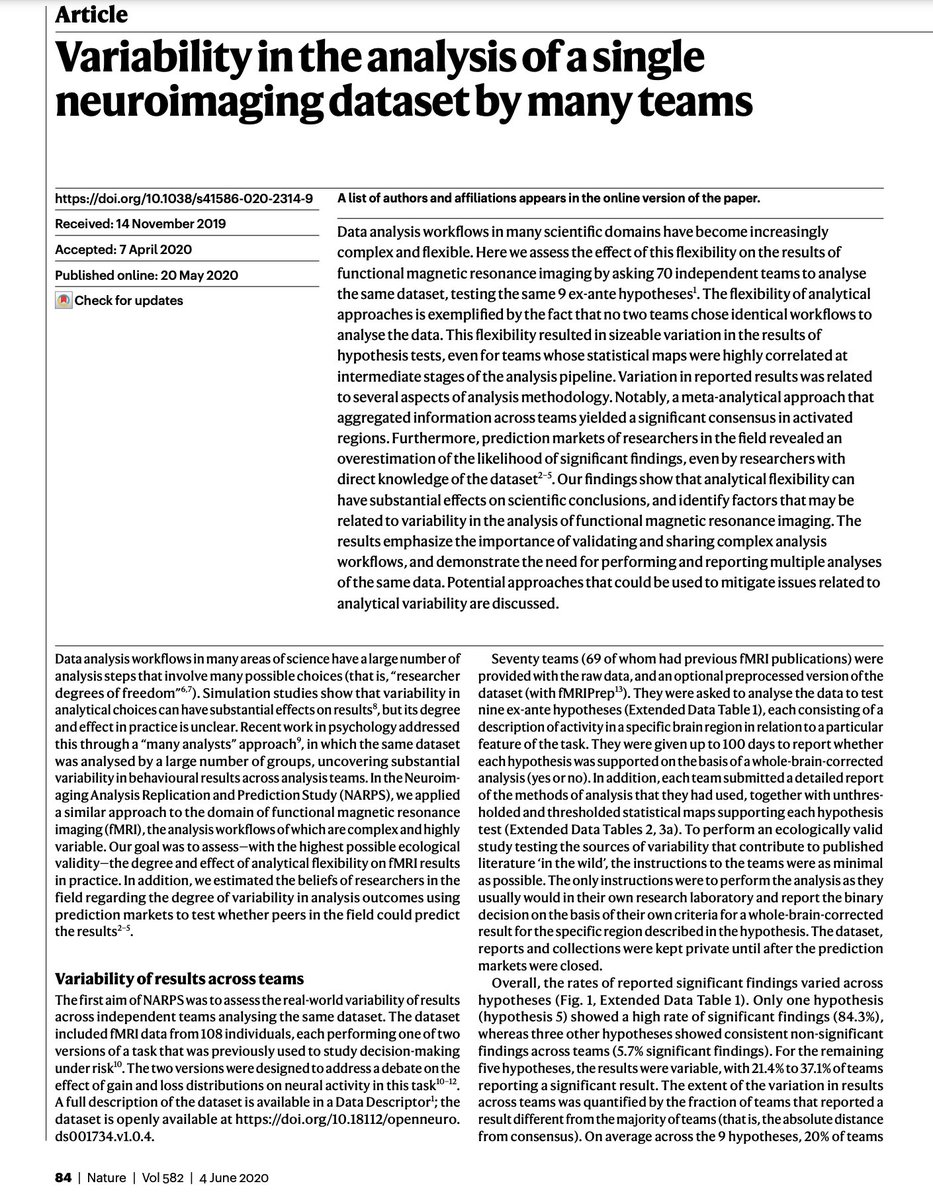
Data can be analyzed in endless ways, as this paper reminds us. So while our published paper reports one way to do it, it's crucial to test many many variants of the analysis to see just how robust our conclusions are.
The dimensionality of representations plays a crucial role in identifying computational capability of neural networks, but "how does structural connectivity shape dimensionality of representation" ?
In this collaborative effort led by @eunji_kkong and colleagues at @attila_losonczy lab, we brought theoretical predictions into the behaving brain, revealing how hippocampal recurrency shapes diverse response dimensionalities. Read more here:
https://t.co/yC8WSZqbBk
Don't forget that the 2024 @IEEEBrain Discovery and Neurotechnology Workshop #CfP for interactive posters and live demos is now open. Submissions are due no later than 9 Sep 2024. #Students, there are limited travel awards available, so hurry! Details: https://t.co/tJn3qrb7Oj
Will @elonmusk's @neuralink fare better the second time around than it did the first time? @Nature takes a look at the adjustments and advances that have been made to the #brain-computer interface in the hopes of preventing new glitches: https://t.co/1VgjnRgVSS #BCI#neurotech
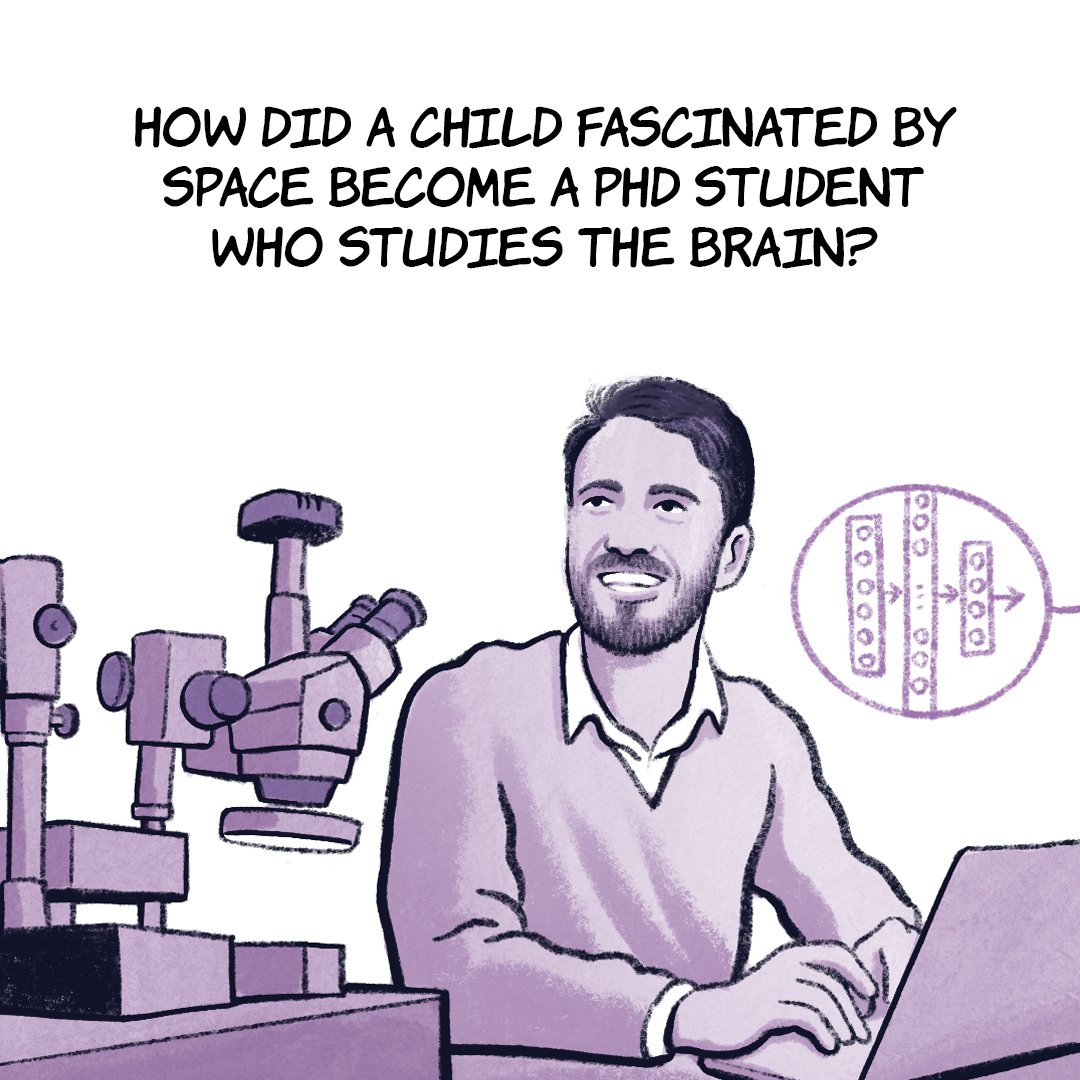
The son of artists, @ZabehErfan took a turn toward science when he discovered astronomy. His interest in technology ultimately led him from the cosmic twinkling of stars in space to the electrical twittering of neurons in the brain:
https://t.co/XjEoyptXjT
#scilife#comics 🔭🧠
Join us tomorrow, September 12, for the next @SNForg Brain Insight Lecture: Can Machines Learn Like Humans? Featuring @ZennaTavares, and Kimberly Stachenfeld; moderated by Emily Mackevicius.
Learn more and register:
https://t.co/UU0rL4pooX
🎓👏Congratulations to Columbia BME's @KaveriThakoor on a successful doctoral dissertation defense: Robust, Interpretable, and Portable Deep Learning Systems for Detection of Ophthalmic Diseases (PIs: Paul Sajda, PhD @LIINClab & Donald Hood, PhD). Well deserved, Kavi!
More evidence for the role of beta in cognitive control. Traveling waves are hot!
Beta traveling waves in monkey frontal and parietal areas encode recent reward history
https://t.co/CzqUieMaVQ
#neuroscience
My paper on #travelingwaves with @neurojosh, Jackie Gottlieb, and @nicofoley is now @NatureComms
https://t.co/qKf0GPjA1h
Coordination of neural activity across space and time are crucial for optimal behaviors and #travelingwaves are signatures of this coordination!
🎓📜New paper with @ChrisSYBenwell & co on spectral changes in Alzheimer's disease!
We found that spectral parameterization shows the key changes in AD are periodic, differentiating AD from the aperiodic changes of healthy aging.
First authors: @MKopcanova & @LukeWTait