There’s an exciting line-up of speakers for the upcoming UK membrane contact sites conference September 28-30 near Bristol.
Register here: https://t.co/sk40MjPSTa
organised by @JoeCost06620852@ButtnerLab@AbelJonny@EmmanuelleBayer
‼️🔔Hi all! The next Bioc Soc Membrane Contact Site Meeting will be in Chepstow, UK 28-30th Sept 2026. Fantastic speakers with talk slots still available. Sign up & abstract submission now open - limited spaces so register early! Hope to see you all there. Please share + RT 🙏
A 3rd new article:
the teams of Laura Lackner (Norhtwestern) and Tom Burgoyne (UCL) jointly review zones of contact between mitochondria and the plasma membrane across a wide variety of organisms, speculating on unknowns and discussing unanswered questions
https://t.co/Xa0ytvWdzU
Another new article:
Ida J. van der Klei and colleagues (Groningen) show the Pex23 family of ER proteins with dysferlin domains have unexpected roles in aspects of lipid droplet function that are suppressed by an artificial ER-mitochondrion tether.
https://t.co/v5xQOsaY4R
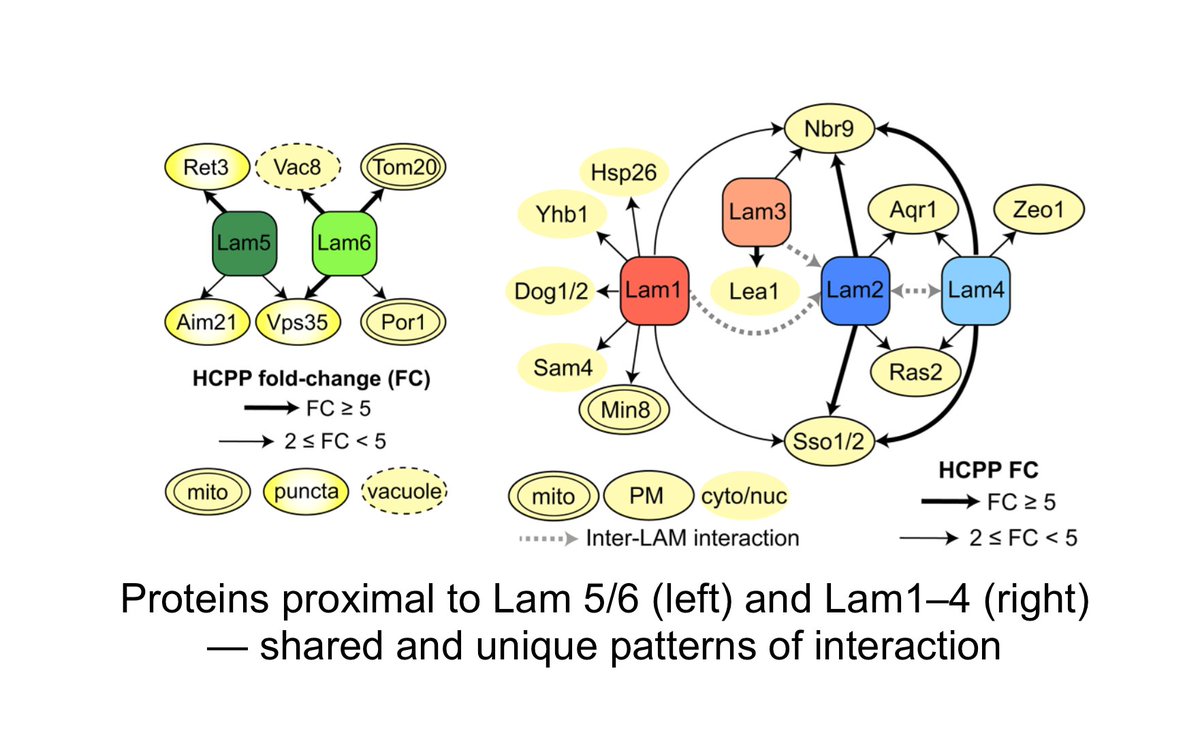
We have a new article from Emma Fenech, Maya Schuldiner & co. (Weizmann, Rehovot) on the yeast LAM family of sterol transfer proteins. They use proximity labeling to compare all 6 proteins, finding unique functions for paralogs and new functional links.
https://t.co/M90UiEMv8q
Image: Interactions between R. parkeri and the ER are dependent on VAPA and VAPB. Acevedo-Sánchez et al. @lamasonlab@MITBiology characterize a novel interkingdom contact site between the ER and a cytosolic bacterial pathogen. https://t.co/7nQzdYuvmU
#ER_literature#Microbiology
We have a new review from Rajendra Angara, Margaret Sladek & Stacey Gilk @sdgilk (UNMC) about how intracellular pathogens parasitise the interface between lipid droplets and the ER
https://t.co/uNINPn6NqR
Their focus is on the differing strategies of SARS-CoV-2 and Coxiella
Did you know we are the only journal dedicated to research on membrane contact sites? And yet the scope is wide - from lipidology to applications in human disease. Check it out: https://t.co/jwvCl0nnY6
Our latest article about proteostasis pathways shared between organelles is from @AKohler_Mito & @_VerenaKohler@umeauniversity. They address how proteostasis requires both major signalling processes (integrated stress response (ISR), UPR + more) and also direct physical contact.
The team of Mark Von Zastrow @UCSFPsychiatry show that one aspect of cAMP compartmentalization is through specific intracellular targeting of adenyl cyclases.
"these results reveal a precise spatial landscape of the cAMP cascade"
https://t.co/zZV5tA4iew
Our most recent article is out: Johannes Frietag Thorsten Stehlik & Gert Bange (Marburg) describe a simple, powerful mechanism they recently uncovered for interaction between organelles:
proteins with targeting sequences for both organelles are pulled both ways at the same time!!
Enjoy the reading: Mitochondria, Peroxisomes and Beyond—How Dual Targeting Regulates Organelle Tethering - great joint venture with my colleague, the twitterless Johannes Freitag @SYNMIKRO @Uni_MR https://t.co/AHVjo4Ob8m
We have 2 new articles out:
Vesa Olkkonen @helsinkiuni & Elina Ikonen @IkonenLab have written a perspective reviewing the Oxysterol Binding Protein family
https://t.co/90ijwS3wkH
Wei-Ke Ji (@2024_HUST, Wuhan) and colleagues have reviewed SMP proteins
https://t.co/kKOXzaA8ye
We have a new review out from Tadashi Makio & Thomas Simmen @UAlberta_FoMD
Not So Rare: Diseases Based on Mutant
Proteins Controlling Endoplasmic ReticulumMitochondria Contact (MERC) Tethering
https://t.co/JVnw9Z842t
Common features of rare diseases may help lead to treatments
Deadlines for abstracts and early-bird registration have been extended until 31 July 2024....
There are still 5 days left: https://t.co/8knXBkVvGU
...see how the two halves of the hourglass are making a contact site?
The membrane contact site meeting in Edinburgh is coming up soon: Sept 23-25
And the deadline for abstracts is less than 2 weeks away: July 23
Since we have lots of slots for oral communications, get your abstract in now. Early bird discount same date
https://t.co/n4KimvytL8
The membrane contact site meeting in Edinburgh is coming up soon: Sept 23-25
And the deadline for abstracts is less than 2 weeks away: July 23
Since we have lots of slots for oral communications, get your abstract in now. Early bird discount same date
https://t.co/n4KimvytL8
Interested in bagpipes* and membrane contacts? Come to Edinburgh this September for the @BiochemSoc meeting on one of these!
Organized by the amazing @timlevine1, @MariaBohnert, @edenlab_ucl, and Pat Hussey. https://t.co/fvXUMAU5vn
*Mike promises he will not play bagpipes.
The Meyer lab @WeillCornell show ER-PM contacts are involved in cell migration. Contacts are static in relation to cell matrix, so as a cell moves contacts go to the back. They turn off EGFR signals via PTP1B, propelling cells forward.
See paper for details on contact asymmetry.
Another fantastic example of a successful collaboration between NYSBC and NY. Tobias Meyer's group at @WeillCornell show the role that the ER plays in cell polarization and migration. Shout out to Bo Gang @WeillCornell and Jake Johnston @NYSBC_Science:https://t.co/SGhVn3b6SG
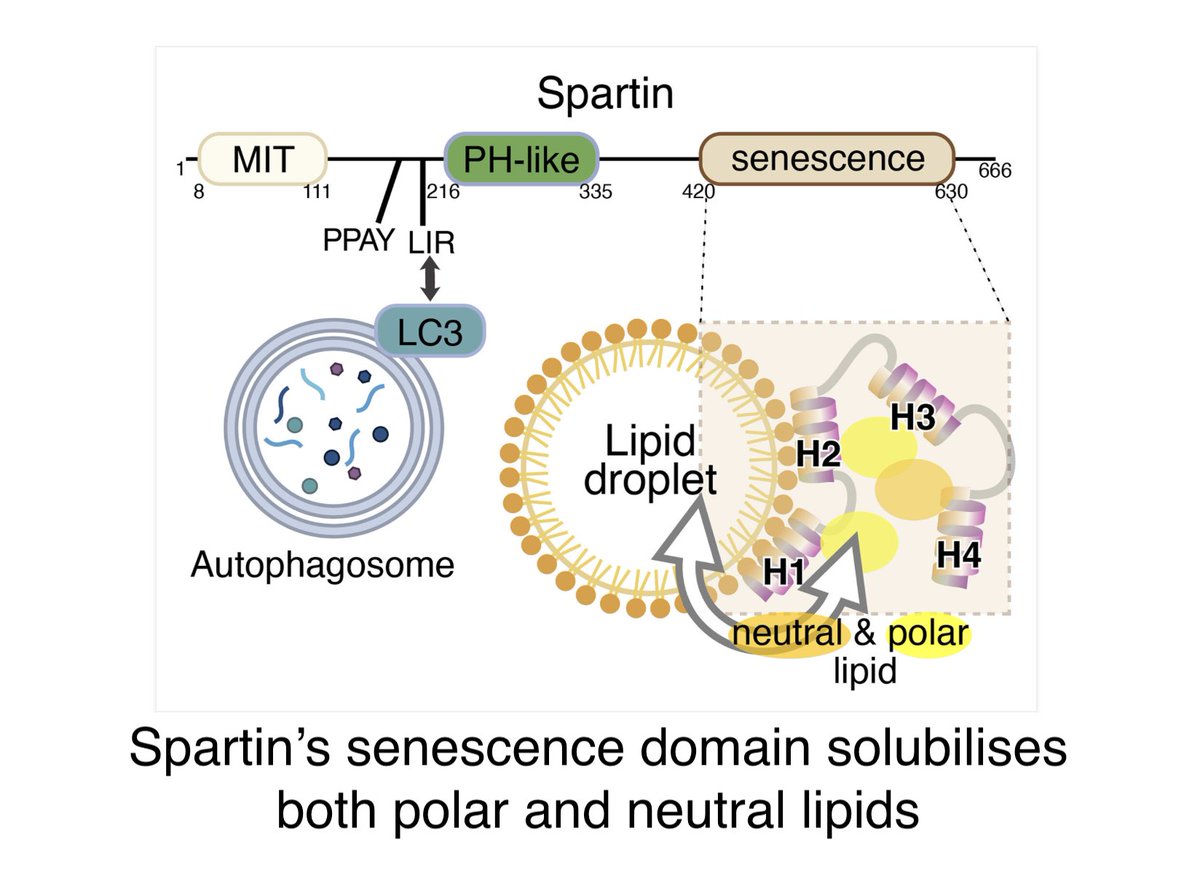
Yaoyang Zhong, PhD student in my lab, & I have a new News and Views in @ContactCTC about the discovery by Karin Reinisch's team (Yale) that the senescence domain in Spartin is a lipid transfer protein https://t.co/rZYRv2NiWR
The original work is in PNAS: https://t.co/609U3yFYIt
The team of @LacknerLabNU at Northwestern University have shown that 3 way mitochondria/plasma membrane/ER contacts in yeast need the tether Num1 to bind VAP. Their outputs include regulating PI4P at the PM and mitochondrial division. The team offer lots of ideas for future work.
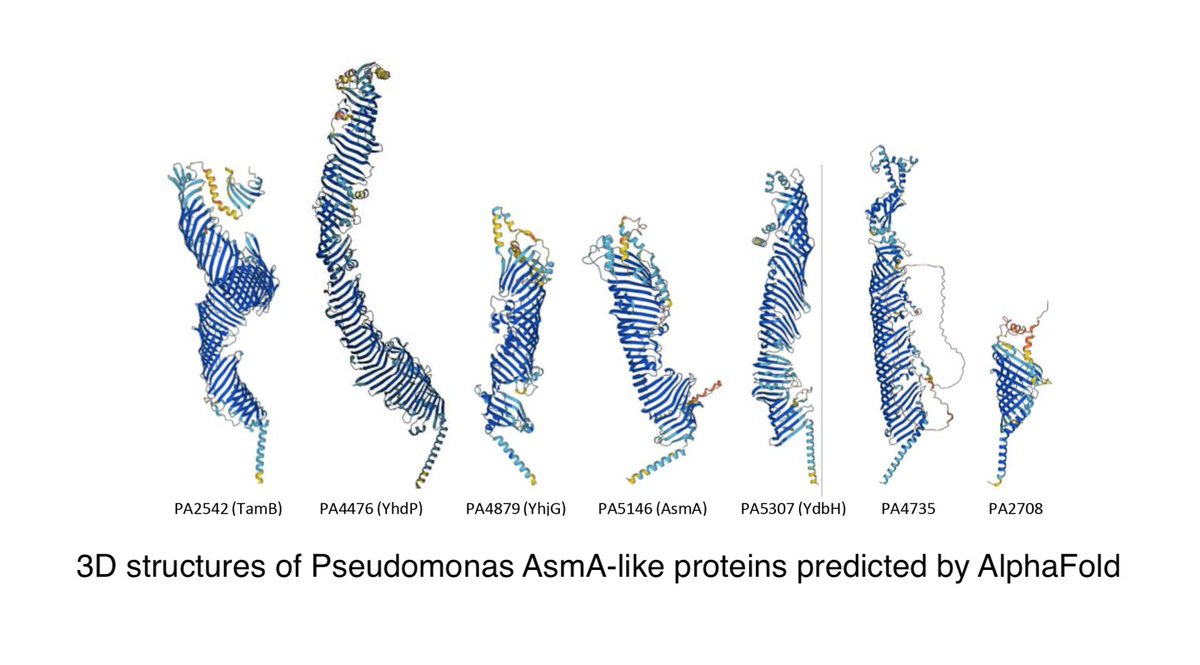
The group of Natividad Ruiz @OhioState have further mapped the role of RBG proteins in bacterial lipid traffic
An RBG protein too short to cross the periplasm functions only when a protein in the same operon augments the b-structure to complete the bridge
https://t.co/t6tTYkwob7
New work from the Imperi group #Roma3 study phospholipid traffic in Pseudomonas. Four out of the seven AsmA homologs (tamB, yhdP, ydbH, PA4735) are redundantly essential (at least one is required).
There is rescue by lower LPS delivery, showing balance between the 2 OM leaflets.
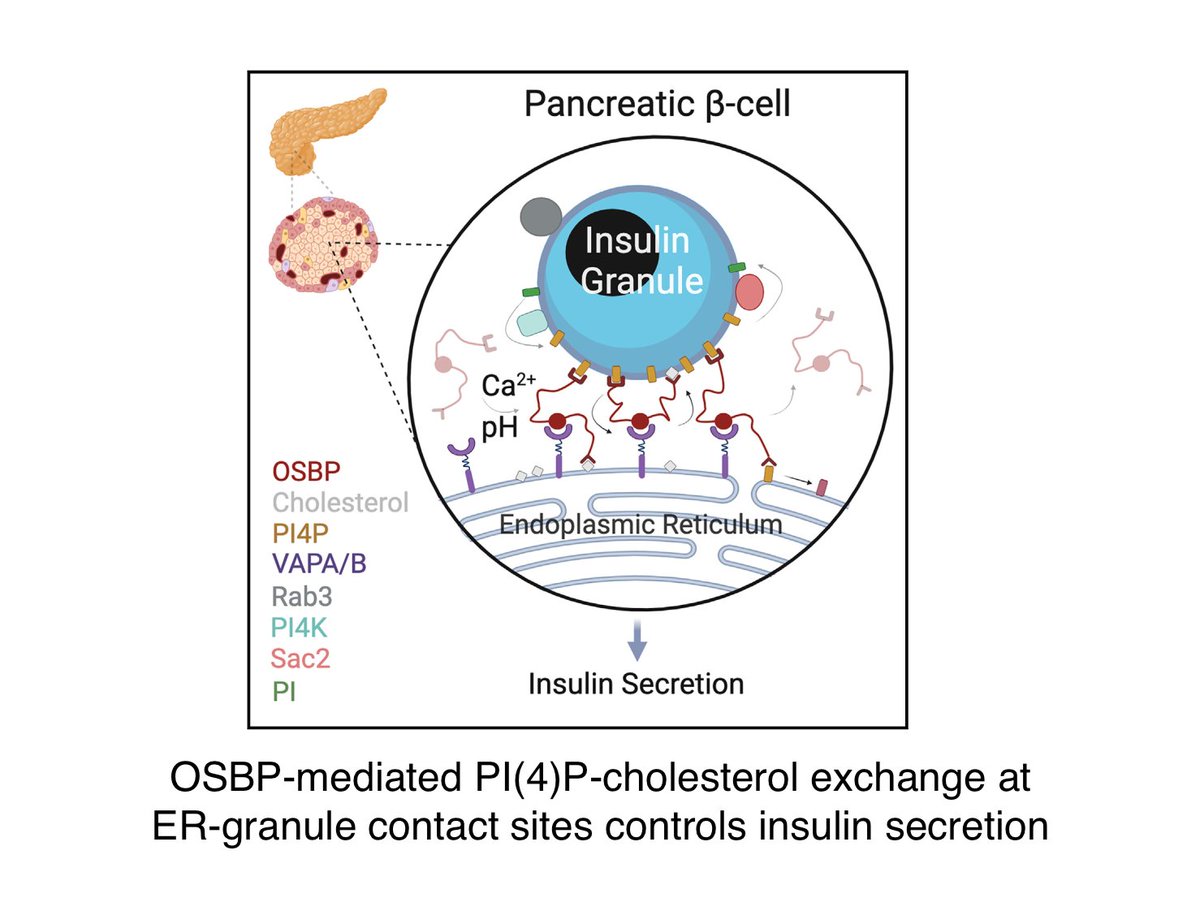
There's a new paper from the @Oidevall group (Uppsala) who show that insulin granules form contacts with the ER where OSBP is recruited (Ca2+ and pH- dependent) to exchange granule PI(4)P for ER cholesterol, hence allowing normal insulin secretion.
https://t.co/MPjsTn8A4b
Excited for my first first-author paper! I'd like to thank all the co-authors @msolimena @miRNA375 @Andi_Microscopy @TomasLab_ICL for their contribution, especially Dr. KiaWee Tan and my supervisor @Oidevall for their guidance during this crazy journey!