A 100% offline, fully portable, zero-trace AI (Ollama + Llama 3 + AnythingLLM) that runs natively from a USB drive on Windows and Mac. https://t.co/vmUJkE2vX1
❓ Is dual RTX-3090 rig worth $4K for home inferencing?
🔹 2× RTX 3090 GPUs in one PC with shared mem
🔹 + NVLink bridge for best performance
🔹 Gives effective 48 GB VRAM via tensor parallel (TP=2)
✅ Memory is pooled for large models (70B+ Q4/Q5)
✅ vLLM / llama.cpp / ExLlamaV2 split & run across both
❌ 4090 & 5090 lack NVLink → slower PCIe-only multi-GPU
Still a top value local LLM rig in 2026.
New hardware from Framework / AMD
Max+ 395 - 128GB Desktop PC
- 16-core/32-thread , 64MB L3 Cache
- 3.0GHz, up to 5.1GHz max boost
- 128GB LPDDR5x-8000
- Radeon™ 8060S Graphics
- Wi-Fi 7, 5Gbit Ethernet
Putting it together now, more pics soon
The company behind Pokemon go (Niantic) was a geospatial mapping company. It crowd sourced geolocation data with few meters precision that would have cost them millions or billions of USD to do it by themselves. In fact, people paid to participate in the game (data collection).🧵
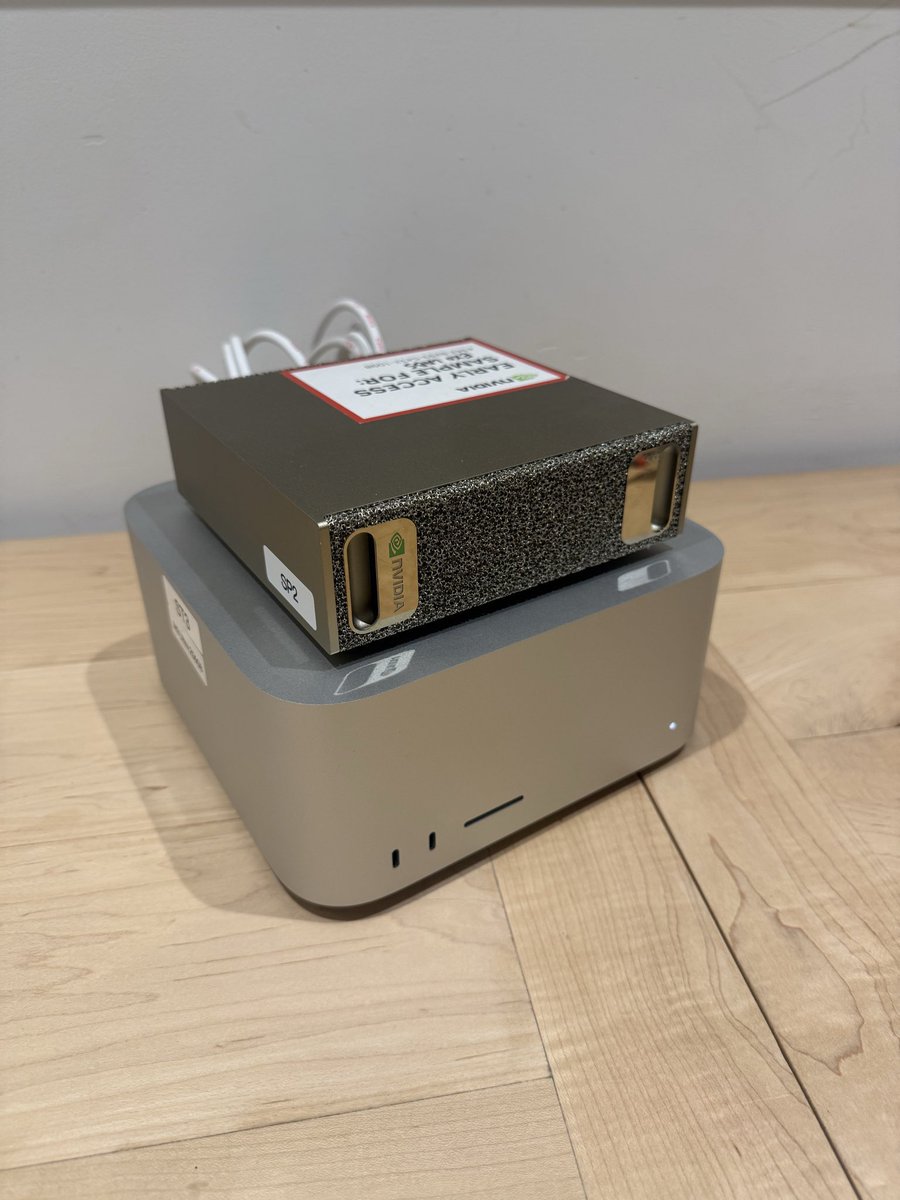
people are now sequencing their DNA at home, locally on DGX Sparks and Mac Studios.
this madlad is running Evo 2, a 40B‑parameter DNA LLM that predicts genome sequences instead of text.
local AI is going to unlock a world of creativity. @karpathy’s personal computing v2 is here.
NEW XINTRA COURSE!!!🥳
Windows Kernel: Offensive, Defensive & Reverse Engineering by @Idov31
https://t.co/3qiJyib7ro
Build an EDR and rootkits from scratch while mastering the Windows kernel.
Over 70 videos and labs covering:
> Build your own EDR (detection + prevention)
> Rootkits & offensive tradecraft
> Reversing Windows kernel & drivers
> Kernel callbacks, ETW, minifilter and more
There are preview videos too if you wanna see some snippets of the course content ;)
This course is instructed by Ido Veltzman (@Idov31), a senior security researcher specializing in reverse engineering, operating system internals, vulnerability research, and exploit development.
His work spans UEFI, hypervisors, kernel, and user mode, where he has developed advanced evasion, persistence, and injection techniques.
@XintraOrg
https://t.co/8QEJfYjSHm
“NTLM HTTP relay tool with SOCKS proxy for browser session hijacking.
1️⃣Capture NTLM auth,
2️⃣relay to HTTP/HTTPS targets,
3️⃣then browse as the victim through a SOCKS ❄️proxy.
This works even when cookie replay doesn't.”
🎯
https://t.co/U49D8cw9nJ
This is very good malware.
This is solid-solid-SOLID B+ malware, very close to A- malware.
APT37 is using a old-school playbook. They're doing EPO (Entry Point Obfuscation) on a self-delivered binary for evasion. They also unironically are using something akin to cavity infection ... but on themselves. This is something you saw more in the Windows 95 - Windows XP era, not something you see in 2026.
Very cool. I respect it.
The multi-staged fragmentation of shellcode phases is also really, really, really cool. This is (once again) a more old-school technique usually reserved for infected binaries, not self-delivered binaries.
Despite all of these super cool features, APT37 shoots themselves in the foot immediately.
- EAT walking for Kernel32 functionality (???)
- XOR decryption is a huge red flag
- Allocating with PAGE_EXECUTE_READWRITE (???)
- Hardcoded OAuth token (???)
- Used external dependency for AES (???)
Why not use NT functionality to hook evasion? XOR is easily identified in static analysis, why XOR? Allocating memory with VirtualAlloc with RWX is a MASSIVE RED FLAG. They also hardcode a OAuth token ... they can multi-staged shellcode payload with old-school malware techniques but hardcore AN OAUTH TOKEN?
It unironically makes me wonder if they had one old-head malware guy working on it, then they had some newer dude do the non-hardcore stuff. There is a huge gap in skill sets here.
Or the old-head hasn't kept up to date on malware stuff since 2005... or they got lazy... I don't know, really weird.