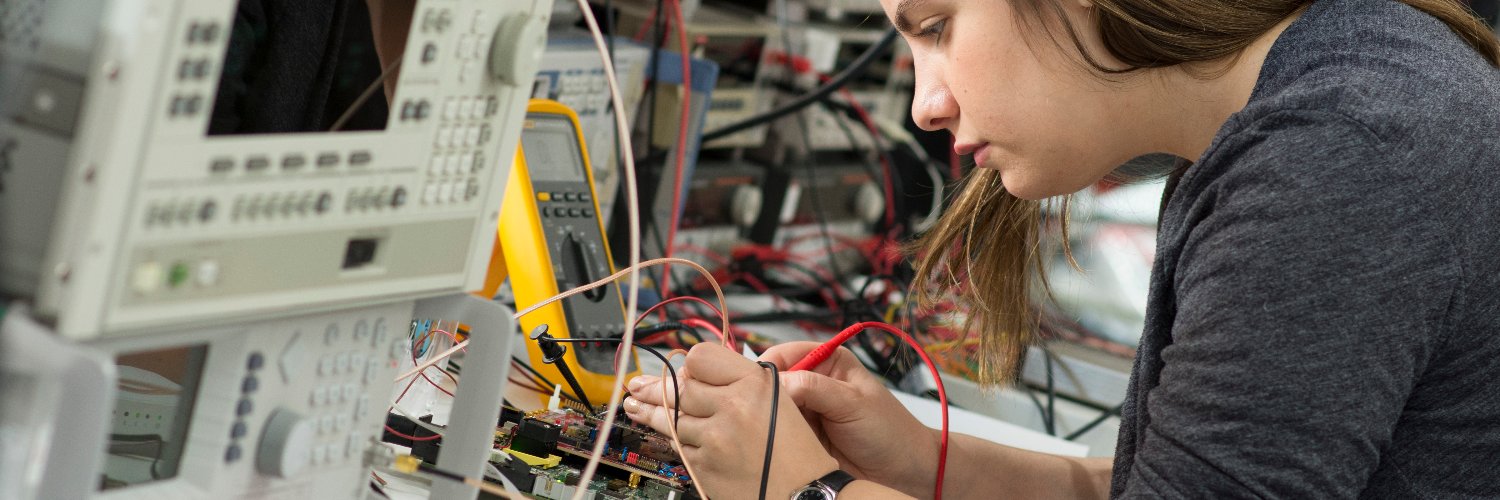
Researchers at @CornellEng found that while the smoother, quieter ride of an electric bus was appealing to those who already rode public transportation, those advantages weren’t enough to lure drivers away from their cars. @Sciencedirect@CEECornell https://t.co/oyc5G7Qd24
Every winter, @CornellBME and @CornellEng students spend two weeks in @WeillCornell operating rooms where they turn clinician challenges into engineering solutions. Watch this (https://t.co/23wCSOAx7O) featuring @BonassarLab members Alex Griffin and Molly Matri, to learn more!
A year after unveiling a “microwave brain” microchip capable of computing on ultrafast data and wireless signals, @CornellEng researchers have shown how the chip can encode information into its own language. @NatureComms@CornellECE@CornellGrad https://t.co/WvWmKRwDX7
As psychedelic drugs gain more support from the medical community as a potential treatment for severe depression – and with the U.S. government relaxing its regulatory constraints – there remains a vast gap in understanding how the drugs work on the brain. Alex Kwan, Ph.D. ’09, professor of biomedical engineering in @CornellEng, is at the center of a multidisciplinary investigation that is exploring the basic neurobiology and mechanics behind psychedelic compounds such as psilocybin.
Read more: https://t.co/EC4vFlnW36
“In my view, the data and transparency [are] the hardest part. If you get the data, we are very good at using data to make decisions. But if the data are not comprehensive enough or even somehow misleading, there could be a challenge.” - says Fengqi You (@CornellEng) in @sciam
Researchers from @CornellEng developed a potential replacement for the tiny copper interconnects in microchips: single-crystal nanowires that become better conductors the thinner they get.
Read more: https://t.co/pgH0vy7kzD
Calling @Cornell faculty 📢
We are now accepting proposals for our 2027 partnership funding opportunities with @EnvDefenseFund and @nature_org that support bold, interdisciplinary research to drive real-world impact.
RFPs ➡️ https://t.co/W9m3ZA2r6y
A new course this fall explores how engineering design can better address women’s health. Students will examine clinical challenges, device design and opportunities for innovation. https://t.co/DVQQ3HMrOw
One month until a new class of Cornellians makes their own odyssey to Ithaca.
Different from Odysseus's Ithaca — Cayuga Lake instead of the Ionian Sea — but the same promise at the end of the road: they're arriving somewhere that's about to become home.
Researchers at @Cornell have developed a potential replacement for the tiny copper interconnects in microchips: single-crystal nanowires that become better conductors the thinner they get. @CornellEng@CornellGrad@NSF@cornellccmr@CornellCNF https://t.co/k3to731T9E
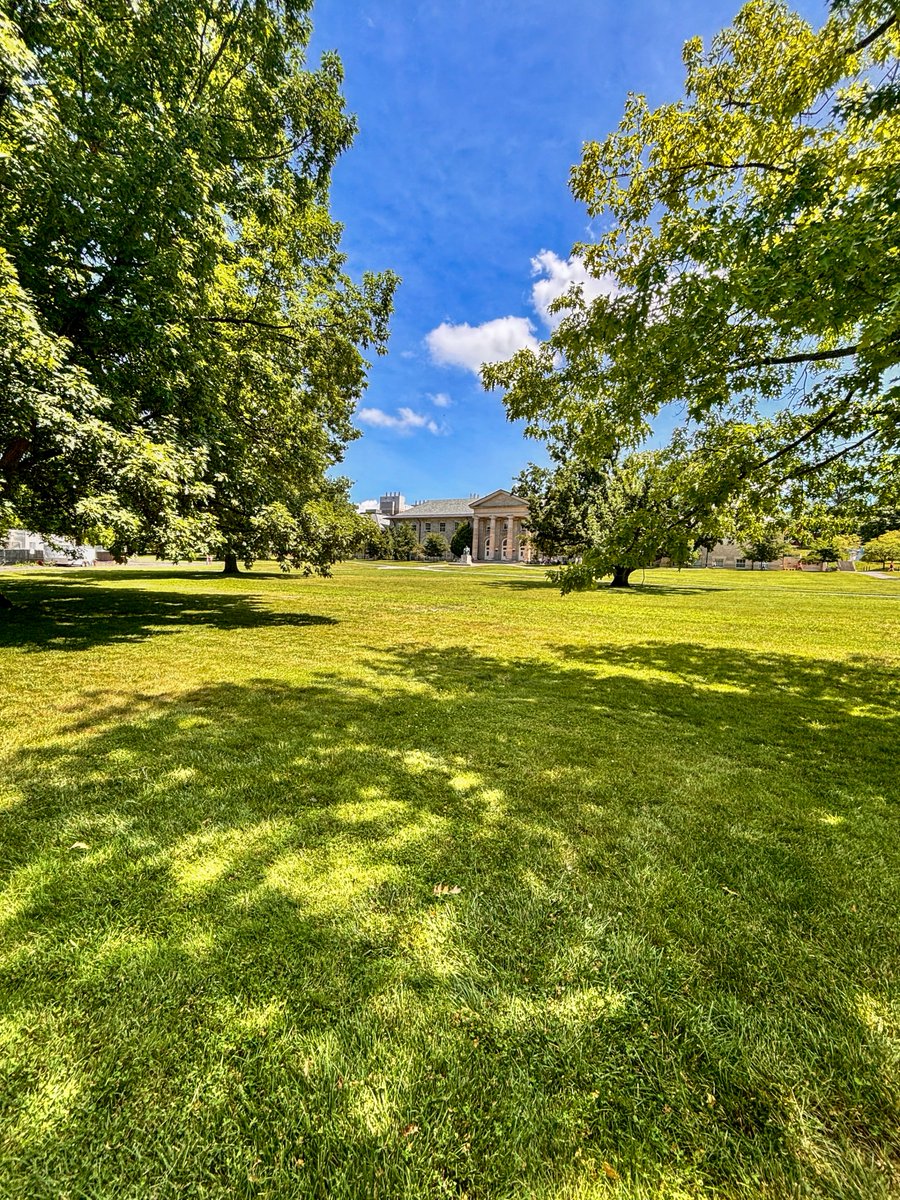
Blue skies, good vibes, Big Red throwback.
@CornellAlumni
To check out more long-unseen images of balmy days on the Hill, visit https://t.co/udgOplq6AK.
Photos courtesy of the @Cornell_Library Rare and Manuscript Collections.
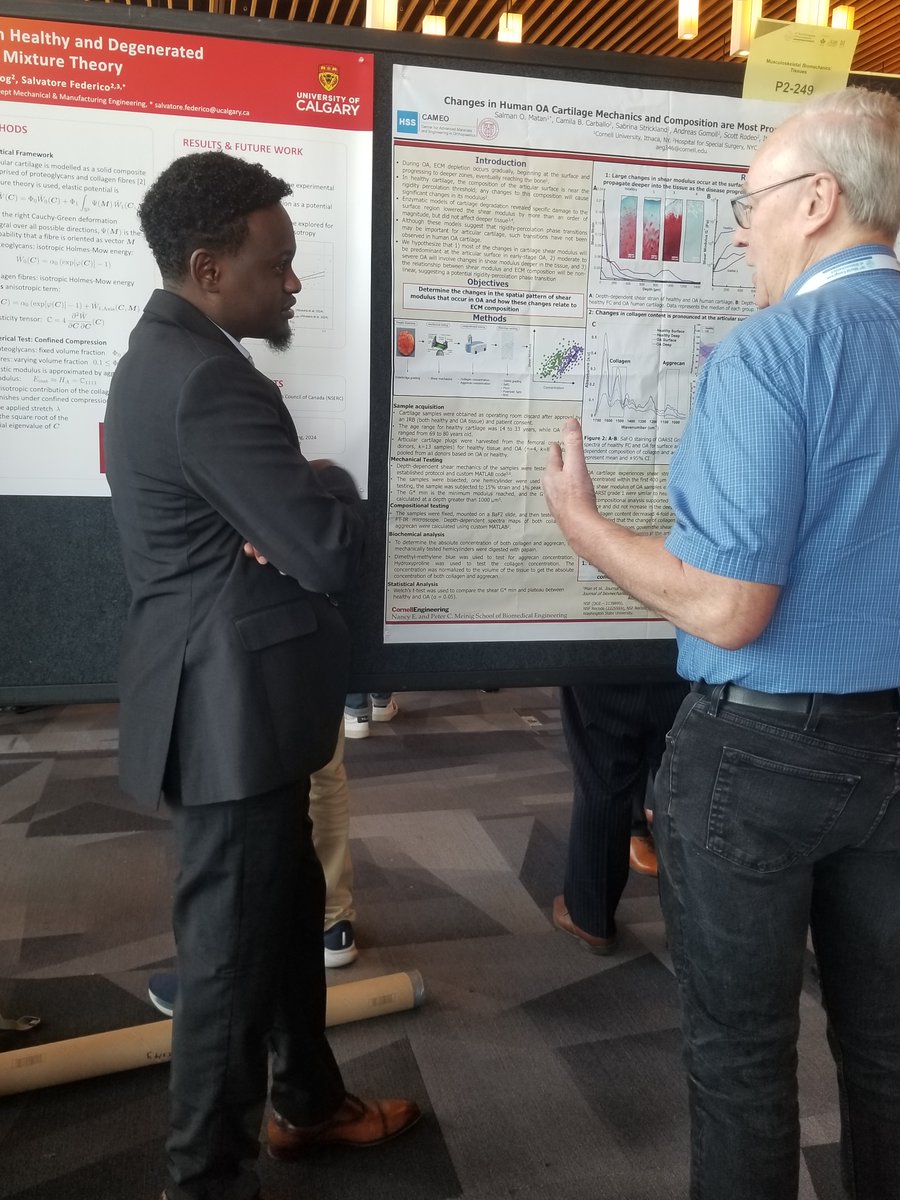
Always love running into alumni around the world! Marjolein van der Meulen spotted Shannon Hugard '18 presenting her research at the World Congress of Biomechanics in Vancouver. Shannon, a member of our inaugural 2018 undergraduate class, is now a 3rd year Ph.D. @uoregon.
Planting the seeds: Middle and high school students from across New York state spent three days discovering potential career paths during the annual 4-H Career Explorations Conference, held June 30 to July 2 at @Cornell. @CornellCALS@CornellEng https://t.co/Zstoaulu6e
Applications are now open for our 2027 Postdoctoral Fellowships!
Join our cohort of early-career scholars committed to discovery that contributes directly to solving the most pressing problems facing our planet.
⏰ Apply by 10/20/26
Please share widely: https://t.co/RJfqs8wO62
Autonomous drones could deliver packages, inspect bridges and skyscrapers, monitor emergencies like wildfires, and, eventually, ferry people. But the airspace still lacks the testing and coordination infrastructure needed to prove drones can operate safely around people, buildings, aircraft, and each other.
Mehrnaz Sabet, a doctoral student in the field of information science in @Cornell_Bowers, is working to create that infrastructure. Learn how at https://t.co/zNjPfkIyjN.