Worked with 200+ Web3 projects across DeFi, community growth, and token launches.
Took some time off & I’m back now .
Helping with growth & marketing
If you’re building and need help to scale, my DMs open.
Btw one of my old research @VitalikButerin :
https://t.co/6LdqSKo4L8
🇳🇵This takeoff from Lukla Airport in Nepal takes extreme precision and skill.
One wrong move and you plunge straight off the cliff edge into the Himalayas. No second chances.
Writer: Bri
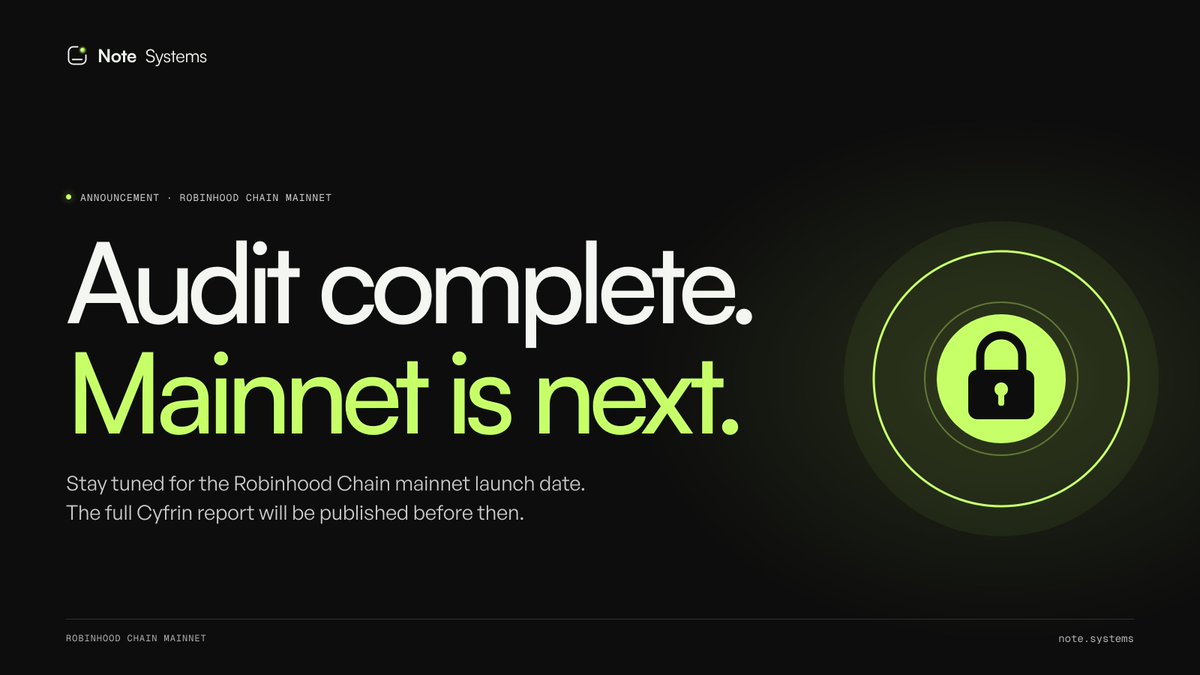
Excited to announce our @cyfrin audit is complete. Robinhood Chain mainnet is next.
The Note Systems protocol passed its audit: 18,830+ lines of code across 70+ smart contracts. Full report to follow.
Contracts are deployed, the move has begun.
Stay tuned for the launch date.
🔥 GPU DePIN is getting serious the economics make tokens more valuable.
Market snapshot shows a $10.83B DePIN sector with $855M in daily trading volume.
The retrieved social snapshots show roughly 1.2M daily engagements for TAO and 145K for RENDER.
What interests me more is the difference between compute usage, customer payments, and token demand.
Here’s what I found.
1/ solana:rndrizKT3MK1iimdxRdWabcF7Zg7AR5T4nud4EkHBof - established usage, with an important emissions question
The Foundation dashboard shows more than 82M cumulative frames rendered.
That demonstrates delivered rendering work; it doesn’t measure AI inference revenue.
The detail I care about is the approved Year 3 BME budget:
-> 5.9M RENDER in scheduled emissions
-> 1.5M for node rewards
-> 1.5M for grants
-> 2.9M for operations, R&D and growth.
Customer-funded burns have to be assessed against that issuance.
Seeing tokens burned doesn’t automatically make the network deflationary.
The more interesting catalyst is RNP-023, the approved roadmap for integrating Salad.
The proposal describes 60,000 daily connected GPUs and plans to move customer payments and operator rewards through RENDER.
Those are Salad’s reported resources, not 60,000 fully integrated Render GPUs today.
I’m interested because this could bring an existing compute business into the token economy.
I want evidence of completed integration and recurring customer-funded burns.
2/ $TAO / Chutes - lower traffic can mean better economics
@chutes_ai, @opentensor's SN64, is the most useful case study I found.
In its March 20 update, the team reported:
-> Token volume down 45% over six weeks
-> Revenue per million tokens up 37.7%
-> Revenue per GPU up 44.9%.
It removed free traffic and a privately hosted workload running at a 9:1 cost-to-revenue ratio.
That changed how I read inference dashboards.
A network can process fewer tokens while improving its business.
Subsidized requests can make adoption look stronger than the underlying demand.
OpenRouter’s retrieved table shows 5.8B daily tokens and 194.5B monthly tokens.
I’m tracking external customer revenue relative to subnet rewards.
I also keep Chutes’ business economics separate from TAO’s token economics.
3/ ethereum:0x6c5ba91642f10282b576d91922ae6448c9d52f4e - confidential compute has measurable distribution
@PhalaNetwork is showing more activity than I expected.
OpenRouter’s retrieved provider table lists:
-> 75B daily tokens
-> 2.6T monthly tokens
-> 20 available models.
Phala also reported 398 paid Cloud users in its 2025 review.
That is a historical customer count across its Cloud offering, not a current GPU-only customer count.
The product combines Intel TDX with NVIDIA confidential computing to protect workloads during execution.
Sensitive financial data and proprietary models give customers a reason to evaluate more than hourly GPU prices.
My next step is checking margins, customer retention, and the mechanism connecting Cloud revenue to PHA demand.
High inference volume alone doesn’t answer those questions.
4/ ethereum:0x58b6a8a3302369daec383334672404ee733ab239 - real fees, but the latest quarter changes the story
@Livepeer's Q1 report showed $154.7K in AI-driven fees, ~60% of total protocol revenue.
But the more recent DeFiLlama series shows:
-> Q1 2026: $256.3K
-> Q2: $116.3K
-> Q3: $138.4K.
Q3 recovered about 19% from Q2, while remaining roughly 46% below Q1.
At the $90.8M market cap in my snapshot, that is approximately 164× annualized Q3 network fees.
I’m curious about the AI video opportunity, but the fee recovery needs to continue before I become more confident.
5/ $AKT / solana:BZLbGTNCSFfoth2GYDtwr7e4imWzpR5jqcUuGEwr646K - inference growth needs to reach token economics
OpenRouter currently shows 12.1B daily tokens for AkashML and 11.4B for @ionet. Both have observable inference activity.
@akashnet also shows why I separate activity from monetization.
Messari’s Q1 report recorded new leases up 27.1%, while lease revenue fell 45% to ~$253K as workloads shifted toward cheaper deployments.
For ionet, June’s IDE announcement specified burns of at least 50% of post-payout network revenue.
That denominator matters: it is revenue remaining after supplier payouts, rather than total customer spending.
I want to see current realized burns and supplier economics alongside inference growth.
6/ ethereum:0x607f4c5bb672230e8672085532f7e901544a7375 - the strongest move in my snapshot needs a fundamental check
RLC is up 184.9% over seven days, with $185.9M daily volume against a $92M market cap.
That’s roughly 2× market cap in reported daily trading volume. It tells me trading interest has increased sharply.
@iEx_ec is relevant through confidential computing.
Its April product announcement described revenue-linked RLC buybacks, but the confidential DeFi product was presented as a Sepolia demo at that point.
The separate 2025 buyback program allocated repurchased tokens to development, treasury and liquidity.
Those tokens were intended for reuse; the program wasn’t a permanent burn.
I’m interested in the privacy thesis.
After this move, I need verified production usage and executed buybacks to support stronger conviction.
AI growth creates demand for compute. Each network still has to win workloads at a sustainable price.
Tokenized stocks just hit $3.9B new ATH, but 2 numbers caught my attention even more 👀
BNB Chain leads with $1.2B, while only 2.6% of tokenized stock supply is actually being used as collateral in DeFi.
I think this creates an interesting setup for protocols building around #RWA.
Looking at the @BNBCHAIN ecosystem:
→ @Ondo already has 430+ tokenized stocks/ETFs on BNB Chain
→ @PancakeSwap processed over $1B in tokenized asset trading volume in July, up from $50M the previous month
→ By September, PancakeSwap recorded around $75M in bStocks volume in a single 24H snapshot
Distribution is clearly giving BNB Chain an edge. The users and liquidity are already there. Now it's about bringing more assets onchain.
But I think the bigger opportunity lies in DeFi.
According to @redstone_defi, ~42% of tokenized stock supply was eligible to be used as collateral, yet only ~2.6% was actually being utilized in lending as of late September.
A few protocols are already seeing real traction:
> $43.8M in xStocks collateral across @kamino and Jupiter Lend
> $25.4M in tokenized Forward Industries shares on Kamino Opening Bell
> $7.7M in bStocks collateral on @lista_dao
To me, this is the next phase worth watching: moving beyond simply putting stocks onchain to making them productive assets that can be used to borrow, provide liquidity, and execute DeFi strategies.
Ofc, tokenized stock lending still faces challenges around after-hours pricing, liquidation liquidity, and redemption.
That's why I'm watching $ONDO for issuance, $CAKE for trading, $LISTA / solana:KMNo3nJsBXfcpJTVhZcXLW7RmTwTt4GVFE7suUBo9sS for lending, and $RED for oracle infra.
If collateral utilization starts growing alongside RWA supply, we'll get a much clearer picture of which protocols can actually capture value from tokenization.
We all agree #RWA is the biggest narrative if crypto wants real adoption.
But when they look for the ticker, 90% point straight to $Ondo and completely miss that how $Pendle shipping yield layer to the RWA market.
$ONDO ~$2.5B mcap, zero value capture to holders.
$PENDLE ~$380M mcap, already doing ~$300k/month in holder revenue.
I’m not saying Ondo is overvalued bc it’s clearly the leader of the sector. I;m just pointing out that Pendle looks heavily undervalued relative to the role it’s already playing.
Numbers don’t lie:
> STRC market: Pendle held over $500M TVL at peak, with ~$1.44B in volume
> AUSD (Agora) market: Pendle held up to 82% of supply
> @re market: Pendle TVL hit $240.7M, roughly 80% of total supply
@pendle_fi has quietly become the main onchain market for these RWA-backed dollars.
I’m already holding a bag and will keep accumulating on dips. Still in the building thesis phase, I think. Once it breaks, the move should be fast.
What's crazier is the hackers apparently bought the reseller and made them sign a non-disclosure agreement to keep their mouth shut.
So many things wrong here...
JUST IN: UP CLOSE VIDEO SHOWS HOW HACKERS STOLE OVER $80,000,000 SILENTLY CORRUPTING LEDGER #BITCOIN WALLETS
A SCAM SHOP IN MALAYSIA WAS LISTED AS AN "OFFICIAL AUTHORIZED RESELLER FOR YEARS"
BEHIND THE SCENES, CRIMINALS WERE INSERTING MICROSCOPIC SPY CHIPS ON EVERY WALLET
THEY REPACKAGED THE DEVICE AND SHIPPED IT TO UNSUSPECTING VICTIMS
ALL THE WHILE IT WAS SILENTLY CAPTURING THEIR PRIVATE KEYS
THIS IS WILD ‼️
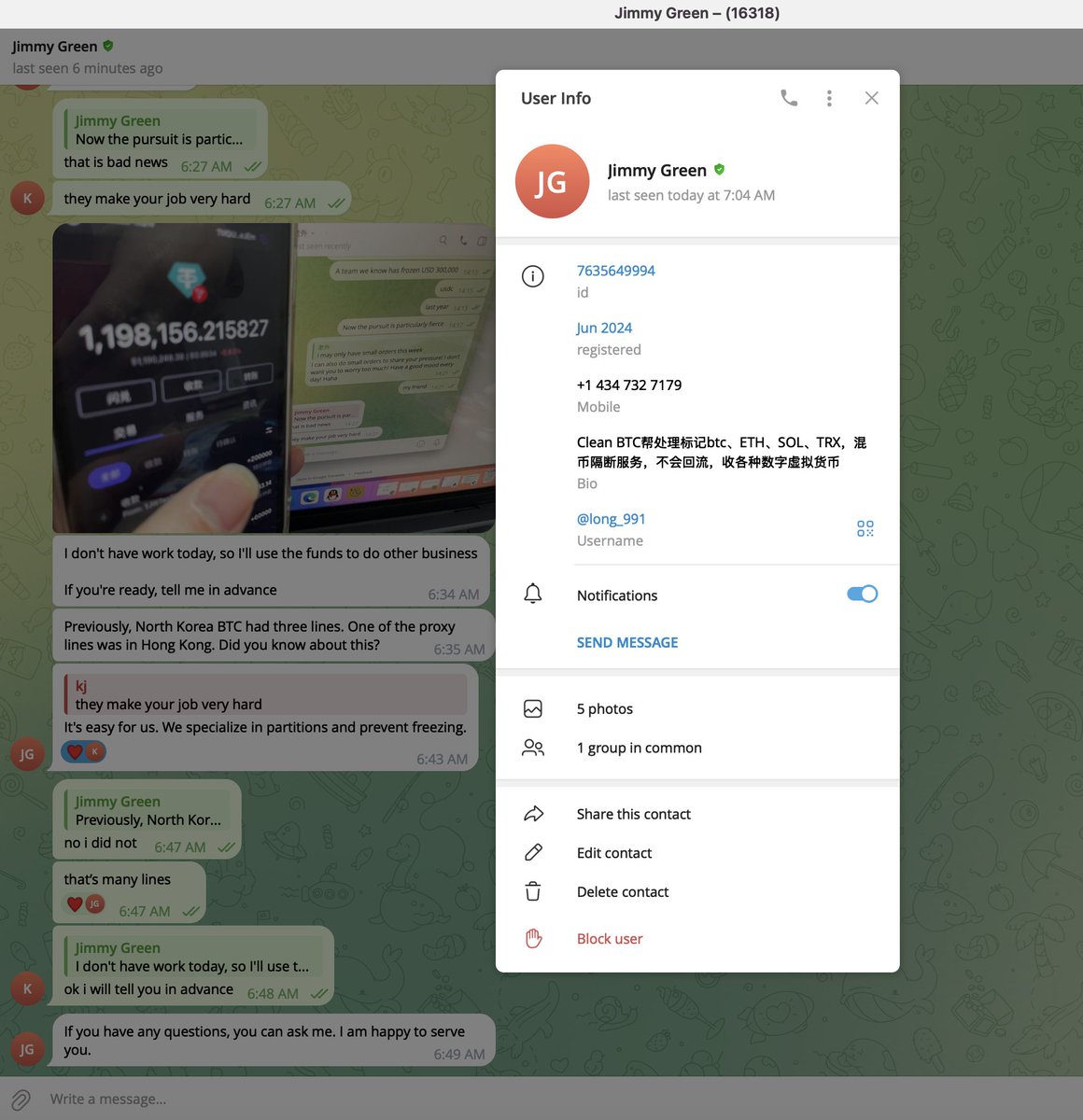
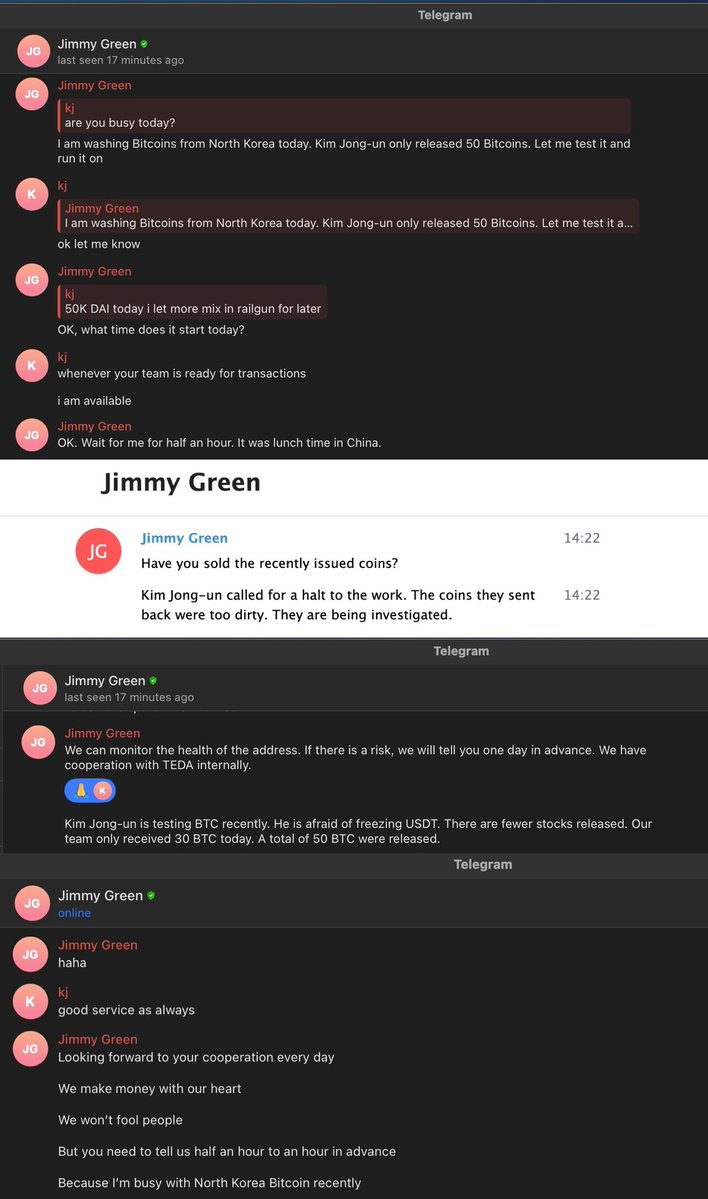
1/ How I infiltrated a Chinese organized crime syndicate that has laundered $1B+ across multiple exploits for Lazarus Group.
Posing as a client, I gathered intel that helped action freezes for the Feb 2025 Bybit exploit and attribute illicit activity onchain.
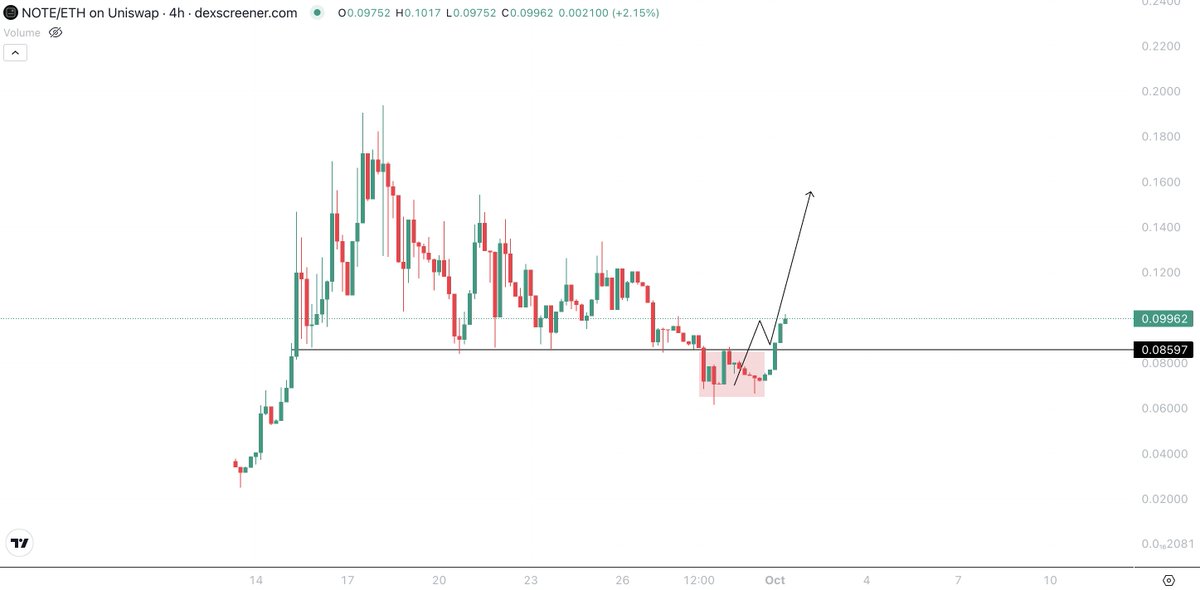
This looks very good.
It looked like a deviation to me, and now, that is confirming here.
We have likely seen the bottom.
I've been posting a lot about robinhood:0xc4f730335fb9e439ca5552f7b52b8e638c4245b0 because this is, in my view, genuinely one of the best R/R bets in the space.
Every now and again you get a project launch, in the right environment, at the right time, tackling a massive industry...
And the opportunity of that is great.
robinhood:0xc4f730335fb9e439ca5552f7b52b8e638c4245b0 is revolutionising a very large and well understood financial category, bringing it on-chain, and simply making it better and cheaper.
I think it's one of those plays that isn't properly understood yet.
But that therein, lies the opportunity and value.
Buying the red box was scary, but you learn over time that this is just the way it is.
Expecting this to trend much higher over the coming weeks/months.