Hands-on AI robotics for kids and classrooms. Wireless coding blocks that make coding, robotics, and AI easy to build, learn, and teach. [email protected]
🚨 ESTOS 7 REPOSITORIOS DE IA SON UNA AUTÉNTICA LOCURA.
Si trabajas con IA, generación de vídeo, 3D o Claude Code, guarda esta lista.
He encontrado 7 proyectos open source de GitHub que te permiten crear escenas 3D a partir de imágenes, animar personajes, generar vídeos cinematográficos con código y construir experiencias interactivas.
Algunos acumulan miles de estrellas. Y merece la pena conocerlos todos.
Te explico qué hace cada uno 👇
1. img2threejs (19.3k stars) →
Convierte una imagen de referencia en una escena 3D con Three.js.
Reconstruye objetos y dales vida mediante código.
https://t.co/9WRUTXLdjz
2. Motion2MixamoRig (1.7k stars) →
Transfiere movimientos humanos de un vídeo a personajes 3D.
Una alternativa interesante a la captura de movimiento tradicional.
https://t.co/7wxzzOfxi2
3. dsh-blender-plugin (1.3k stars) →
Integra herramientas de IA directamente en Blender.
Explora nuevas formas de generar modelos 3D y acelerar el proceso creativo.
https://t.co/KwSWCAPNwE
4. dioramas (564 stars)→
Crea páginas web 3D interactivas con una estética cinematográfica.
Combina recursos generados con IA, Three.js y WebGL para crear experiencias inmersivas.
https://t.co/dgjTFgZKeu
5. video-shotcraft (13.7k stars)→
Genera vídeos de producto con acabado cinematográfico utilizando código.
Incluye flujos de trabajo con Remotion y plantillas reutilizables.
https://t.co/DGRL3fr9ka
6. lemo-opuscar (7.7k stars) →
Genera vídeos cortos mediante código, sin depender de los modelos tradicionales de generación de vídeo.
Elige un estilo cinematográfico y crea tus propios clips.
https://t.co/d63dDYtVWR
7. mg-styles-15 (2.2k stars) →
Explora 15 estilos de animación con vídeos de referencia, prompts y código fuente.
Un recurso práctico para aprender cómo se construyen distintos estilos visuales.
https://t.co/7eAnVffwYb
¿Lo mejor?
Puedes explorar estos proyectos gratis, estudiar cómo funcionan y adaptar su código a tus propios proyectos.
Ya no necesitas construirlo todo desde cero.
Guárdate esta lista antes de pasarte otro finde preparando algo que alguien ya ha dejado listo para usar🔖
this is where REA × Kimi K3 starts to feel dangerous.
reverse engineering normally means one model slowly reading through an app and trying to keep the whole architecture in context.
REA changes that first.
it breaks the app into smaller pieces that can be investigated separately - functions, dependencies, call paths, state changes, UI behavior.
then K3 sends 300 agents across that map at the same time.
so instead of:
one model → one codebase → one long chain of reasoning
you get:
one app → hundreds of narrow investigations → one reconstructed system
the swarm builds the understanding collectively.
that’s what makes REA × K3 powerful: reverse engineering stops being limited by how much of the app one model can hold in context.
full course in the article below ↓
Cuando me preguntan por qué tengo tan claro que los humanoides van a llegar pienso en qué podría salir mal para que la tecnología dejara de evolucionar.
Por eso me encanta el trabajo que realiza @enactic_ai con OpenArm, porque deja claro que si se quiere se puede.
holy sh*t, someone just dropped the full prompt library for REA
https://t.co/qrA2w7M49V
here's what it can do:
→ software cloning and game logic reconstruction
→ function tracking and binary analysis
→ porting to WASM
→ firmware, Android APK and kernel
→ Electron apps
→ vulnerability research, anti-cheat and DMA research for CTFs and security work
17 sections, swap the <placeholders> and run
every prompt forces the same rule: files, functions and addresses for every claim, confirmed facts kept apart from guesses
ask about one function at a time, the narrower the question, the more you can trust the answer
read the full REA guide in the article below ⭣
Dusting off this tweet from April because this gap in shared understanding of LLM capability is *widening*. It's now less "two groups of people speaking past each other" and more a sharp funnel.
- Napkin math somewhere around 6B people (~75% of the population) have barely come in contact with LLMs at all.
- Around 1-2B (~20%) are casual and infrequent users of free-tier ChatGPT-like products. This group sees derpy chatbots and treats them a bit like a better Google search, a writing aid, or etc. Maybe an agent tries to book you a flight. I have non-tech friends who (reasonably, imo) say they have not much use for it at all. Even many professionals outside of math&code are in this tier. For example, execs and many other functions spend a lot of their time talking to other people, so while they understand what is happening intellectually, it is still second-hand and a bit abstract.
- Now we get to professional use of frontier-grade LLMs in math&code. Somewhere around 20M people (0.2%) see first-hand that large, complex projects that used to take them weeks/months can now be completed by agents with a prompt. Building apps, copying apps, translating apps, decompiling apps from binaries... This has all happened very quickly and recently - less than 1 year ago, I was writing code manually by hand, typing memorized computer code commands into a code editor character by character, occasionally pressing Tab to autocomplete a little chunk of code.
- And finally we get to the ~5,000 people (~0.00006%) with access to frontier-grade systems internally. The external world has seen the preview. It looks like swarms of thousands of agents collaborating over weeks on software mega projects: minting zero days, running cyber attacks and defenses at machine speeds, discovering new science, advancing the frontier of mathematics. Things that would have taken top professionals in the industry years of work. Meanwhile, human review and comprehension are starting to fall behind. For example, people are still involved in the "archeology" of the OpenAI-HF incident from many months ago. Mathematicians may be poring over the 722 manuscripts on frontier mathematics for a while.
The funnel is driven by a combination of factors:
1. The impact scales with ambition, problem size, and horizon. A question with a paragraph answer barely stresses the system. You need a reservoir of big, difficult problems that you really care about. This aspect drives the consumer / professional dimension of the funnel.
2. The jaggedness of the system (which I have written about a lot separately). Capability peaks in domains that are digital, verifiable and economically valuable. This is because LLM capability emerges from reinforcement learning on verifiable rewards on a curated environment mixture driven by revenue potential. This aspect primarily drives the area (e.g. math&code) dimension of the funnel.
3. Access. Free-tier, paid-tier, internal.
So this is the weirdness of the moment. The general public has mostly not interacted with these systems. When they have, it looks like a derpy chatbot. The majority of professionals still see only a modest uplift. And a small sliver of professionals are experiencing the vertigo of the curve going vertical. And it is all happening at the same time.
Watch the Dream-1 VLA by @dreamlabs_ai break my camera mount at the end .... (I expected it)
The problem:
> Dream-1 is trained on a dual YAM arm setup with three camera's (left wrist, right wrist and POV camera).
No way it will work zero-shot on my setup (single SO-101 arm mounted on a rover with one wrist camera).
3 ways I'm looking to solve it:
1. Pure VLA:
> Prepare a dataset of 50 episodes of doing just one task using the @LeRobotHF LeLab on my setup.
> Train 3 VLA models - Dream-1, Gr00T 0.7 by @NVIDIARobotics, Pi 0.5 by @physical_int
> Use cloud/local inferencing and see their performance
2. VLM inferencing + IK tools:
> Use Gemini Argon/Opus 5.5 (topped the @robocurve Agentic benchmark).
> Give them low level tools, along with the robot's configuration to remove depth estimation errors.
> Run it in an agentic loop until task is completed by the arm
> MoveIt in ROS2 takes care of low level path planning, dangerous positions, IK and sending action commands to the arm.
3. Tele-operated Recordings + VLM:
> I can easily pre-record trajectories for getting the arm to pick something up from the ground.
> Different objects can have different recording - labelled and saved by their description (eg. teleop_pickup_marker etc.)
> Use VLMs and camera positions adjust the rover to the appropriate position
> LLM orchestrator simply "plays" the appropriate recordings
> In case of missed grab - a VLM agent can kick in to help
RL based fine tuning on failed tasks also shows promising results. Check out amazing article by @dm_robots (https://t.co/h2CzLbkyDs)
I'm also participating in the @nebiusai hackathon in Physical AI Track. Looking for someone to team up with.
HMU if you'd like to work together, my DMs are open.
UN TESLA ROADSTER ACABA DE SALTAR DESDE EL PUENTE GOLDEN GATE.
LUEGO VOLVIÓ A SUBIR VOLANDO.
La plataforma del puente se encuentra a 67 metros sobre el agua.
Ningún automóvil ha regresado jamás de esa caída.
El Roadster cae, activa sus propulsores justo encima de las olas,
y asciende de nuevo hasta la carretera.
El conductor sale con un traje de carreras y los brazos en alto.
Cada choque de autos termina con la gravedad ganando.
Este es el primer automóvil que puede discutir.
We’re opening a research preview of Claude Duet, a new app where Claude works as a proactive agent.
It comes to you with what needs your attention, completes tasks you ask of it, keeps working when you step away, and checks with you before it acts on your behalf.
The TRV-150 has intercepted multiple one-way attack drones in a single mission, without landing to reload. During trials at Eglin Air Force Base, the modified Malloy T-150 fired laser-guided APKWS rockets from a three-pod launcher to intercept several air targets.
Low-cost. Precise. Delivered at pace.
Find out more: https://t.co/SkGYjIJun0
Footage taken from earlier trials at Fort Rucker in May 2026. Credit US Army.
Mantis is an autonomous construction robot developed by London-based All3 to perform tasks on real building sites.
It uses AI to place, fasten, finish, and inspect components without human help.
Mantis can carry up to 100 kg, switch tools, and work using real building data.
Unitree Introducing: H2-X Kung Fu Legend Guardian🤖
Powerful performance to serve and guard you, with a maximum endurance of approximately 8 hours.
Please use the robot safely and in a friendly manner.
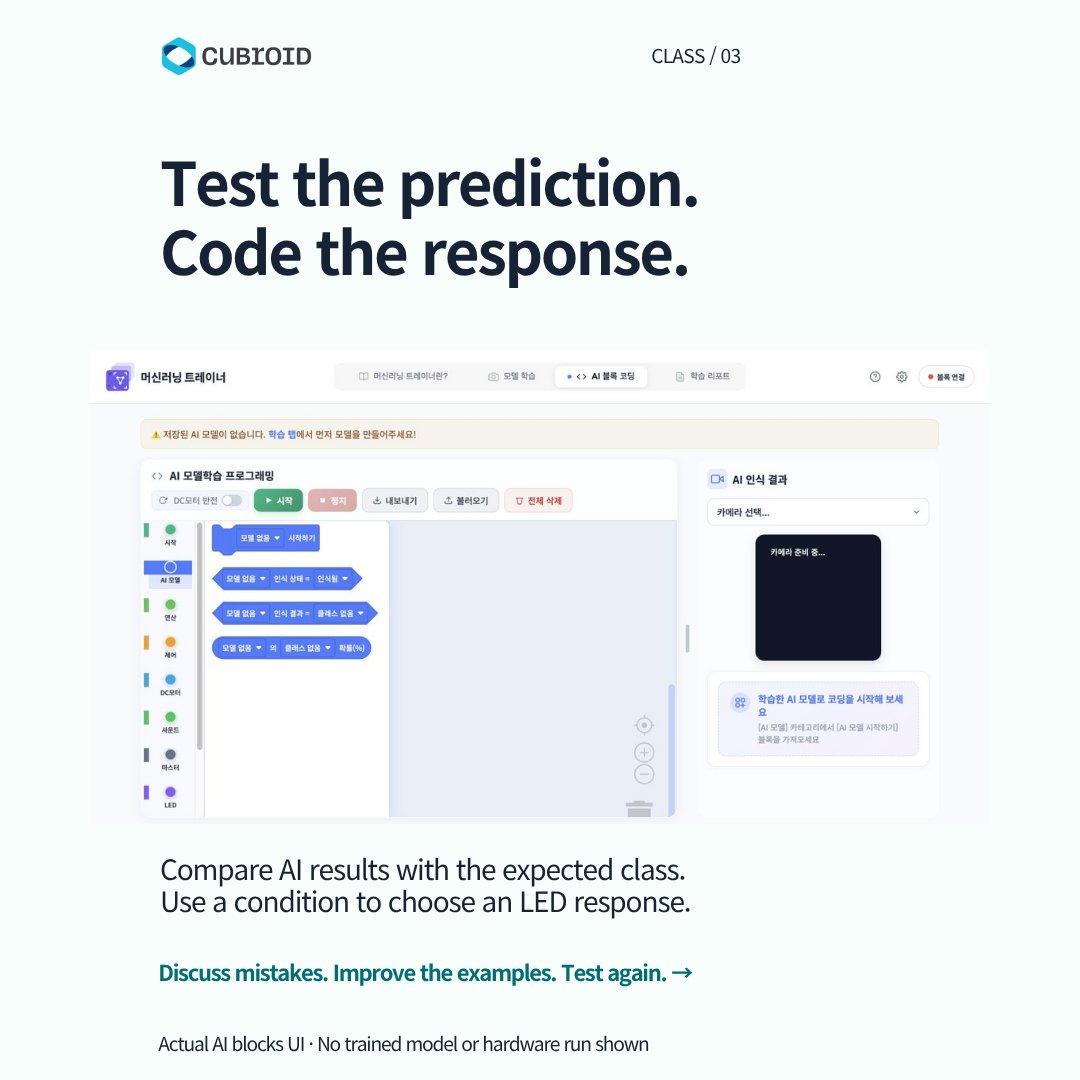
Teach AI to classify images. Code a response.
Collect → train → test new images → design an LED response.
Cubroid lesson proposal; actual Korean setup UI, not a hardware run.
Try https://t.co/Y7jumuR2BN
Ask https://t.co/SkeO1SsBvn
#Cubroid#AIeducation
You can build an 8-servo robotic hand for under €200 in parts.
The AmazingHand by Pollen Robotics has two options:
DIY: source 8 Feetech SCS0009 servos, print the mechanical structure in 3D and assemble the linkages using the free GitHub files.
Seeed Studio kit around $89, or €119.43 including VAT at RobotShop Europe. It includes the structure, 8 servos, a XIAO-compatible control board, power supply, cables and hardware.
Both require assembly. The DIY route gives you the parts list and printable design. The kit bundles the components.
Which route would you take to build your own robotic hand?
Your phone probably costs more than this humanoid robot.
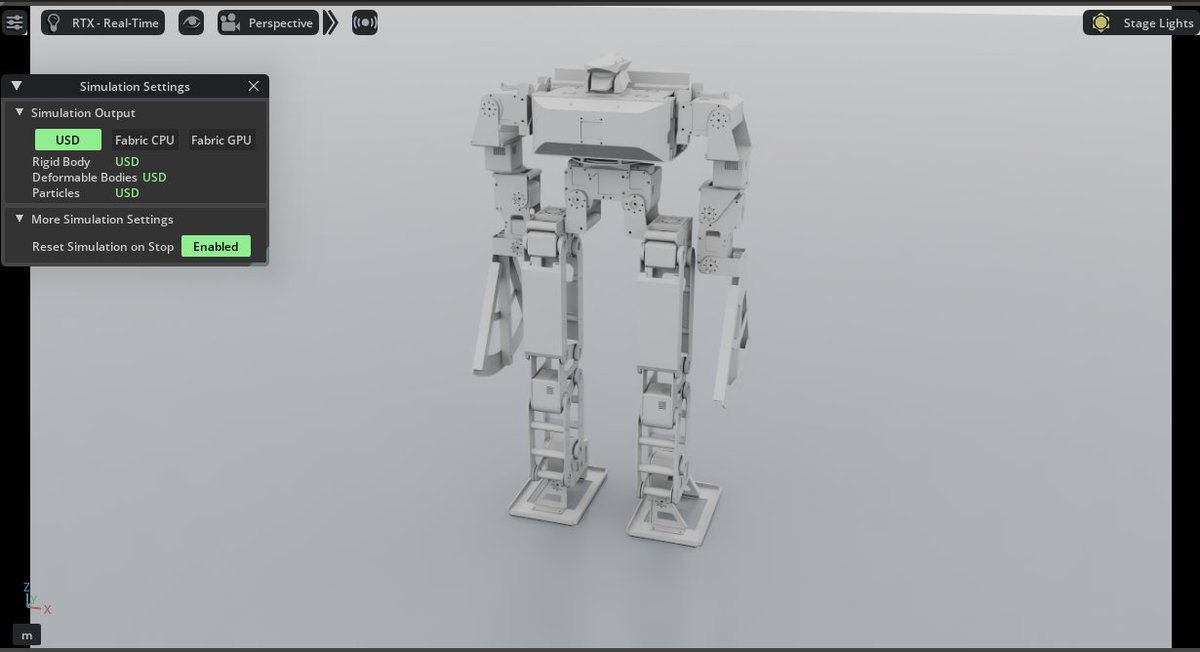
Zeroth 01 is an open source humanoid 40 cm tall with a parts list starting at $350.
Most of the frame is 3D-printed Feetech servos drive the joints and you control it in Python.
One developer already built one with 16 servos a Raspberry Pi 4 and a battery. It can kneel wave and do push ups.
Walking is another story. Five walking controllers have been trained in MuJoCo and none of them runs on that physical robot yet.