And I very much like their new prosperity gap indicator — for which the great @OlivierSterck made the case.
It tells you by which factor incomes need to be multiplied to bring everyone to the prosperity standard of $25 per day.
For the world as a whole, the factor is five.
One very helpful new feature is that you can see the growth incidence curves for different countries in the world.
This is, for example, how economic growth was shared across the income distribution in Brazil over the last decade.
The World Bank's data portal for poverty, inequality, and growth data has gotten much better!
Their replacement for the older PovcalNet is called PIP — the 'Poverty and Inequality Platform'.
If you are interested in poverty it is worth having a good look around. They just updated their data.
→ https://t.co/IBuuVPwyOE
Congrats to @DMJ2020 and team @worldbankdata on the new WDR! 🧑💻📊📈 Will take some time to digest, but really like the key messages on the need for a new social contract for data, equity, and safeguards!
#COVID19 must change the value we all see in timely, high-quality data. This is especially true for #CRVS data on birth, death & cause-of-death registration.
Thank you @worldbankdata & fellow panelists for hosting this important discussion.
https://t.co/XipH1P76tM
(3/3)
By default, data should be a public good.
Congratulations to @worldbankdata on the World Development Report 2021: Data for Better Lives. Data for better health leads to data for better lives, and it must be accessible to all. #WDR2021
https://t.co/Ve2XQhhdS4
(1/3)
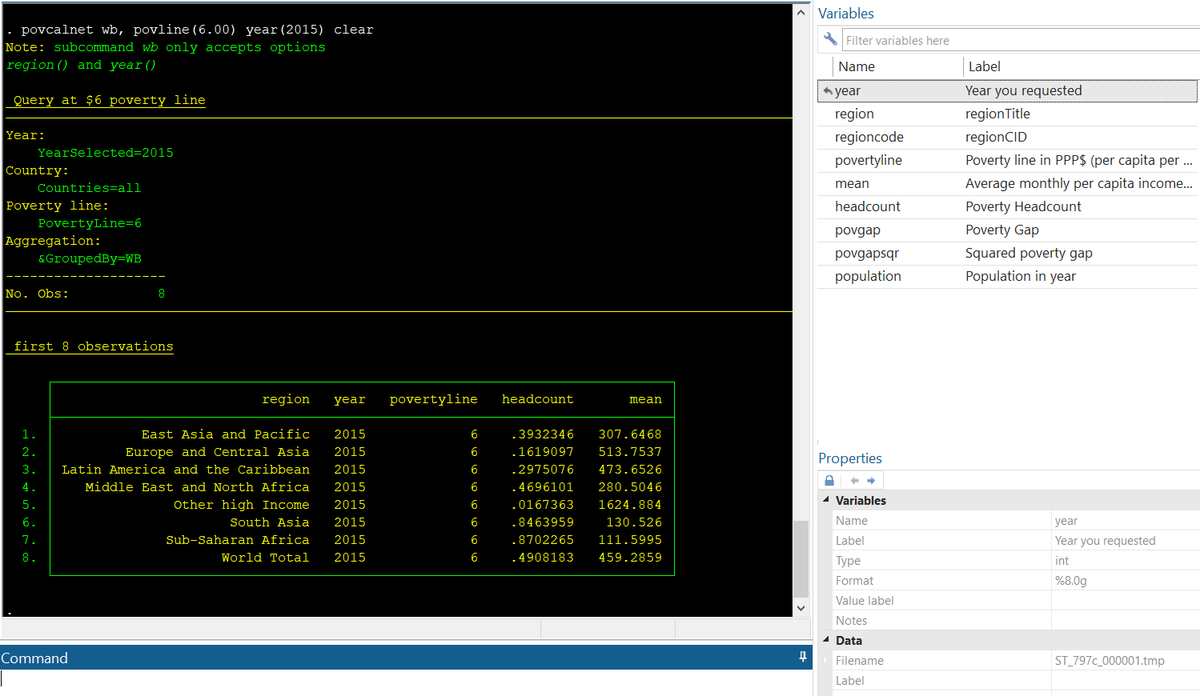
We just released Stata and R packages for the PovcalNet API. Estimate poverty at any poverty line, for any country, or any group of countries. More about our latest data and tools: https://t.co/5JGfmGNGoK
A key lesson we learned is that sampling, questionnaire, and such design features are important, but a large part a survey’s success is about the quality of its implementation. https://t.co/e7hV0YkoRU via @worldbankdata
A stepping stone or a bad place to get stuck? Self-control problems explain lack of continued job search effort in Ethiopia’s ready-made garment industry: Guest Post by Christian Meyer https://t.co/Ps0YgOYcee via @WorldBank