DeepSeek is much slower this morning. Reasoning streams on turtle mode and "thinking time" way up compared to past days. Throttled by explosive demand?
But the slow "thinking out loud" is oddly mesmerizing. And the results still perfect!
(And GPUs still hot - $NVDA rebound?)
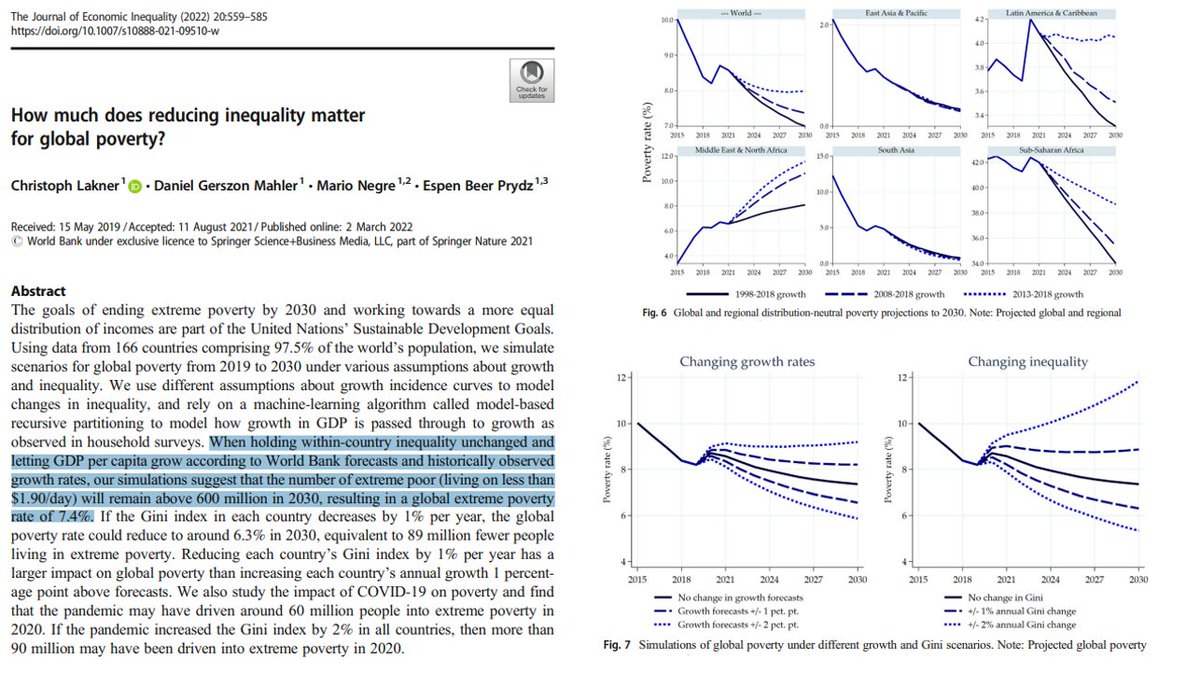
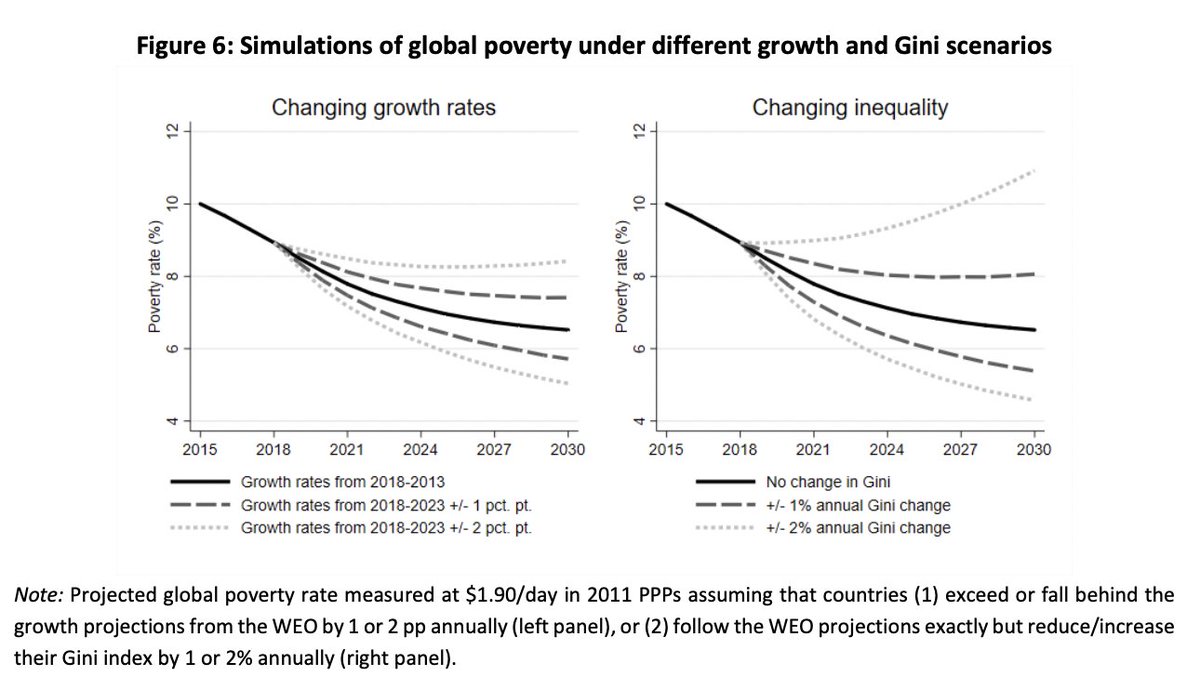
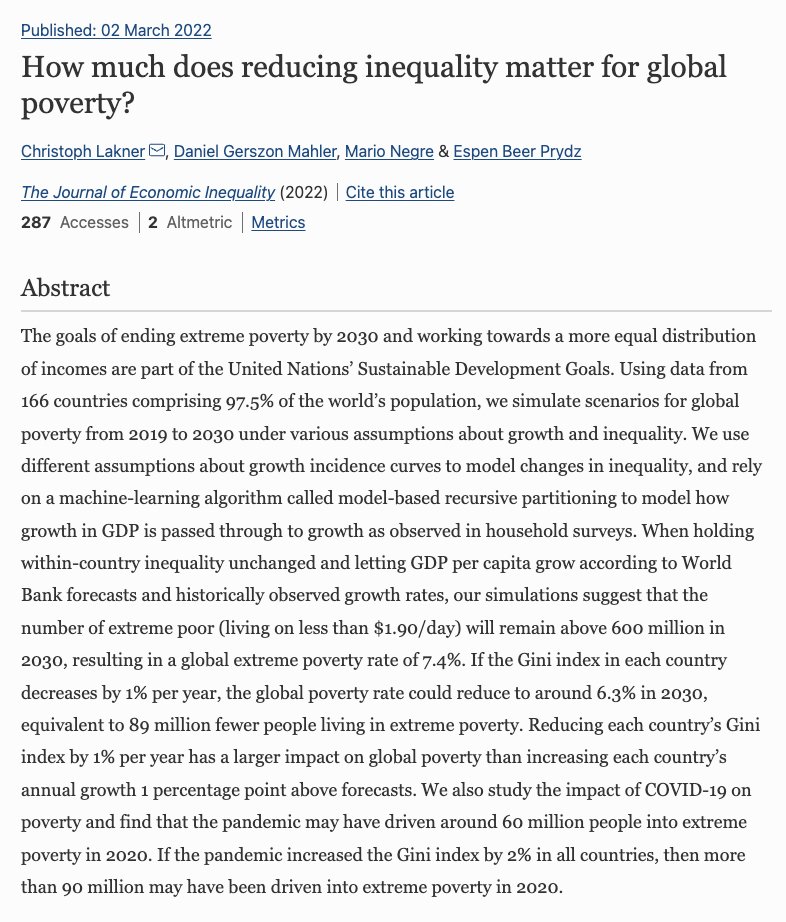
If within-country inequality doesn’t change and GDP per capita grows per World Bank forecasts, “our simulations suggest that the number of extreme poor (living on less than $1.90/day) will remain above 600 million in 2030.” https://t.co/rNA5LpFDIE by @ChristophLakner et al
How to use the @WorldBank's new Poverty and Inequality Platform (PIP)? The first of a series of videos to walk users through the new home of the @WorldBank's poverty and inequality data @worldbankdata@WBG_Poverty
https://t.co/FhFIyBFvAO
https://t.co/70YQg9cFGR
"Reducing each country’s Gini index by 1% per year has a larger impact on global poverty than increasing each country’s annual growth 1 percentage point above forecasts."
In a new @CESifoGroup wp., @maxemilking and I find that parenthood can be a crucial barrier to the political careers of women. Using data from Norway, we show that women drop out of politics to a larger extent than men after their first child is born. [1/5]
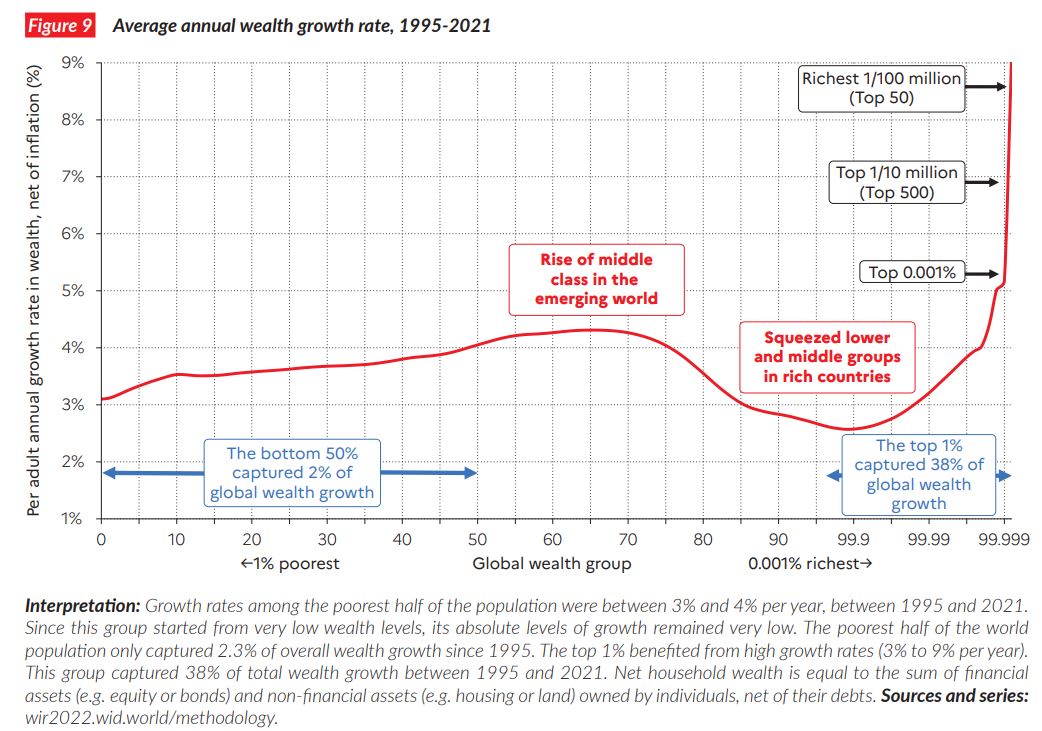
The #wealthinequality elephant curve 1995-2021. Very high growth in wealth at top of the "trunk" (top 1% captured 38% of growth), "wealth squeeze" of middle class in rich countries, and modest growth in middle income countries, but from very low base. See #InequalityReport.
New blog on how global inequality is affected by cross-country differences in the macro impact of COVID-19, with @nishant_yonzan and Daniel Mahler. https://t.co/ryfQROEmdX
We are hiring for a one-year full-time position in the Global Poverty and Inequality Data team @worldbankdata. Working on global poverty. @DMJ2020. Deadline next week (12 February).
https://t.co/wBmjq0wD1w
Our societal poverty line captures the fact that the real value of countries' own national poverty lines typically increases as countries become richer. For more details on the line, see paper by @DMJ2020 and @espry: https://t.co/LINe70ZmyT
Because the societal poverty line rises with median income, it is not surprising that societal poverty has declined at a slower pace than extreme poverty. https://t.co/874QE6eFWk
In 2018, the World Bank introduced a Societal Poverty Line, combining fixed and relative elements of poverty. We updated the numbers: Around a quarter or the world (or 2 billion people) are poor by this measure. @marta_schoch@DMJ2020@worldbankdata https://t.co/VmmhFLO5od
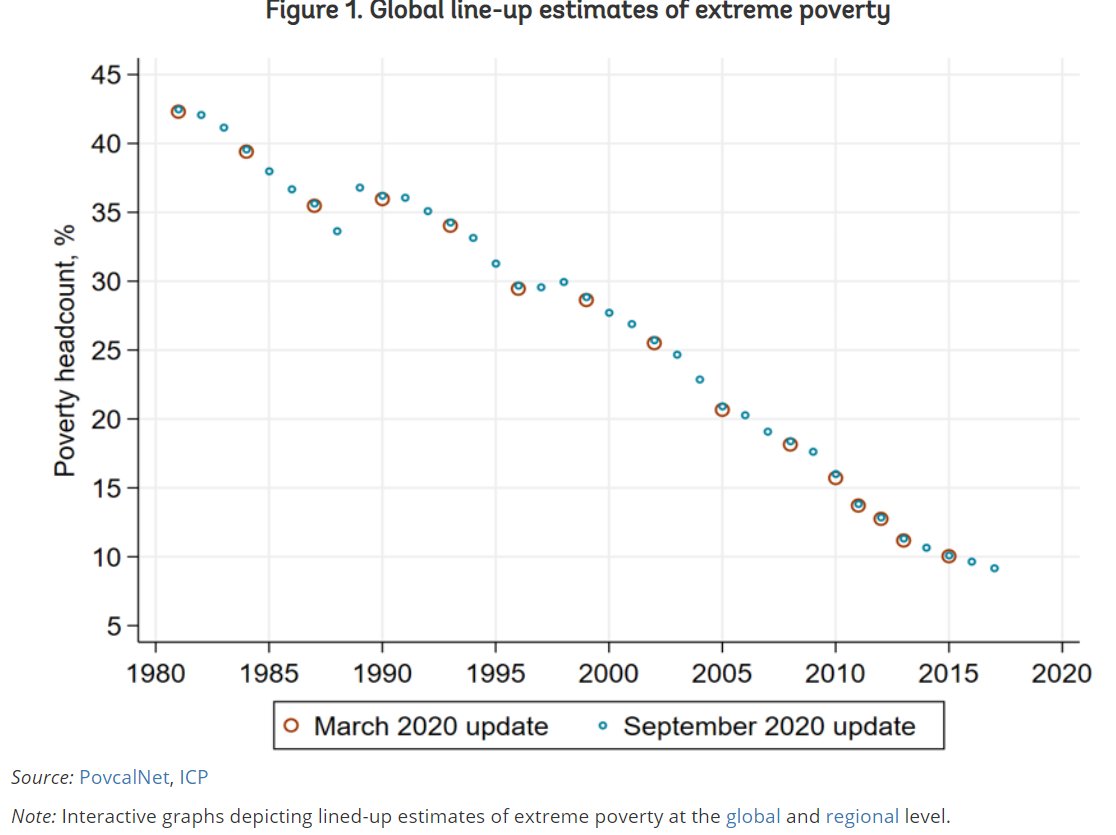
Update of @WorldBank's global #poverty numbers:
- New global #poverty estimates for 2017, most regions to 2018.
- Revised 2011 PPPs: Poverty lines & regional/global estimates unchanged.
- New #Nigeria data
- Annual numbers now available
https://t.co/ahsiXKyQwp
Our new report on global poverty is out!
More details on the poverty update: https://t.co/FFwCQvlQXk and https://t.co/ahsiXKyQwp
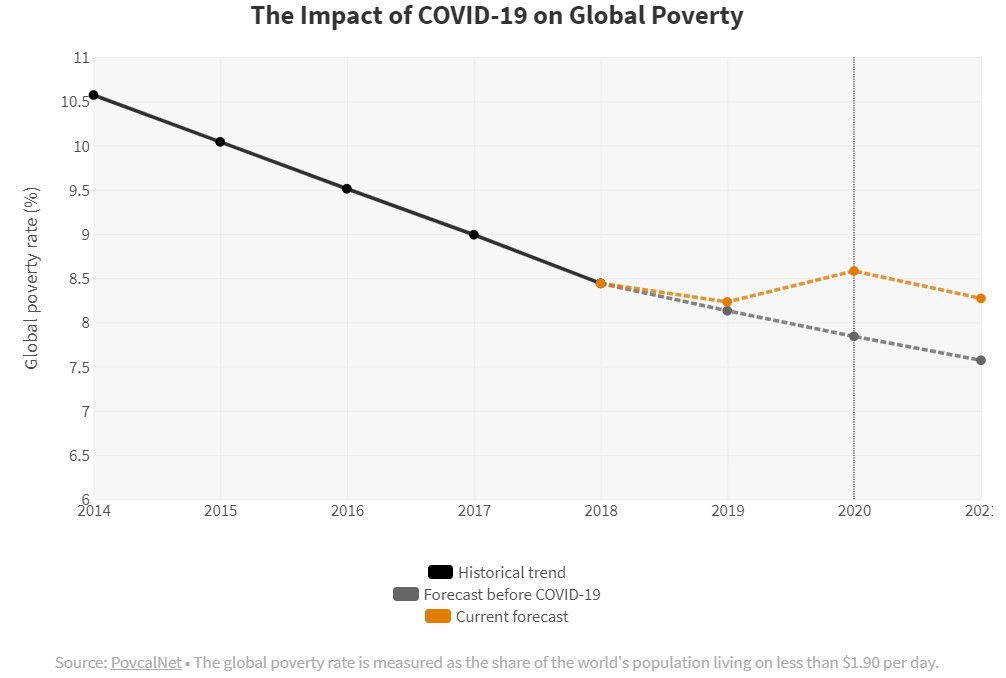
Updated estimates of the impact of COVID-19 on global poverty: https://t.co/eBRXELnP4u
Last week we updated the estimates of how many people #covid19 will push into extreme poverty: https://t.co/4RVTGeXGQ9 Our new paper shows what happens if inequality changes: https://t.co/DKxfVM1OzH
New PPPs were released earlier this week. How do they affect the World Bank’s global poverty estimates? We are taking a first look in a new paper and blog
https://t.co/XLcrIUBvYo
https://t.co/Ksi6kzCqWJ
New blog with a simulation of the impact of COVID-19 on global poverty: COVID-19 is likely to cause the first increase in global poverty since 1998. With Daniel Mahler, @RACastanedaA and Haoyu Wu. https://t.co/iQI7xfP2Nd









![JFiva's tweet photo. In a new @CESifoGroup wp., @maxemilking and I find that parenthood can be a crucial barrier to the political careers of women. Using data from Norway, we show that women drop out of politics to a larger extent than men after their first child is born. [1/5] https://t.co/haRsZbzlGr](https://pbs.twimg.com/media/FNaImg7XoAAB-ry.jpg)