Active Directory Hacking - Public Resources
Link 1: https://t.co/iYRkCy8PzK
Link 2: https://t.co/ffpbErFIfT
Link 3: https://t.co/8Oj2CoZK1I
Link 4: https://t.co/8Oj2CoZK1I
Bookmark & Share!
Comment more resources :)
Don't follow me - I'm not a content creator 🤞🏻
Did you know #ssload sends a POST request to "<IP>/api/gateway" to register the infected device?
You can leverage @anyrun_app Threat Intelligence tool to hunt for ssload using a simple query: url:"api/gateway"
Zelenskyy tricked dozens of Ukrainian men and condemned them to die in the US proxy war. The SBU pretended to sell a safe escape out of Ukraine and instead ‘mobilized’ the men by force. Zelenskyy and the US Govt are the real enemies of Ukraine, not Russia.
Europol and Eurojust have taken further action against the LockBit ransomware gang, with four arrests and seizing devices used in its infrastructure. https://t.co/oo7pXshFLH
@vxunderground ISIS is always seen in Toyotas. Arrest the CEO.
Using Telegram required a phone number, Arrest the CEO of Google and Apple, for 'providing technology' that allowed the use of Telegram.
This argument makes no sense.
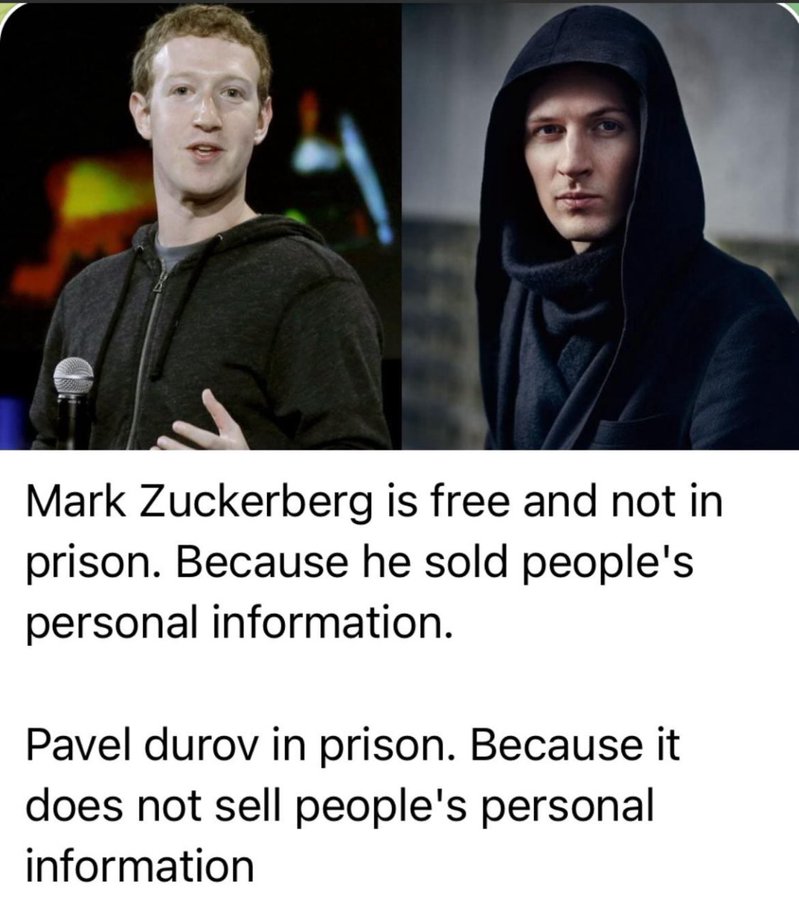
Regarding Pavel Durov, the apprehension of the CEO of Telegram:
tl;dr is he responsible for the crazy stuff people do?
There is a difference between freedom of speech and freedom of consequences. Indeed — Mr. Durov provides a platform used by journalists and individuals communicating under tyranny. However, because Mr. Durov is the CEO of a large communications platform, his organization is subject to different territories judicial rulings. Virtually every single country on the planet has regulations in place which define the responsibilities of the entity (i.e. organization) and the roles they must introduce to prohibit illegal behavior. Some countries are more restrictive, others are more 'lax.
It is no surprise really France (and surely other countries beyond France) believe Mr. Durov must be held responsible for the behavior of its end users. This is not a debate of 'free speech' as it falls within the scope of liability of end user behavior.
Example: we are aware Wagner Group openly recruits people on Telegram. Should Wagner group be allowed on Telegram? Many countries despise this group, whereas other countries like this group and praise their actions (we are sure our western colleagues may find that shocking). If they are allowed to use Telegram, to what end can they operate? Is Mr. Durov responsible for their actions which violate laws in different regions? This is not a rhetorical question. Each country, people from different geographical locations, philosophical beliefs, religions, and personal experiences will answer this question differently.
Moreover, because some people have condemned Telegram for being a drug market — this is nothing new to social media platforms. It is common place for many social media platforms such as Facebook and Instagram to find people advertising drug sales. The primary difference is Telegram is less likely to cooperate with western governments and Telegram does not fall within the reach of western governments. Meta (e.g. Facebook, Instagram) cooperates with law enforcement on both a local and federal level for nearly every single country on the planet.
We have no comment on the debate on E2E encryption. We use Signal. We'll let someone privy to privacy stuff to take that lead.
This is just our pseudo-educated (still ignorant) comment on a very complex problem which will continue to plague companies as things become more global.
💡15 Popular Google Dorks
https://t.co/yffqVupT1Y
1. File Type Searches
filetype: – Searches for specific file types.Example: filetype:pdf "cybersecurity report" – Finds PDF files related to cybersecurity reports.
2. Inurl Searches
inurl: – Searches for URLs containing specific text.Example: inurl:admin – Finds URLs that include "admin," potentially leading to admin login pages.
allinurl: – Searches for multiple words in the URL.Example: allinurl:login.asp – Finds URLs that include both "login" and "asp."
3. Intitle Searches
intitle: – Searches for pages with a specific word in the title.Example: intitle:"index of" – Often used to find directory listings.
allintitle: – Searches for multiple words in the title.Example: allintitle:"login" "admin" – Finds pages with both "login" and "admin" in the title.
4. Site Searches
site: – Restricts the search to a specific website or domain.Example: site:https://t.co/bnffeRkypF – Searches only within the domain https://t.co/bnffeRkypF.
5. Index of
intitle:"index of" – Used to find directory listings that may be publicly accessible.Example: intitle:"index of" "backup" – Finds directories with "backup" in the title, potentially exposing sensitive files.
6. Cache Searches
cache: – Shows the cached version of a webpage.Example: cache:https://t.co/bnffeRkypF – Displays the cached version of the homepage of https://t.co/bnffeRkypF.
7. Link Searches
link: – Finds pages that link to a specific URL.Example: link:https://t.co/bnffeRkypF – Finds all pages that link to https://t.co/bnffeRkypF.
8. Intext Searches
intext: – Searches for specific words within the body text of a webpage.Example: intext:"username" – Finds pages that contain the word "username."
9. Directory Listings
intitle:"index of /" – Looks for open directory listings on web servers.Example: intitle:"index of /" "passwords" – Finds directories that may contain password files.
10. Confidential Information
filetype:xls username password – Searches for Excel files that might contain usernames and passwords.
"confidential" filetype:pdf – Finds PDF files labeled as confidential.
11. Login Pages
intitle:"Login Page" – Finds pages with the title "Login Page."
inurl:login – Finds URLs that contain "login," often leading to login portals.
12. Sensitive Directories
intitle:"Index of /" – Used to find open directories that may contain sensitive data.
inurl:/admin/ – Looks for admin directories.
13. Finding Cameras
inurl:"view/view.shtml" – Finds live cameras.
intitle:"Live View / - AXIS" – Specifically finds AXIS camera live views.
14. Finding Vulnerable Servers
"phpinfo()" "mysql server version" – Finds PHP info pages that may reveal server configurations.
inurl:/proc/self/cwd – Can be used to find LFI (Local File Inclusion) vulnerabilities.
15. Finding Email Addresses
"@domain.com" "email" – Finds email addresses on a particular domain.
intext:"@gmail.com" – Finds Gmail addresses on the web.
Hi, I talked about advanced initial access in June at OffensiveX in Athens.
Slides are here: https://t.co/cvc1UlmmqI
For those who ask: I still don't know when the recorded talk will be published
#redteam