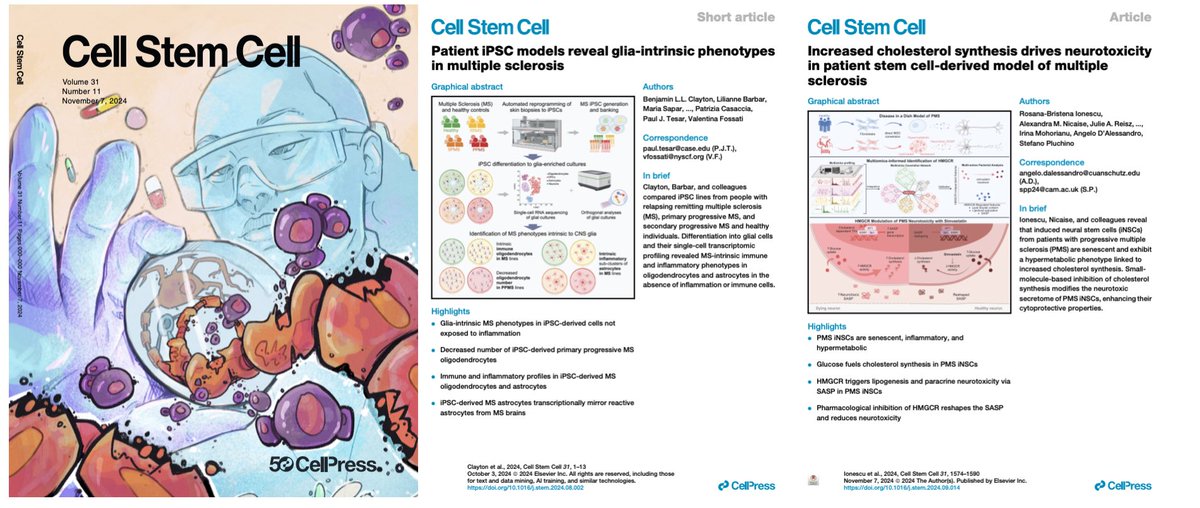
Proud to see our image selected for the November @CellStemCell cover, spotlighting two papers from my lab and @Pluchinolab that showcase the power of patient stem cell-derived models to study multiple sclerosis. (1/2)
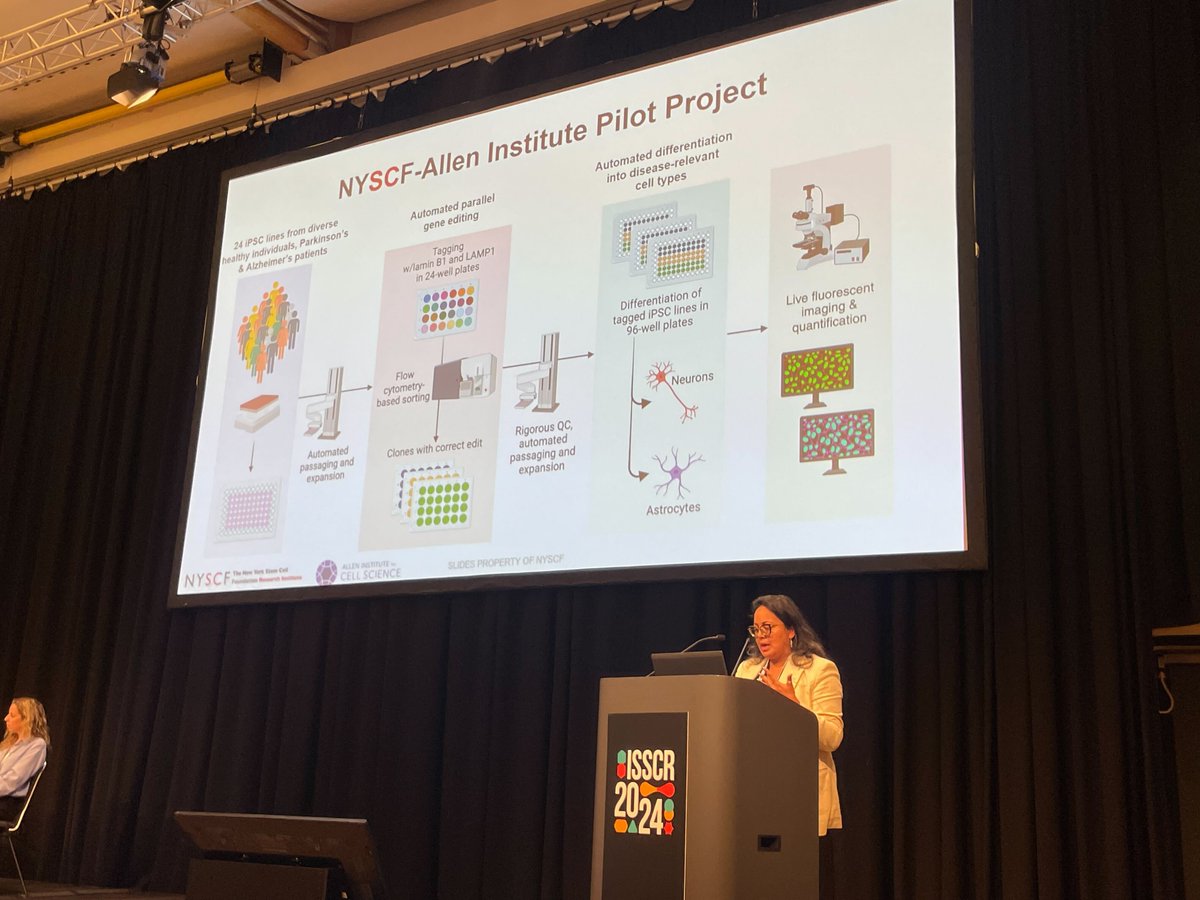
Happening now at #ISSCR2024: NYSCF’s @RaekaAiyar announces our new partnership with @AllenInstitute to create a collection of tagged, ancestrally diverse stem cell lines with the aim of enabling inclusive quantitative cellular biology.
I broadly agree with this post, which is very good. (And I share @RuxandraTeslo's ambivalence about our progress over the past 50 years.)
That said, wet lab experiments themselves are IMO a bigger bottleneck than trials. (This is why @arcinstitute is working on a virtual cell.) It's still far too slow and expensive to even come up with effective drug candidates, which is substantially a function of the time constants, complexity, and costs of dealing with cells and tissues. We need faster iteration and better predictive power in our preclinical models.
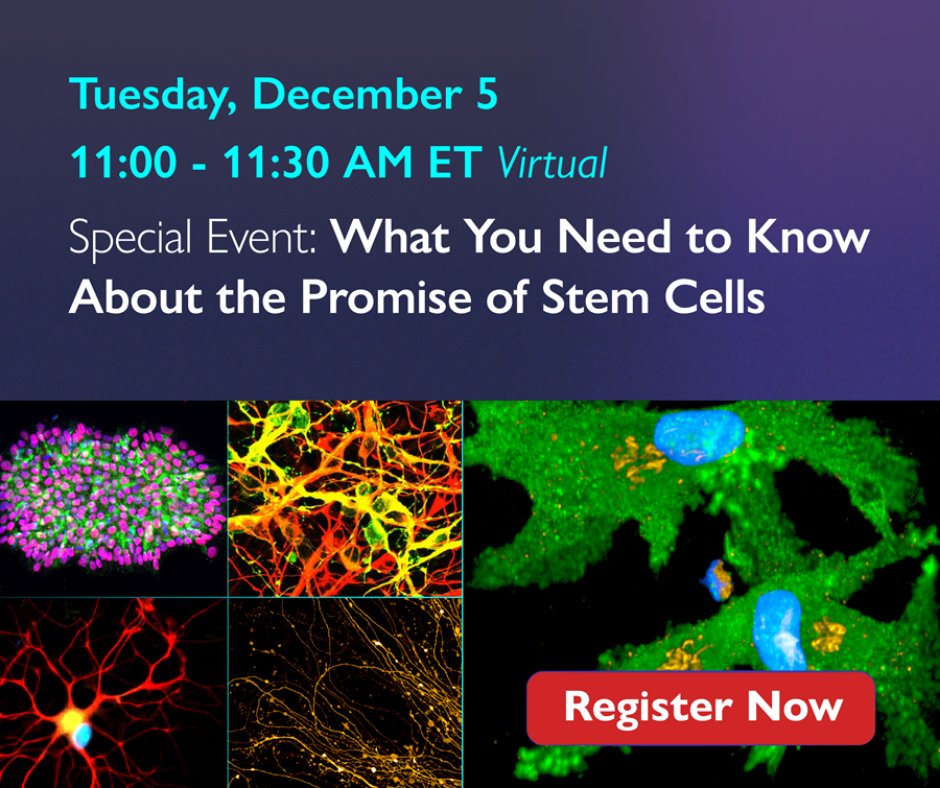
How close are we to cures, and how are stem cells transforming human health? Tune in virtually on 12/5 at 11 AM ET to hear from NYSCF’s Dr. Daniel Paull about the exciting future of stem cell research. Register here: https://t.co/debZwZ6hrL
This #GivingTuesday show your support for NYSCF and stem cell research by joining and sharing our upcoming virtual event. Learn about the revolutionary tools that could lead to new disease treatments sooner than you think. Register here: https://t.co/debZwZ6hrL
📢 Don't miss this live event with @NYSCF on August 3rd!
Three NYSCF leaders will discuss the organization's efforts to take down obstacles in stem cell research.
RSVP now: https://t.co/6hlfx37YR4
@RaekaAiyar@Laurandres@Dan_Paull
Today last year was the last time I saw you in person. Who could have known? What a wonderful presentation, bringing #nyscf to Greece. I like to keep the memory of us smiling, together. Missing you, Susan.
Congratulations @ChenShuibing, on this great publication. Happy to have played a role in getting those arrayed iPSC lines to you. This is the second big paper this year showcasing the power of automation and large-scale disease modeling, with more to come from the @nyscf team…
A touching obituary of our beloved founding CEO, Susan L. Solomon, in today's @nytimes:
“Vexed by lags in producing cures for diabetes and cancer, she helped raise $400M to start a foundation that has made breakthroughs in treating major diseases.” (1/n)
https://t.co/9MTSUtFH9w
Postdoc position available with my group to study the role of non-coding variants in neurodevelopmental diseases.
We have fascinating data that we want to pursue with iPSCs, brain organoids, CRISPR, molecular and cellular phenotyping.
https://t.co/UqBL8s1eWk
#postdocjobs
And you get to work with some pretty cool tech! Lots of #Robots here @nyscf doing all sorts of cool things with #stemcells 🤖
Come help build our #software, #workflows while doing some great #biology along the way.
Finally, a big thanks to the NYSCF comms team for doing such a great job with the original thread I quoted: hats off to @raekaaiyar, @CapelleraSandra, and the rest of the team for putting together such a great read! 10/10
Drug discovery for complex diseases like #Parkinsons (#PD) is challenging - we need screenable cellular phenotypes to move faster. Today in @NatureComms, we present an #AI-driven phenotyping platform that identifies #PD hallmarks in patient cells: https://t.co/IQdinIjQJL 🧵(1/11)
Importantly though, nothing we do @nyscf happens in a vacuum: it’s made possible because brilliant people push the limits of what we think is possible. This was exemplified by Reid Otto (1969-2022), who was not only a mentor but a great friend. This work is dedicated to you. 9/10