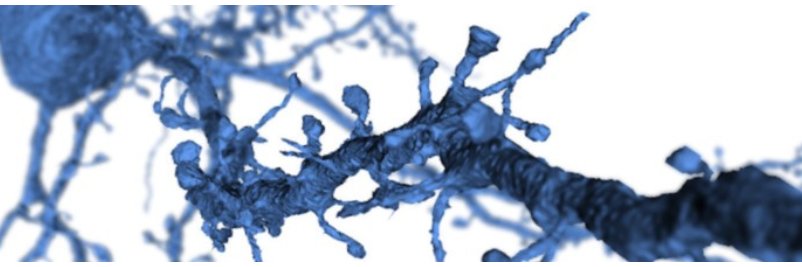
We're at the threshold of understanding intelligence itself. The convergence of neuroscience and AI has created an unprecedented opportunity — but our research ecosystem isn't built to seize it. We need a new model that matches the scale of our ambition... 🧵
Wow, this sounds like an incredibly exciting and visionary initiative. The brain is the ultimate source of all our problems and possibilities, and there should be an all-hands-on-deck effort across government, industry, and private philanthropy to decipher its mysteries fully.
I hope we may accomplish the miracle of allowing your daughter to regain vivid sight soon.
“Storytelling” can sound like fluff.
But for emerging technologies, it is infrastructure.
Neurotech won’t be adopted on technical merit alone. It needs public pull: a shared desire for the future it enables, grounded in the real benefits it’s already delivering.
A new Roadmap, the third in the PL Neuro series, makes the case for building the narrative infrastructure the world needs to understand this technology.
🔗 https://t.co/74JYHwlQIM
In my inaugural Substack post, I explore the role of philanthropy in promoting AI moonshots.
Although the private sector will invest in many AI applications, philanthropy can play a critical role in harnessing AI to accelerate the development of vaccines for diseases of the poor, climate-resilient crops, and safe replacements for “forever” chemicals. Philanthropists can have an enormous impact by supporting the “public goods” for these applications, such as open datasets and well-designed benchmarks.
I am very excited by the partnerships that @RenPhilanthropy has with philanthropists to use AI to double the rate of student learning outcomes in middle school math, expand access to benefits for low-income families, fight climate change, develop targeted cancer therapies, and transform fundamental math. Link in the reply.
@dfirgs @RenPhil21 @AsteraInstitute@tkalil2050@KumarAGarg@elidourado Super excited to see this materialize!! I first saw @tkalil2050 present his vision for unlocking DAFs as impact capital in 2019, back when it was "only" a $120B oppty space. The fact that it's now a $250B space shows there is an urgent market need for help deploying capital.
@BrackLab@LifeSciVC@DARPA@ARPA_H Concrete example: as an IARPA PM, I funded a buzzy VC-backed startup in a hot biotech IPO environment. The company underperformed on my program, so we cut them. If IARPA had an equity stake in the mix, I might have felt pressured to "play ball" until realizing a financial ROI.
@BrackLab@LifeSciVC@DARPA@ARPA_H Here's the failure mode: A typical ARPA R&D contract can be canceled for underperformance or just USG's convenience. If a performer awards equity to USG in exchange for maintenance of a contract through certain milestones, it creates a financial conflict of interest for USG.
How to make frontier AI models safer and accelerate drug discovery with the connectome. We are featured in this @IFP article by @AdamMarblestone & @Andrew_C_Payne
@michaelzlin Yep! MICrONS researchers at @BCM used the mesoscope to acquire the functional data that was then co-registered with neural circuit maps generated from EM. My comment was more about the ever expanding field of view by new microscopy tools.
Feels like we're reaching a tipping point for technologies that will unlock whole brain emulation, e.g. a team from China just announced an optical method for cellular resolution monitoring of activity across mesoscale networks than span the whole mouse brain. 👇
@JacquesCarolan Yes interesting! The first author's prior published work in this area was also mostly with Chinese institutions, with 1-2 Western collaborators (not from Imperial). I'd suggest the arc of progress seems driven by Chinese institutions... https://t.co/fAfIY9zsZR
Devastating loss for neuroscience and ultimately for AI safety. Hearing that Lichtman's NIH grant to scale up EM connectomics by 10x beyond MICrONS was just canceled. Essential work for scaling EM to whole brains and for training a large workforce to support connectomics.
This multi-institutional program also involves Princeton, MIT, and Cambridge University, with *$3M in co-funding* by several participant orgs. https://t.co/WUpjyDHquj
@AToliasLab@AdamMarblestone Thought problem: let's take a "small" recurrent system with well characterized nonlinear dynamics, like STG. If I were to structurally and molecularly characterize all 30 STG neurons, would a model with those constraints alone be sufficient to recapitulate known dynamics?
If you could deeply phenotype a whole brain - mapping all ultrastructure and connectivity, plus in situ proteomics, metabolomics, transcriptomics - would that be sufficient to constrain a model of its function under all conditions? What's the minimal data needed for emulation?
@AToliasLab@AdamMarblestone No argument that underconstrained models need physiology! But I was making the point that "all the technologies needed to deeply phenotype a whole brain exist today". With the right data, I believe it's now possible to adequately constrain a model without physiology.
@AdamMarblestone If dynamics are fully determined by system parameters (structure + cellular+molecular properties), shouldn't the model exhibit "normal" function if initialized to any reasonable activity state? Why do we need to observe any physiology in advance?