Every single absolute low in mrkt $SPX has been confirmed by NYSE $NYA Advancing Issues 10-Week Moving Average dipping into 1,200 - 1,100 zone.
Dec 2018 low
Mar 2020 low
Oct 2022 low
Apr 2025 low
Mar 2026 low
10-WMA evidences the baby and the bathwater...
Currently 1,222.
I wrote about this in Finom Group's April 2025 macro-market Research Report, encouraging subscribers to be aware of a most probable low point in market!
$SPY $ES_F $VIX $QQQ $NDX $IWM $DIA $NVDA $SMH $META $AMZN $GOOGL $TSLA $SPCX
If you're a trader in tech, build two separate systems so news and narratives wouldn’t affect you no matter it’s positive or negative.
1. AI belief: You have an unfair edge on the insights of AI tech and business progress. Things are advancing fast and positively everywhere. We're at sea level and will be climbing Mount Everest soon. Just ignore the outsider narratives/news, no matter it’s positive or negative.
2. Trend following: We're trading AI stock prices, not the real future of AI but the future in market participants’ mind. Prices are driven by not only fundamentals, but also macro factors, geopolitical risks, positioning, sentiment, and more—hence the volatility. As retail traders, just follow the trend; don't fight or argue with it just as the same way to your wife. We just leverage their narrative/news to take our profits from the dumb money.
We have to make the two systems completely isolated so that we can always keep our edge against the market.
I think many people on X misunderstand this.
If you look at history, some of the best companies in the world have experienced 80% drawdowns.
I know the $WGS story very well. At one point, it represented more than 40% of my portfolio, and I trimmed it too.
The stock went to $100 and then all the way back to $60. That’s what stocks do.
This is why I believe you need to actively manage large positions, especially after big runs.
Obviously, if you have a five-year time horizon, you might not care about these swings. But when a stock becomes a huge part of your portfolio, you have to manage that risk somehow.
My style is not to buy and hold forever through massive drawdowns.
Some investors prefer to buy and never touch their positions. I prefer to actively manage mine.
Neither approach is necessarily wrong. It’s simply a matter of personal investment style and risk management.
𝗛𝗢𝗪 𝗧𝗢 𝗛𝗘𝗗𝗚𝗘 𝗬𝗢𝗨𝗥 𝗣𝗢𝗥𝗧𝗙𝗢𝗟𝗜𝗢 𝗥𝗜𝗚𝗛𝗧 𝗡𝗢𝗪?
Before you read this on how I recommend hedging your portfolio in the current environment, first read my previous tweet below it: “What Are You Hedging Against?”
The idea is simple. If your kid rides his bike only inside the house, you probably don’t need to insure it against a total loss. That would be expensive and unnecessary. You insure against the kind of damage that is actually likely to happen.
Same with hedging. First define what you are protecting against. Then build the hedge around that risk.
If everyone is already afraid of a 10% correction and hedge funds have already deleveraged, I struggle to see where the sellers come from for a full 10% drawdown.
But let’s assume they are partially right and we get a correction.
I see four possible outcomes over the next 45 days, into the October 16 expiration:
5% chance: market goes up 5% in the next 45 days
30% chance: The market goes higher. You deleveraged, so you barely participate.
30% chance: The market stays around current levels. Some stocks do well, but because you deleveraged, you probably don’t.
30% chance: We follow the historical pattern and the market corrects, but because everyone is already positioned for it, the drawdown is more like 1% to 7%, not 10%.
5% chance: The market actually falls 10% or more.
Taking that distribution into account, I like a creative hedge/trade on $QQQ into the October 16 expiration:
Buy the 715 put.
Sell 3 puts around 650, roughly 9% lower.
Sell the 750 call, roughly 5% higher.
It’s opened for a $19 credit.
The trade does especially well if the market falls somewhere between roughly 5% and 11%.
The idea is simple: stay exposed to some upside while protecting yourself against the kind of downside I think is actually more likely over the next 45 days.
One of the best lectures I have ever seen on risk and volatility by Howard Marks, @Oaktree Capital Co-Chairman.
I recommend watching it at least 3 times and to take notes while you do.
https://t.co/94jfy0A9eX
𝗞𝗡𝗢𝗪 𝗧𝗛𝗬𝗦𝗘𝗟𝗙
𝘏𝘰𝘸 𝘵𝘰 𝘉𝘦𝘤𝘰𝘮𝘦 𝘙𝘪𝘤𝘩 𝘞𝘪𝘵𝘩𝘰𝘶𝘵 𝘉𝘦𝘪𝘯𝘨 𝘓𝘶𝘤𝘬𝘺
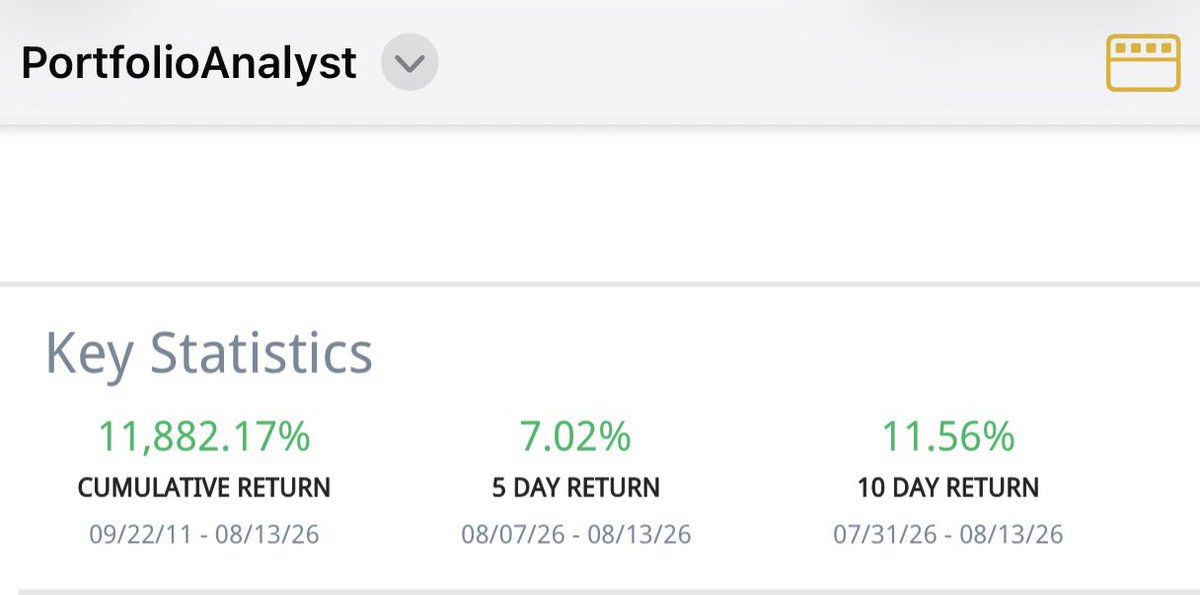
Over the last 15 years, my portfolio is up 11,882%. Almost every major trade that got me there I discussed here on X, usually while taking it or a few days later, and explained why. No single investment contributed more than 10% of those returns. I consider myself lucky I never found one investment that made me rich. If you bought Bitcoin or a stock very early and it went up 100x, you may be rich, but that doesn’t prove you can repeat it. Early in my career I had several huge drawdowns, including quite a few around 50%. Today they are far fewer and smaller. Every mistake forced me to recalibrate. Over time, logic compounds.
A lot of you look at old traders as gods because they had one incredible period. One great call can make you famous for 20 years. But where is the repeatable track record? True legends are rare because their edge isn’t one trade or market. Their edge is how they think. Every time someone tells me, “Michael Burry said this,” my answer is: who cares?
At the entrance to the Temple of Apollo at Delphi were the words Know Thyself. Over the years I realized becoming a better investor was less about learning another industry and more about learning to see clearly. None of us sees base reality. We see it through years of opinions and filters. The less you color reality with opinions, the easier it becomes to see the facts.
I remember this with COVID. While the market acted like nothing serious was happening, I warned volatility was mispriced and recommended reducing risk. Before Russia invaded Ukraine, there was a massive military buildup while the U.S. was evacuating embassy personnel. I recommended buying $VIX. The same happened with Iran, I recommended buying oil before the escalation. In all three cases the information was public. People preferred opinions to reality.
$ZIM was another example. The market valued the company below its cash while it still held valuable assets and new ships coming. Shipping experts made fun of me because I was a generalist. They knew far more about shipping. But sometimes knowing every detail makes you miss the obvious. How can an analyst say a company should be worth roughly a quarter of its cash position while it still holds billions in valuable assets? Basic logic has to matter.
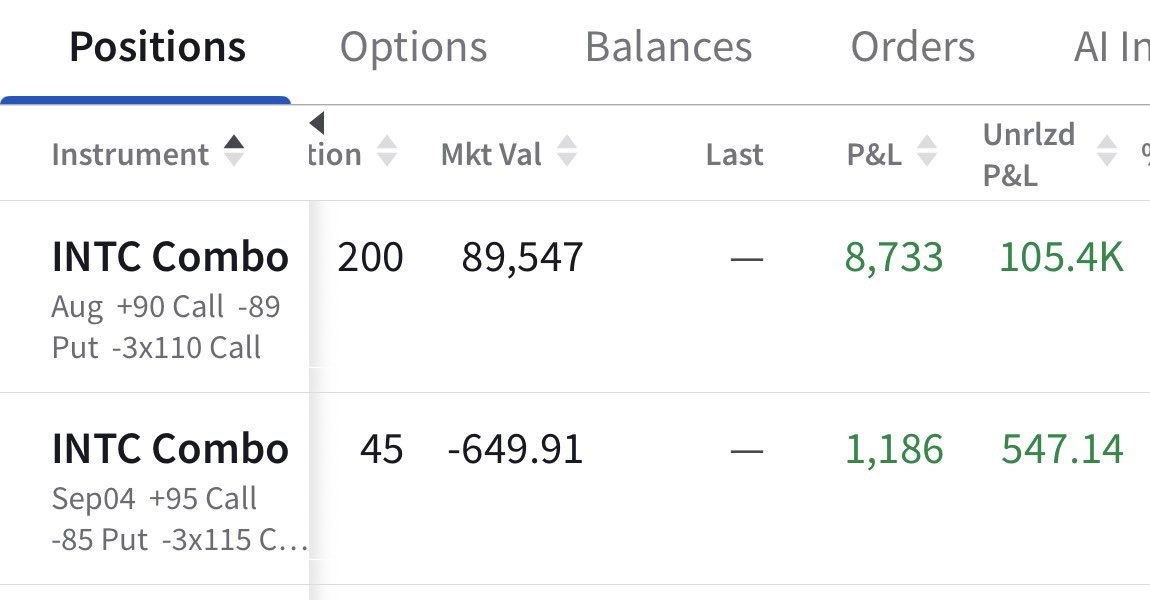
After enough years, your mind starts working almost like a probability machine. You collect the relevant variables, understand which matter, and they produce a range of outcomes. It is not always right. But when the facts are clear and price is far away from what they imply, you can make a lot of money. The trade idea I published on $INTC a few days ago is another example. With options, I don’t show every trade because people copy them without understanding risk management. That $INTC idea alone contributed roughly 7% to my portfolio this week and a half and will continue to compound this week. It is not always what you hold, but how you hold it.
Almost everyone publishing investment research has an incentive, and your benefit is usually not one of them. Think for yourself. If you bought Ethereum because Tom Lee, who makes around $10 million a year promoting Ethereum, told you to buy it without doing the work yourself, that is your fault, not his. You pressed the button. Blaming the person you followed teaches you nothing. Taking 100% responsibility does.
This is why I recommend a 10-day Vipassana retreat. Nothing will make you a better investor or human being than understanding how your mind works. For 10 days there is nowhere to run. No phone, no business, no entertainment. Just you and your mind. It is hard. That is the point.
Most people don’t lack information. They cover it with opinions. Reality does not care. See what is there. Understand the probabilities and risk-reward. Then act. Money was the byproduct. Becoming better was the real return. Know thyself. See clearly.
I love $NBIS $INTC $RDDT $PLTR
That's why they're in my long-term portfolio.
I also love $AEHR $CRDO $MU $LITE $SNOW
That's why they're in my position-trading portfolio.
These are stocks I've openly been bullish on throughout 2026, and that conviction is paying off.
After decades of doing this, I can tell you one thing:
Investing does not need to be complicated.
1. Use the 21-week EMA as your trend guide.
2. Mark your major horizontal support levels.
Buy quality stocks when they pull back into those areas.
That's 90% of the game.
We made rockets reusable and are rebuilding the internet in space. The next challenge: making life multiplanetary and understanding the true nature of the universe
Watch @ElonMusk deliver a company update to @SpaceX employees
Be careful with labels.
“I’m a technical trader.”
“I’m a fundamental trader.”
“I’m a value investor.”
“I’m a momentum trader.”
The moment you label yourself, you start seeing the market through that label and ignoring opportunities that don’t fit inside it.
$AMZN falls 30% to $200 and trades at one of its lowest valuations in years. The value investor says the P/E is still too high. The technical trader says it hasn’t reached his moving average. The momentum trader sees a falling stock and wants nothing to do with it.
Or take $ZIM when it was around $13. It was trading at almost half its cash value, with assets worth multiples of its market cap, yet the stock was well below its 200-day moving average. The fundamental trader sees an opportunity. The technical trader sees a chart he shouldn’t touch.
That’s the trap with labels. Your label becomes your rules, and your rules can make you blind to some of the best opportunities you will ever see.
If you ask me what kind of trader I am, I’m a logician. I’m here to make money. I don’t care if the opportunity comes from fundamentals, technicals, options, sentiment, or something else. If the logic makes sense to me and the opportunity is there, I take it.
Use every tool available to you. Don’t let a label decide what opportunities you’re allowed to see.
I’m layering another trade on top of my current $INTC trade that I recommended a few days ago and is already very profitable.
Intel has nearly tripled this year and sentiment completely changed. They just raised $15B around $95/share, with reported demand above $100B.
𝗧𝗼 𝗺𝗲, $𝟵𝟱 𝘀𝗵𝗼𝘂𝗹𝗱 𝗮𝗰𝘁 𝗮𝘀 𝘀𝗼𝗺𝗲 𝗸𝗶𝗻𝗱 𝗼𝗳 𝗳𝗹𝗼𝗼𝗿. 𝗜𝗳 𝗶𝗻𝘀𝘁𝗶𝘁𝘂𝘁𝗶𝗼𝗻𝘀 𝘄𝗮𝗻𝘁𝗲𝗱 𝗼𝘃𝗲𝗿 $𝟭𝟬𝟬𝗕 𝗼𝗳 𝘀𝘁𝗼𝗰𝗸 𝗮𝗿𝗼𝘂𝗻𝗱 𝘁𝗵𝗮𝘁 𝗹𝗲𝘃𝗲𝗹, 𝗜 𝘄𝗼𝘂𝗹𝗱 𝗲𝘅𝗽𝗲𝗰𝘁 𝘀𝗲𝗿𝗶𝗼𝘂𝘀 𝗱𝗲𝗺𝗮𝗻𝗱 𝘁𝗼 𝘀𝗵𝗼𝘄 𝘂𝗽 𝗮𝗴𝗮𝗶𝗻 𝗶𝗳 𝘁𝗵𝗲 𝘀𝘁𝗼𝗰𝗸 𝗴𝗲𝘁𝘀 𝗯𝗮𝗰𝗸 𝘁𝗵𝗲𝗿𝗲.
On the upside, I don’t see any scheduled catalyst in the next three weeks that should push $INTC another 15-20%. No earnings, no investor event.
Of course, Intel could surprise the market with a major new foundry customer or another big announcement. But is that worth more than a +20% move in the stock? I am not sure.
But after this massive run, the equity raise and the change in sentiment, I like the setup for layering another trade above my existing one.
I would recommend using limit orders if you put the trade on. You don’t necessarily have to use my exact strikes. These are just general guidelines.
The new trade is below the older trade I recommended, which, as you can see, is very profitable:
Expiring: Sep 4
Buy 95 Call
Sell 85 Put (you can also choose 90, which is very good)
Sell 3x 115 Calls