Every time ASI has to construct a low dimensional UI to bridge communication... "This is a manifestation of the Continuum that we hope falls within your level of comprehension."
I just made the most expressive real-time motion harness for the Reachy Mini.
It was created by:
> synthesizing a massive motion dataset using Astra (over 10000 samples)
> fine-tuning Qwen 3.5 4B using such dataset
> then training a flow matching transformer head to transform sparse motion plan (<1hz) into dense expressive motion (25Hz)
The average inference time for a full motion is less than 200ms, enabling real-time interaction.
@pollenrobotics and @huggingface only recorded 85 emotions for the reachy mini. With my work, you can now prompt and animate any motion you want.
Everything is open-source; write-up and links attached below. Here is a video of Reachy explaining itself through my harness.
Excited to share Quail, our new open source AI-SQL engine (a collab with Modal)! By planning queries and LLM inference together, it reaches 1B+ input tokens/min on one H100 for one query 😱🚀
AI-powered data operators create a new, interesting inference workload👇
The popular narrative of AGI often centers on a single, isolated super-intelligence. My colleagues James Manyika, @bratton, and I have a different model. In our new DeepMind Institute essay, we argue that the AGI transition will be a highly social event.
https://t.co/QQUl0JEeRJ
New research: Project Swap
To see what works & what breaks when agents are sent into a marketplace, we made a mini barter economy of Claudes.
It gave us an early look at the economy of the future––and the challenges to overcome to make agent-run markets efficient, safe & fair.
I put motion-bricks.cpp up on GitHub! It generates animations from key-frames in realtime using a tiny model that easily runs on a desktop CPU and Vulkan. There are still bugs to iron out and I'm thinking this can be combined with physical simulation and robotic control policies...
This is a live demo from the future!!! 🤯🤯🤯
An interactive sitcom? A playable episode?
Games and movies are merging into one thing. I genuinely cannot stop playing this.
Real-time video generation will change the entertainment industry forever. We are so close.
Thanks to @fal team . @Hailuo_AI
Perhaps, our models will be improved through the understanding that the universe has been perpetually patched with hotfixes by many of those that came eons before us.
Finding myself watching a panel on defining life at the A-Life conference in Waterloo. “Why is life? What problem does life solve?” — I think life emerges over the possibility of self organization in the universe. Life results from mathematical laws.
Today we release IFStruct, a new benchmark to measure how well models generate structured outputs.
A 350M model trained on it outperforms models more than 10x its size.
🧵
1/7
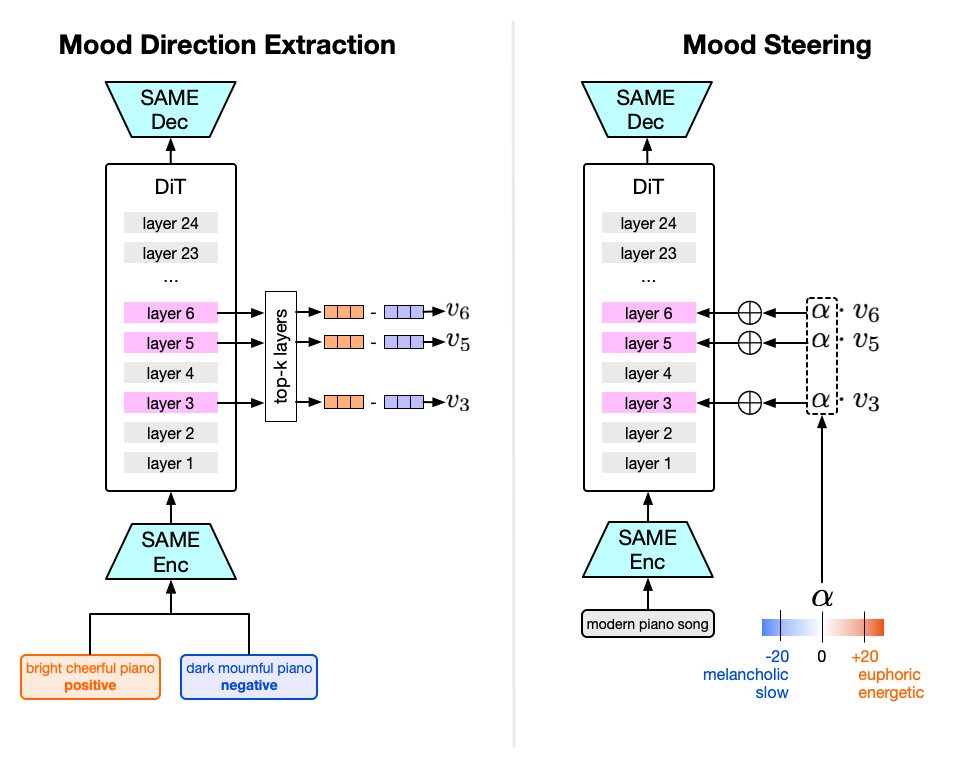
recently i started exploring mechinterp, and i started with audio diffusion.
i spent some time cracking open stable audio 3 to see if mood has a zip code in its residual stream.
it does! it's layer 11 and you can dial it. (audio results below) 🧵
Local AI Assistant with TTS and wake word detection - say “look at this” to take a picture and ask about it, and “question” to simply ask a follow up question
Using Whisper for speech transcription, Kokoro for TTS (both via @huggingface’s Transformers.js), and @EdgeImpulse to create the wake word model
Works with compatible smart glasses, in this case @omidotme’s Omi Glass running our custom firmware (based on the @seeedstudio Xiao esp32-S3)
LocalVQE v1.1 is out: A tiny ~1M parameter model that does echo supression and noise cancellation in realtime. V1.1 comes with big improvements to audio quality over V1.
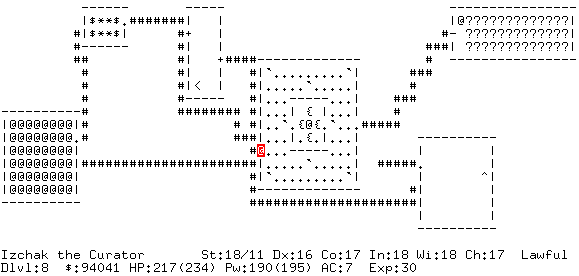
NetHack is one of the most complex and longest-lived open source programs ever written, and after 46 years, v5.0 shipped today.
https://t.co/ICEyakS6T5
And ... it is a VERY cool large codebase to work with in the LLM era.
For years, voice AI has been stuck in a rigid loop: think, then speak. But real human conversation is messy, overlapping, and asynchronous.
In our new #ICASSP2026 work, we built a tandem architecture that shifts the paradigm to “speak while thinking.” A fast speech model starts replying instantly, while a backend LLM runs in parallel to inject deep knowledge on the fly.
It’s a completely different way to approach conversational AI, making it feel remarkably more alive.
Blog: https://t.co/qZ4cEKUUIm 🐢
Announcing Talkie: a new, open-weight historical LLM! We trained and finetuned a 13B model on a newly-curated dataset of only pre-1930 data. Try it below!
with @AlecRad and @status_effects 🧵
New Anthropic research: Project Deal.
We created a marketplace for employees in our San Francisco office, with one big twist. We tasked Claude with buying, selling and negotiating on our colleagues’ behalf.
Overheating electronics could soon be a thing of the past. Researchers have identified theta-phase tantalum nitride, a material with the highest thermal conductivity ever measured among metals, showing promise for microelectronics, AI hardware, and more - https://t.co/shh37mQpQu
Ternary Bonsai: state-of-the-art intelligence at 1.58 bits. The models are so small they can even run locally in your browser on WebGPU! ⚡️
Here's the 8B version (just ~2GB in size) running at 60 tokens per second on my M4 Max.
Try the demo out yourself! 👇
New paper out in Proceedings of the Royal Society B: we apply linguistic tools to sperm whale vowels.
The result: sperm whale vowels do not just look like human vowels. They also behave like them.
We found several parallels. Like in Latin, whales have short and long vowels. Like in Slovenian, some vowels prefer particular tones. Like in human language, there’s a lot of coarticulation (a process when you say “tense” but the word sounds like “tents”).
Observing vowels in whales is a matter of timing. Our vowels are fast, whale vowels are slow. Beats become pitch if they’re fast enough. If you slow down human vowels, they start sounding like whale clicks.
Applying linguistic tools to whales shows us that we’re much more similar to these wonderful ocean creatures than we previously believed and that their language is much more complex and structured.
@projectCETI@UCBerkeley
"How do I decrease the latency of my voice agent?" is our #1 question.
The answer depends on your pipeline bottlenecks.
We recommend co-locating your agent with models, evaluating faster models, and practicing good tool hygiene.
Check out our playbook for more tips.