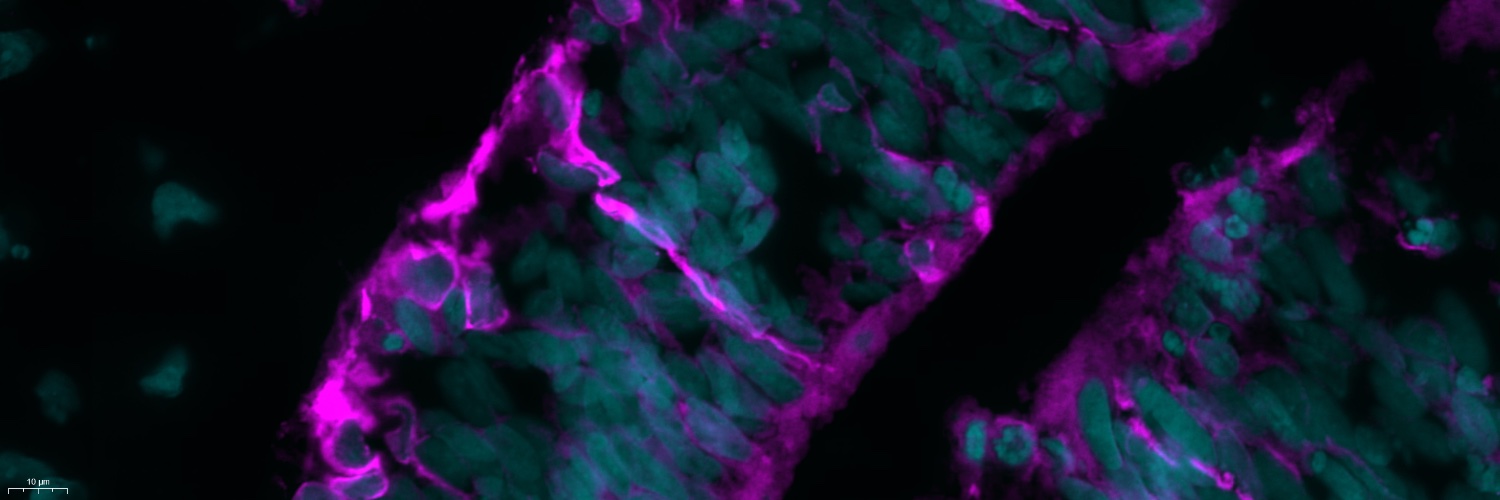
We are thrilled that our blood-tumor barrier (BTB) paper is featured on the cover of @NeuroCellPress! In this paper https://t.co/5vQ0IJy91X, we show that tumor cells project cellular processes to ensheathe blood vessels to form the BTB in medulloblastoma.
The latest publication from the Ellis lab, and the first of hopefully many more MEA-related research papers to come out of our fruitful collaboration with @JulioMTNeuro. Big congratulations to everyone involved in this work!
https://t.co/VM7Omvmjqv
"Therefore, mRNA levels should not
be interpreted as the final output of gene expression.
Instead, it is more instructive to think of mRNAs as what
they mechanistically are: the templates for protein synthesis."
https://t.co/jRtBsQ2D4z
Any mouse genetic tools needs to be tested and refined with many targets. We are distributing the TIR1 mouse lines through Canadian Mouse Mutant Repository(CMMR) and my Lab ([email protected]). Help develop exciting AID mouse tools by using it on your favorite targets.
https://t.co/jkLLijryRY @eLife. Happy to share our new publication. We showed that the Auxin Inducible Degradation (AID) system can be used to manipulate endogenous proteins in live mice. A big thanks to @AndrewWoodLab for great collaboration!
Our lab is hiring! Come join us in Toronto at the Krembil Research Institute @KrembilRI@UHN
Who? Postdoctoral Fellows and Research Technician
We use mouse in vivo and human iPSC-3D organoid models, and multi-omics, to study neurodevelopmental and neurodegenerative disorders
Excited to share this review prepared jointly by the James Ellis and @JulioMTNeuro labs, published online today at @Biology_MDPI. Here, we discuss the use of in vitro multielectrode array technology in iPSC models of neurodevelopmental disorders.
(A long thread 🧵)
@MrKarunhands @NU_CDB@NUSynBio 2) Could the lack of correlation be caused by counteracting mRNA decay mechanisms, since you’re only looking at steady-state mRNA levels you cannot distinguish. I bet mRNA decay might have a role there
https://t.co/N7pdOZ1doF
@MrKarunhands @NU_CDB@NUSynBio But by the book, ‘expression’ should be reserved for transcription. This brings me to my questions: 1) what about the correlation between the accessibility peaks and actual transcription activity (measured by GROseq or similar)? Would you have a stronger correlation there?
I am delighted to share the newest bioRxiv preprint from the James Ellis lab @SKDevStemCell program @sickkids@SickKidsNews - Buffering of transcription rate by mRNA half-life is a conserved feature of Rett syndrome models https://t.co/N7pdOZ1doF 1/n
I’d like to acknowledge the work of many people, especially my co-first author Marat for the incredible computational biology work, funding agencies, and Brian Kalish @briankalishMD for helping with comments to the manuscript. 15/n