The Disaster Channel strives to capture the drama of the forces of nature along with news of the space & earth sciences. Hurricanes, tornadoes, volcanoes, fires
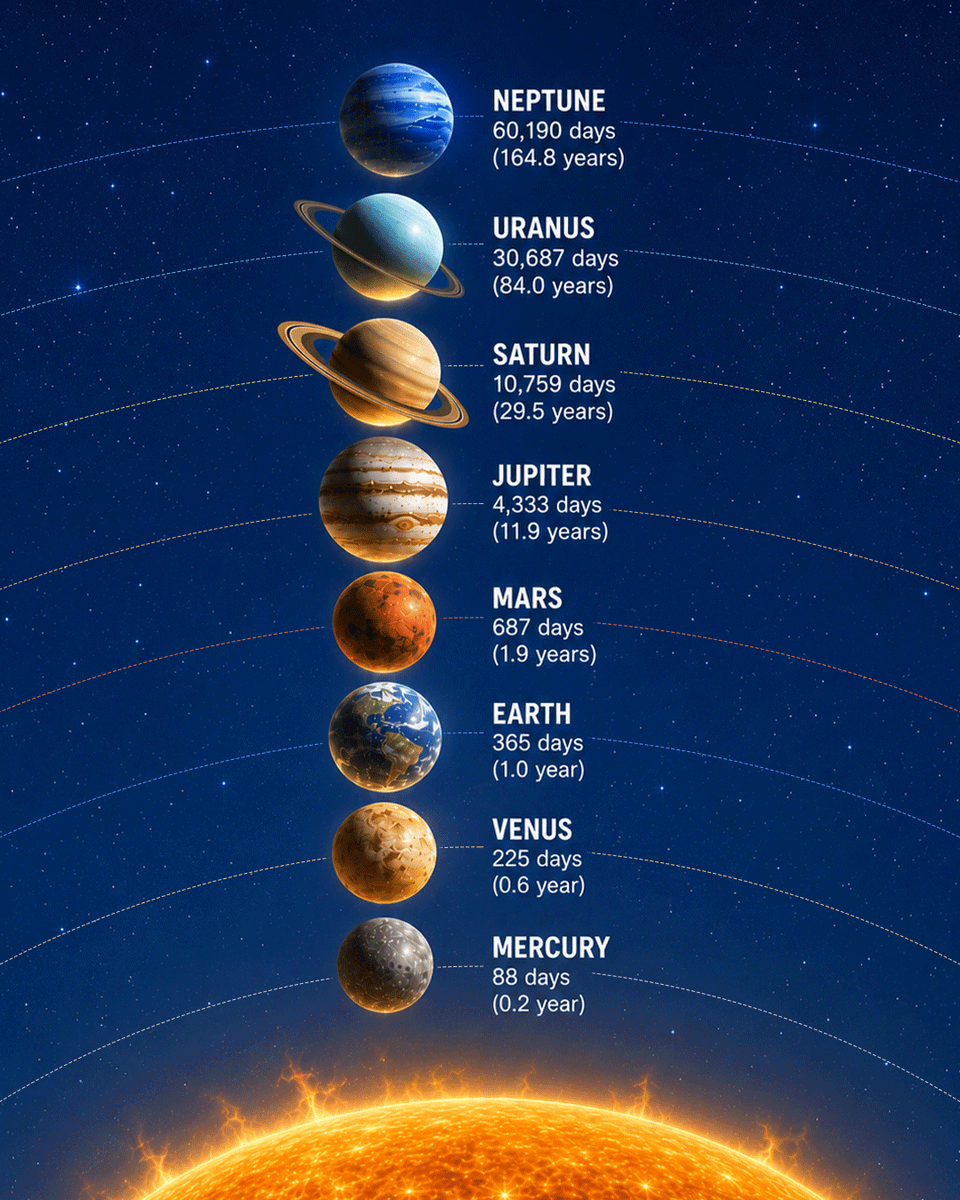
A planet’s orbital period is the time it takes to make one full trip around the Sun ☀️🪐
Because each planet is at a different distance from the Sun, their “years” are very different:
Mercury takes just 88 days, while Neptune needs about 165 Earth years.
#Planets#SolarSystem #Astronomy #Space #StarWalk
🇮🇩 Lewotobi Laki-laki volcano erupted again today (twice). The ash columns reached an altitude of about 4,084 metres (13,399 feet) & 2,500 metres (4,084 feet) above sea level.
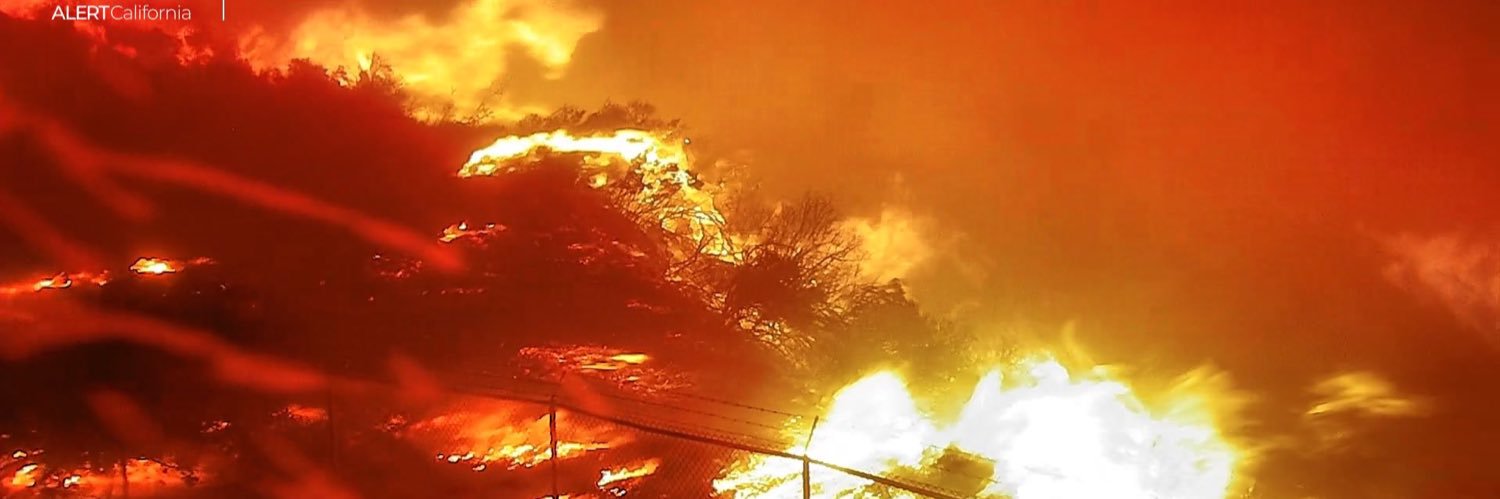
Wildfires are creating unhealthy air far from active flames.
According to a new NASA study, wildfires have worsened ground-level ozone pollution across much of the U.S. since 2015. NASA’s satellite data and models help track air quality patterns across states and fire seasons.
The supermassive black hole at the center of our galaxy, Sagittarius A*, is blowing a hot cosmic wind — something scientists have been hunting for over 50 years. ⚫More on the discovery at: https://t.co/rm9nkb4Jsf
What is happening inside this unusual nebula?
Planetary nebula Tc 1, captured here in exquisite detail by the James Webb Space Telescope, is the celestial site where buckyballs were first identified in 2010.
Buckminsterfullerene — as buckyballs are officially called — is a molecule with 60 carbon atoms (C60) arranged in the shape of a soccer ball.
The molecule is named for architect Buckminster Fuller because of its resemblance to the geodesic dome he helped popularize. Webb’s new data reveal where the C60 molecules live in this nebula, and the geometry is striking: they populate a thin spherical shell around the central star, visible here as the bright edge of the nebula’s glowing orange central region.
Look closely near the nebula’s heart and a more perplexing feature emerges: a delicate structure shaped uncannily like an upside-down question mark, fitting punctuation for the many questions this nebula still poses.
Image Credit: NASA/ESA/CSA/J. Cami (Western University); Image Processing: K. Beecroft
Text: Jan Cami (Western University) & Cecilia Chirenti (NASA GSFC, UMCP, CRESST II)
Well, well, look who's back! After several months of being hidden in the glare of the Sun, Mars is once again visible in the sky. But only for early risers – the planet appears as a small, reddish "star" low on the eastern horizon just before sunrise.
On June 1, 2026, Kīlauea volcano on the Island of Hawaiʻi made history.
Its ongoing summit eruption in Hawaiʻi Volcanoes National Park has now produced 48 fountaining episodes—surpassing the previous record set by Puʻuʻōʻō eruption in the 1980s (47 fountaining episodes).
With no signs of this eruption slowing, Kīlauea will continue to rewrite the record books with every new episode.
USGS photos/videos.
Video description: A volcano spews bright orange lava high up into the sky. A distant shot shows a tree branch swaying in the wind, as the volcano erupts lava in the distance. A final closer view of the eruption.
60 years ago today, NASA took a pivotal step toward mastering spacewalking. After Ed White’s groundbreaking spacewalk in 1965, NASA's next attempt pushed the limits of human endurance.
On June 5, 1966, Gene Cernan undertook America’s ambitious second spacewalk, battling a stiff suit, limited maneuverability, and extreme heat. Though the EVA was cut short, the challenges he faced helped shape the future of spacewalk design and safety.
Florida Forest Service Wildland Firefighters are responding to a wildfire off Seaboard Drive in Wakulla County. Please be aware that smoke may be present in the area as we contain this wildfire.
Pink/purple/blue auroras tonight? If tonight pans out and we get a major geomagnetic storm, we could see lots of purples, pinks and blues. Being close to the summer solstice the sun will never dip deep below the horizon. With the sun low below the horizon, significant parts of the northern auroral oval will be in direct sunlight. High oxygen reds may overlap with purples and blues from ionized molecular nitrogen at high altitudes, making the display rich in purples, pinks and blues. We had similar colors in the 15-16 July 2000 G5 Bastille day event (photo Javor Kac) and the 10-11 May 2024 G5 Gannon storm ). At other times, pinks and purples only occur in evening and morning hours. Fingers crossed!
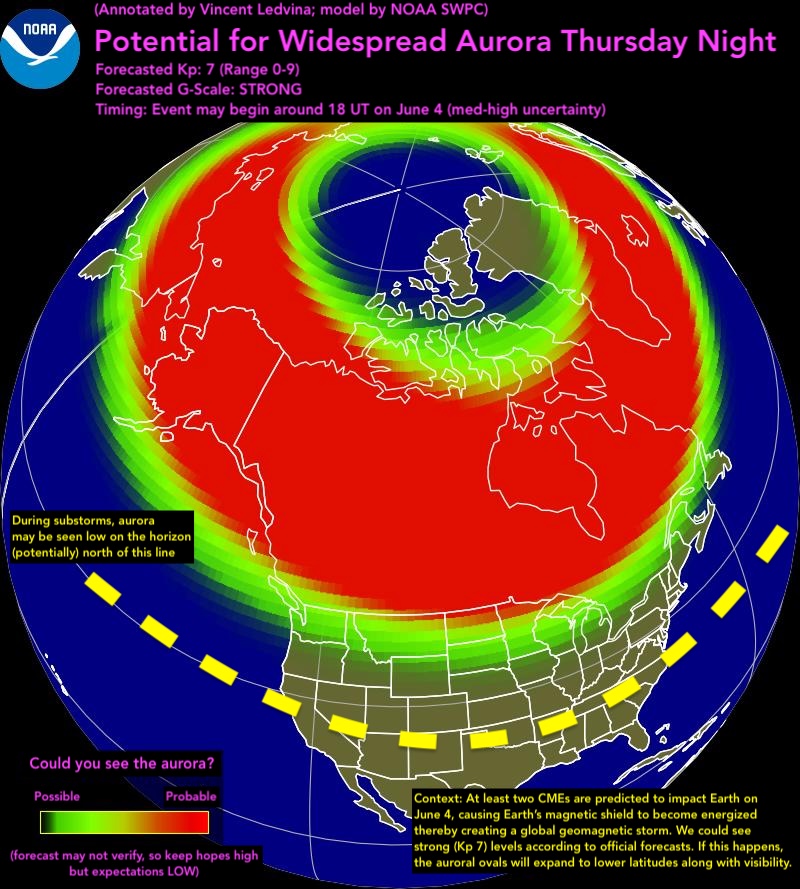
AURORA ALERT: a strong solar storm could bring the northern lights to much of the U.S. tonight (Thursday, June 4). NOAA has issued a G3 ("strong") geomagnetic storm watch for June 4 into June 5. If it pans out, the aurora may be visible across the northern states and into the central U.S., with a small chance even farther south during brief bursts called substorms.
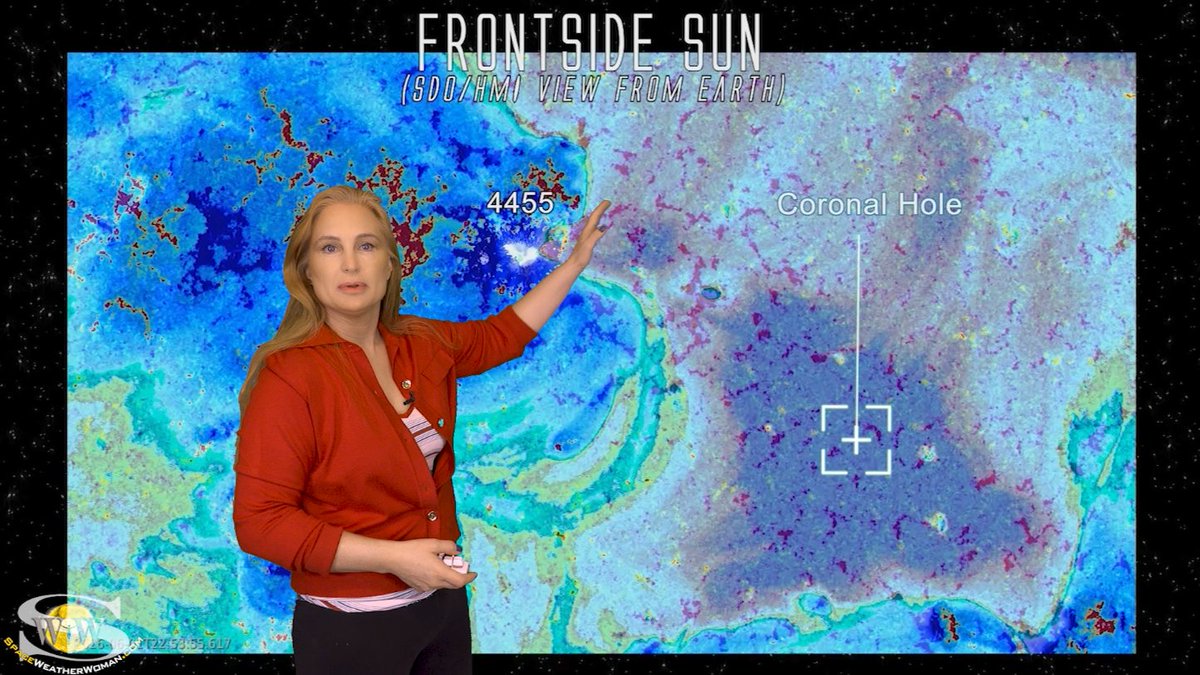
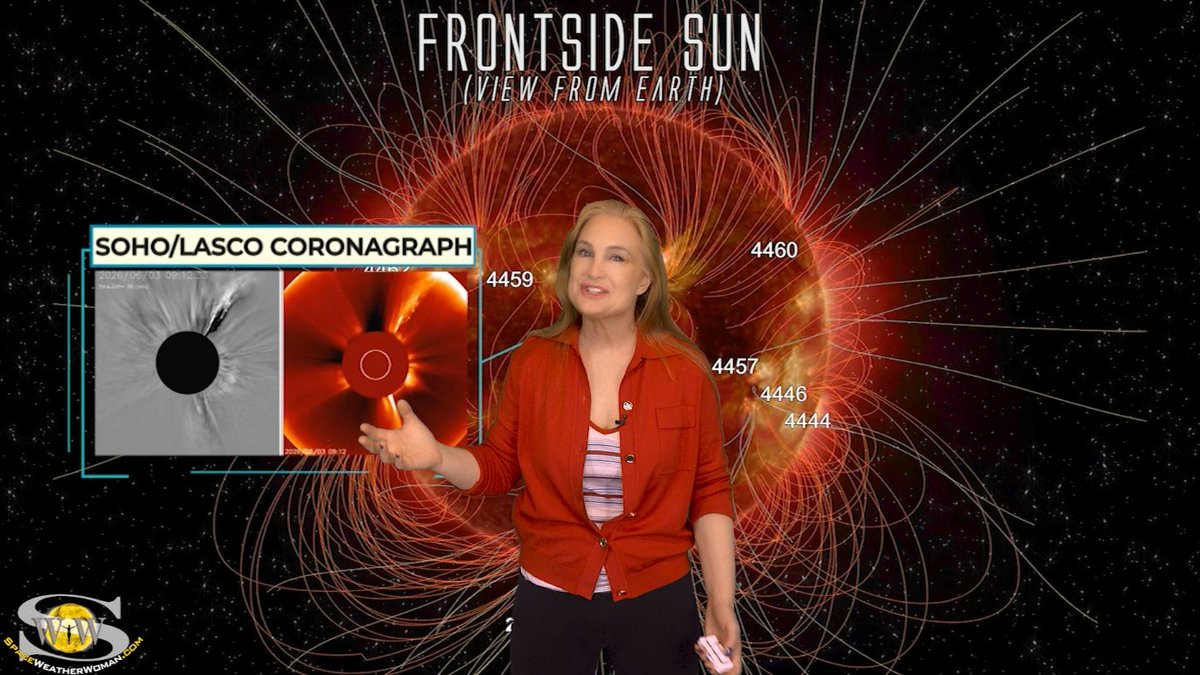
What's happening: an active sunspot region called AR 4455 fired off several CMEs (giant clouds of solar plasma) on June 3, including ones tied to an M9.5, M7.8, and an X1 flare. At least three are aimed our way and may arrive together. NOAA expects the first impact around midday Thursday (18 UT or about 2 PM Eastern, 1 PM Central, 11 AM Pacific), while NASA's model leans to the evening and another (HUXt) pushes it into the early hours of June 5. It's a wide window, so watch tonight into early Friday.
How strong: NOAA's official forecast is G3 (Kp 7), but a lot depends on whether we take a direct hit or a glancing blow, so it could land higher or lower. Don't put too much stock in pinpoint Kp numbers or app forecasts days out. Space weather is hard to predict and the storm will evolve on its own. Treat them as a sign activity may be enhanced, not a guarantee.
How to catch it: get away from city lights, find a clear view to the north, and look during the darkest part of the night. Watch for substorms when the sky can go from dark to full of color in just a few minutes. Two things working against us: clouds (even thin, high clouds can mute the show) and a bright ~80%-lit moon that rises around local midnight. Your best window is the dark gap after dusk and before the moon comes up.
The map shows roughly how far south the aurora might reach tonight. Forecasts like this don't always come true, so keep your hopes up but your expectations realistic.
A few free resources to help you chase:
Sign up for my aurora alerts + guides: https://t.co/TmXQ9bcWkT
Live aurora webcams (100+): https://t.co/6p6lf2217i
What is a substorm? https://t.co/4zGp9vcHYG
What resources you may look at but are actually NOT helpful for chasing in real-time: https://t.co/dXajNLSH25
How to read the HUXt model: https://t.co/gWx1zGXjeB
Support these free alerts on Patreon: https://t.co/8f4dgCQHIs
@TamithaSkov This is my 2025 Solar Storm Activity Analysis Report I wrote last year. I am in the process of writing another report for 2026.
https://t.co/xb0PuiFDAc
Fashionably late: The expected solar storms have yet to arrive, but they are drawing near! Learn the details of the 4 solar storms on their way, find out why Region 4455 has been so unstable, and see where aurora might be visible. Also watch the recent X-flare disrupt satellite signals for a short bit! https://t.co/8LNVwFGFZH
Our Sun wakes up! In the last 6 hours, our Sun launched 3 gorgeous solar storms. Two are off the east limb, but Region 4455 is right in the middle of the Earth-strike zone and is firing one straight at us now! This one is launched on the heels of an M3.3-flare, so its got a little kick. Waiting for more data to come in, but this could finally give aurora photographers at mid-latitudes something to celebrate! Early estimates show arrival possible by late June 4 or early June 5. Stay tuned!
Since arriving at its destination five years ago, our Perseverance Mars rover has collected data that hints at a history of past life on the Red Planet.
Catch up on Percy’s biggest discoveries in this week’s episode of our Curious Universe podcast: https://t.co/J5dh8FhHjw
The Disaster Operations Centre in Abuja, Nigeria, opened in June 2023, adding to the African Multi-Hazard Early Warning System for Early Action.
A warning of just 24 hours can reduce ensuing damage by up to 30 percent.
Read more 👉 https://t.co/Ai17Q5grVM #EarlyWarningsForAll
This is WILD! Houston the other morning. Clouds formed perfectly above the roads early AM. Yes it is true. Many mets are talking about and something very few have seen before. You can actually see the outline of the roads here. Humid and warm conditions heated up the roads faster than surrounding areas allowing this. Light winds helped these clouds rise and stay in place. I am sure traffic also contributed. Crazy!
For those who hadn’t seen already, there are currently three coronal mass ejections en route to the Earth (launched by solar flares on the Sun yesterday). We are expecting these eruptions to merge together, reaching Earth and triggering a strong geomagnetic storm tonight!