How to set up Claude the right way:
(so you actually stop going back to ChatGPT)
1 - Know what's chat vs. cowork vs. projects.
2 - Small tip: Use cowork most of the time.
3 - Best tip: Use cowork + projects is even better.
To download all of my other Claude infographics:
Step 1. Go to https://t.co/psB7XxAv8w.
Step 2. Subscribe for free. Don't pay anything.
Step 3. Open my welcome email (most skip this).
Step 4. Hit the automatic reply button inside.
Step 5. Download my infographics from my Notion.
Bonus. Enjoy my best copy-paste prompts, too.
You now master Claude within 5 minutes.
But if you have 50 more minutes, read in this order:
Claude 101 full article: https://t.co/jw2qdIbLxJ
Claude Cowork (full guide): https://t.co/uWTpOI3oyE
Claude for Teams: https://t.co/qxlcqheAme
Follow me (I'm @rubenhassid) for more.
Glycine successfully treated OCD + body dysmorphia in this study.
This patient struggled with these conditions for years until high dose glycine was initiated.
The idea here is essentially:
NMDA dysfunction → glutamate spillover → hyperexcitation via other glutamate receptors → OCD circuitry overactivity.
Glycine plugs in as an NMDA activator, which stops this at the source.
Other studies show some promise for glycine in OCD.
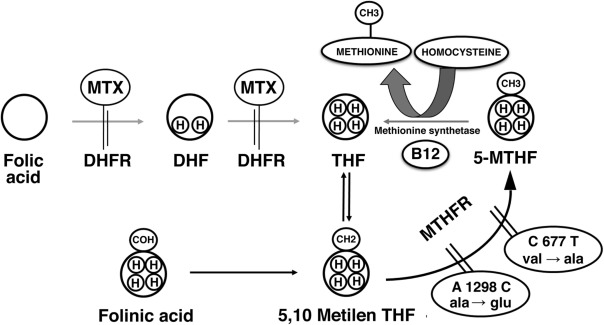
A lot of people with MTHFR mutations are told to take methylfolate and methyl-B12. For some, it works great. For others, it causes anxiety, irritability, racing thoughts, and insomnia.
Nobody explains to them why this happens. Here's the leading hypothesis:
Methylfolate and methyl-B12 increase SAMe, which is your body's primary methyl donor. SAMe feeds COMT, the enzyme responsible for breaking down catecholamines like dopamine and norepinephrine.
If you have slow COMT variants (which is quite common), you're already dealing with higher catecholamine levels at baseline. Adding extra methyl donors into this equation may amplify that buildup in sensitive individuals.
This is why many clinicians in the functional medicine space have success switching these individuals over to hydroxocobalamin and folinic acid.
Hydroxocobalamin is a non-methylated form of B12. Your body can still convert and use it, but without dumping a heavy methyl load into the system all at once.
Folinic acid works on a similar principle. It supports folate-dependent reactions but bypasses the direct methylation pathway that methylfolate pushes.
Together, these two forms give you the cofactor support you need without overwhelming the very pathways that are already struggling to keep up.
No large scale studies have confirmed this yet, but it's a well-recognized clinical pattern so it’s worth discussing. If you've taken methylated B vitamins and felt worse, this MAY be why.
Cool new study in AJP (@APAPubJournals) showing that #memantine 10–20 mg/d appears effective as a treatment for #BFRB disorders (trich/skin picking). Great new option for patients with these often overlooked and difficult-to-treat conditions.
https://t.co/SYBsHjCYOW
Memantine: An Underutilised Agent in Psychiatry 🚀💊 ( an old post)
Find out why 👇
MOA 👉reducing NMDA excitotoxicity due to glutamatergic over-activation 🧠
NMDA receptors' locations: 🧠
1. DLPFC: Influences executive function
2. Ventral Tegmental Area: Houses dopaminergic neurons, essential for reward processing, salience etc
3. Hippocampus: Central to memory, learning, and emotion.
4. Amygdala: stress responses
Memantine vs. Ketamine ✅
👉Memantine predominantly affects extrasynaptic NMDA receptors which mediate excitotoxicity as opposed to synaptic receptors ( Neuronal transmission - LTP)
Thus 👉minimising side effects related to synaptic inhibition.
👉Ketamine impacts both extrasynaptic and synaptic receptors ( responsible for greater side effects)
👉Memantine's favorable dissociation rate enhances tolerability, whereas Ketamine's prolonged receptor binding correlates with increased potency but also tolerability challenges.
Clinical Insights :
👉I find Memantine's efficacy unfolds over time, and is best used an augmentation strategy.
It’s the longer term stability that I’ve noticed - 3 -6 months onwards
👉Borderline Personality Disorder : emotional regulation, impulsivity, SH
👉Repetitive behaviours : OCD, trichotillomania, skin picking disorder
👉PTSD (as an augmenting agent) - intrusion phenomenon, cognition , emotional aspects
👉Pain syndromes ( esp if above comorbidities)
👉Behavioural disturbances in dementia
👉Cognitive deficits in schizophrenia
👉Neuroinflammatory conditions e.g CFS / LC / Fibromyalgia ( see areas targeted)
👉emerging in ADHD treatment ( repurposed)
‘Side effects’ I’ve noticed patients tell me 👉my binge eating is down.
👉lowered ‘urges’ to act on compulsions in OCD
Tolerability Profile:
👉Gastrointestinal side effects are common but generally self-limiting; go slower if this occurs.
🤔Imo Memantine should be in your armamentarium of agents BUT in psychiatry it’s benefits are best as an augmentation (on its own it ‘fails’ due to time factor and MOA )
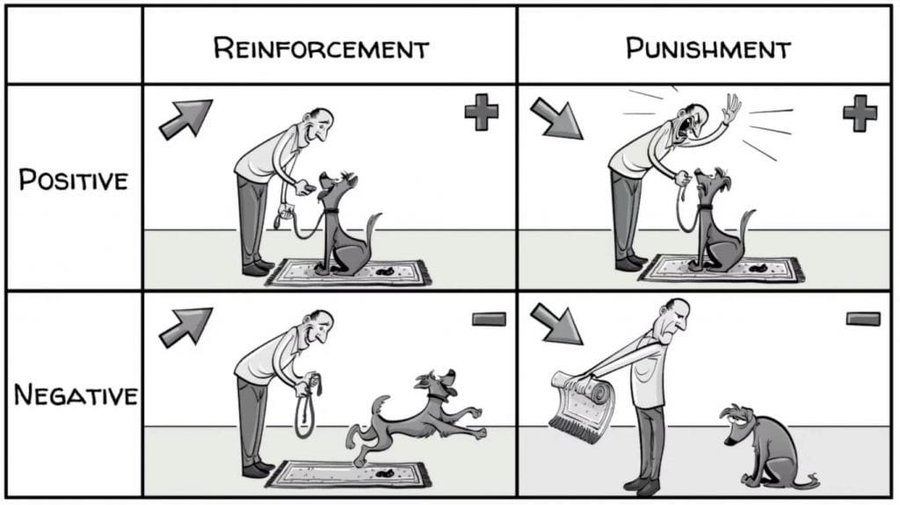
8. Skinner's Law:
When procrastinating, you have 2 choices:
1. Make not doing it more painful than doing it.
2. Make doing it more enjoyable than not doing it.
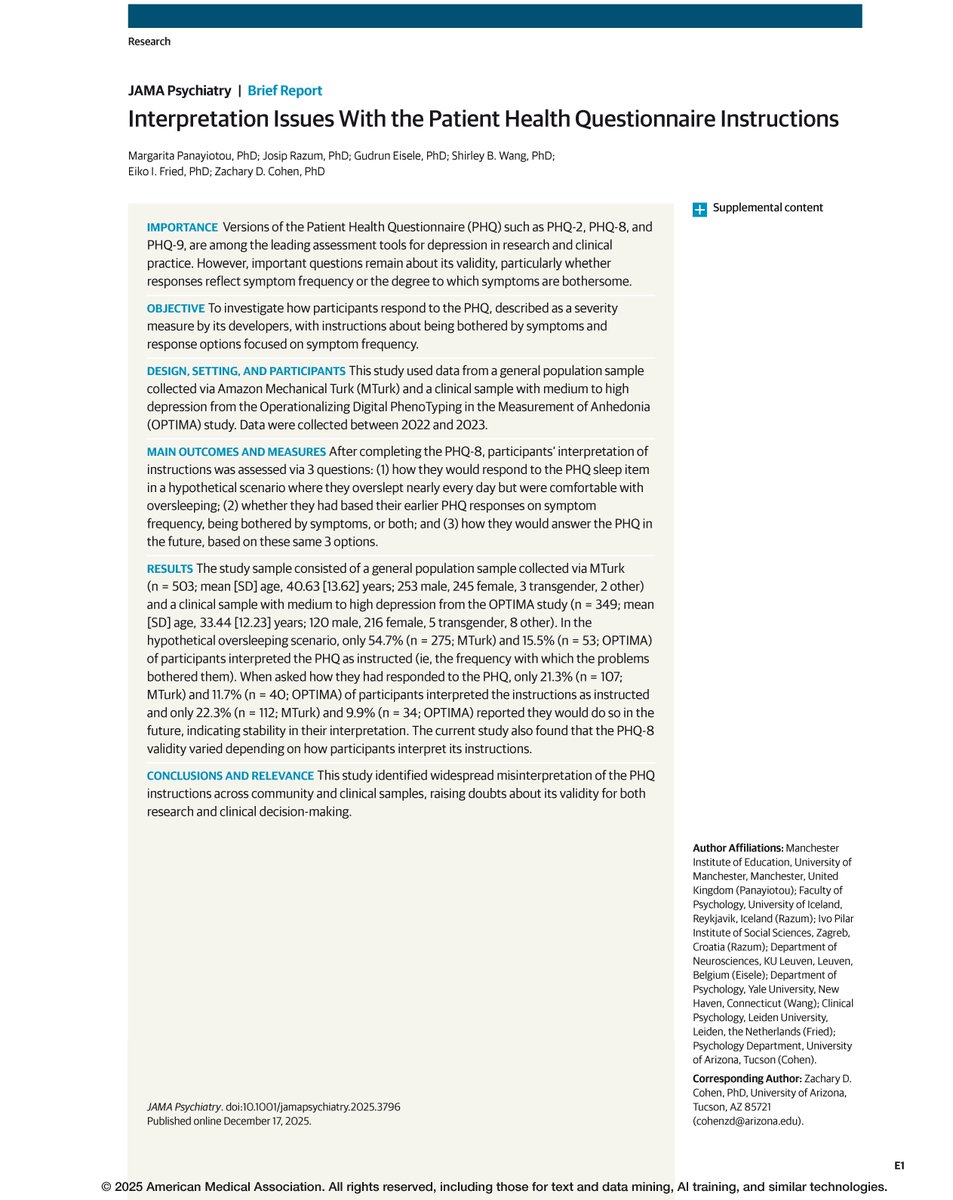
Survey study identifies that most patients with depression interpret the Patient Health Questionnaire instructions incorrectly, raising questions about its validity for clinical and research use. https://t.co/FNfkKMLrEK
Evening caffeine delays your internal clock
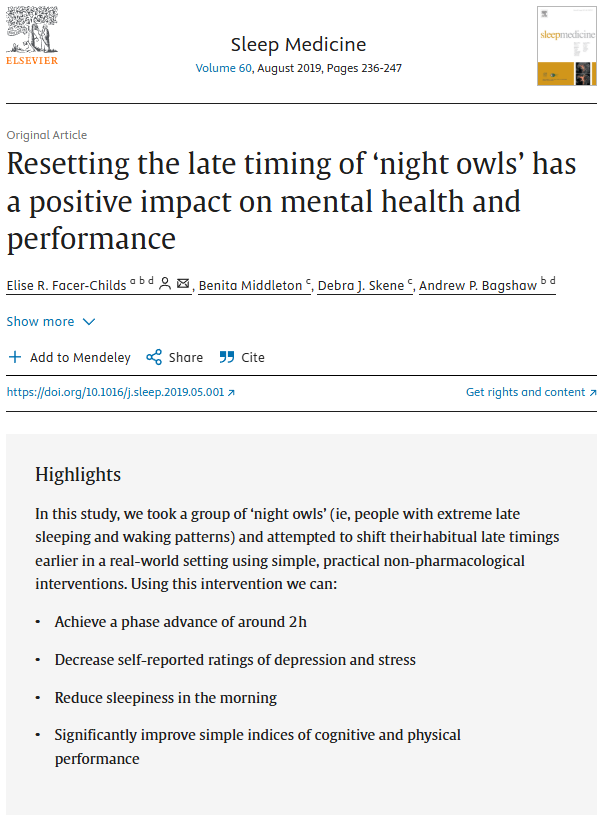
Caffeine (~200 mg) 3 hours before bed delayed melatonin circadian phase by ~40 minutes, about half the delay seen with 3 hours of bright light (~85 minutes)
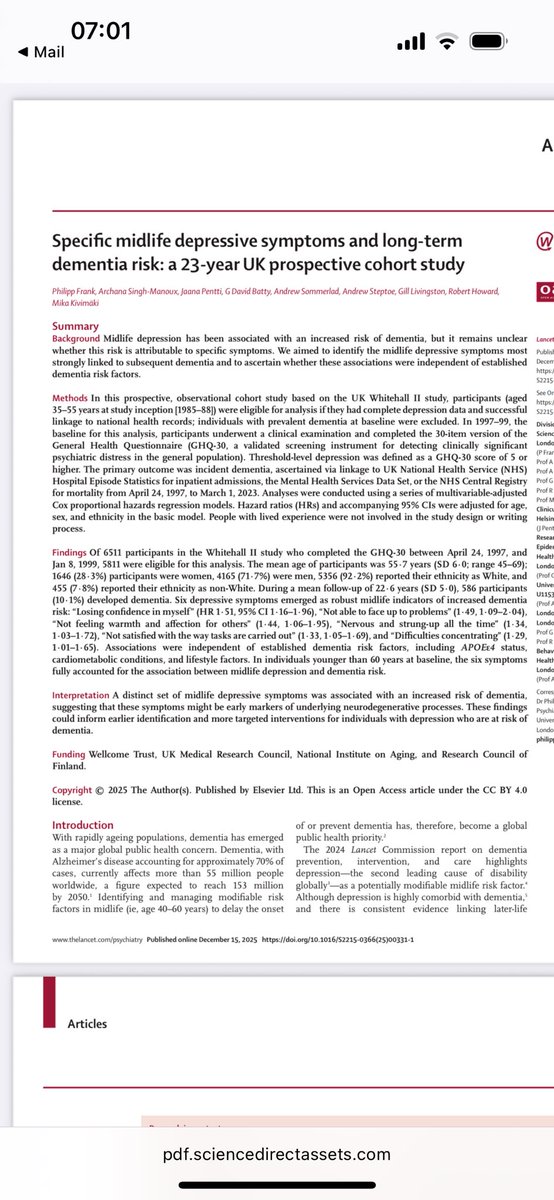
Just out - we show that six symptoms of midlife depression are associated with the later development of dementia. Publisher’s link not working, so here is a snap of the Abstract.
@RobynPorteous Aah Robyn , my heart breaks for you, I have followed your story since the awful accident. I can't imagine the pain.
Your dad holds a special place in my life since he treated me so kindly when I was sick as a junior doctor .
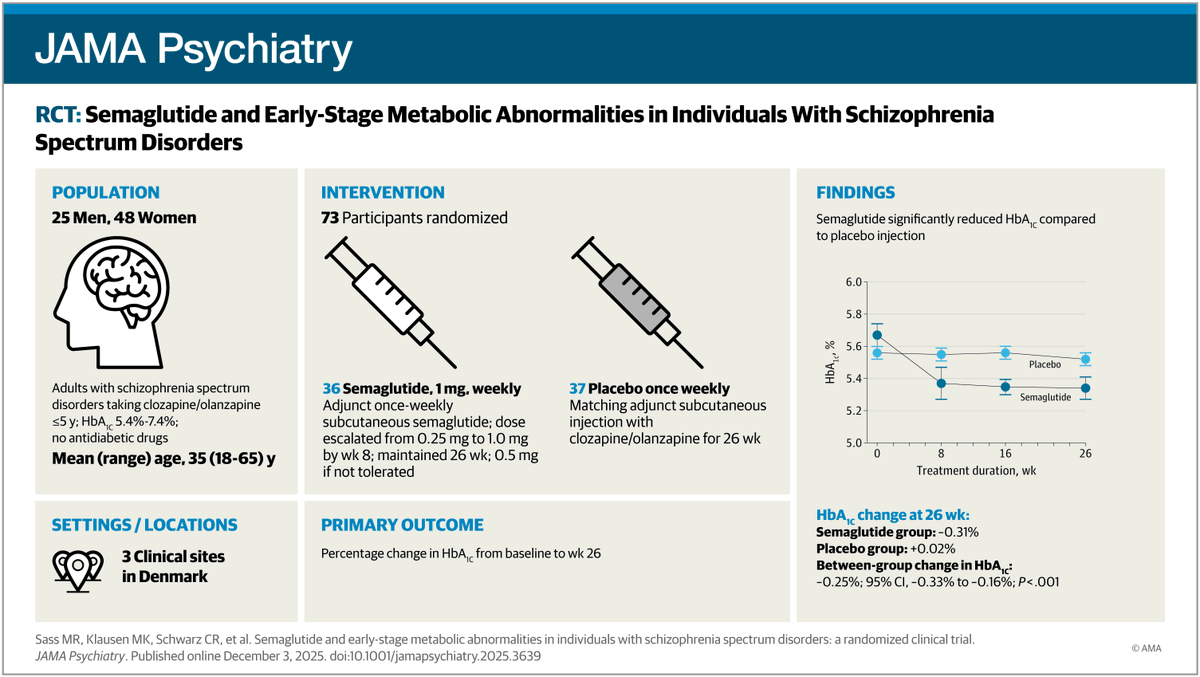
🚨 Semaglutide prevents antipsychotic-induced metabolic effects
» RCT of 73 adults w/ schizophrenia on clozapine or olanzapine
» Early-stage glycemic dysregulation (A1c: 5.4%-7.4%)
» 1 mg semaglutide vs placebo
43% of semaglutide → glycemic control vs 3% in placebo
When people say
“ADHD gets better with age,”
they’re usually picturing
hyper little boys who grow into men
who just look less restless on the outside. Meanwhile, peri/menopause pulls the rug out from under an entire generation of women —their ADHD gets louder, they’re hanging by a thread,
and feeling like they’re losing their sh*t.
XO, Dr. Jen
Burnout isn't about how much grit or willpower someone has. It is a mismatch between human needs and workplace demands. Here's what can be done about it. https://t.co/fIIjUCj6fn
One reason why some people experience higher levels of emotional well-being is that they use more effective ways to regulate their emotions. Here's how they do it. https://t.co/9AZo9fDaR7
New slide deck: Neurobiology and Aetiology (developed by Prof. Iiris Hovatta)
Anxiety and fear responses are like smoke detector signals – it is safer to avoid missing true positives and accept the occasional false positive than it is to miss a true positive. This can lead to responding to "false alarms", propagating a fear / anxiety response. Fear / anxiety circuits (amygdala–hippocampus–insula–mPFC) and learning processes (conditioning and extinction) shape symptoms, predisposed by genetics and epigenetics.
This slide deck walks through core concepts and evidence across fear and anxiety responses, including threat conditioning and fear learning, neuroimaging and neurocircuitry, genetics and epigenetics, the microbiome and interoception, sex differences, as well as where biomarkers stand today (and why none are currently diagnostic).
Explore, download, and use the slide deck here:
https://t.co/KuMZoI4smE