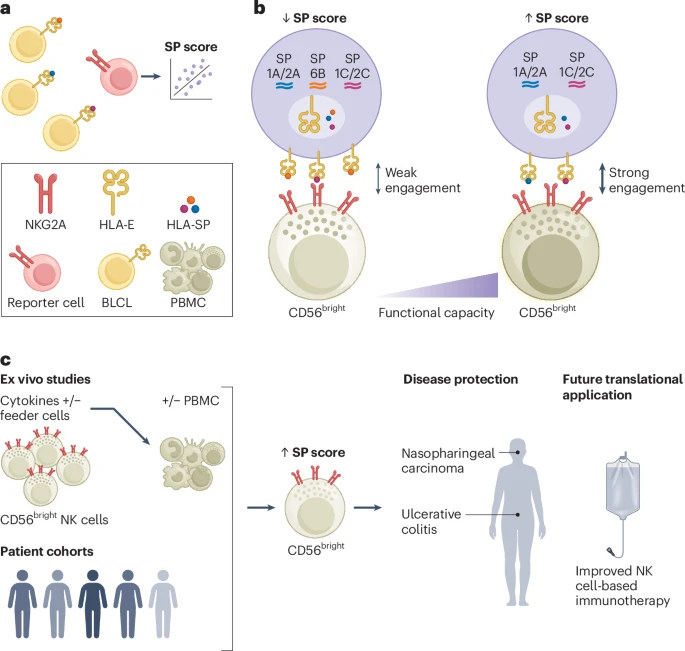
@MalmbergLab commentary on the recent Carrington Lab paper
A genetic set-point for natural killer cells
https://t.co/ULbd3i57i1
@NatImmunol
https://t.co/pRhIocGVSk
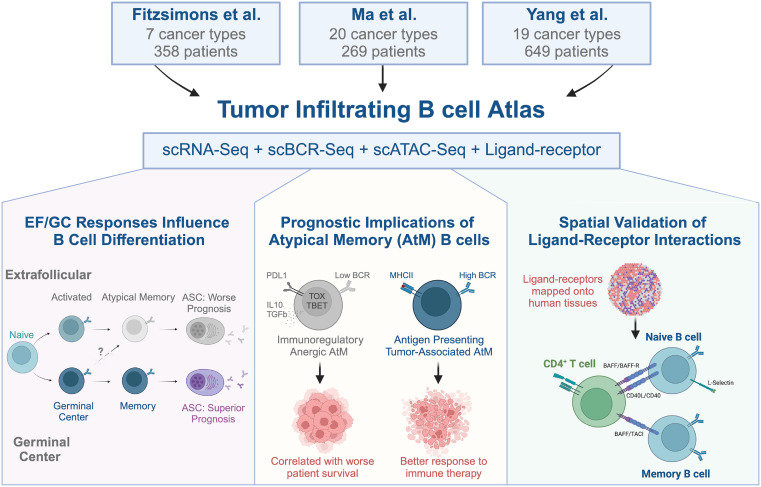
Shi Yong Neo et al. show that atypical memory B cells can be immunosuppressive & found within peripheral blood and tumor microenvironment of hepatocellular carcinoma patients: https://t.co/DOPpMmN8ON
Proud to share our group latest paper in Nature.
"Spatial immune scoring system predicts hepatocellular carcinoma recurrence."
A game-changer for early-stage HCC management - high risk patients benefited from Immunotherapy - Dawn of Spatial Medicine?
https://t.co/By3EcRUYTB
Our study introduces the AI-powered TIMES scoring system, leveraging Spatial Proteomics to predict hepatocellular carcinoma (HCC) recurrence with 82.2% accuracy. Key finding: SPON2+ NK cells at the tumor’s invasive front lower recurrence risk by boosting IFN-γ and cytotoxic activity.
#CancerResearch #HCC #Immunotherapy
@mysgh@astar_research@dukenus@sitcancer@asdp_ai@MICCAI_Society
New findings cast light on the role of understudied DN3 #MemoryBcells in cancer, and shows these cells correlate with progression and poor clinical outcomes in #HNSCC and melanoma. @BcellBruno@AyanaTRuffin@Pitt_PMI https://t.co/D0sb7lG8uo
Online Now: Contrasting cytotoxic and regulatory T cell responses underlying distinct clinical outcomes to anti-PD-1 plus lenvatinib therapy in cancer https://t.co/H8aXmgT7OG
Excited to share our new paper in @JExpMed 🎉 We show that NK cells use autocrine TGF-β1 signalling to establish tissue residency, form a highly cytotoxic subset, and protect the tissue against viral persistence. https://t.co/EkLtWAPWZo
Disseminated tumor seeding cells utilize the PGE2-EP2/EP4 axis to induce NK cell dysfunction and immune escape following organ colonization @CellReports@JBoettcherLab @AMPedde
https://t.co/2Gc4GnurLw
Comprehensive snapshots of NK cells functions, signaling, molecular mechanisms and clinical utilization
@jounaidiy@sigtrans_sttt
https://t.co/z0tNuTexiY
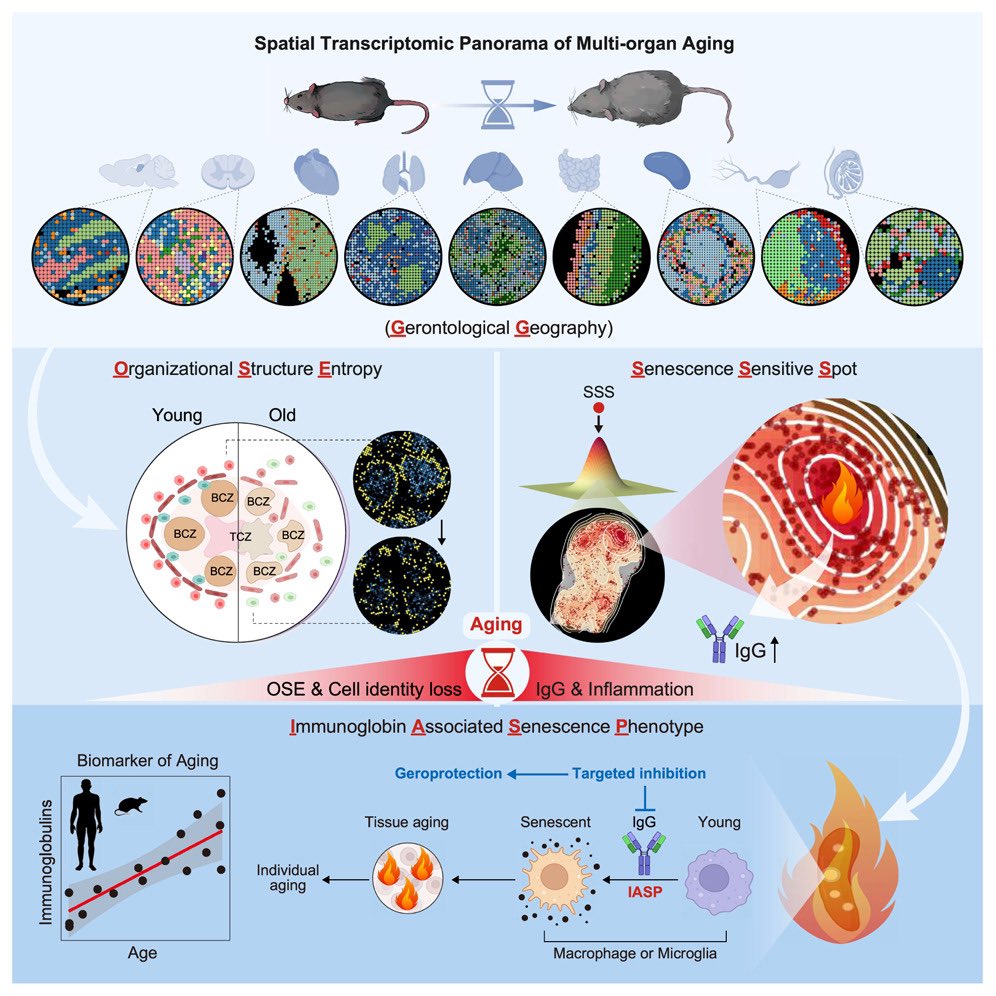
New @CellCellPress resource:
Spatial transcriptomic landscape unveils immunoglobin-associated senescence as a hallmark of aging
https://t.co/IE1lRHWmpD
Impressive dataset of aging associated transcriptomics alterations across multiple tissues that identifies immunoglobulin-associated senescence (IgGAS) as a marker of aging.
Conducted using the @ST_Omics Stereo-seq platform.
Dietary nucleic acids expand small intestine IELs via MAVS/STING/TBK1 induced IL-15, with IEL TGF-β1 promoting activation of gut CD103+ DC that induce antigen-specific Treg cells & oral tolerance
https://t.co/BaRJQCZFRA
NK-cell-specific Trp53 disruption in mice leads to the development of NK-cell lymphomas after long latency, and highlights CXCL16, KLRG1, and MYC as potential therapeutic targets in ENKTCL
https://t.co/fczdMlkmrd
nBregs & early-life microbiota
Newborn regulatory B cells (nBreg) autocrinally regulate IgM via IL-10. mAbs from intestinal nBregs react against diverse bacteria, highlighting role of nBreg Abs in microbial diversity & early-life microbiota communities
https://t.co/imQpOmsfyo