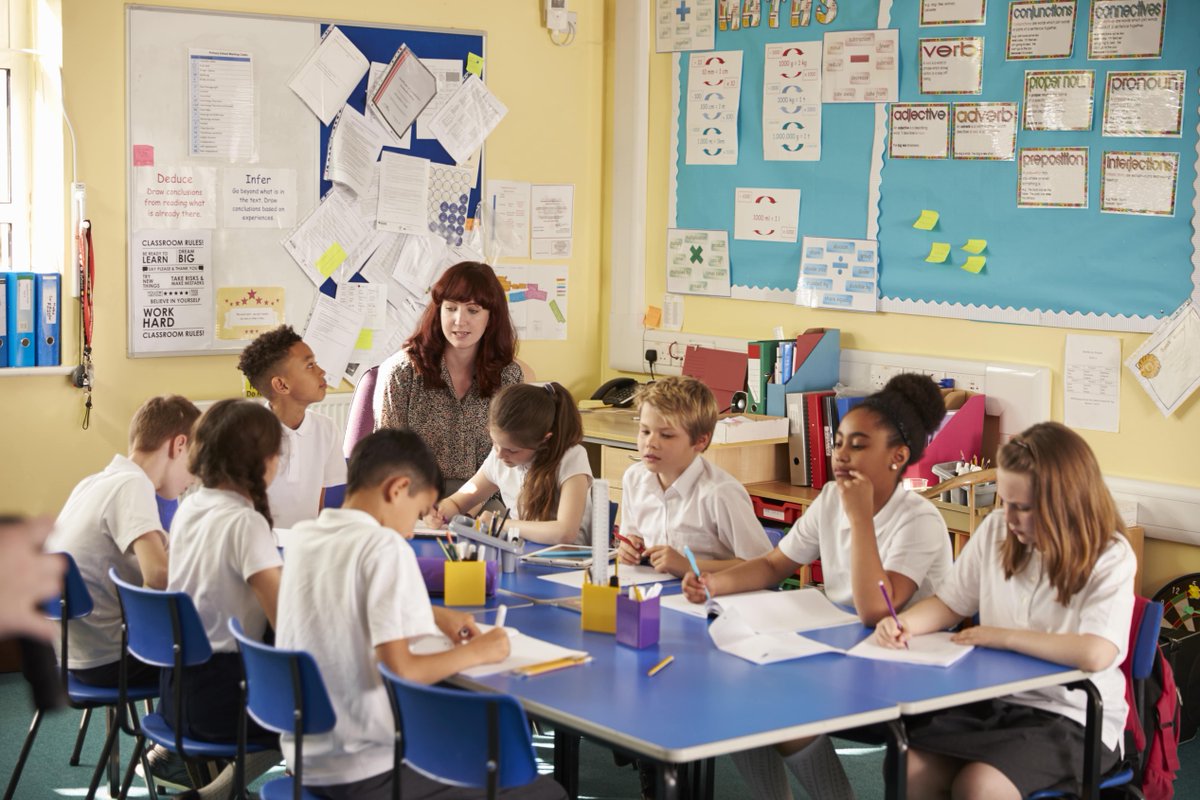
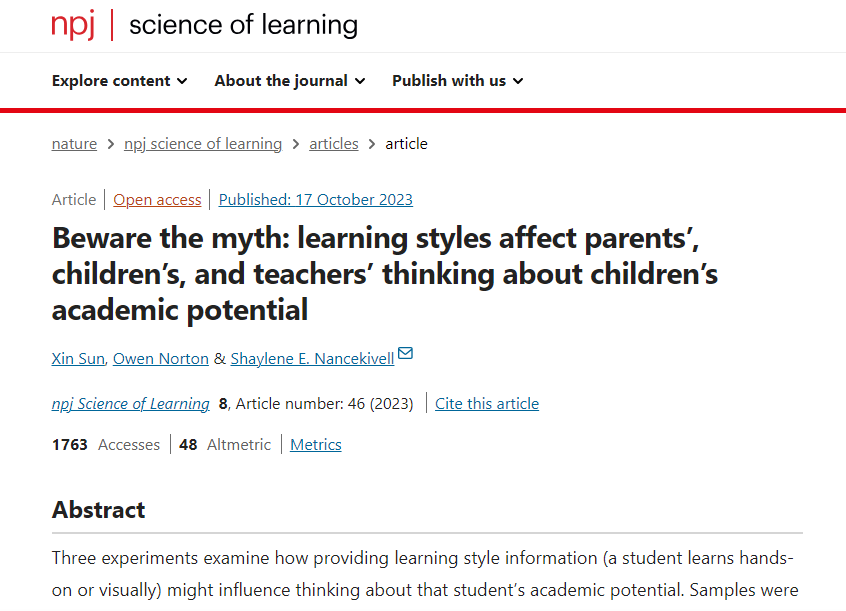
Our @EducEndowFoundn Cognitive Science in the Classroom Review is out! There is a full report and a shorter, more digestible summary report. Last week’s #CogSci preview talk from @TWPerry1 here: https://t.co/1t4Pj5jQvv. I’ll attempt to summarise below... 🧵 (1/25)
NEW EEF evidence review - 'Cognitive Science in the Classroom'
With findings drawn from a systematic review of the best available evidence, in addition to a review of current practice.
More info: https://t.co/8IjF9efx2H
Download here: https://t.co/6Cmnl0UF6C
Laura Spence introduces the newest EEF resource ‘Clips from the Classroom’.
“The platform enables the sharing of approaches and professional expertise at a level that hasn't been easily accessible before now.”
https://t.co/HA9odhdBvR
Do babies develop accents even before they can speak conventionally?
The short answer is yes… and these linguistic markers begin even sooner than you might think.
So many of you tagged me in this video yesterday featuring an infant that babbles with the same Scouse accent as his mother.
Other than “no” he doesn’t speak a single conventional word, but listen to how the rhythm and intonation of his vocalizations mirror those to which he is exposed daily.
As hearing becomes functional during the third trimester, infants are exposed to the distinct patterns of their mothers’ native language - with studies suggesting newborns can already distinguish (and prefer) what will become their native tongue only hours after birth.
Incredibly this learning doesn’t wait until the babbling stage to evidence itself.
Research suggests that even the cries of newborns reflect this preference.
That’s right: babies cry with an accent.
One major study on the topic showed that French babies cry with a rising intonation, while German infants favor a falling melody - both reflecting the patterns of their native languages.
We’re only just beginning to understand the deep learning that begins in utero. It’s just more evidence that the period from prenatal to three is the most critical window in all of human development.
This little Liverpudlian was shared to TT by iamcustardpot.
Imagine if there was a free, service for schools to evaluate the impact of 1-1 and whole class interventions.
Imagine if it gave you robust research methodology, and ease of use.
Imagine no more. Just have a go. @WhatWorked
https://t.co/ZybeRYDIXr
📣 Calling school headteachers, college principals and early years managers!
We’re working with @ESRC on a new research project to find out what motivates you to take part in education research.
Find out more: https://t.co/YA24pNLttE
We’re hiring two permanent research officers for our lovely synthesis team @EducEndowFoundn - a great opportunity for folks interested in education research and evidence synthesis! Deadline 10th March 😊 https://t.co/CoFva3pYrs
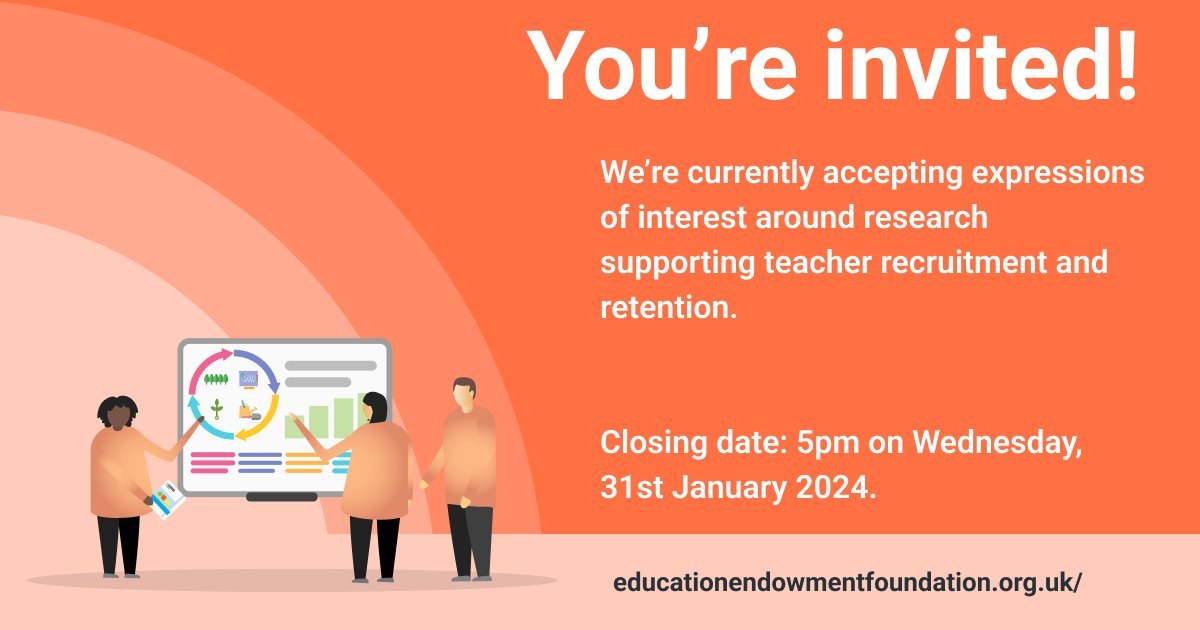
📢 Our new funding round is now open to research organisations looking to investigate how teachers can be best recruited and supported, particularly in areas of socio-economic disadvantage.
More info: https://t.co/KfYOVapgiP
1/2
🚨NEW: 2023 EPI Annual Report shows the disadvantage gap is widening across all education phases🚨
📝We have published the second & final phase of our EPI Annual Report on the attainment gap between disadvantaged pupils and their peers.
Read the report: https://t.co/xUGV6b961g
🌟 Today, we’ve published three new evidence reviews looking at strategies to support teacher recruitment and retention, as part of our flagship research theme for 2023.
Find out more: https://t.co/hjGlVfTFV2
1/4
Interested in research on cognitive load? I recommend this special issue: https://t.co/x5z0WM4I7d. E.g. Endres et al show that sometimes prior knowledge can increase CL (when teaching complex systems pupils with little knowledge can underestimate the complexity of the problem).
📢➡️JOB OPPORTUNITY - Come and work with us!
Assistant/Associate Professor in the Department of Education Studies (@Warwick_Edu) at Warwick Uni. Details here: https://t.co/RC70cb0iXD
📚 The 'Teacher Choices' pilot trial with @NFERClassroom on 'The Story Time', aimed to assess the effectiveness of two whole-class reading aloud approaches in primary schools.
Find out what the teachers and pupils who took part in the trial thought.
👉 https://t.co/QZU8jg0CK6
New paper just out. Free open access. Summarises our work on how best to use "additional" funding for schools to improve outcomes and reduce the poverty outcome gap.
https://t.co/OSsBEjOa2K
@harry_madgwick Thanks for sharing, Harry - a treasure trove of educational memories through the years! Joyce sounds like a fab person and a credit to education, you must be very proud.
New article by @orhanagirdag and me shows positive impact of the High Performing Schools improvement programme in the Netherlands. Points to power of CPD and need for intervention at all levels (leadership, classroom teaching, culture). https://t.co/2IUwwty6Lv