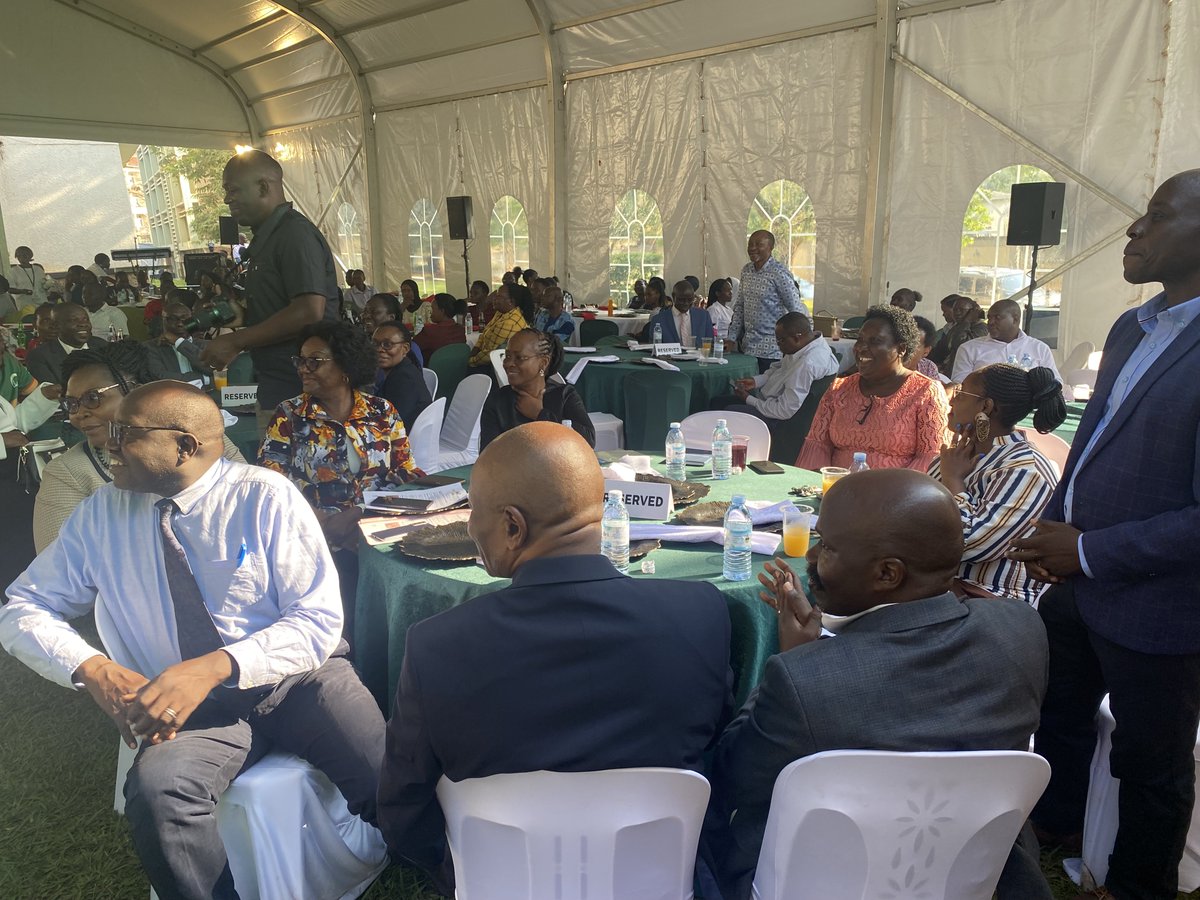
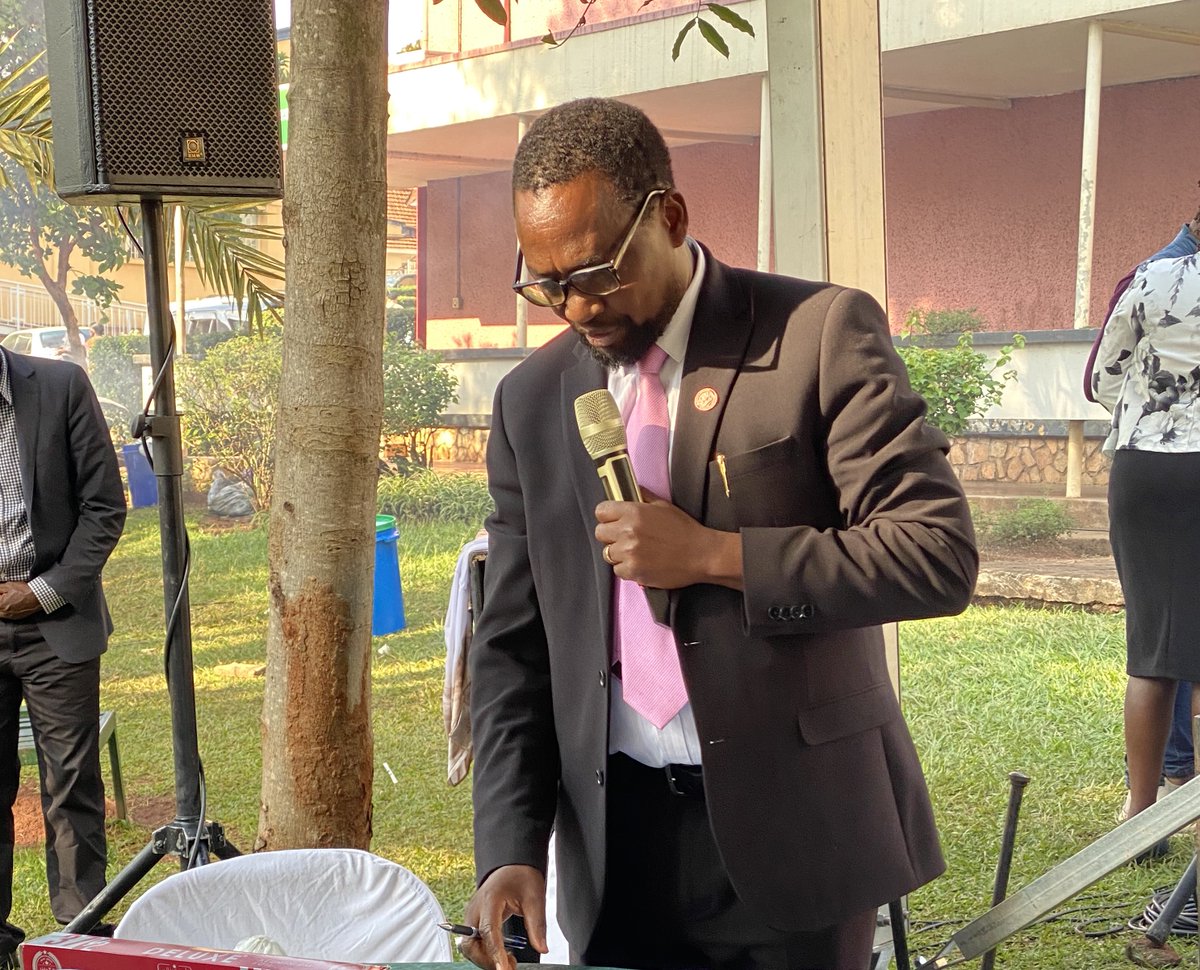
Our patron @SabrinaKitaka, Dean @MakCHS_SOM (Prof. Annette Nakimuli), Former MUMSA President @AtukundaAnneR, and Deputy Vice Chancellor in charge of Academic Affairs @Makerere (Prof. Sarah Ssali) at the MUMSA Finalists’ Dinner
Don’t ask me why the 1st rows were empty 🫡🥰🇺🇬😂
So much love for Prof. Kagimu 🙌🏾🔥You mentored us alongside our consultants who were also permanently on fire 😄🔥.
In fact, the fear was so real that even our own teachers found the first rows difficult to occupy 😂😂🫡🫡.
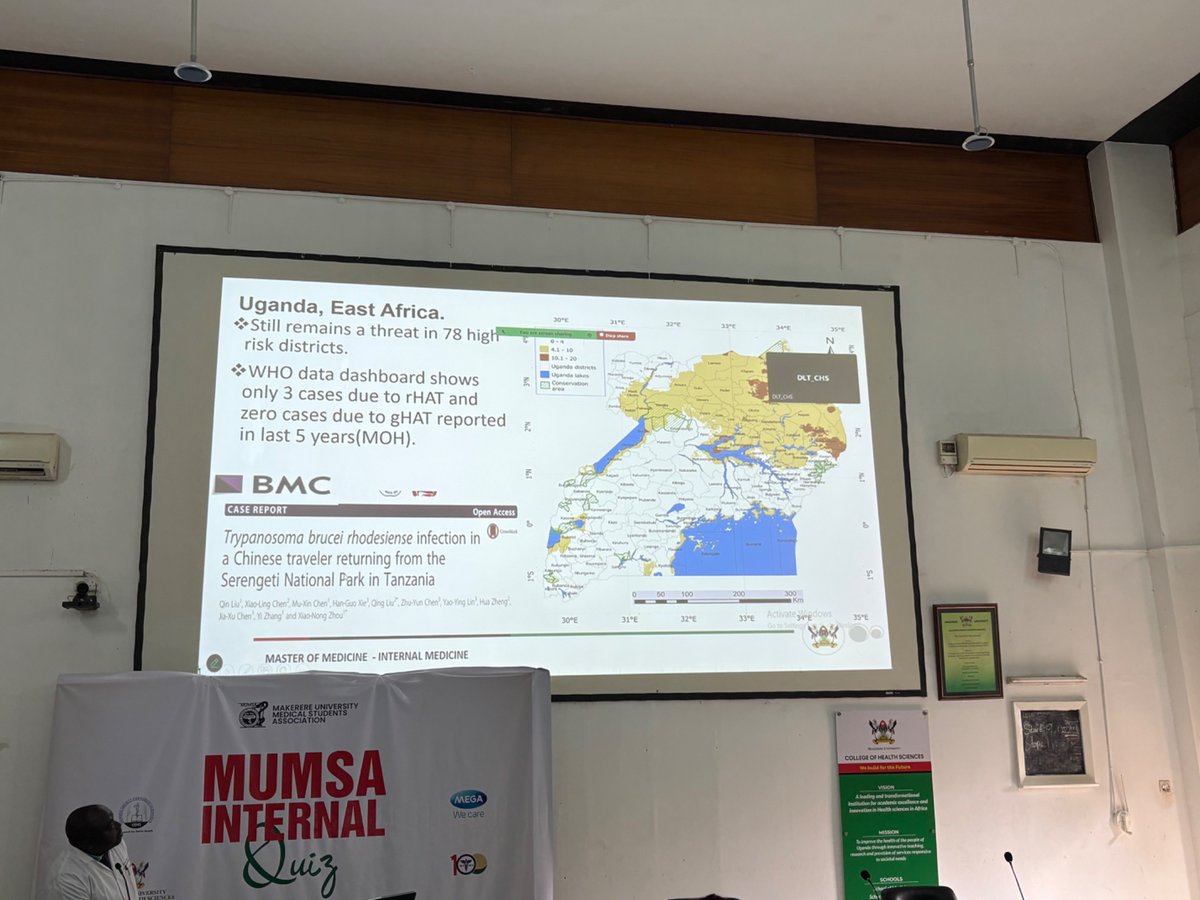
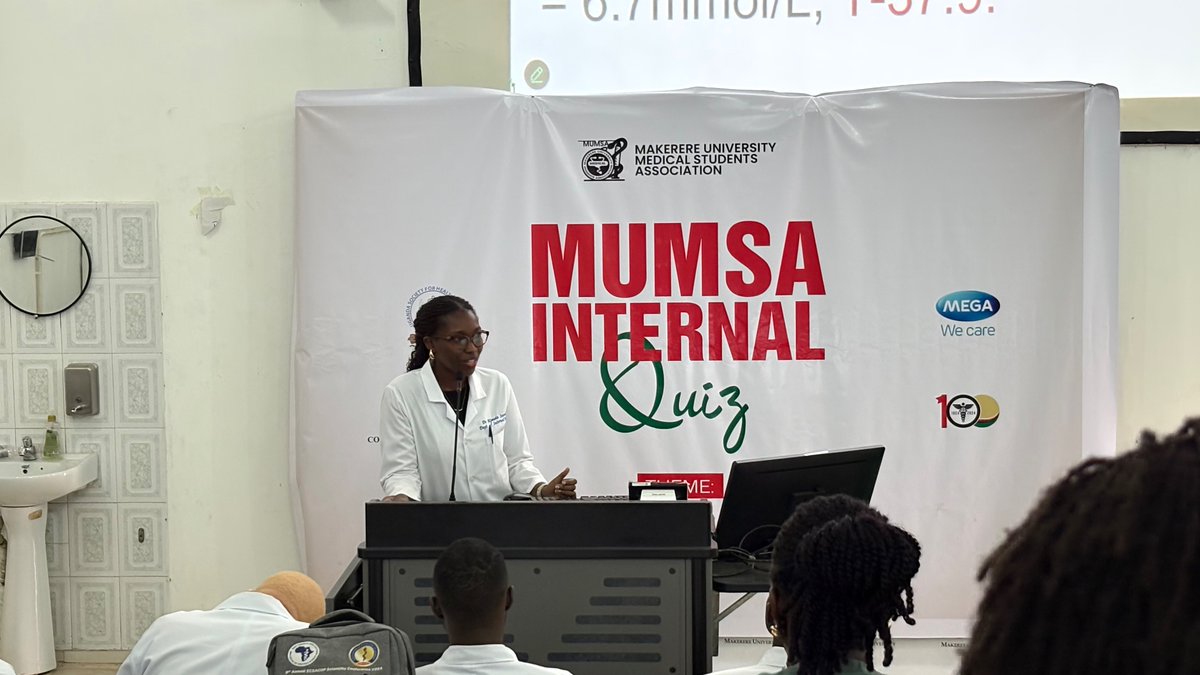
As promised, exciting and rare. The ID team presented a case of CNS trypanasomiasis. Interesting presentation. @SemitalaFred said the last patient he saw with it was in 2006. Have you seen any?
This morning, the Infectous Diseases ward @Makerere@MulagoReferral presented a 22 yr old herds woman, a with malaise, undulating fevers, headaches, hypersomnia, weight loss for a month. Had GTC seizures with reduced consciousness for a day and was hypotensive at admission. She was diagnosed and managed for trapanonosomiasis.
Whats the most recently discovered drug for this disease?
The @MakerereCHS Principal, @brucekirenga, has hosted College teaching, administrative and support staff to an end-of-year party in the Dean's Gardens. The party was organized by the Schools of Dentistry and Health Sciences to recognize the contribution of everyone to the mission of health professionals' education throughout the year.
Kudos to our own @emmyrov, on being elected Vice President of the Pan-African Society of Cardiology (Eastern Africa) @PASCAR_Cardio
Your leadership inspires progress in heart health across the region.
#PASCAR#PASCAR2025#HeartHealth
🎯 ITT vs TPP - the most misunderstood twins in clinical trials!
Both look similar in papers…
but they tell completely different stories.
Let’s break it down the easy way 👇
1️⃣ ITT - Intention-To-Treat
🧠 “Once randomized, always analyzed.”
Even if the patient skipped doses, switched drugs, or dropped out - they stay in their original group.
➡️ Reflects real-world effectiveness
⚖️ Preserves randomization
🚫 May dilute the treatment effect
💬 Think: How the drug works in everyday clinics.
2️⃣ TPP / PP — Per-Protocol
👩🔬 Only those who followed every rule: correct dose, schedule, no major violations.
➡️ Reflects true biological efficacy
🚫 Excludes non-compliant patients → selection bias risk
💪 Usually shows a cleaner, stronger effect
💬 Think: How the drug works in perfect lab conditions.
🩺 In short:
📊 ITT = “Reality” analysis
🧫 PP = “Purity” analysis
Together, they tell us:
👉 Does the drug work in real life AND under perfect control?
💡 Pro-tip for journal clubs:
If ITT and PP give similar results → the trial is rock solid 🔥
#OncoTwitter #ClinicalTrials #MedEd #TrialDesign #Biostatistics #MedTwitter #esmo2025
@OncoAlert@ASCO@JCO_ASCO@NEJM@DanaFarber@myESMO@ESMO_Open@TheLancetOncol@TheLancet@OncBrothers@TheStatsGeek@ProfessorAkston@CSMOxford@VR_Cornelius@alexandrosM@instrumenthull@Clin_Info_News@EricTopol
“My dream was to publish at least one paper that receives 100 citations. Now my students say that our group has garnered over 250,000.”
New #NobelPrize laureate in chemistry, Omar Yaghi, told us he entered into science to build beautiful things.
What began as an appreciation for the elegance of molecules led to the creation of metal–organic frameworks (MOF) – crystalline materials with vast internal cavities that allow molecules to move freely in and out.
MOFs have opened new frontiers, enabling scientists to harvest water from desert air, remove pollutants from water, capture CO₂, and store hydrogen for clean energy.
Learn more by listening to our interview: https://t.co/fTaKVBE36Q
This year’s #NobelPrize in Physiology or Medicine has been awarded to three scientists for discovering how the immune system distinguishes friend from foe.
Read more: https://t.co/NcWqfZofin
The Nobel Prize for medicine has been awarded to Mary E. Brunkow, Fred Ramsdell, and Shimon Sakaguchi.
Interestingly, none of them seem to be part of the huge network of Nobel Prize winners.
At least none of their PhD supervisors seem to have won the Nobel.
The immune system is powerful.
Sometimes, too powerful.
If it goes unchecked, it can turn on us -
attacking our own organs, tissues, even our blood.
That’s why the 2025 Nobel Prize in Medicine matters so much.
It honors three scientists who figured out how the body stops itself from self-destructing.
🧬 Mary Brunkow
🧪 Fred Ramsdell
🧫 Shimon Sakaguchi
Here’s the story :👇
Every day, your body fights off thousands of invaders - viruses, bacteria, fungi.
But the real magic? It knows not to attack you.
That precision is everything.
And for decades, scientists thought they knew how it worked:
Bad immune cells were weeded out early in the thymus (central tolerance). End of story.
Except… that wasn’t the whole story.
Sakaguchi’s bold idea (1995)
He challenged the dogma.
He found a new class of immune cells doing something unexpected:
➡️ They weren’t attacking.
➡️ They were protecting.
He called them regulatory T cells - the immune system’s peacekeepers.
They roam the body and tell other immune cells:
“Stand down. This is us. Don’t attack.”
It was a radical idea at the time. But he was right.
Brunkow & Ramsdell’s breakthrough (2001)
They were studying a mysterious mouse.
It had a single mutation - and developed devastating autoimmune disease.
They found the cause: a gene called Foxp3.
🧬 Foxp3 isn’t just any gene.
It’s the master switch that tells cells to become regulatory T cells - the same ones Sakaguchi discovered.
Mutate it in mice or humans… and the immune system spins out of control.
In kids, that mutation causes a rare and deadly disease: IPEX syndrome.
The missing link (2003)
Sakaguchi came back to close the loop.
He proved that Foxp3 is what powers the regulatory T cells - the body’s tolerance enforcers.
This confirmed the whole mechanism.
➡️ We don’t just delete dangerous immune cells early on.
➡️ We also deploy specialized cells to watch over the rest.
➡️ That’s how we avoid autoimmune chaos.
The impact? Massive.
Their discoveries opened an entire new field: peripheral immune tolerance.
We now have:
🔹 New approaches to treat autoimmune diseases
🔹 Promising advances in organ transplant tolerance
🔹 Immunotherapies that fine-tune the immune system to fight cancer - without turning on the body
Some of these are already in clinical trials.
This isn’t just a scientific triumph.
It’s a reminder that:
✅ Curiosity still drives paradigm shifts.
✅ Going against the mainstream can change everything.
✅ Basic science leads to better medicine.
And sometimes, three scientists working decades apart can quietly solve one of biology’s deepest mysteries.
👉 That’s worth a Nobel.