HEY CT , MEET DUKE!
I've always been curious about what moves the crypto market.
Not just the green candles or sudden drops, but the things happening underneath them.
Why is one sector getting attention while another is losing it? What's driving the movement? And how much of what we're seeing is backed by actual activity?
That's why I'm here on CT.
I want to follow the market closely, share what I'm seeing, and make sense of it all through my own research and perspective.
Expect market breakdowns, interesting data, sector trends, and honest conversations about what's happening in crypto.
Still learning. Still observing. Always asking questions.
If you care about understanding the market beyond the charts, let's connect.
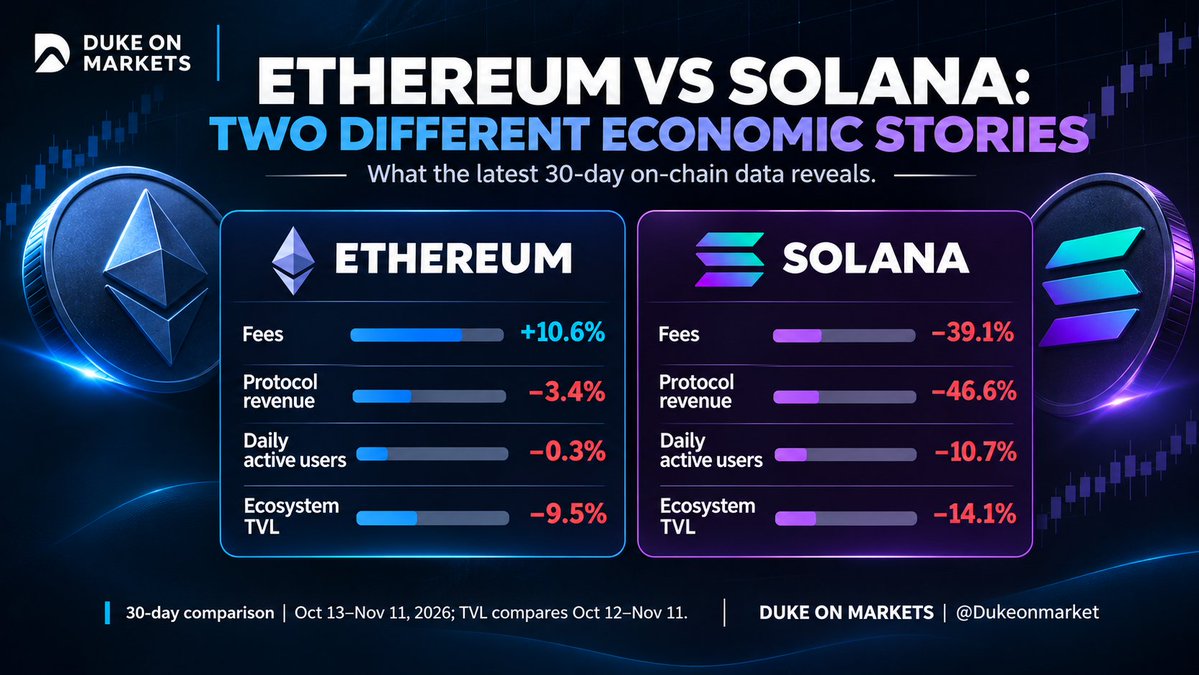
ethereum:native and solana:So11111111111111111111111111111111111111112 are showing two very different sides of the market.
Over the latest 30 days:
Ethereum's fees increased by 10.6%.
Solana's fees fell by 39.1%.
But fees are only part of the story.
Ethereum's protocol revenue also declined by 3.4%, while Solana's fell by 46.6%.
And both ecosystems saw their TVL decrease.
Here's what I find interesting:
Ethereum generated more fees, but that didn't translate into higher protocol revenue.
Solana still had a much larger daily active-user base, despite activity declining on both networks.
This is why I don't think one metric is enough to judge a blockchain.
Users tell us something about activity.
Fees tell us what users are paying.
Revenue tells us what the protocol retains.
TVL tells us how much capital is deposited across its applications.
They answer different questions.
The real question is whether an ecosystem can turn activity into sustainable economic value.
the post that gets you a job dm might be the one you almost deleted
because only six people liked it.
one of those six might’ve been a founder trying to
figure out who could explain their product that clearly.
it’s hard to remember that when you’re looking at the number
cos you are addicted to good engagements 😂
@nifercheks The company will also have some strong share holders obviously, some decision have to be taken either by votes or probably he resigned himself.. Just what i think tho
A public blockchain has an interesting problem.
Everyone can verify what's happening.
But everyone can also see your financial activity.
Your wallet balance, transaction amounts and the addresses you interact with can reveal a lot more about you than you might realise.
For businesses, traders and even ordinary users, that level of transparency isn't always desirable.
This is one of the problems @Helius is trying to address with Solana Privacy Rings.
Launched on Solana mainnet on November 10, Privacy Rings introduce programmable privacy through encrypted onchain balances and transfers.
Here's what makes it interesting.
Users can move supported assets into a private balance and send confidential transfers without leaving Solana.
The assets and amounts are encrypted, while wallet addresses remain visible in the default Ring.
It also uses zero-knowledge proofs to verify transactions without publicly exposing the private information.
And because execution happens directly on Solana, users don't have to move to a separate privacy network to access these features.
I think this is an important development.
We've spent years discussing blockchain scalability, transaction speed and cheaper fees.
But there's another question worth asking:
Can people and businesses comfortably use public blockchains if their financial activities are permanently exposed?
Privacy could become just as important as performance in the next phase of onchain adoption.
And that's what makes this development worth watching.
ethereum:native and solana:So11111111111111111111111111111111111111112 are showing two very different sides of the market.
Over the latest 30 days:
Ethereum's fees increased by 10.6%.
Solana's fees fell by 39.1%.
But fees are only part of the story.
Ethereum's protocol revenue also declined by 3.4%, while Solana's fell by 46.6%.
And both ecosystems saw their TVL decrease.
Here's what I find interesting:
Ethereum generated more fees, but that didn't translate into higher protocol revenue.
Solana still had a much larger daily active-user base, despite activity declining on both networks.
This is why I don't think one metric is enough to judge a blockchain.
Users tell us something about activity.
Fees tell us what users are paying.
Revenue tells us what the protocol retains.
TVL tells us how much capital is deposited across its applications.
They answer different questions.
The real question is whether an ecosystem can turn activity into sustainable economic value.
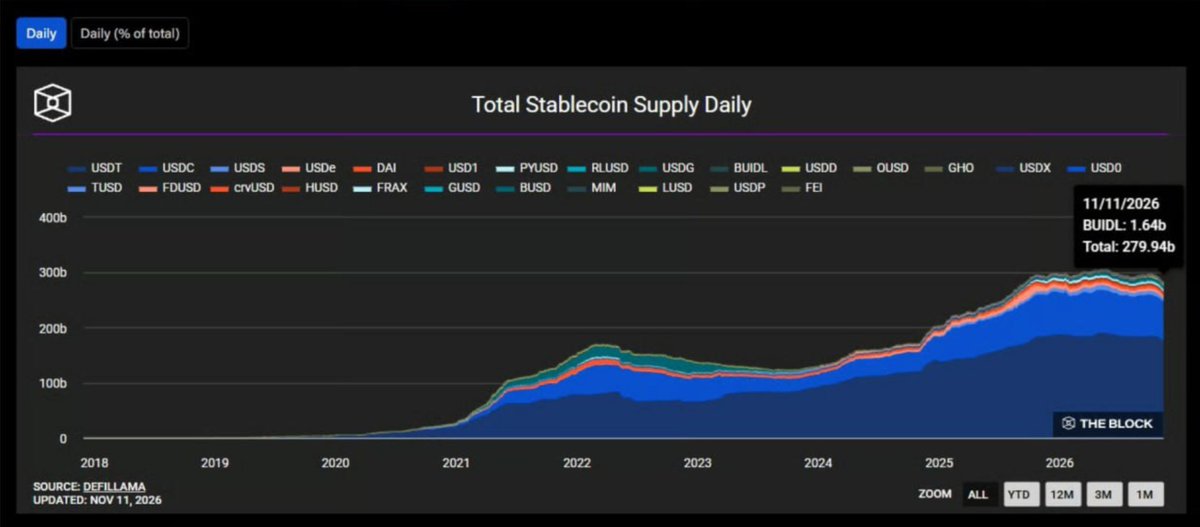
stablecoins circulation has shrunked by $14.2B according to theblock's report.
I thought we only liquidate our altcoin bags but stablecoins?
in simple terms, people redeem most of their stables to cash.
is this panic?
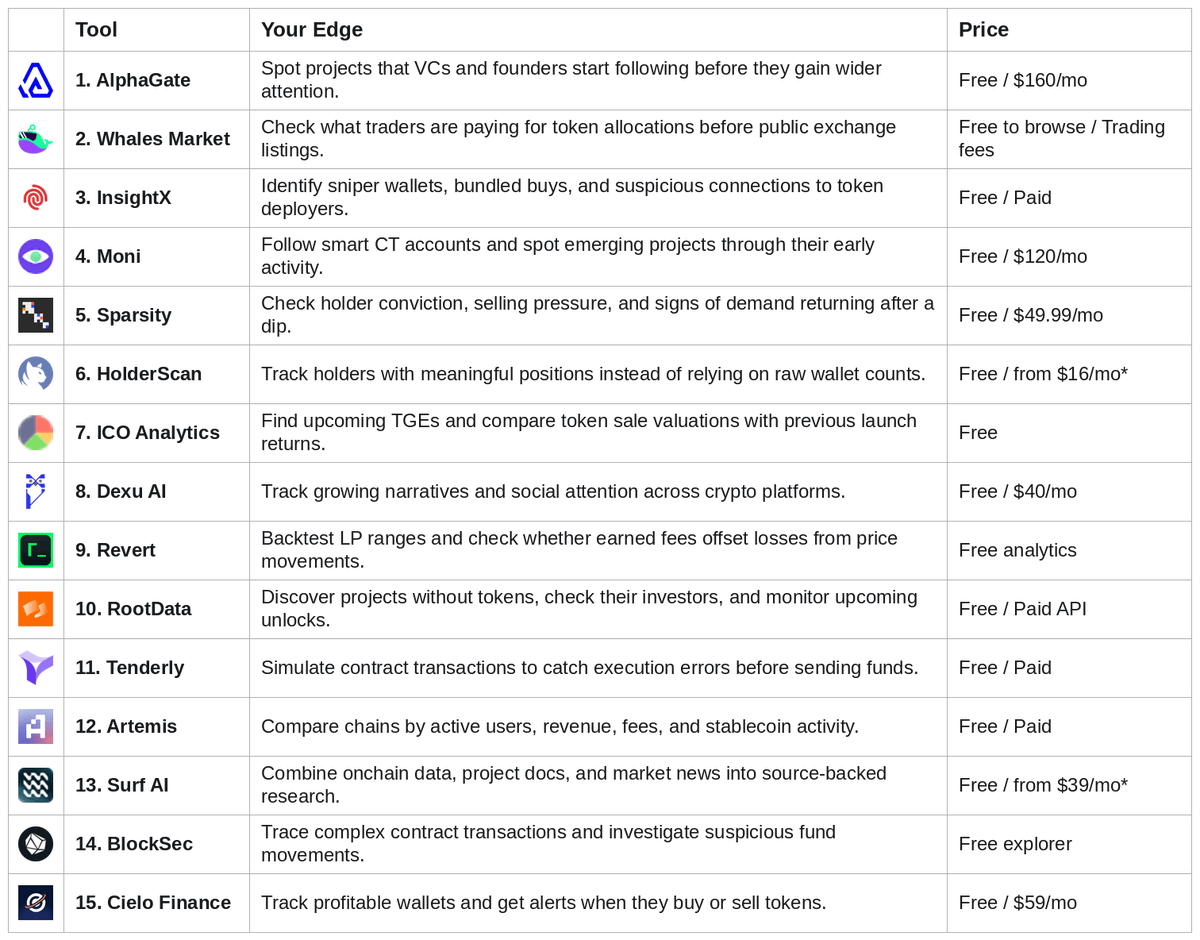
I found early RWA projects weekly so you don’t have to PT.42
@CrucibleLimited - Tokenized Gold
@IPNexusxyz - Tokenized IP
@thecardanogold - Tokenized Gold on Cardano
@AtlasGPU - Private AI Agents for Tokenized Equities
@gaiabyprimior - Tokenized Real Estate and Private Markets
@BuildVestRWA - Tokenized Emerging Markets
@veilstock - Tokenized Stock Lending
@Bidwell_Cash - Tokenized Stock Fixed Rate Lending
@YieldFX - Tokenized Deposits
@novlipai - Tokenized IP Marketplace
@StaxFinance - Tokenized Stock Basket
@afterbookapp - Tokenized Stock on Base
[ Bookmark for later read🔖 ]
the possible reasons for stablecoins redemption are:
> increase in level of poverty:
peeps needs to redeem their stables to cash to cover expenses due to shrunken income source in real life.
> rise in level of panic:
people are scared of losing their funds due recent exchanges and wallet hacks.
in addition, we have CEOs saying that everyone will get hacked at some point.
> poor performance of crypto assets:
crypto assets haven't been performing well so people that kept their stables to buy dips have seen continuous dips so they decided to opt out.
> collapsing of yield incentives:
stablecoins grew earlier due to yield sharing rewards when people lock their stables in a vault.
a reduction or decline in this rewards could make them to pull out.
this is my personal opinion & suspicion but there's likeliness that this will be one of the reasons.
have you ever redeemed your stablecoin to cash in the past 30 days? what's your reason?