ESAC Science Data Centre, holding, curating and distributing science data from @ESA's science missions to all scientists.
The digital library of the Universe!
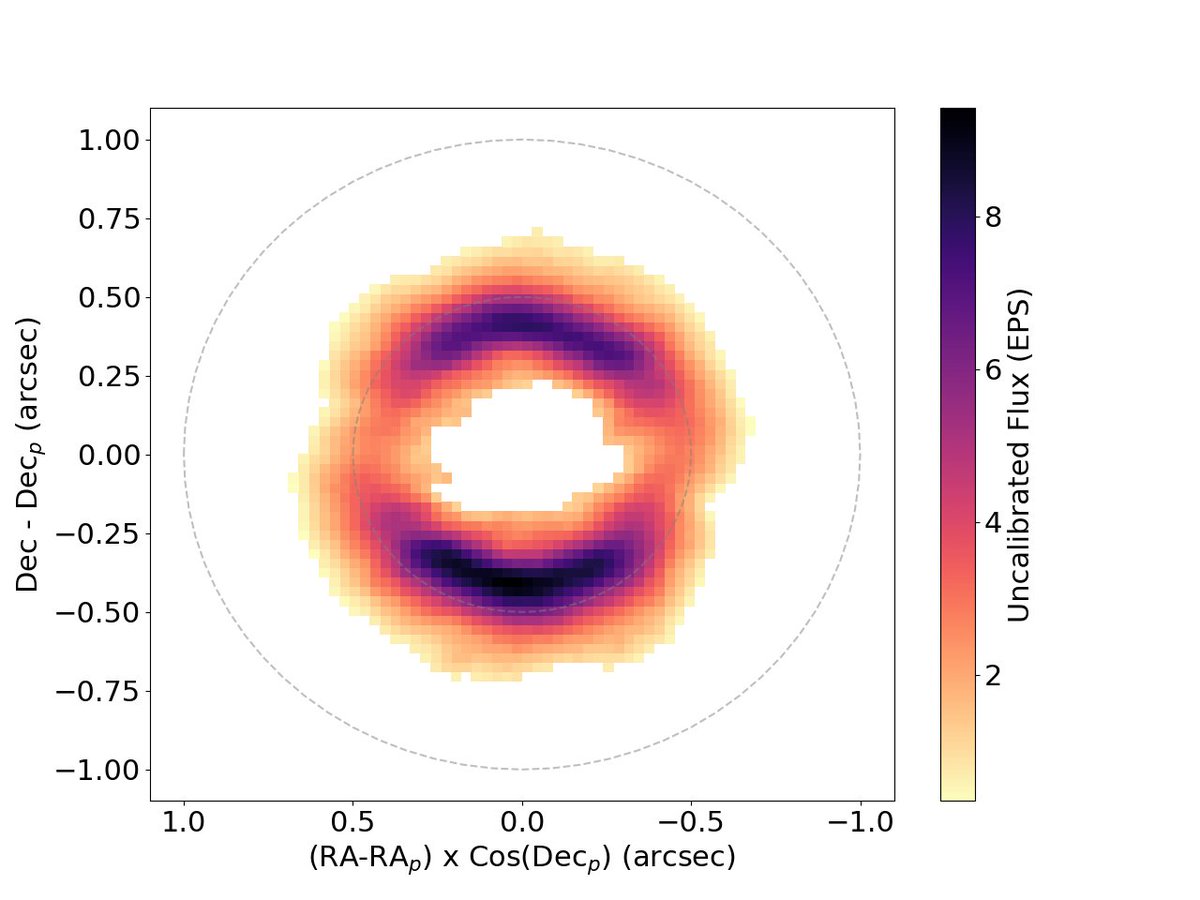
Wouldn't it be wonderful if also photometric information from Gaia could help find these baby star systems? Meet a new #GaiaDR4 data product: the residual image. Obtained from stacking many individual images and removing the point spread function of the central source: https://t.co/XyN446zYgI
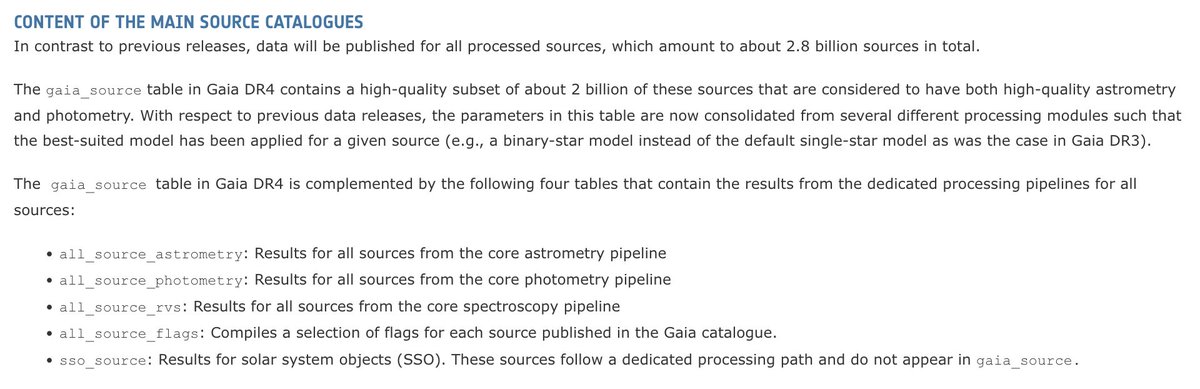
@esa Gaia Data Release 4 is expected December '26 and #GaiaDPAC is hard at work processing, validating & documenting the data sets. While #GaiaDR3 brought ~60 different data products, #GaiaDR4 will bring ~130 of them. Lots of new data products! Updated page 👉https://t.co/Rje0e59ep7
Gaia dances the night away! 💃A farewell to a fading Gaia... But no worries, you can still follow Gaia's location in the sky using some ephemeris services! GIF credits: Liverpool telescope / J. Marchant. Full story on Gaia Cosmos: https://t.co/lzLEuatbfC
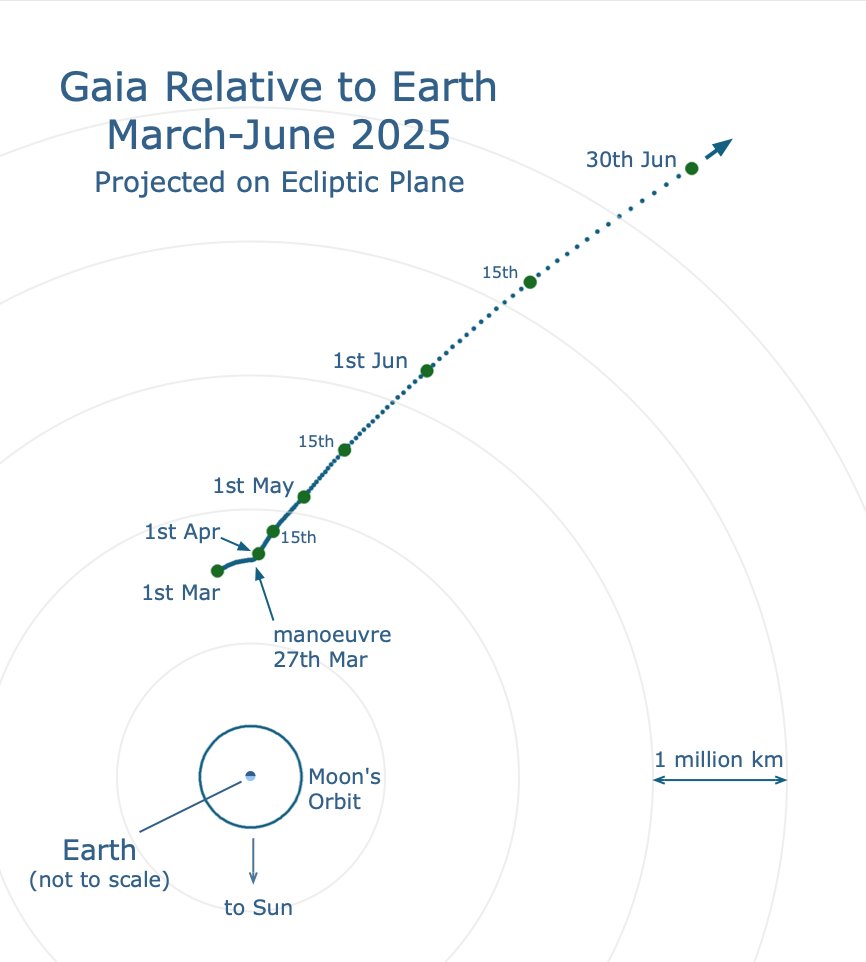
Wondering what Gaia's retirement orbit is and where to find it with respect to Earth and the Sun? Check out this video👇🏽 as published here: https://t.co/HDwkKphMKk
https://t.co/Y8INoo773e
Gaia was passivated in March after its cold gas ran out. It was seen dancing in the sky! But where is Gaia now? You can find the details from our story here: https://t.co/lzLEuatJ5a! Meanwhile, #GaiaDPAC works hard preparing #GaiaDR4: https://t.co/9ou7aX6HXi
📣 Euclid releases first batch of survey data, including a preview of its very own deep fields!
With just one scan, #ESAEuclid has already spotted 26 million galaxies 👉 https://t.co/p5Xgr84MRN
Let's explore the treasure trove that our #DarkUniverse detective has uncovered 🧵 1/
Gaia was a faint object in the sky during its science observation phase but could potentially reach a 14 magnitude in the coming days. More details: https://t.co/bHgk4yXQVq Amateur astronomers & ground observatories are invited to observe Gaia's final moments before passivation. Image credit: https://t.co/IpRNVnwyyL
While Gaia stopped taking science observations, it is hard at work to perform a set of technology tests: https://t.co/PCvuvcHf5F. As part of these tests, Gaia's angle with respect to the Sun will change, and the Gaia spacecraft's brightness is gradually increasing at the moment.
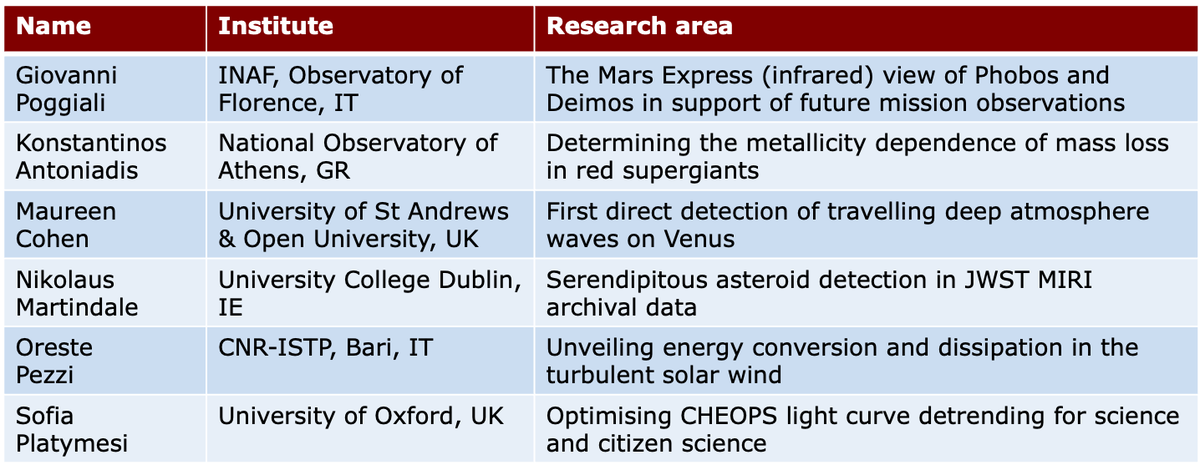
Congratulations to the six researchers just awarded with @ESA's Archival Research Visitor Programme funding! Next deadline to apply for funding is on the 25th of April of 2025. Check https://t.co/Me92uaeVdV Cc @esascience@ESA_Webb@ESA_CHEOPS
@PerditaMoon@ObsVirtEsp Absolutely, as you know, over 50% of all the scientific production from ESA Science missions actually comes from the archives, as recently demonstrated by de Marchi and Parmar in 2024 at https://t.co/Tqpg6dDXSP
@Jan_1@esascience Thanks for your question, @Jan_1, it is very good one which we get a lot: compared to the desktop application, ESASky runs on a browser and needs not installation. Compared to Aladin Lite, ESASky has built-in access to all major astronomical archives worldwide.
✨Attention #GaiaData Users. The @ESAesdc Gaia Archive takes a first step towards Gaia DR4 soon on 10 December! To prepare for bigger volumes and the larger product diversity, some breaking changes to the way things work will be needed. ✨More details: https://t.co/Ls1fdXSSji
Join the @ESA Science Directorate ! 🌌
We're hiring an Archive Scientist at the European Space Astronomy Centre (ESAC) near Madrid, Spain on a 3-year contract to work with the @ESASolarOrbiter, @ESA_Cluster and other Heliophysics data archives.
🔍 If you have a passion for space science, a background in heliophysics, and a desire to work with ESA's missions, this opportunity is for you!
Apply now to be part of groundbreaking space discoveries!
📅 Deadline: 7th October 2024
🌍 Location: Madrid, Spain
🔗 https://t.co/M5g54VTbHS
#SpaceJobs #ESA #DataScience #Astronomy #SpaceCareers #ESAJobs #ESAC
Out in the open ✨
This open star cluster within the Eagle Nebula is home to stellar "toddlers" that formed recently. They emit ultraviolet radiation that causes the surrounding nebula of cosmic material to glow.
Find out more: https://t.co/cdi7QYmONw