📌📄 Factors involving technology use, digital training, and teaching personalization: a national and regional mixed-methods study .
Trabajo realizado junto a la Dra. @MaraNapal 👩🏻💻🧑🏻💻.
📔Journal of New Approaches in Educational Research (2026).https://t.co/AUM2JPy6rK.
📄 Digitalización de la educación: un estudio comparativo entre autonomías.
Trabajo realizado junto a la Dra @MaraNapal 👩🏻💻🧑🏻💻 del grupo @kimua_dce.
📔Profesorado. Revista de Currículum y Formación de Profesorado.
Ha muerto Sir John Gurdon con 92 años (1933-2025), premio nobel de medicina en 2012 junto a Shinya Yamanaka por desdubrir que es posible reprogramar células adultas y convertirlas en pluripotentes. En 1962 clonó ranas de células intestinales de renacuajos.
https://t.co/VrZOrdAMrh
Para profesores de biología de IES y cualquiera interesado en las nuevas técnicas de reproducción asistida, publico en mi blog #geb_ética en @Naukas_com un artículo explicando la última innovación de Mitalipov, producir óvulos a partir de cualquier célula.
https://t.co/C2OLRQpTnF
Today in @ScienceMagazine, we report a new DNA editing technology to seamlessly write massive changes into the right place in the human genome.
The reason gene editing hasn't transformed human health is that current gene editing technologies like CRISPR are very limited.
The problem with CRISPR is that it cuts up your DNA, and then hopes that unreliable cellular DNA repair will make the wanted edit. @geochurch famously called it genome vandalism. More precise versions of CRISPR only edit less than 100 bases - often only a single base. Therefore, it's not suited to make large changes safely.
However, most diseases are not the result of mutations in one location. Instead, their causes are spread all across the 3 billion base pairs in the genome.
We found bridge RNAs in bacterial “jumping genes” that allow us to make safe and arbitrary changes (insert, cut out, or flip) to every nucleotide within (up to) a 1 million bp sequence in your DNA.
In the paper, we show that we can correct the disease-causing DNA repeats that cause Friedreich's ataxia (which is a rare neurological disease). The same approach could be applied to Huntington’s and other repeat expansion disorders.
At @arcinstitute, we're working towards a full Turing machine for biology. Evo, our DNA foundation model, helps us design the optimal healthy DNA sequences. And Bridge recombination gives us the ability to seamlessly write these changes into the right place in the genome.
This work was a wonderful collaboration with my @arcinstitute cofounder @SKonermann and led by the indefatigable @ntperry13, alongside our amazing bridge editing team: @BartieLiam@dhruvakatrekar@Gabogonzalez515@mgdurrant@james_jw_pai@AlisonFanton Juliana Martins Masa Hiraizumi @chiaroscurale@hnisimasu
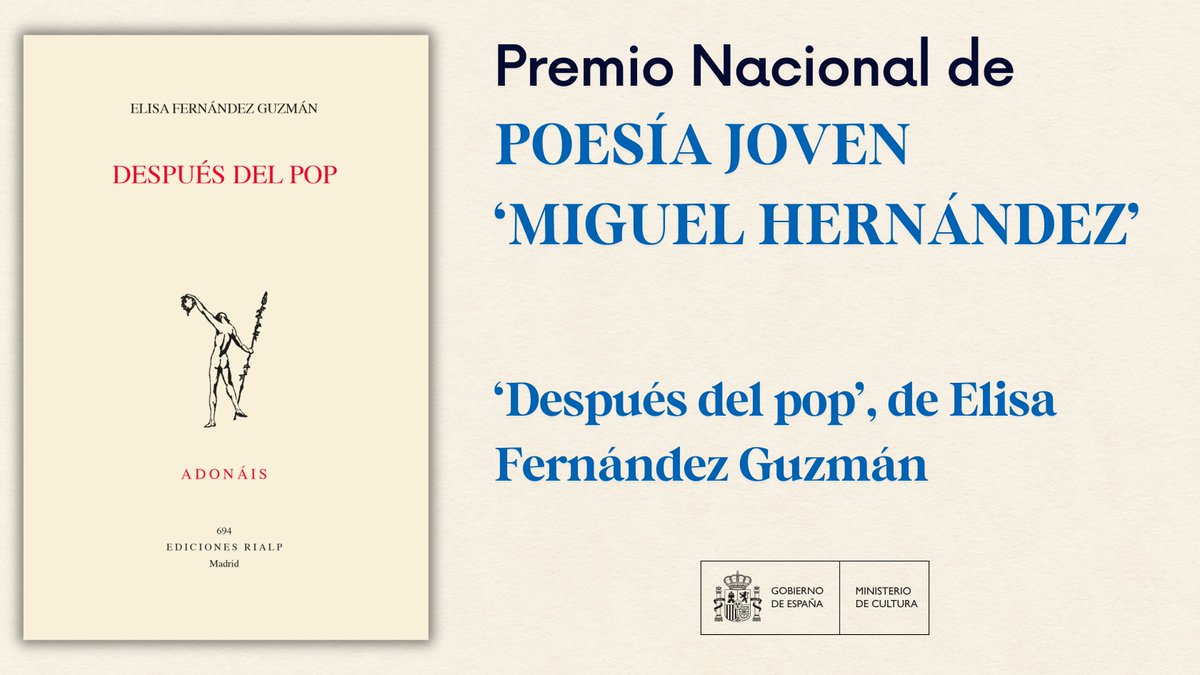
Elisa Fernández Guzmán, de 25 años, acaba de recibir una noticia que cambiará su vida: el Ministerio de Cultura ha otorgado a su primer poemario el Premio Nacional de Poesía Joven.
▶ ️ https://t.co/ZgJQU9hIkG
🤩 ¡¡Elisa Fernández Guzmán, Premio Nacional de Poesía Joven ‘Miguel Hernández’ 2025!!
✍🏼 El jurado ha elegido su obra ‘Después del pop’ por “transmitir verdad con la fuerza de una sencillez aparente que seduce, atrapa y hace temblar”
✨ ¡Enhorabuena! 🔗 https://t.co/3QWnqCZplc
A single mitochondrial DNA mutation in mice causes autism-like behavior—social deficits, anxiety, and EEG disruptions—with no changes to brain anatomy.
Let’s break it down 🧵1/10
“models for governing the use of social media algorithms to amplify/demote certain information are being exported from the Global North to the Global South…[with] negative unintended consequences.” @Robin_Mansellx @MediaLSE https://t.co/VwU4AZjZ1A
🗨️ @andrearopero habla con Belén González, numeraria del Opus Dei entre 2011 y 2016, sobre la opacidad de la institución y la vejación que ejerce hacia las mujeres. #elintermedio
"...depression, far from being a brain disorder, is actually your brain’s designed signal. It’s there to let you know that something in your life isn't going well and needs more attention".
- Justin Garson reviews Joanna Moncrieff's new book.👇
https://t.co/CAtK2BvqMc
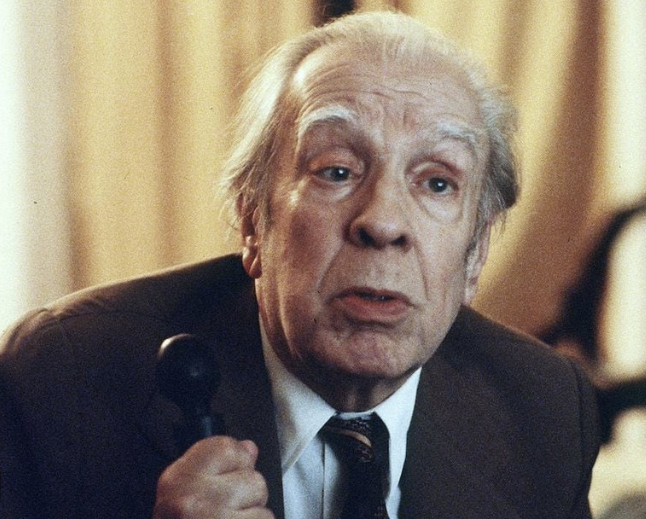
A: ¿Cómo acostumbra celebrar el año que se inicia, Borges?
B: Silenciosamente, como lo hace el tiempo. Voy a la casa de los Bioy, y allí lo pasamos sin barullo, como una noche más, conversando, recordando cosas, bebiendo, eso sí, un poco de sidra. Mi amigo Xul Solar daba un consejo para Año Nuevo. Decía que lo que uno hiciera esa noche era lo que después iba a hacer durante todo el año. Yo he aceptado ese consejo; así que seguramente esa noche escriba algún poema o lea unos versos para que se cumpla el presagio.
Step into Christmas with our double issue—and see whether you can identify all of the stories on our cover. Here’s how we put it together: https://t.co/lCkeHcXM6v
La mayoría de las prohibiciones de libros en Estados Unidos se dirigen a la literatura infantil que presenta personajes diversos y autores de color https://t.co/2rDtXkecYv a través de @jalonsoarevalo
Lipovetsky: El capitalismo de consumo ha convertido la búsqueda interior en una mercancía. «Ser tú mismo» ya no es una llamada al conocerse a sí mismo socrático, sino a la adquisición de productos que nos prometen ser más «auténticos».
https://t.co/VndUDUg2re