New research reveals that listening to music can slash dementia risk by 40%.
A landmark Monash University-led study involving more than 10,800 participants has discovered a powerful connection between music and cognitive preservation in seniors. Researchers found that consistently listening to music after age 70 is associated with a staggering 39 percent reduction in dementia risk. For those who play an instrument, the risk is lowered by 35 percent, indicating that both active and passive musical engagement can serve as a potent shield against brain decline.
Lead researchers Emma Jaffa and Professor Joanne Ryan emphasize that these findings offer a vital, accessible strategy for maintaining brain health in an aging global population. Beyond reducing dementia risk, regular musical engagement was linked to sharper episodic memory and improved overall cognition. As medicine continues to extend human lifespans, integrating music into daily life represents a simple yet transformative lifestyle choice that may delay the onset of neurodegenerative conditions where cures remain elusive.
source: Jaffa, E., & Ryan, J. (2025). What is the association between music-related leisure activities and dementia risk? A cohort study. International Journal of Geriatric Psychiatry.
🚨 THIS SMALL PATCH COULD CHANGE CANCER TREATMENT FOREVER
Scientists have created a wearable patch that reportedly destroyed 97% of cancer cells during testing. Instead of major surgery, the patch uses targeted treatment to attack tumors directly.
Researchers say it could one day make some cancer treatments less invasive and easier for patients. The technology is still being studied, but the early results are already getting global attention.
A tiny patch… with the potential to completely change the future of cancer care.
Source: Zhou, Y., et al. Wearable ultrasound patch for localized cancer therapy. Science Advances.
🚨 IT LOOKED LIKE DEMENTIA... BUT THE REAL CAUSE WAS HIDDEN!
A woman spent years battling memory loss and confusion that seemed like dementia. Then doctors made a surprising discovery — a severe Vitamin B12 deficiency.
After treatment, her symptoms improved dramatically, showing that some cases of cognitive decline may have a treatable cause. A simple vitamin played a much bigger role than anyone expected.
Source: National Institute on Aging. Dementia and reversible causes of cognitive impairment
Denmark, Germany, Belgium and the Netherlands plan to build four artificial islands to quadruple offshore wind in the North Sea – the equivalent of 30 nuclear reactors.
We have so many solutions. Implement them. #ActOnClimate#ClimateCrisis#climate#energy#tech#GreenNewDeal
Uruk, the world's first metropolis and the birthplace of written language, was nourished by the Euphrates River, as was Babylon, ancient Mesopotamia's grandest city. The fertile plain between the Euphrates and its companion waterway, the Tigris River, was one of humankind's cradles of civilization.
Read more:
https://t.co/qiXUUohjnf
Noninvasive 40 Hz gamma sensory stimulation uses rhythmic pulses of light and sound to entrain the brain’s natural gamma oscillations, which are linked to memory, attention, and cognitive processing. This approach, often called GENUS (Gamma Entrainment Using Sensory stimuli), has shown promise in reducing the accumulation of amyloid-beta and tau proteins, the two primary pathological hallmarks of Alzheimer’s disease.
In multiple preclinical studies, daily one-hour exposure to 40 Hz light and sound reduced amyloid plaque burden, decreased tau pathology, protected neurons, preserved synaptic connections, and improved memory performance in mouse models of Alzheimer’s. Researchers observed that the stimulation enhances clearance of toxic proteins through the brain’s glymphatic system, its waste-removal “plumbing” network.
A pivotal 2024 study from MIT demonstrated a key mechanism: 40 Hz multisensory stimulation activates vasoactive intestinal peptide (VIP)-expressing interneurons, which promote increased cerebrospinal fluid influx and interstitial fluid efflux. This boosts glymphatic flow and accelerates the removal of amyloid proteins from brain tissue.
Human research has progressed from early feasibility trials to larger studies. In a Phase 2A pilot trial, patients with mild Alzheimer’s who received daily 40 Hz audiovisual stimulation for three months showed reduced brain atrophy (less ventricular enlargement and hippocampal volume loss), improved functional connectivity, better performance on memory tasks, and more stable daily activity rhythms compared to controls. Longer-term open-label extensions suggest sustained safety and potential cognitive benefits over two years in some participants.
A large Phase III clinical trial is currently underway to rigorously evaluate efficacy. While results remain preliminary and the therapy is not a cure, it represents a novel non-pharmacological strategy that aims to harness the brain’s own rhythms to activate natural cleanup and repair processes.
Early evidence also hints at broader applications for other neurological conditions, including Parkinson’s disease, stroke, and epilepsy, though further research is required.
[Tsai, L.-H., et al. (2025). Review: Evidence that 40Hz gamma stimulation promotes brain health. PLOS Biology]
On December 27, 1968, Apollo 8 needed to fire its engine to leave lunar orbit and return to Earth.
If the burn was wrong, the crew would never come home.
In Mission Control, a 25-year-old mathematician named Frances Northcutt, known as Poppy, had prepared the return-to-Earth calculations.
She was the first woman to work in Mission Control in a technical role.
When the burn data came back, something was off.
The numbers didn't match the expected trajectory.
She had 4 minutes to determine whether the deviation was within tolerance or whether Apollo 8 was in danger.
She ran the calculations by hand.
They were within tolerance.
She gave the go.
The crew came home.
She later went to law school and became a prominent civil rights attorney.
When asked about her time at NASA she said:
"We were just doing our jobs. Nobody thought it was unusual except the reporters."
The people who kept the astronauts alive were largely anonymous.
Most of them were young women with slide rules.
For more than a century, researchers have studied the bones of a central character in the human story, a heavy-browed human ancestor named Homo erectus whose fossils were eventually found on three continents. Now, a new study reveals the first clear glimpse of the proteins—and therefore the DNA—of this ancestor.
Learn more: https://t.co/b9xbKkEhwM
We can not wait to address the climate crisis.
We can not wait to address the climate crisis.
We can not wait to address the climate crisis.
We can not wait to address the climate crisis.
We can not wait to address the climate crisis.
We can not wait to address the climate crisis.
We can not wait to address the climate crisis.
We can not wait to address the climate crisis.
#ActOnClimate
#climate #renewables
Not a week. Not a decade. Not even a century.
Over a million years of nonstop downpour.
It actually happened. Around 232 million years ago, Earth got hammered by what scientists now call the Carnian Pluvial Episode.
Scientists have discovered a unique marine sugar compound that has the astonishing ability to trigger self-destruction in cancer cells. This breakthrough means certain sugars derived from marine organisms can selectively attack cancer cells without harming healthy tissue.
The compound works by activating cancer cells’ own death mechanisms, essentially convincing them to destroy themselves. Early laboratory studies have shown promising results across multiple cancer types, offering a potential new path for safer, more effective treatments.
Researchers believe this marine-derived sugar could one day complement existing cancer therapies, improving outcomes and reducing side effects. The discovery also highlights the untapped potential of ocean-based compounds in modern medicine.
With continued research, this natural sugar compound could become a revolutionary tool in the fight against cancer, giving patients a powerful new ally in their treatment journey.
🚨 THIS BLOOD TEST COULD SEE CANCER YEARS EARLY…
What if cancer could be found before you feel anything at all?
Scientists at Johns Hopkins University are developing a simple blood test that can detect tiny pieces of tumor DNA in the body years before diagnosis. It sounds incredible—but it’s still being tested and isn’t fully ready for everyday use yet.
The idea is powerful: catch cancer early, treat it sooner, save more lives. But for now, it remains a promising glimpse into the future—not a guaranteed solution.
Source: Johns Hopkins University. Liquid biopsy research for early cancer detection.
Human's are causing the Earth's sixth mass extinction. 83% of wild mammals have already been pushed past the brink.
If nature goes, its taking us with it. No time to wait.
#ActOnClimate#biodiversity#natureneedshalf#biodiversity
The Day the Sun Disappears for 6 Minutes ………
On August 2, 2027, a rare and powerful total solar eclipse will turn day into night for over 6 minutes in some places. The Moon will completely block the Sun, creating darkness, cooler air, and a glowing ring of light in the sky. It will be visible mainly in Spain, North Africa, and parts of the Middle East. Scientists say it will be one of the longest and most impressive eclipses of the 21st century.
Source:
NASA. Solar Eclipses: 2027 August 2 Total Solar Eclipse
A traditional vaccine primes the immune system to build better defences. Researchers think we can do something similar to increase our resilience to the pressures and worries of life https://t.co/jXiP45Sgr9
🚨 Say “goodbye” to fertilizers.
Dr. Mariangela Hungria, a distinguished researcher at the Brazilian Agricultural Research Corporation (EMBRAPA), has been named the 2025 World Food Prize laureate for her pioneering work in soil microbiology. Often described as the "Nobel Prize for Food," this honor recognizes her development of over 30 biological technologies that utilize natural bacteria to nourish crops. By harnessing the power of Biological Nitrogen Fixation through specific bacterial strains, Hungria has successfully replaced heavy reliance on synthetic fertilizers, drastically improving the sustainability and yields of soybean and other vital crops across South America.
The scale of Hungria’s impact is staggering, with her methods currently applied to more than 40 million hectares in Brazil alone. This agricultural revolution saves farmers an estimated US$40 billion annually while preventing the release of over 180 million metric tons of carbon dioxide equivalent emissions each year. Her career-long dedication at EMBRAPA has not only solidified Brazil’s status as a global agricultural leader but also provided a low-cost, eco-friendly blueprint for global food security. Her work proves that the most powerful solutions for feeding the world can be found within the soil itself.
Source: World Food Prize Foundation. Dr. Mariangela Hungria Named 2025 World Food Prize Laureate for Revolutionary Work in Soil Microbiology.
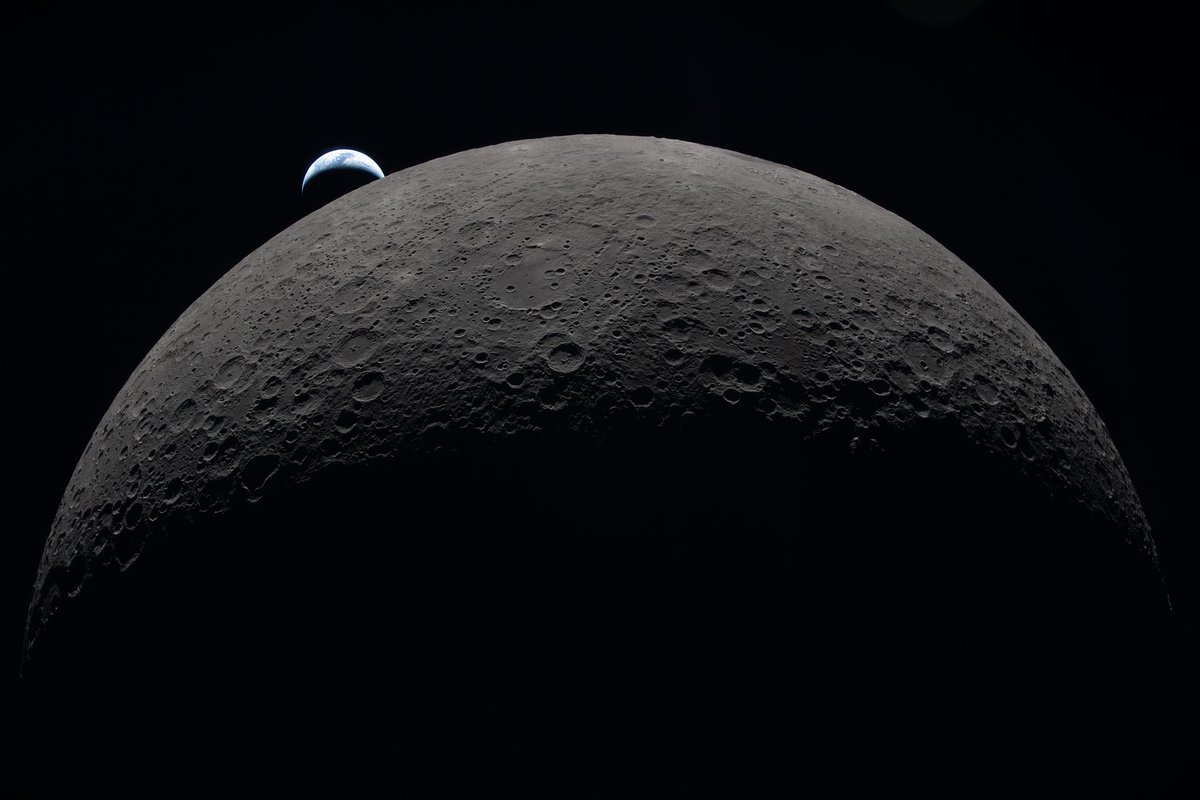
What the Artemis II astronauts did over the last 10 days was a testament to their bravery. And the fact that they traveled farther from Earth than anyone ever has, re-entered our atmosphere at more than 24,000 mph, and splashed down safely was a testament to human ingenuity. Thanks to everyone at @NASA for making this mission possible, and for taking us along for the ride.


![Rainmaker1973's tweet photo. Noninvasive 40 Hz gamma sensory stimulation uses rhythmic pulses of light and sound to entrain the brain’s natural gamma oscillations, which are linked to memory, attention, and cognitive processing. This approach, often called GENUS (Gamma Entrainment Using Sensory stimuli), has shown promise in reducing the accumulation of amyloid-beta and tau proteins, the two primary pathological hallmarks of Alzheimer’s disease.
In multiple preclinical studies, daily one-hour exposure to 40 Hz light and sound reduced amyloid plaque burden, decreased tau pathology, protected neurons, preserved synaptic connections, and improved memory performance in mouse models of Alzheimer’s. Researchers observed that the stimulation enhances clearance of toxic proteins through the brain’s glymphatic system, its waste-removal “plumbing” network.
A pivotal 2024 study from MIT demonstrated a key mechanism: 40 Hz multisensory stimulation activates vasoactive intestinal peptide (VIP)-expressing interneurons, which promote increased cerebrospinal fluid influx and interstitial fluid efflux. This boosts glymphatic flow and accelerates the removal of amyloid proteins from brain tissue.
Human research has progressed from early feasibility trials to larger studies. In a Phase 2A pilot trial, patients with mild Alzheimer’s who received daily 40 Hz audiovisual stimulation for three months showed reduced brain atrophy (less ventricular enlargement and hippocampal volume loss), improved functional connectivity, better performance on memory tasks, and more stable daily activity rhythms compared to controls. Longer-term open-label extensions suggest sustained safety and potential cognitive benefits over two years in some participants.
A large Phase III clinical trial is currently underway to rigorously evaluate efficacy. While results remain preliminary and the therapy is not a cure, it represents a novel non-pharmacological strategy that aims to harness the brain’s own rhythms to activate natural cleanup and repair processes.
Early evidence also hints at broader applications for other neurological conditions, including Parkinson’s disease, stroke, and epilepsy, though further research is required.
[Tsai, L.-H., et al. (2025). Review: Evidence that 40Hz gamma stimulation promotes brain health. PLOS Biology]](https://pbs.twimg.com/media/HKsNjT5XkAA-teq.jpg)