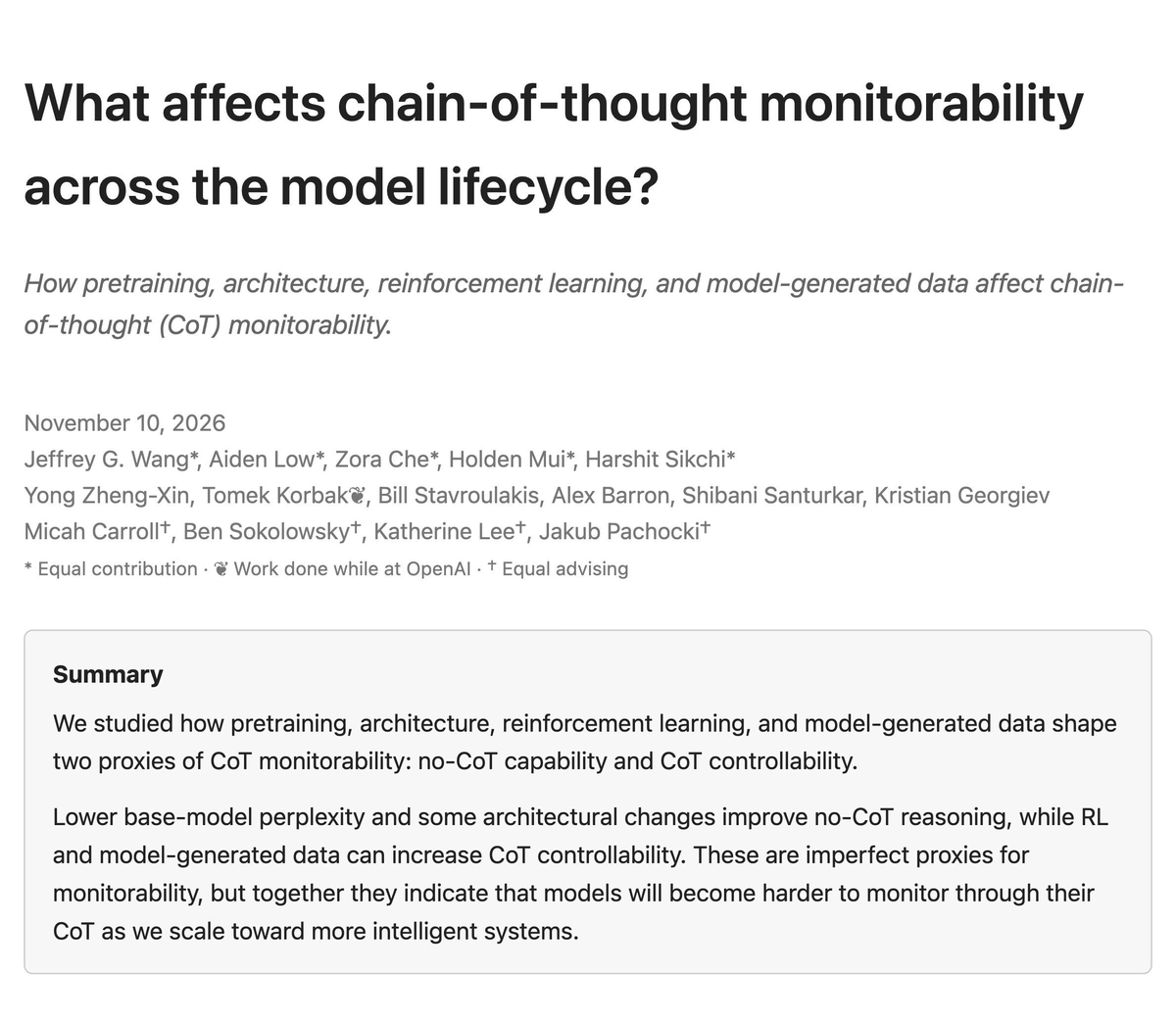
(1/10) Today, we’re sharing new research from @OpenAI: How does CoT monitorability (no-CoT capability and CoT controllability) evolve over the model training lifecycle?
We emerged with unsurprising but sobering findings: as we scale toward more intelligent systems, models are becoming harder to monitor through their CoT. 🧵
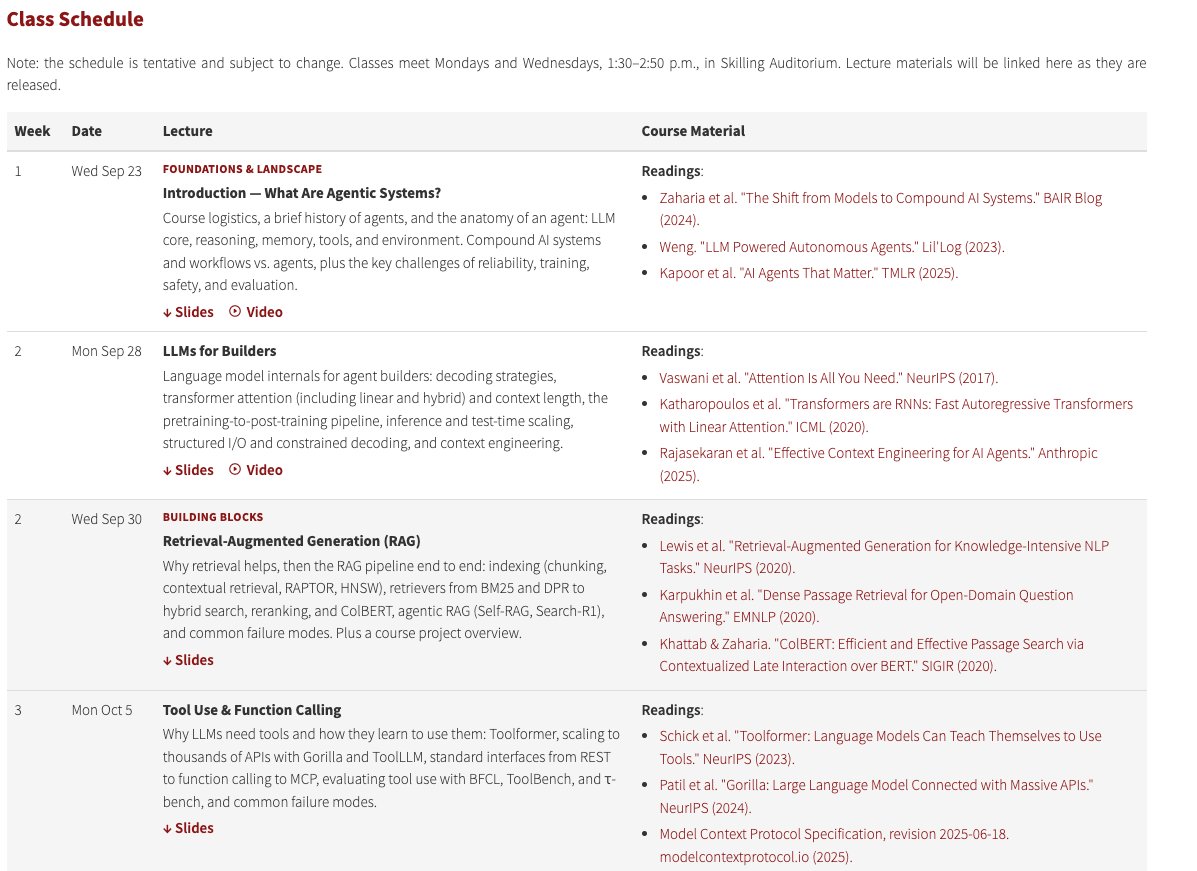
🔊 Big Update!
All materials are now being released publicly for our NEW Stanford course CS329Z: Engineering AI Agents!
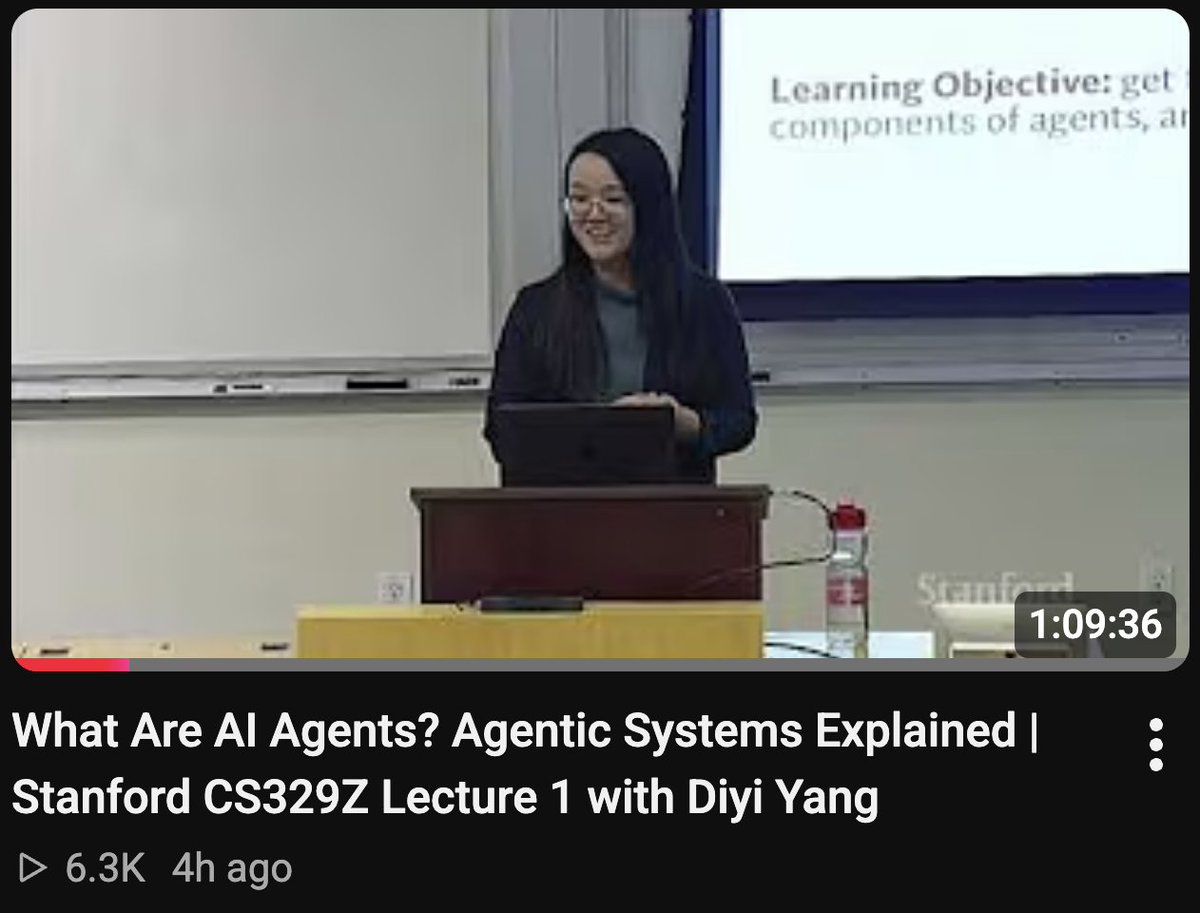
Starting with the lectures, which are going live daily on the Stanford Online YouTube channel!
Lecture 1: https://t.co/Gpjxoyi5UM
🧵 (1/5)
Highly recommended! 🚀 Stanford's CS329Z: Engineering AI Agents (Fall 2026), now open and led by Diyi Yang (@Diyi_Yang), is a great resource for anyone interested in AI agents.
One of the most interesting takeaways is the history and challenges of AI agents, as well as the emerging topic of proactive agents.
https://t.co/XTPNvsAxov
GRPO variants have been dominating for math reasoning tasks but PPO starts to be revisited more and more for agentic post-training. In this work, a comprehensive characterizations of PPO–GRPO tradeoff across 1,200+ runs reveals that PPO leads at small batch sizes, and GRPO needs increasingly larger batches to catch up as tasks get longer and harder. Our findings guide algorithm selection based on factors like batch size, task complexity and compute budget. Check out the amazing work from @jaswwei