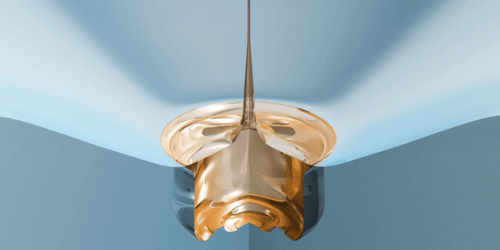
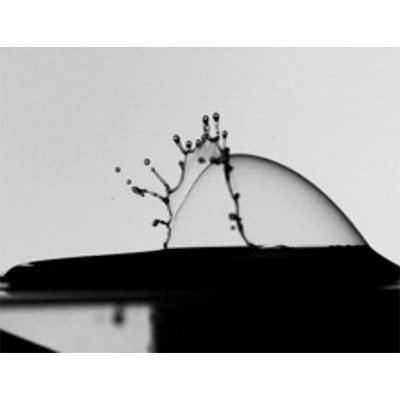
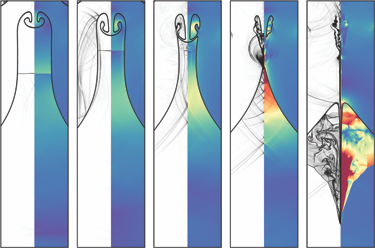
Happy to share our recent work on contaminated bubble bursting just published @NaturePhysics, showing oil-coated bubble bursting enhance aerosol formation and transmission by producing jets that are smaller and faster than those formed by pristine bubbles.https://t.co/Q6f1NYMmRp
The busting of bubbles at a liquid-air interface can create liquid jets that break up into small droplets, releasing biological or chemical contaminants if present. Researchers have developed a new model that accurately predicts a jet’s properties. https://t.co/mjLMTfxiUW
How does the angle of a nozzle influence the clogging of suspensions? Better to make it slender! Our study is out in @PhysRevResearch and could help guide the design of extrusion-based manufacturing systems https://t.co/Ygtsqz3FXj @UCSBengineering @PMMH_lab @umdme@UMDResearch
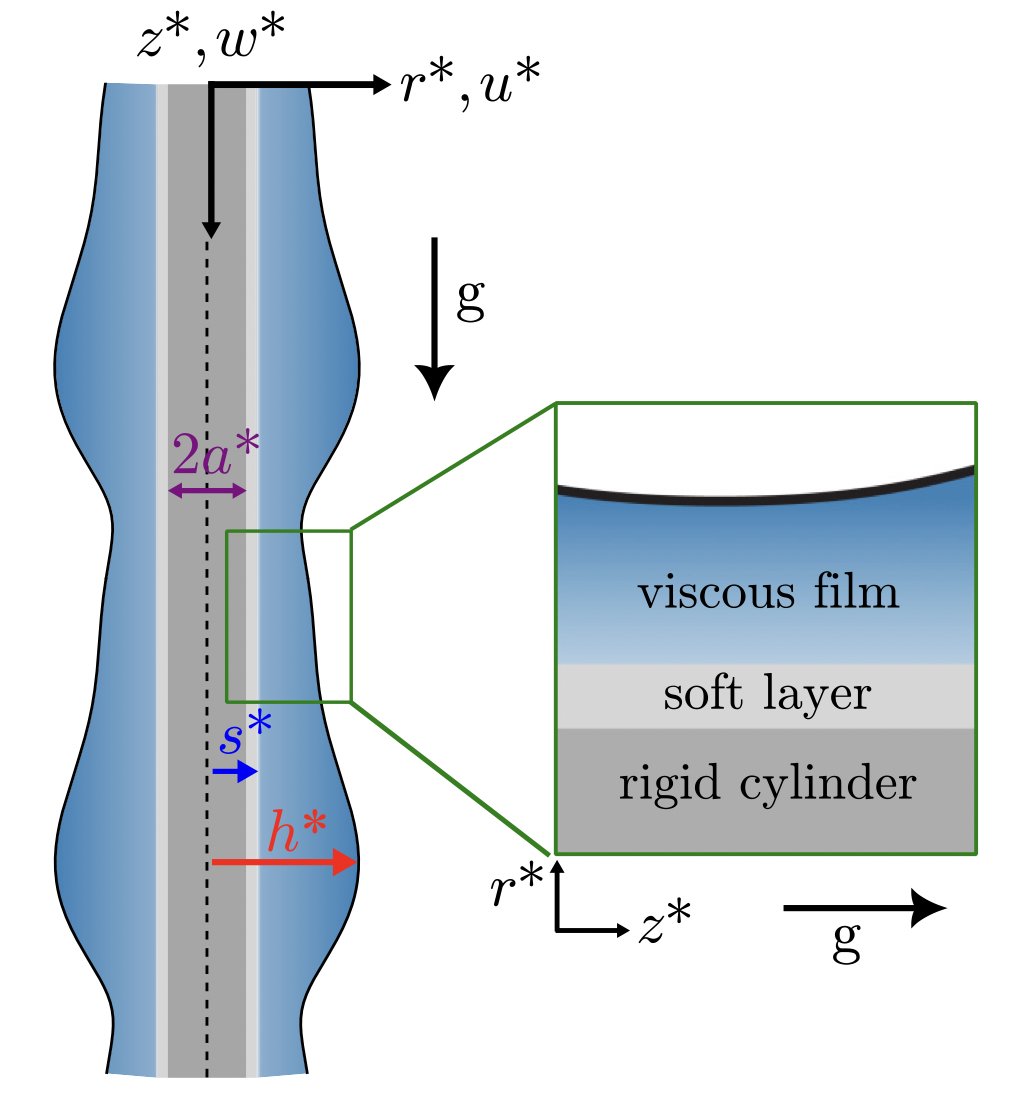
Ever thought a soft-coated cylinder could shake things up? Turns out, adding some squishy layers to viscous films destabilize the films, trigger faster droplet coalescence, and boost water transport. Find out more about Chao et al's new research @ https://t.co/nUPwIrFzf8.
Reactive oxygen species oxidize membrane lipids, compromising cell integrity and causing cell death.
A study on vesicles links spontaneous curvature from oxidation to vesicle collapse, providing insights for drug delivery systems
👉https://t.co/SmcnEO30tk
Congrats on Vinit in publishing our work that explores the stability of lipid vesicles under oxidative stress, with significant implications for biomembrane physics and biomedical engineering in Advanced Science @AdvSciNews https://t.co/aWYHcki8tB
Bauer and Gilet study how the shape of substrate edges affects droplet ejection during drop impacts, showing that star-shaped edges lead to asymmetric rim expansion, resulting in larger, faster droplets ejected preferentially in certain directions! https://t.co/yDi4KWlh0C
To better understand the contaminant effects on bubble bursting, Feng Lab continues to explore the intriguing effects of different structurally compound surfaces. So far, their work’s been published in Nature Physics and Physical Review Letters (9/9)(https://t.co/CaVtRkWsQj).
Shaw and Deike delve into film drop production from bursting bubbles at the ocean surface. They study effects of liquid conditions, salinity, temperature, and surfactants on global climate dynamics with crucial insights for modeling sea spray emissions. https://t.co/dH7aZpnlZc
Congratulations to Bob Prud'homme on being elected to the National Academy of Engineering! He is being recognized in particular for the foundational innovations that allowed for the mass manufacture of SARS-CoV-2 vaccines and other applications to improve human health.
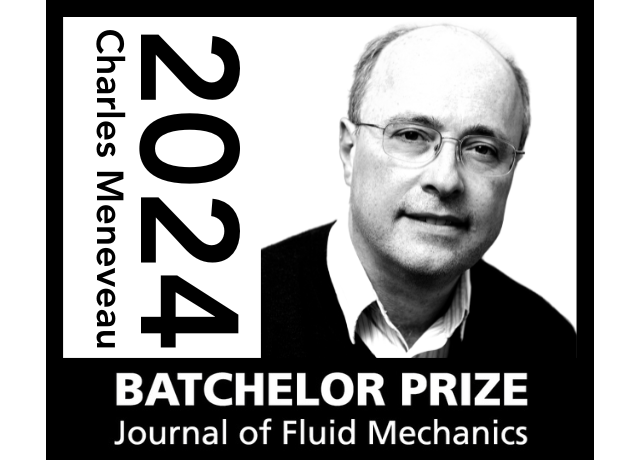
Charles Meneveau wins the #BatchelorPrize 2024!
“...George Batchelor's enduring legacy in this field grows more influential each day, especially as fluid mechanics becomes increasingly vital, notably in shaping strategies for sustaining civilization...”
https://t.co/EHFOwJ4AgA
Congrats on Zhengyu in publishing our work studying oil entrainment by compound bubbles bursting, which may provide guidance and modeling constraints for bubble-mediated contaminant transport in liquids. @JFluidMech
https://t.co/dQYvRWG8Sf
A picture (or a video) is worth 1000 words! Every year, PR Fluids publishes a collection of papers based on the winners from #APSDFD 's Gallery of Fluid Motion competition. Check out last year's winners and their stunning visuals in our new editorial: https://t.co/goi3hZiios.
Thanks for covering our recent work about how surface viscoelasticity affects the secondary bubble generation from the primary bubble bursting at a protein-laden interface! https://t.co/SXinAWWHHG
The Department of Mechanical Science and Engineering at the University of Illinois Urbana-Champaign invites applications for multiple full-time faculty positions at all ranks. https://t.co/YzmMn59ugn
Happy to share our recent publication in @PhysRevLett. We document that when a bubble bursts at a protein-laden surface, a secondary bubble is entrapped with no subsequent jet drop ejection, contrary to the counterpart observed at a Newtonian surface. https://t.co/SXinAWWHHG
"I discovered as a young professor that the best thing I could possibly do... is I would leave my door open, and every day I'd walk into my office, and I would say, 'I hope someone interesting walks in today.'" - Prof. Howard Stone, MAE @Caltech https://t.co/zeml6eJhp8
PRFluids Editors' Suggestion: A glass of fizzy drink is a complex laboratory for two-phase flows. In your next glass, watch for those tiny rising bubbles. Here, @ZenitLab and Co. show why champagne has stable “bubble chains” but other bubbly drinks do not. https://t.co/FNInAjxRdV