Without a mechanism, I’m struggling to understand the importance of this.
Host-pathogen interactions have been a rich source of biological tools for decades; it’s where CRISPR and restriction enzymes and Agrobacterium came from.
But the way we get these tools to be great, and useful, is by understanding their mechanism such that we can begin engineering and improving them.
I’m sure AI tools will be helpful for molecular characterization and engineering; so why not wait to announce until you actually do that?
Excited to share VIPerturb-seq!
New tech from my lab which aims to improve the cost, data quality, and efficiency of single-cell CRISPR screens so that they are accessible to any lab - even at genome-wide scale
Preprint and 🧵 (1/): https://t.co/m8nleniSUD
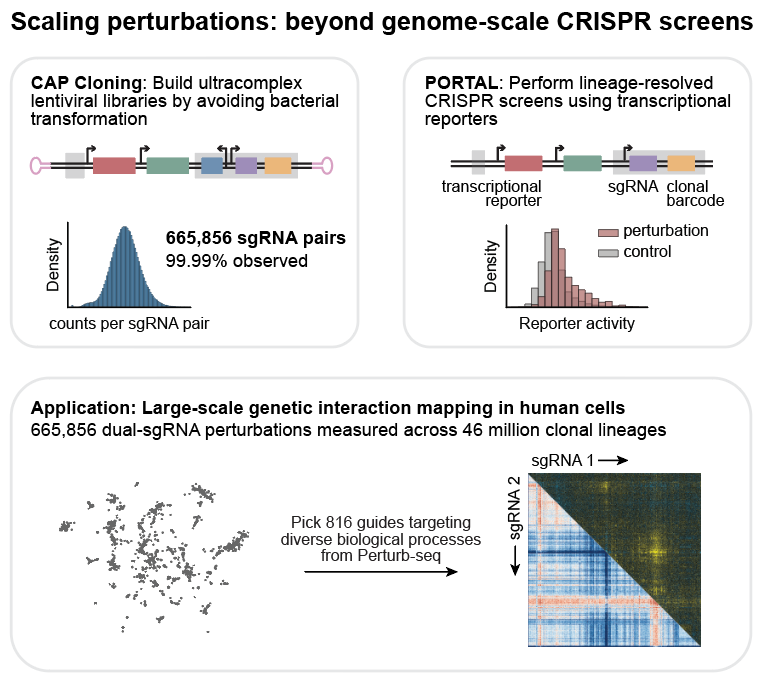
New preprint on technologies to scale up CRISPR screens.
We use them to map 665,856 pairwise genetic perturbations and outline a path to comprehensive interaction mapping in human cells.
We also introduce an approach for cloning lentiviral libraries with billions of elements.
Read the full story in our preprint! 👇
https://t.co/IaGoM6DkWR
Excited to share this work with my co-first author Kevin Sabath - a fantastic collaboration between the @AlexanderStark8 and @plaschka_lab labs! 🤝🧪
Do transcriptional activators work on any promoter? Our data says no. 🙅♂️
Despite driving ~2/3 of mammalian genes, CpG island (CGI) promoters have remained a puzzle. We identified >50 activators that are exclusively compatible with this promoter class. 🧬
Using Hcfc1 as a model, we show it functions as a molecular bridge: it connects CGI-bound TFs directly to TFIID. This recruitment overcomes a rate-limiting step unique to CGI promoters, enabling transcription initiation. 🧬🌉
🚀 Excited to share our latest work now on bioRxiv: the computational de novo design of tissue‑specific mammalian enhancers that work in vivo in the mouse embryo. 🐭
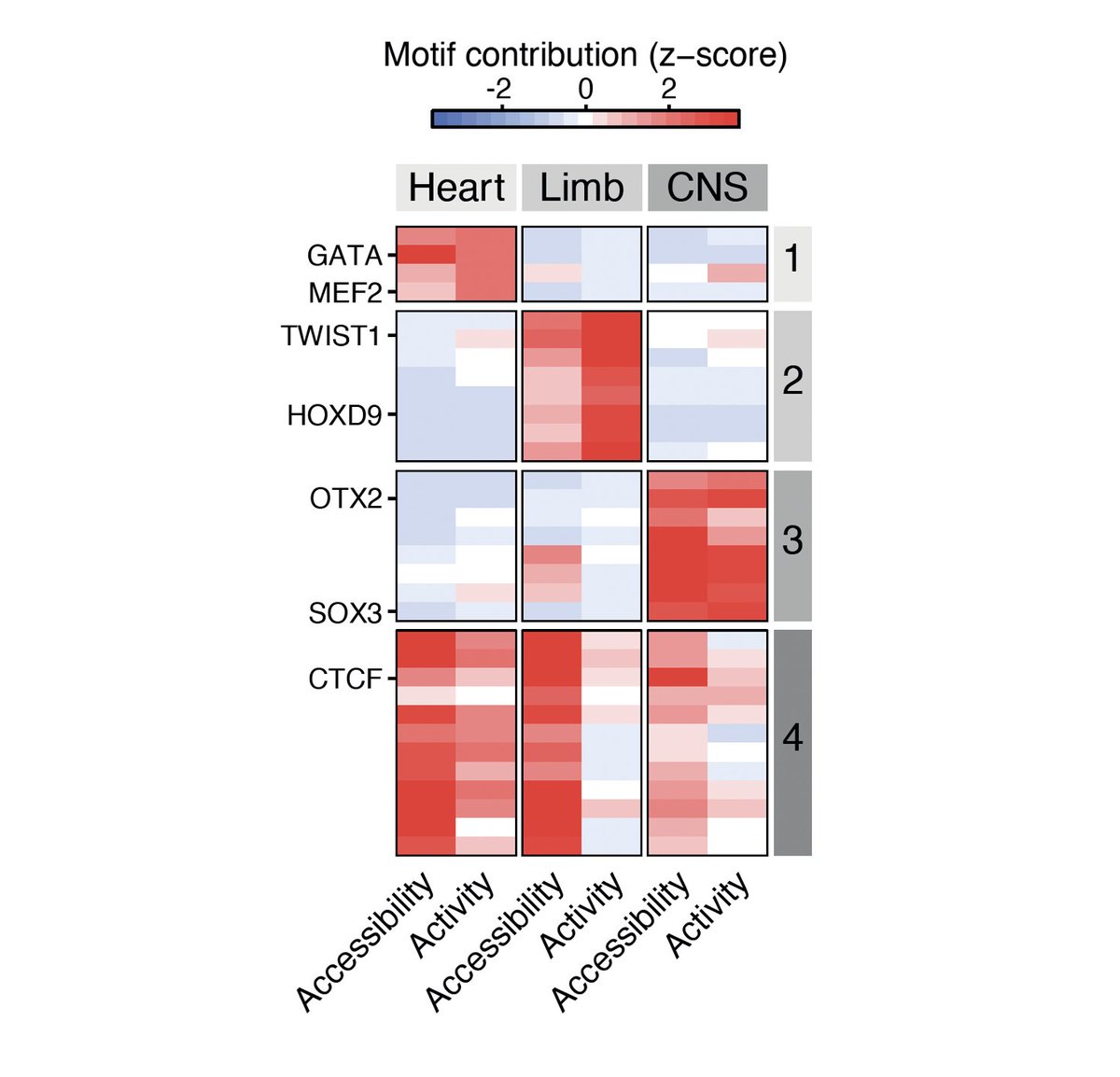
We use compact CNNs and transfer learning (pre‑trained on genome‑wide ATAC‑seq and fine‑tuned on validated enhancers from VISTA enhancer browser) to program tissue‑specific enhancers.
Transfer learning reveals clear shifts in motif importance between sequence‑to‑accessibility and sequence‑to‑activity models, highlighting the specific features that drive enhancer function.
100% (15/15) of designed enhancers for heart, limb, and CNS are active in their intended tissues in mouse embryos. 🎯
We hope this approach will help enable the design of more versatile and precise synthetic enhancers across mammalian tissues, cell types, and dynamic cell states.
Grateful for the amazing guidance from @AlexanderStark8 and @Loubiere20! 🙏
Huge thanks to all co-authors and collaborators, especially Evgeny @evgenykvon and Jacob @jmschreiber91, for making this work possible. 🙏
More details in the preprint and code:
bioRxiv: https://t.co/pePaINUSGj
#DeepLearning #Genomics #SyntheticBiology
Our new preprint is online! Viruses, bacteria and parasites use effector proteins to evade immunity and rewire host cell pathways. Together with @AlexanderStark8, we wondered if we could systematically map what these effectors, regardless of their origin, do in human cells. 1/8
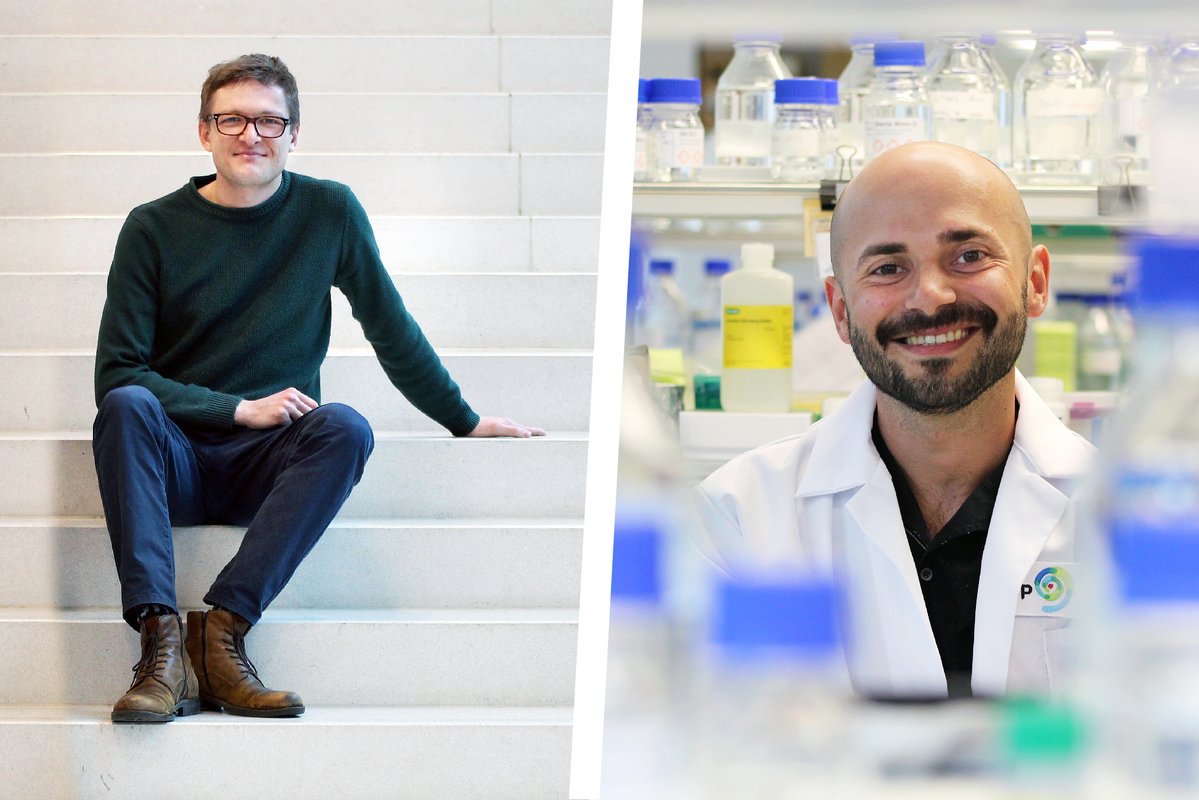
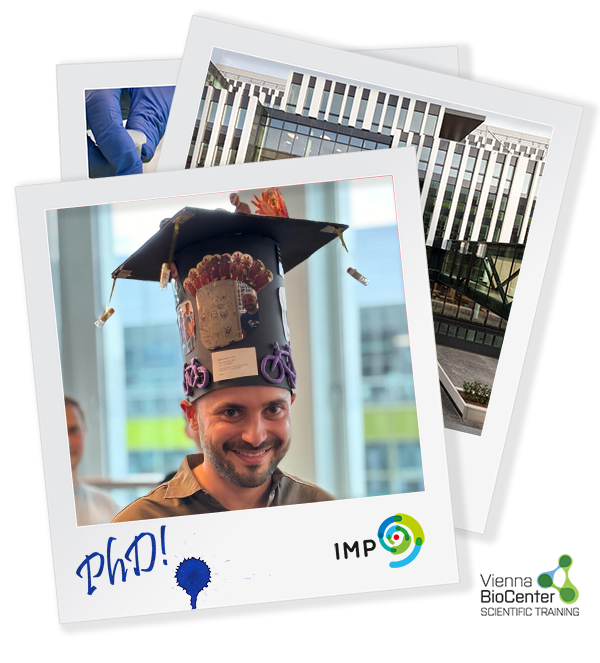
🎉Congratulations to recent graduates @FilipNemcko and @julianehrmann for winning this year’s Vienna BioCenter PhD Award for their outstanding doctoral theses at the @VBCPhdSymposium!
More about their projects and all the awardees: https://t.co/WbFVZ2HAcZ
@viennabiocenter
Excited to share our collaborative project at the @viennabiocenter, introducing ORFtag—a new method to advance protein function studies. Learn more in the interview and the linked paper. 🧬
Our @FilipNemcko co-developed ORFtag–a new method that makes it easier to study the function of proteins by mass tagging and tracking them across the entire genome.
Read about this @viennabiocenter-wide collaboration in the interview with Filip:
https://t.co/HshQ9kgGNp
How do enhancers work over distances that sometimes exceed megabases? Excited to share our work led by @gracecbower where we uncover a unique sequence signature globally associated with long-range enhancer-promoter interactions in developing limb buds: https://t.co/n0p7BdxSdq 1/
How do chromatin modifications quantitatively impact gene expression?
How do sequence variants or combinatorial marks influence relationships?
We developed a modular #EpigenomeEditing toolkit to systematically test these Q, published today 🧵…
https://t.co/2p4W0J50Oc
🎉Congratulations to @FilipNemcko from @AlexanderStark8's lab for being included in Forbes Slovakia “30 Under 30” list!
To earn him the mention is the development of a method that significantly speeds up the understanding of human gene functions.
https://t.co/NuZYDGach0