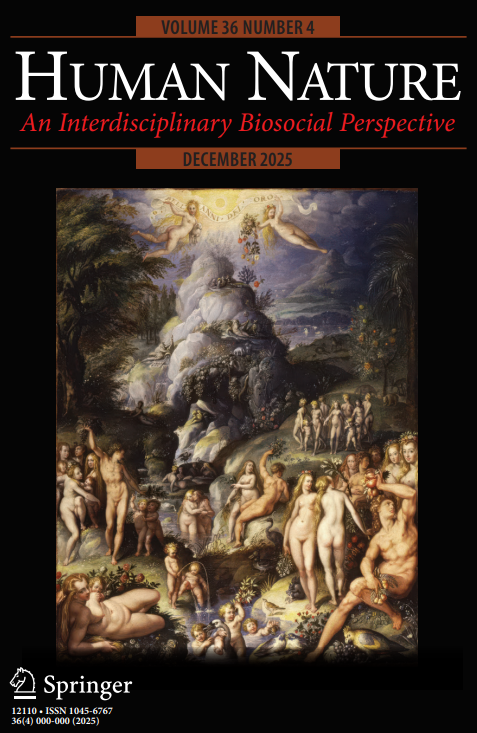
Humans exhibit an astonishing variety of marriage systems. Sometimes monogamous, other times polygamous, occasionally we even marry ghosts. The diversity can seem to defy any general explanation. In my new piece for @WorksInProgMag, I write about the Darwinian logic behind it. 1/
New paper 🚨 LLMs can match or exceed human coders on theoretical variables assessing the form and function of ritual fasting. Guided by theory and ethical human oversight, LLMs can generate units of cultural analysis for cross‑cultural theoretical tests. https://t.co/Z58sG422bI
1/ Ever wondered why so many cultures romanticize a "golden age"—where ancestors had superhuman strength, talked to animals, or lived centuries? My new paper dives into the cognitive roots of these "decline narratives"
https://t.co/rdkqjCC1hF
free version https://t.co/M3sa6Qf9UM
Good theory is important in the social sciences but while theories are, by necessity, continuously being refined and often superseded, the observations in the ethnohistorical record are timeless and will always be valuable. They remain criminally under-appreciated.
I’d be curious to know your take on this, @Evolving_Moloch. Inbreeding being rare is expected, but I was surprised to see moral condemnation of incest isn’t more frequent cross-culturally.
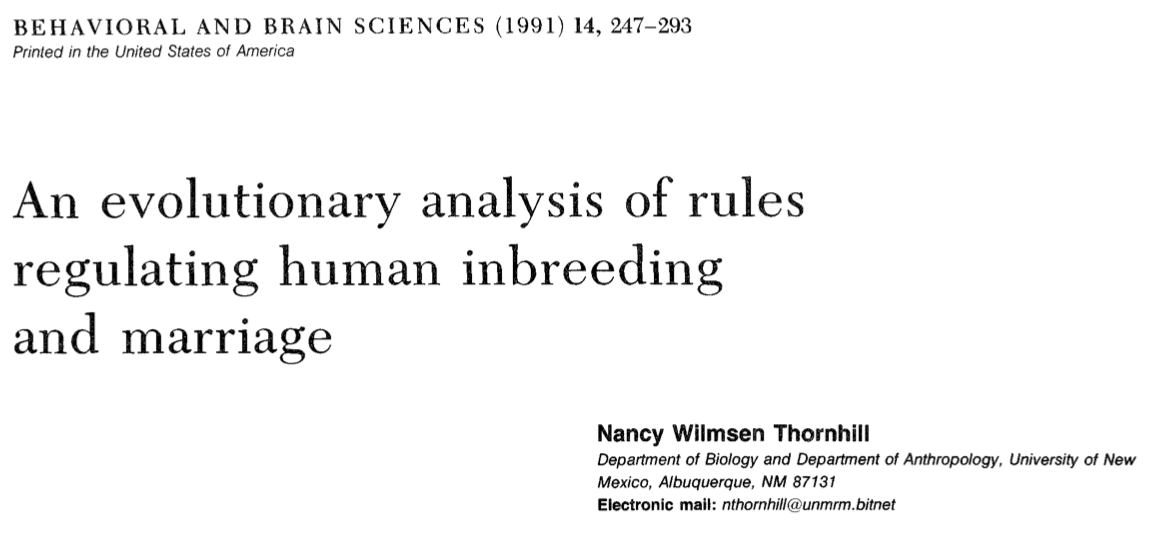
I recently came across a survey of the ethnographic record suggesting that fewer than half of the societies surveyed had explicit rules against incest within the nuclear family. I would have expected more, considering how often the incest taboo is described as universal.
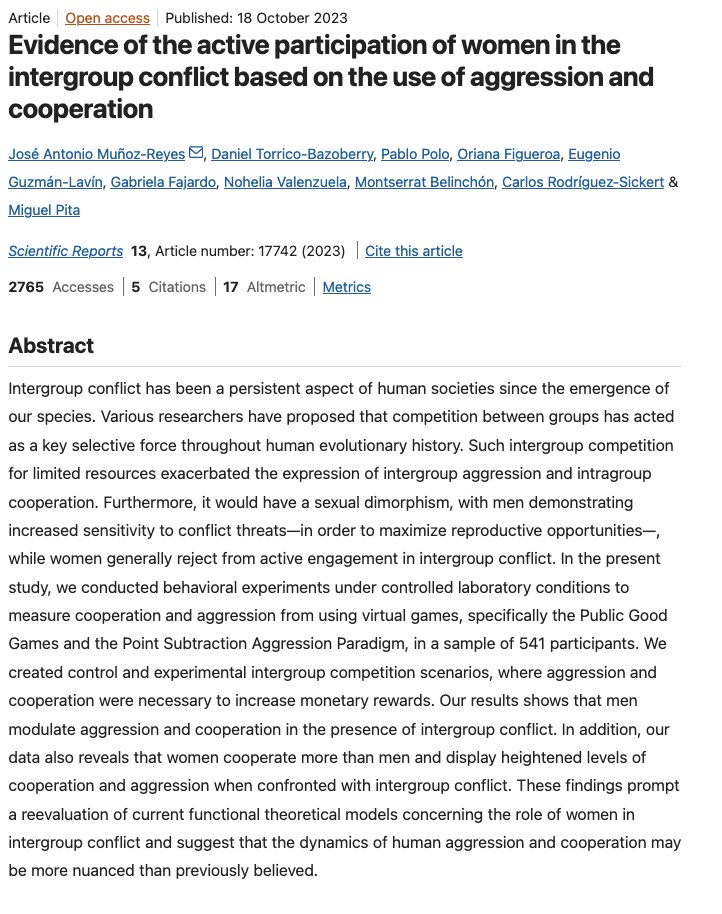
I think the idea women aren't aggressive is mostly a myth. Rather, what matters is the kind of aggression: physical (violence) or social, direct or indirect, and the context in which is occurs (war, social, resource, or status etc.).
Skewed sex ratios correlate with violence against women from spouses, boyfriends and in-laws, but less so for honour-based violence from natal family| Evolutionary Human Sciences | Cambridge Core - @OLKCampbell Maheen Pracha @tavitonst@Journal_EHS
https://t.co/RXcHtRH7VK
Nicolas Baumard & Jean-Baptiste André’s “ecological approach to culture” provides an exciting new perspective that reconciles Behavioral Ecology, Evolutionary Psychology, & Cultural Evolution. Read more in their EHB blog post: https://t.co/k97qkbs8i6
The winners of the HBES Margo Wilson Award (best paper in E&HB the previous year) are Olympia Campbell, Cecilia Padilla-Iglesias, Gregory Fiorio, & Ruth Mace for the paper “Genetic markers of cousin marriage and honour cultures”. Congratulations!
https://t.co/5LnuNGxlea
HGs were originally of key interest because foraging life-ways were thought to reveal important facets about human behavior and social structure in human evolution. There are very few populations in the world today that retain those aspects.
Over the years, a lot of our guests have recommended various books and/or media relating to various aspects of cognitive science. A 🧵
EP #1 | @hugoreasoning recommends
A common misconception is that matrilineal societies are matriarchial. Matrilineal/patrilineal refers to how people track descent and inheritance, not who wields social power.
I'm working on a project exploring "numerological correspondences"—beliefs that numbers from different domains match, such as the idea that the human body has 365 bones because there are 365 days in a year. I've found clear cases in literate societies (China, Medieval Europe).
We often have to judge who is knowledgeable—precisely when we are not. Can humans really do that? Our new paper in Psychological Science shows that, surprisingly, we can. https://t.co/hhXtIWbkCo
@A_Marie_sci Je te recommande le livre de Christophe Darmangeat "Le communisme primitif n'est plus ce qu'il était. Aux origines de l'oppression des femmes". Je n'ai pas réussi encore à me le procurer mais les premiers chapitres portent exactement sur cette question : https://t.co/sD3GZWhdqV.
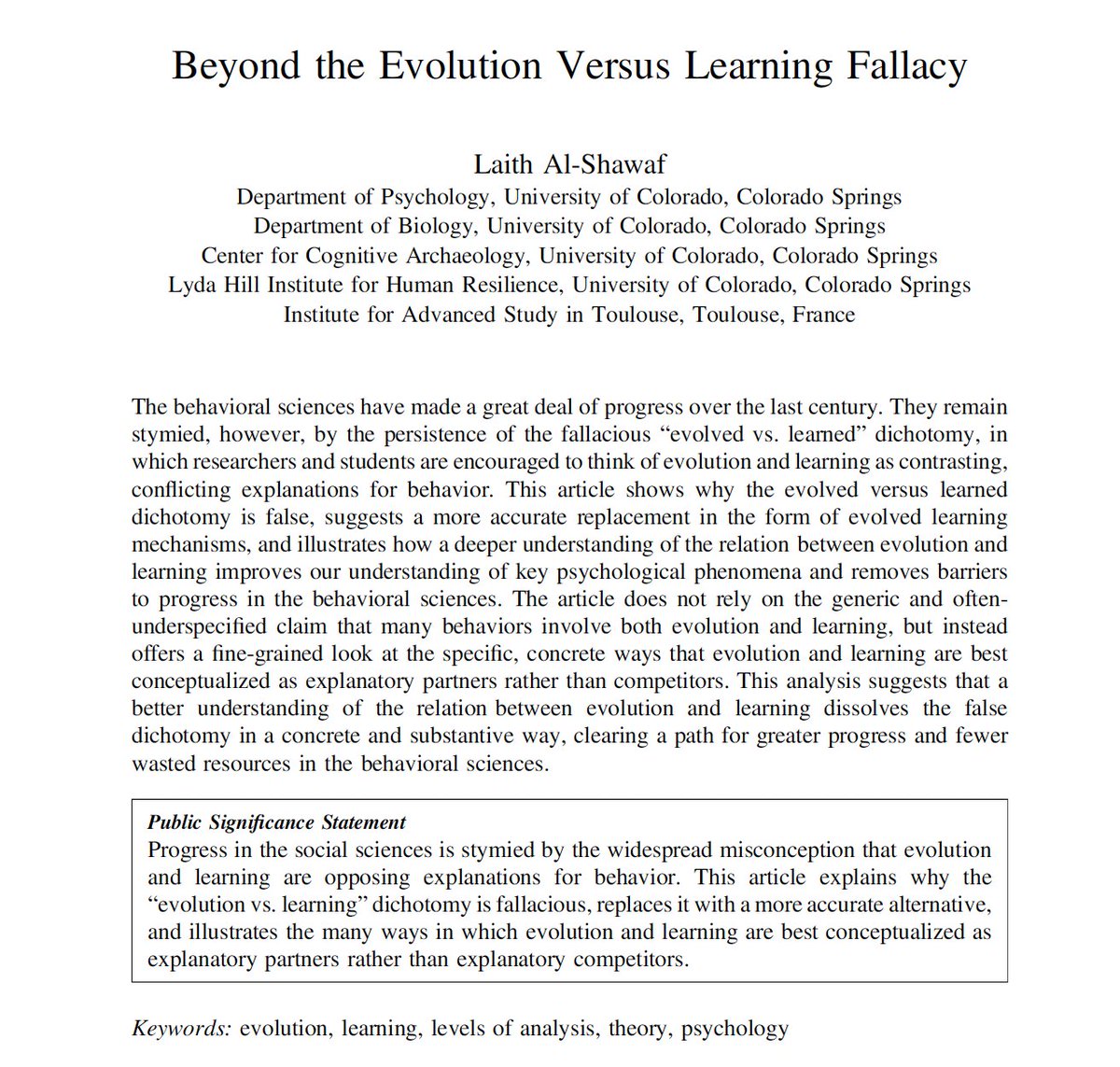
New, hot-off-the-presses! Delighted to share this new paper about why the ubiquitous "Evolution vs. Learning" dichotomy is the wrong way to think about things.
Out now in American Psychologist (@APA_Journals).
The paper avoids the boring, underspecified claim that "both matter" or "the answer is in the middle".
Instead, it takes a concrete, specific look -- with lots of animal examples -- at why evo & learning are best thought of as explanatory partners rather than competitors.
A short thread 🧵
https://t.co/G5zev8SVD7
@Evolving_Moloch I played a bit with the data it covers since I wanted to survey regulated battles. Lot of information about the number of casualties but death rates are nearly impossible to estimate. Very much in line with your point about Keeley’s data.
@Evolving_Moloch Also, I discovered a few months ago a database that compiles (more or less) detailed accounts of raids and pitched battles in Aboriginal Australia https://t.co/zDU5LYeFW5.