In the quiet majesty of space, the Sun is our eternal driver, a radiant sphere of nuclear fire hurling light and life across the void.
Huddled around it like silent travelers, the planets sweep in graceful orbits: Mercury scorched, Venus veiled, Earth alive with oceans and breath, Mars rusting in memory, the great gas giants crowned in storm and ring, and distant ice worlds whispering in blue twilight.
We ride with them, brief passengers made of stardust, hearts beating with the Sun’s own energy, eyes lifted to behold the driver’s golden face.
We are starlight gazing back at its source, a fleeting song the universe sings to itself.
JFK's call for human exploration of the Moon set us on our path to Apollo and the first crewed lunar landing. Remembering President John F. Kennedy on the anniversary of his death: https://t.co/pzCf3rMiAX
This is part of our universe.
An area of sky about the size of a grain of sand held at arm's length.
The spiked features are stars in the Milky Way.
EVERYTHING ELSE IS A GALAXY.
Image by James Webb
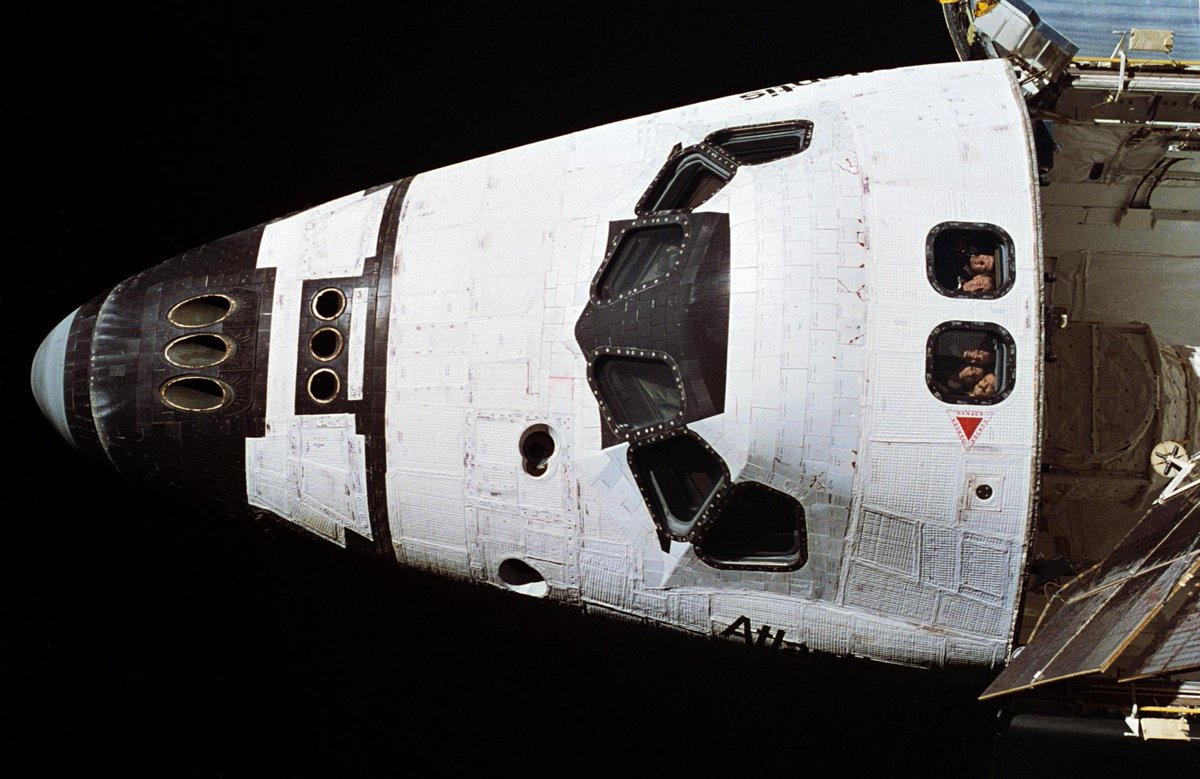
This was such a fun photo to set up, to get the right lighting angle as we circled Earth, and to make time during the frenzied docked schedule. It was taken on a film camera by cosmonaut Thomas Reiter through Sergei Avdeev's sleep station window on the Mir space station. The sun was so bright in our eyes we (the Atlantis crew) were all squinting like crazy, waiting until Thomas confirmed he'd got the shot. But I love how it shows the texture of the Shuttle's rough, protective hide, and the glimpse of humanity (and my moustache) against the eternal blackness of the universe.
Today marks Fibonacci Day (11/23), a date that reflects the famous numerical sequence 1, 1, 2, 3.
This sequence appears in mathematics, nature, architecture, and many scientific phenomena, reminding us of the elegance and order underlying complex systems.
This week, HTV-X1 successfully docked with the ISS, marking a key milestone for the mission. Our team's contributions to the vehicle included PCBMs, hatches, navigation lights, internal lights, and cabin sensors. We’re proud to support this achievement and the spacecraft’s role in advancing space operations.
Video by JAXA Astronaut @Astro_Kimiya
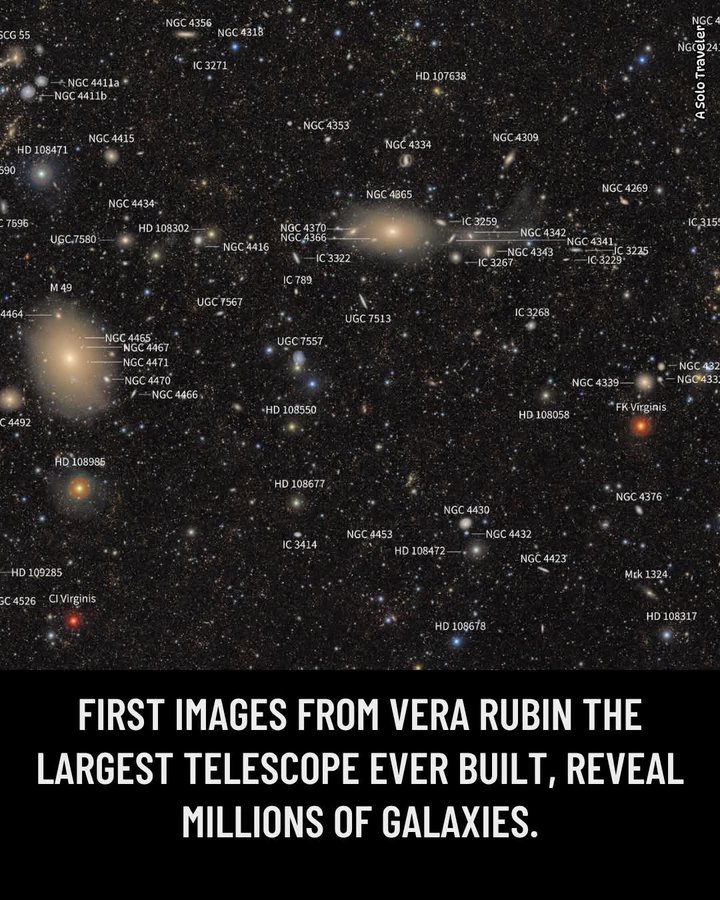
The Vera C. Rubin Observatory has produced the first-ever full-sky imaging survey, revealing millions of previously undetected galaxies distributed throughout extragalactic space.Equipped with an 8.4-meter primary mirror and a 3.2-gigapixel focal-plane camera—the largest digital camera ever constructed for astronomy—the observatory will conduct repeated scans of the entire southern celestial hemisphere over a 10-year baseline, enabling time-domain observations of transient phenomena.The Legacy Survey of Space and Time (LSST) will facilitate real-time detection of near-Earth asteroids, supernovae, and other dynamic events while providing high-precision photometric and astrometric data to constrain the influence of dark matter on large-scale structure.These inaugural images represent the initial dataset in a decade-long campaign that will dramatically enhance our understanding of cosmic evolution and the underlying architecture of the universe.
Fun fact.
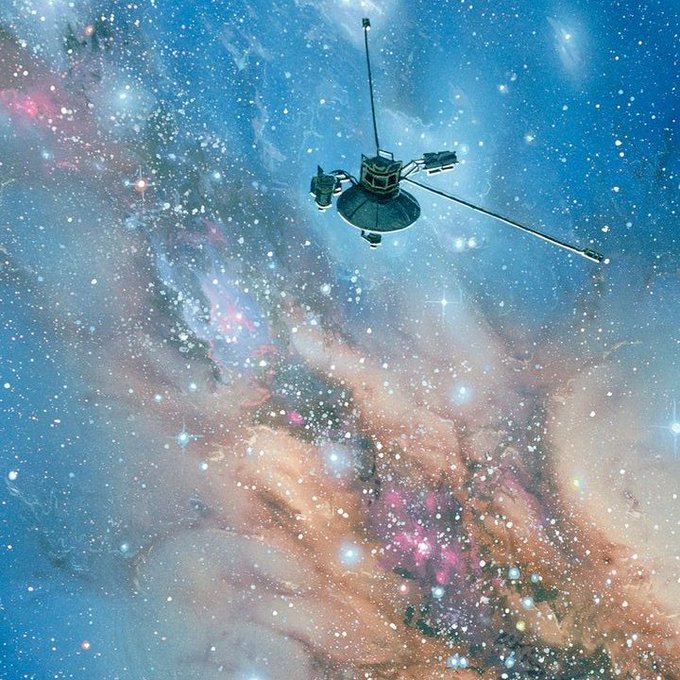
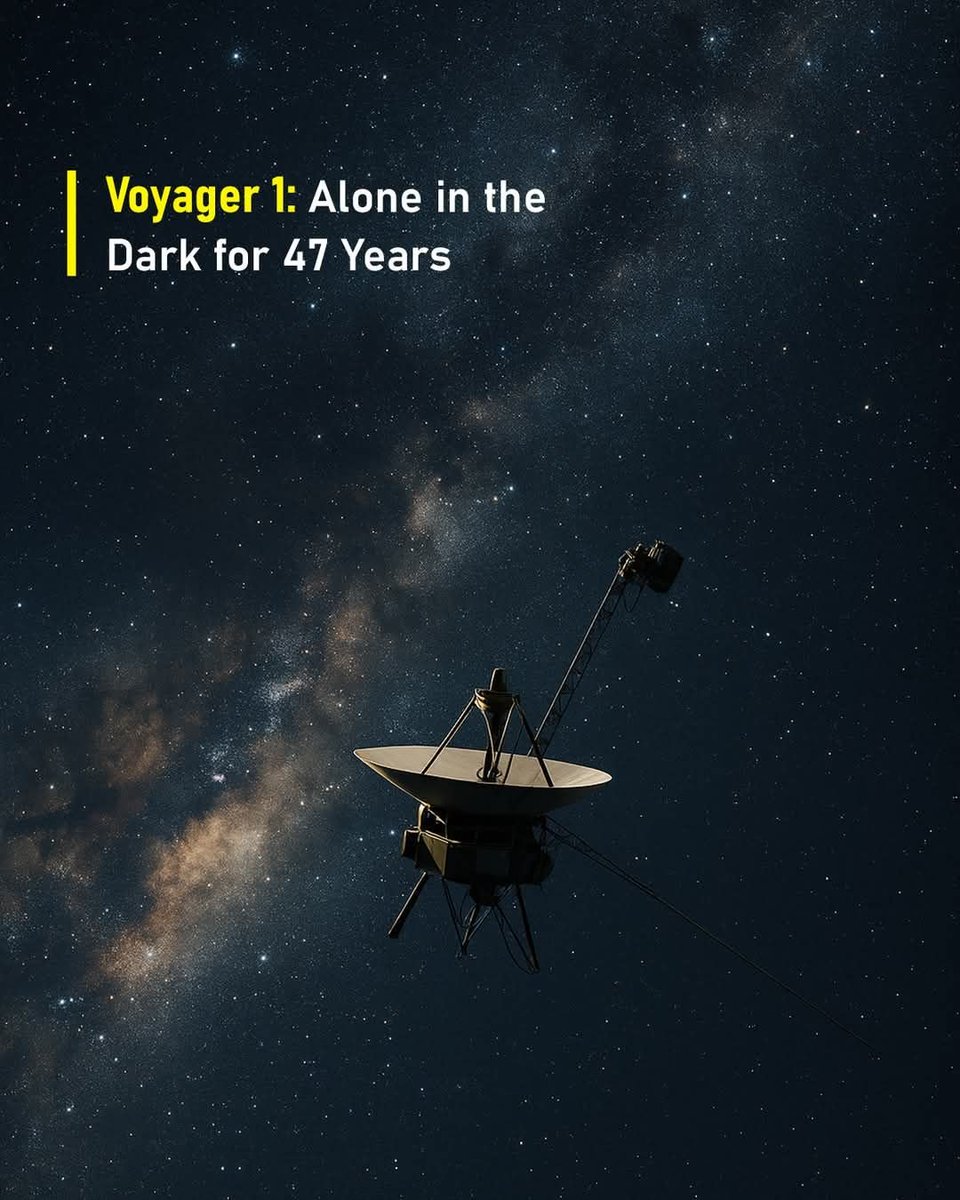
Voyager 1, currently over 15 billions miles away (roughly 2.5 light hours), still operates using 69 KB of memory, 8 track tape and Fortran code written in 1977.
Right now, more than 24 billion kilometers from Earth, a tiny spacecraft is drifting through the darkness—Voyager 1, the most distant object we've ever sent into space.