By employing a virtual reality behavioral system and in vivo imaging, our new study shows how a brain chemical, acetylcholine, helps the brain learn and adapt to unexpected events, driving flexible behavior.
@oistedu@NatureComms https://t.co/DZ0LBSaElf
In any given situation, we need to adapt our behavior for success. In @NatureComms , OIST researchers describe the neural basis of behavioral flexibility in mice, with insights which may help us understand a wide variety of diseases and disorders. https://t.co/0PajU5gmJ9
Check out our latest customer story on @Gasarpong at @OISTedu.
https://t.co/QWEjl7gsqt
His work published in @NatureComms explores the role of acetylcholine (ACh) in behavioral flexibility.
Read the study👉 https://t.co/6NOj3dsOAj
#neuroscience#behavior#neurobiology
…collaboration with a dedicated group of colleagues and the continued support of the @PhenoSys team, whose guidance has been invaluable throughout.
Grateful for the mentorship and research environment at @OISTedu…
“If I have seen further, it is by standing on the shoulders of giants.” — Isaac Newton
Honored to have my work featured by @PhenoSys as part of their success story series.
https://t.co/wScMUujQYS
This has been a truly rewarding experience, made possible through…
…collaboration with a dedicated group of colleagues and the continued support of the @PhenoSys team, whose guidance has been invaluable throughout.
Grateful for the mentorship and research environment at @OISTedu…
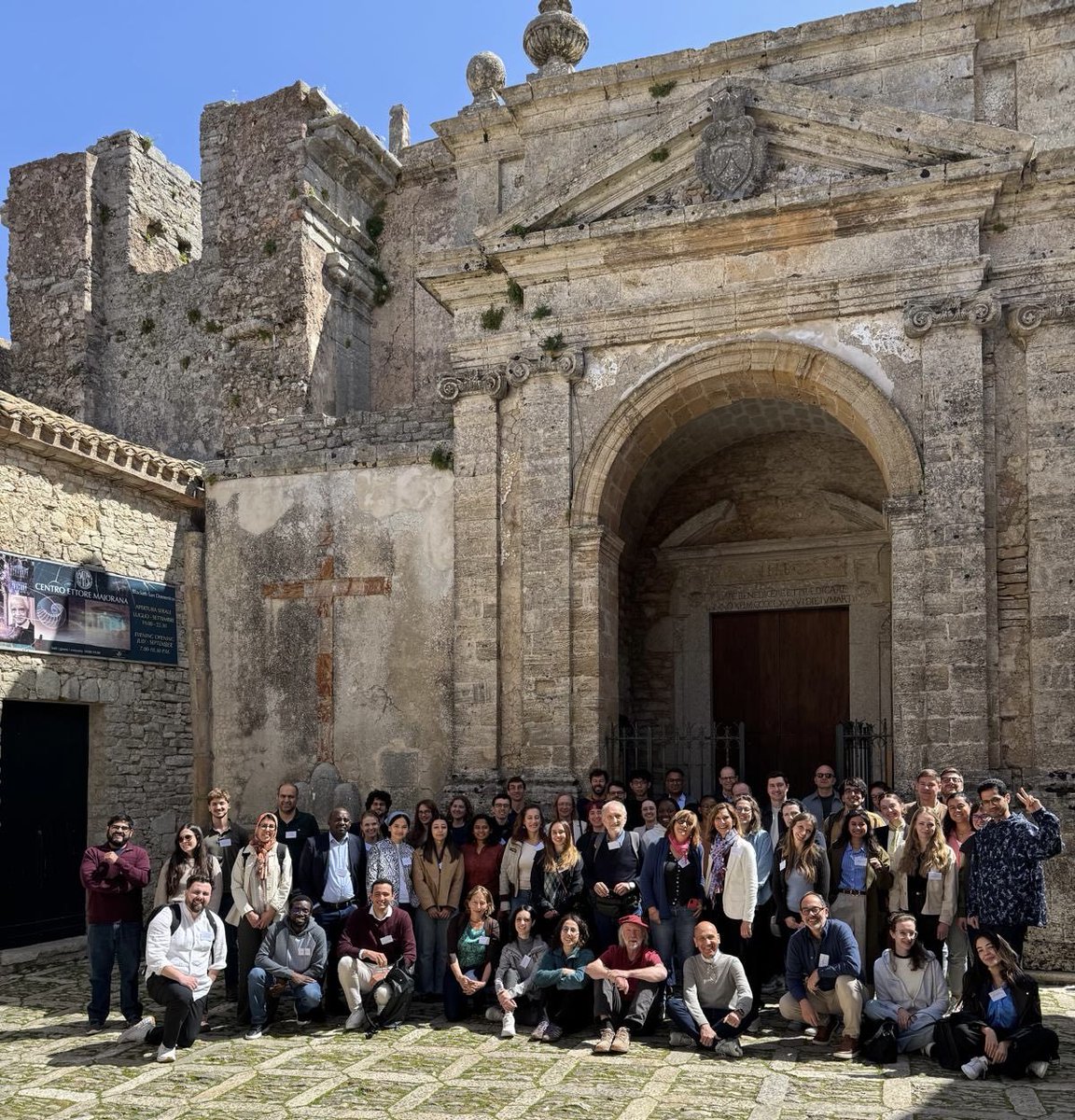
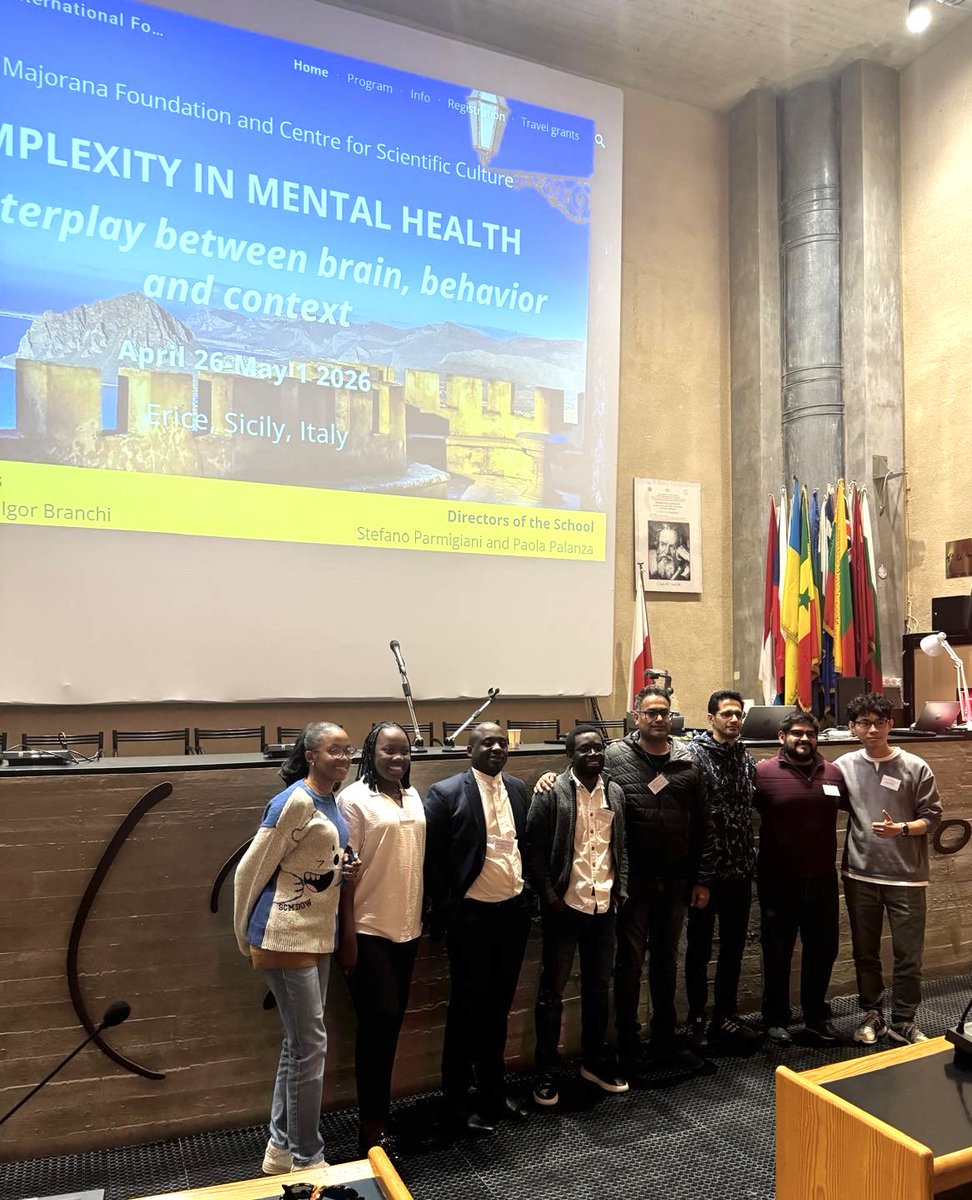
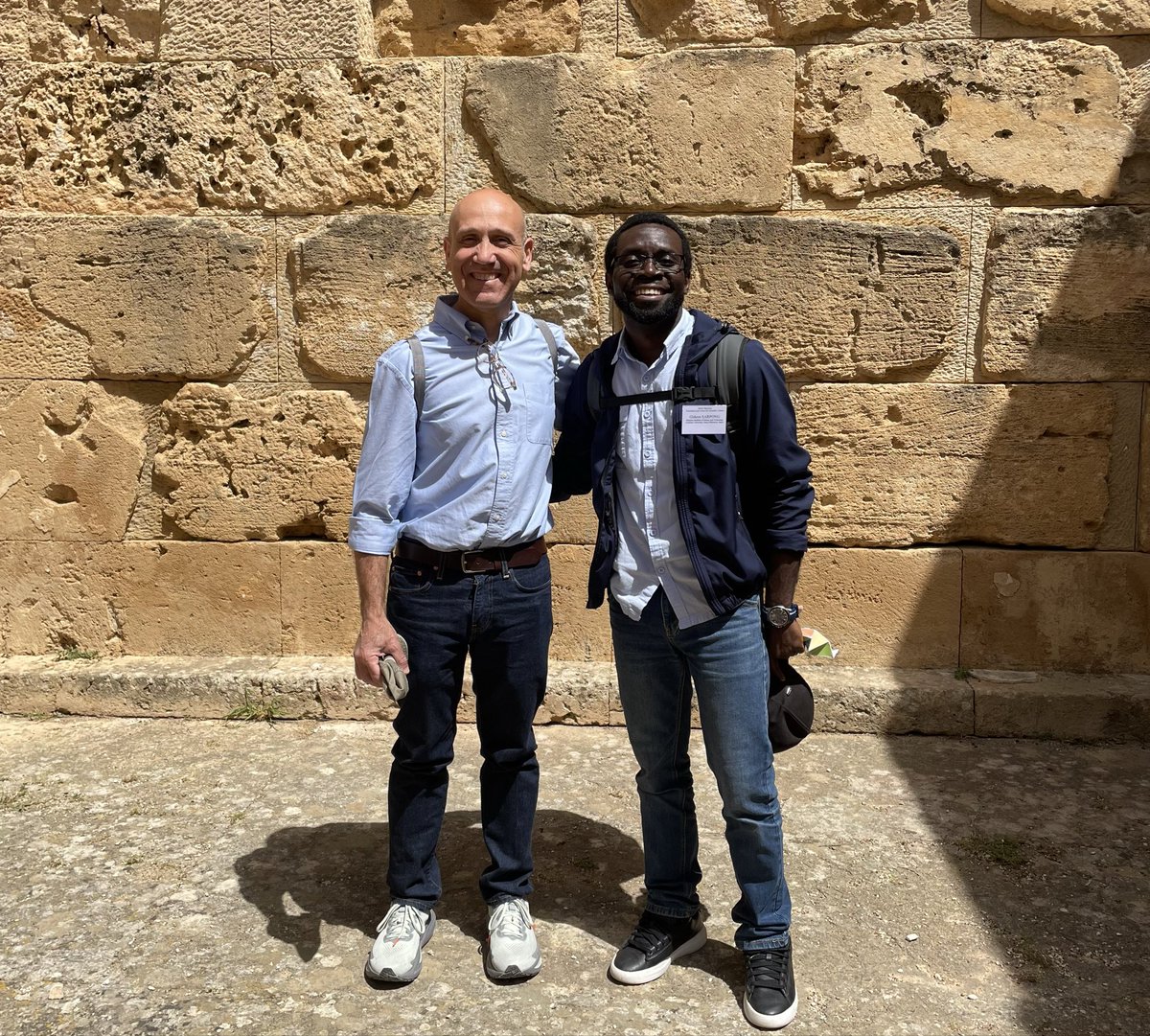
Last week I joined the IBRO School on “Complexity in Mental Health” in Italy.
As a behavioral neuroscientist at @OISTedu, it was inspiring to exchange ideas across disciplines and career stages.
Huge thanks to @IBROorg for the support.
#ComplexityInMentalHealth#Neuroscience
🔔A new @natcomms study from @OISTedu & @hhmi_science explores how the brain "switches" strategies.
Huge congrats to the team! 🎉
https://t.co/6NOj3dsOAj
We are humbled to contribute to this study through our JetBall-TFT system.👉 https://t.co/8AmArTXkm0
🚨 Today in @Nature, we report GEMINI—a genetically encoded intracellular memory device that writes cellular dynamics into tree-ring-like fluorescent patterns within cytoplasmic protein assemblies.[1/n]
https://t.co/eVchPCiK6f
New paper alert 🚀 Our organism-wide single-cell ATAC-seq atlas of mammalian aging is now out in @ScienceMagazine, led by our fantastic graduate student @ziyu__lu from @RockefellerUniv!
https://t.co/RpbgHgd29D
MOST READ PAPER (>8100 readers) in 🚀🧠
A comprehensive, timely review of psychedelic therapy in depression & substance use disorders—covering neurobiology, clinical evidence, plasticity, and ethical considerations. 🌱🧬
A must-read for the neuroscience & mental health community.
@FENSorg@WileyBrainPsych@istanbuledu
https://t.co/5317cKqScd
excellent new paper breaking a long-standing impasse by the identification of specific behavioral conditions under which CINs are recruited to augment DA release in vivo : Cholinergic modulation of dopamine release drives effortful behaviour https://t.co/B6HaqBBq4P
New protocol from SWC reduces off-target effects in optogenetics 🚥
Light can unintentionally activate retinal cells, complicating results. The protocol minimises light leakage and verifies off-target activity is reduced.
➡️ Paper in @STARProtocols https://t.co/dZGQVablEq
Very cool preprint from Paul Kramer and Zayd Khaliq showing a dual effect of nicotinic receptors on excitability of striatal dopamine axons.
Excitatory nicotinic signaling drives action potential bursting in dopaminergic axons https://t.co/zIZ6xGhVZ6
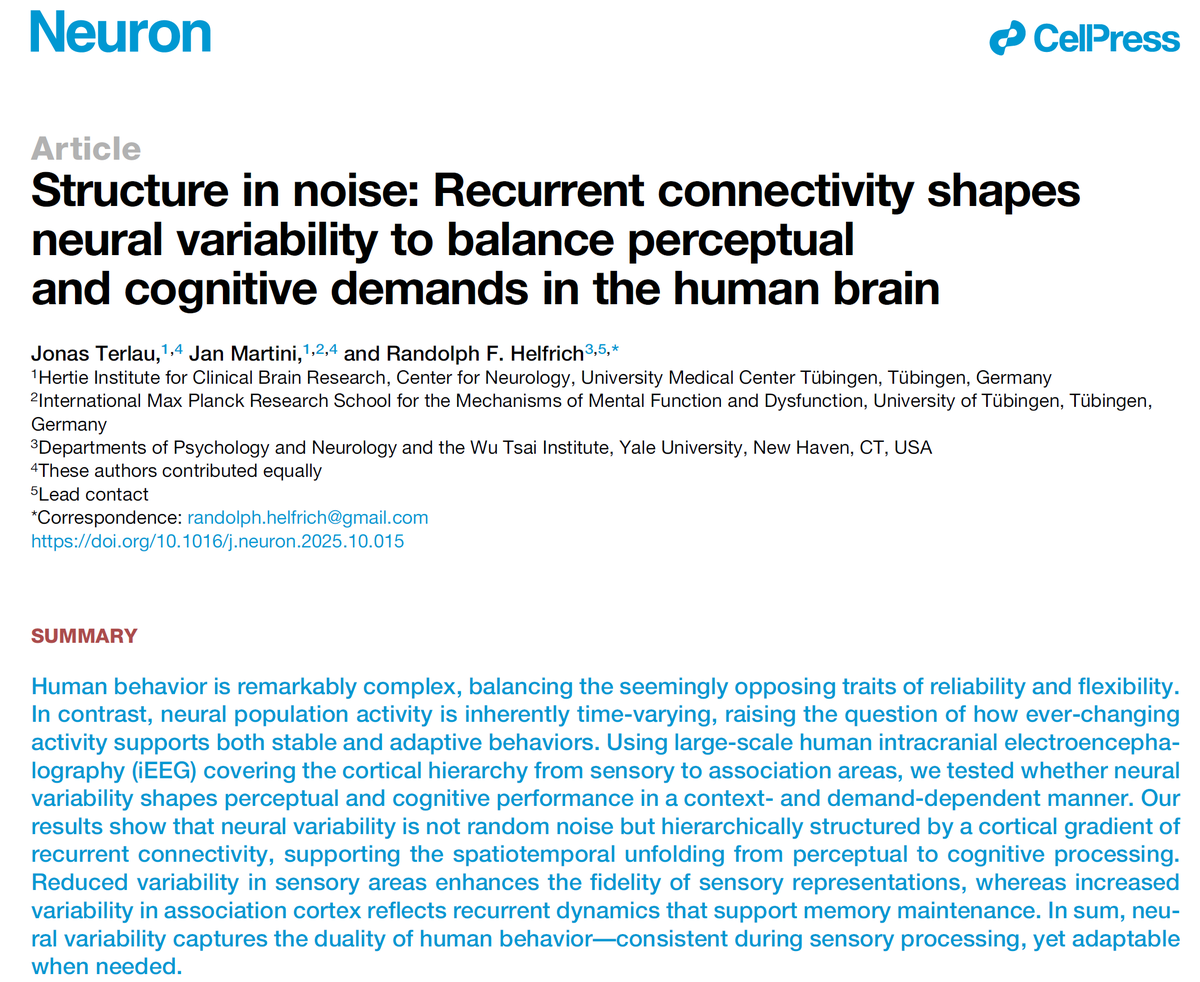
𝗪𝗵𝗮𝘁 𝗶𝘀 𝗻𝗼𝗶𝘀𝗲 𝗶𝗻 𝘁𝗵𝗲 𝗯𝗿𝗮𝗶𝗻?
Almost always we average responses thus equating response variability with noise.
Well, we shouldn't because variability is also signal, not noise to be entirely discarded.
https://t.co/vvSgL07XMJ
Join leading scientists for a 3.5-day #LakeConference discussion on: "The Neurobiology of Mental Health" at the level of genes, cell types, organoids, circuits, networks and brain systems. Learn more & apply by January 31: https://t.co/WcuXHdWnFa
I’m very happy to share the final version of this, now published in @Nature
https://t.co/an3t14AziH
Hippocampal neurons that initially encode reward shift their tuning over the course of days to precede or predict reward.
Tim Spellman demonstrates his open-source tool, FlexRig. Read the paper for the full instructions and parts list to build the tool. #eNeuro#OpenSourceTools
https://t.co/rZWD2PXF0T
We are thrilled to share our new preprint!
What happens to memory when >50% of synapses disappear?
We show that artificial hibernation induces massive neuronal remodeling, yet preserves memory through protected circuit architecture.
https://t.co/4FReI3WZKe





![DingchangLin's tweet photo. 🚨 Today in @Nature, we report GEMINI—a genetically encoded intracellular memory device that writes cellular dynamics into tree-ring-like fluorescent patterns within cytoplasmic protein assemblies.[1/n]
https://t.co/eVchPCiK6f https://t.co/KPmYKFgnZt](https://pbs.twimg.com/media/HCgxFtcWkAAoaPS.jpg)