@xwu@TrowbridgeLab@rosslevinemd This is great work and a valued contribution to the field. - we use this Cre often. Findings like these should absolutely have a published home. Thank you for this effort and putting this out here!
Not two cells in our body have exactly the same DNA, making us all genetic mosaics! @SMaHTnetwork is trying to understanding what this mosaicism is doing
Excited to say that our commentary @Goodell_Lab "The Silent Variation Within Us" about SMaHT's first papers is out now! 1/n
More evidence that #ClonalHematopoiesis evolution is context dependent! 🧬 Clonal selection reflects both cancer therapy and germline genetics, with important implications for tMN development.
Huge congrats to @KellyLBolton@IrenaeusChan & colleagues!
https://t.co/L9T9KHPDin
I had an incredible opportunity to talk with Dr. Tolar, the President of BCM, about my research, my involvement with the Postdoctoral Association, and my experience at BCM and in the @Goodell_Lab.
As always, feeling more comfortable pipetting than talking.
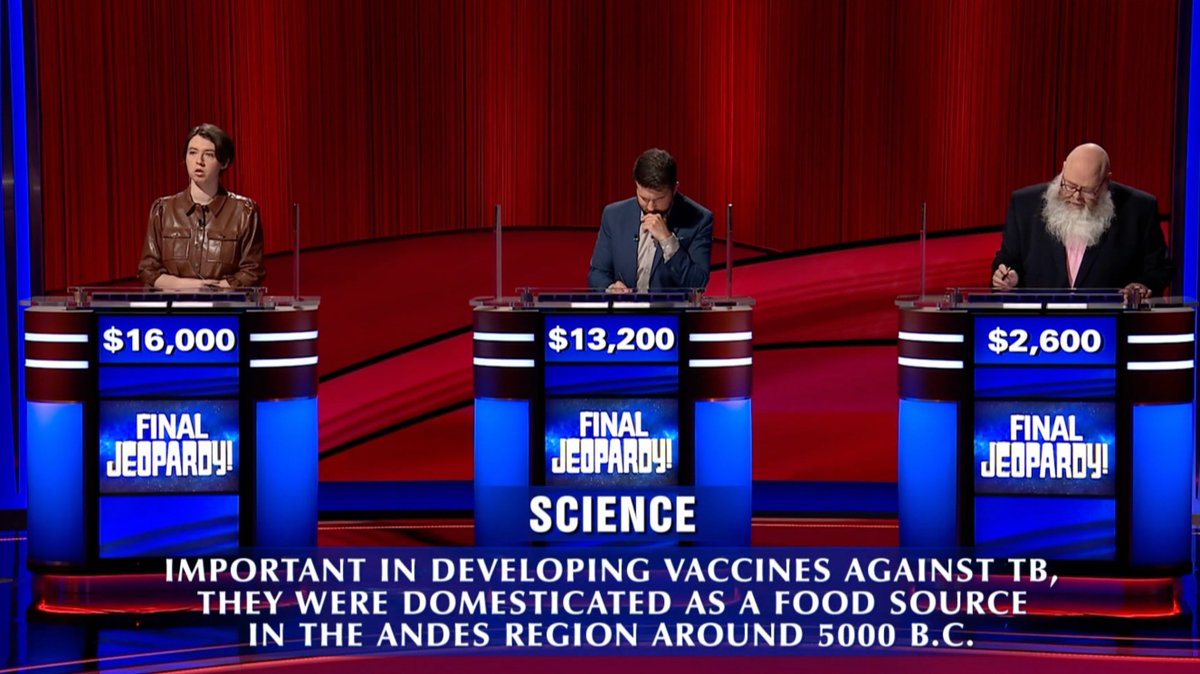
Jeopardy! Champion Stella Trout in the nail-biters of the Champions Wild Card (CWC) Tournament- reruns this week and next! Definitely smarter than her mom! Going to the TOC this year!
https://t.co/8MrxlEjVqk
Well, who is curious? How did Stella Trout do in her #Jeopardy! Champions Wild Card quarterfinals game? Did she make it to Final Jeopardy in good standing? Was she confident enough in the #Science category to wager big? Did she answer the #Biology question right?
"...deidentified data on 110,303 manuscript submissions over 5 years at Science and Science Advances."
Key results:
- Editors rejected 28.1% of submissions outright.
- They sent the other submissions to an advisory board for feedback, and then rejected 75% of those.
- If a paper makes it to peer review, then it will be accepted about one-third of the time.
- Submissions from "more prestigious" schools are far more likely to make it past the editor. The benefit of being from a prestigious school goes down once the paper makes it to peer review.
- Submissions from China are penalized (less likely to be accepted). Papers with lots of authors also have higher success rates. Note that all of these things are correlations, though; it is possible that papers from China are literally just worse on average, or that papers with large teams really are better, etc.
- And they made the data available!
We recently launched an essay competition for which scientists described structural problems they run into. With nearly 200 submissions, we decided to give out 8 awards, instead of 3. A quick summary here 👇 1 / 5
@PracheeAC Really interesting competition! And great summaries of the essays, winners, and process on the blog. Congrats to the winners and to the @AsteraInstitute for putting this together!
Paying peer reviewers led to faster first editorial decisions — an average of 5.5 working days, down from nearly 38 for unpaid reviews.
The review quality, as judged by handling editors on the basis of helpfulness in making an editorial decision, went up.
1/
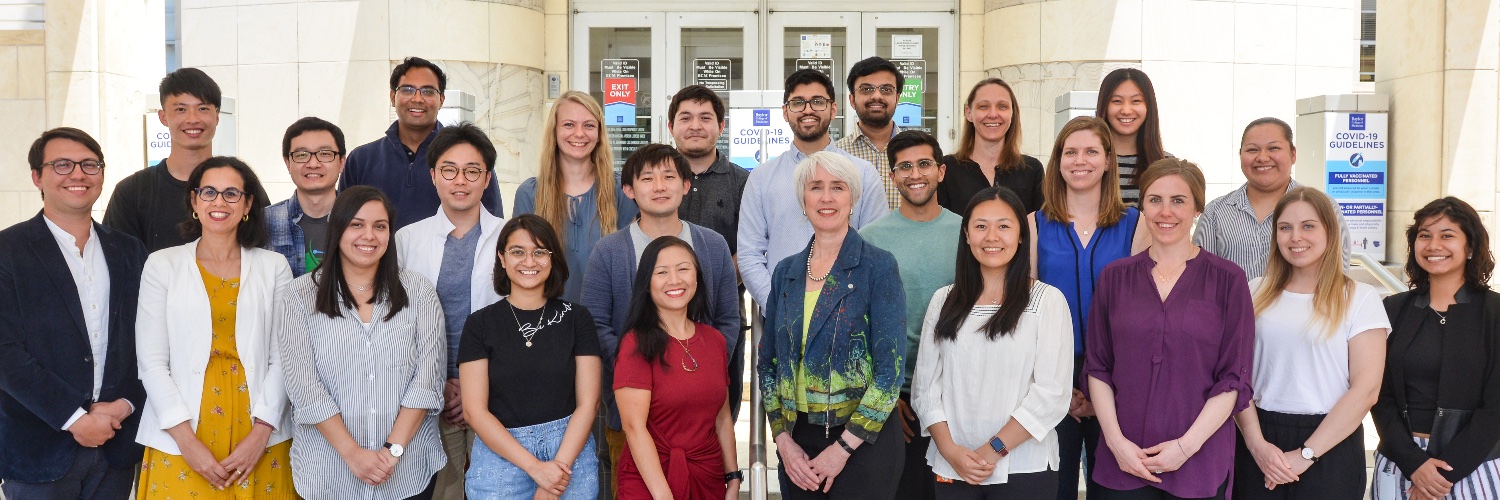
Two Presidents of @BCMhouston! Excited to welcome Jakub Tolar as our new President and CEO! He brings enormous energy and enthusiasm to take BCM into the next era, bringing deep experience leading a learning health system and his own interests in clinical translation of basic discoveries. Also grateful for the 16-year leadership of Paul E Klotman, who brought us through financial challenges, the pandemic, and a changing academic landscape with calm and humor. He modernized medical education, our infrastructure, and bolstered our finances; we grew and evolved. We are in a fantastic position for the future. Hope to be recruiting soon- watch this space!
@imartincorena Congrats! Great to see in final form. And what an issue- shared with @VamsiMootha with a fantastic somatic mosaicism story, tracking clones using mitochondrial DNA variants, and the inimitable @stephxie with human HSCs that exhibit memory of inflammatory exposure.