Now published in the June issue
@NatureNeuro
I am especially happy that the artwork my 4-year-old son created (with a little help) was chosen for the cover. #Glial cells in diverse hues as paint splotches, CD8+ #Tcells in red, aberrant #myelin in purple. Thanks @ElisaFlo04 & co!
Excited to announce our study (w/ @RukmanThota & @MaxKrummel) published today @Nature:
Macrophages “hold our living identities” by taking tiny bites from living cells and presenting this information to CD8 T cells.
https://t.co/9XENtFrB4h
#immunology#cellbiology@immunox@ucsf
Thrilled to share our invited Nature Reviews Neuroscience review on the role of peripheral immunity in Alzheimer’s disease.
Honored to write this piece with outstanding colleagues @KuchrooLab, @RudyTanzi, @weinerlabhms, Mehdi Jorfi and rising stars from my lab Neta Rosenzweig and Kilian Kleemann.
My sincere thanks to Editor Katherine Whalley for the invitation.
The time has come to deeply investigate peripheral immunity in AD.
How is the persistence of compartmentalized inflammation sustained in MS?
Our new study in @ImmunityCP offers some hints.
https://t.co/QBUdWljXhY
Congrats @fngruqng2, @LenaSpieth, @LuLiu_Laura, @StefanBerghoff, @vinitiwari1 et al.
Join us 10/30 for a @Labroots webinar with Dr. Janos Groh: From Myelin Damage to Immune Dysfunction: Unravelling the Aging Brain.
Hear how single-cell + spatial transcriptomics reveal glial–immune interactions driving neurodegeneration.
Register: https://t.co/zyBF9e9j1I
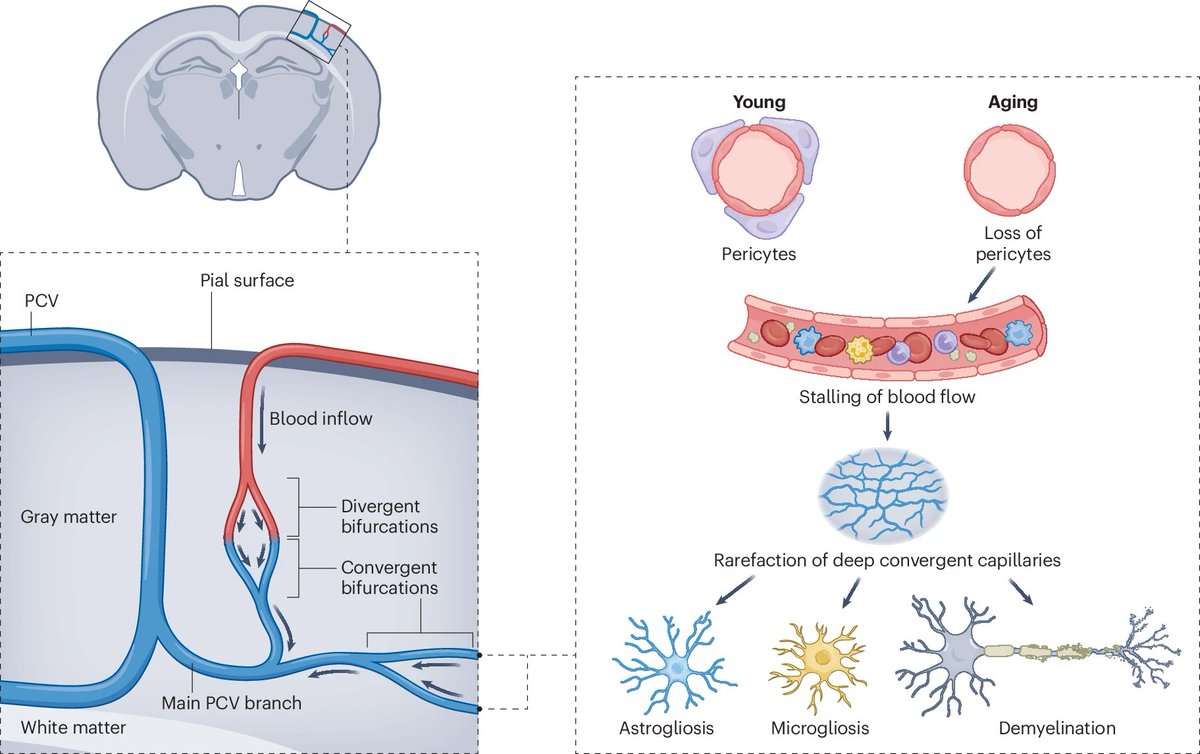
When it comes to aging, the health of even the smallest vessels is critical to maintaining cognitive function.
New study in @Nature finds that deterioration of the brain's drainage system contributes to reduced blood supply in deep white matter: https://t.co/cs9JA4CHuY
Are T cells in the brain friend or foe? In tauopathy mice, CD8⁺ T cells can slow pathology. In older, wild-type mice, they damage the optic nerve. (@NINDSnews @NIH@tumuenchen https://t.co/22HjO6hUSo
New study featured on the June cover of Nature Neuroscience used Vizgen’s MERSCOPE® to uncover how microglia and CD8⁺ T cells drive white matter degeneration in aging brains.
Learn more: https://t.co/5O9imytVA6
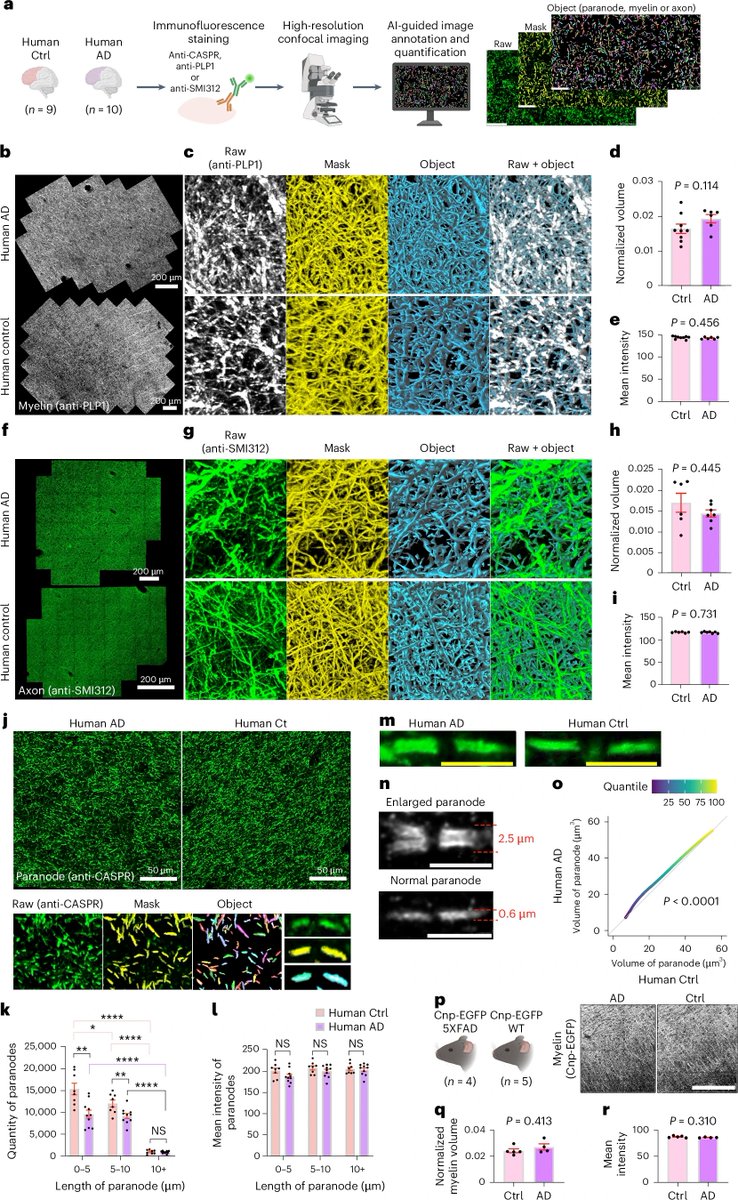
Myelin–axon interface vulnerability in Alzheimer’s disease revealed by subcellular proteomics and imaging of human and mouse brain
https://t.co/1FiOeGAHHA @NatureNeuro
Pleased to share our latest work on neural-immune interactions in aging white matter.
It was a long journey, made possible by incredible support and persistent efforts of many colleagues across various locations.
Many thanks to everyone involved.
https://t.co/l8UAe3m0Rr
@RBioceutics There is literature that regulatory T cell expansion may be beneficial in this context.
Thank you.
I can ask him. He will probably ask for a lot of gummy bears.
@Ella_Maru Thank you, Ella. Good question. Possibly yes. Resistant microglia downregulate Csf1r and show increased expression of genes encoding alternative receptors that may support their survival (Supplementary Fig. 5d,e).
To start off 2025, we are very pleased to introduce a Special Issue on the Neuroscience of Aging, curated by @AGuskjolen . We hope you enjoy every single piece of it as much as we do!
https://t.co/ImgPc6z4Dp