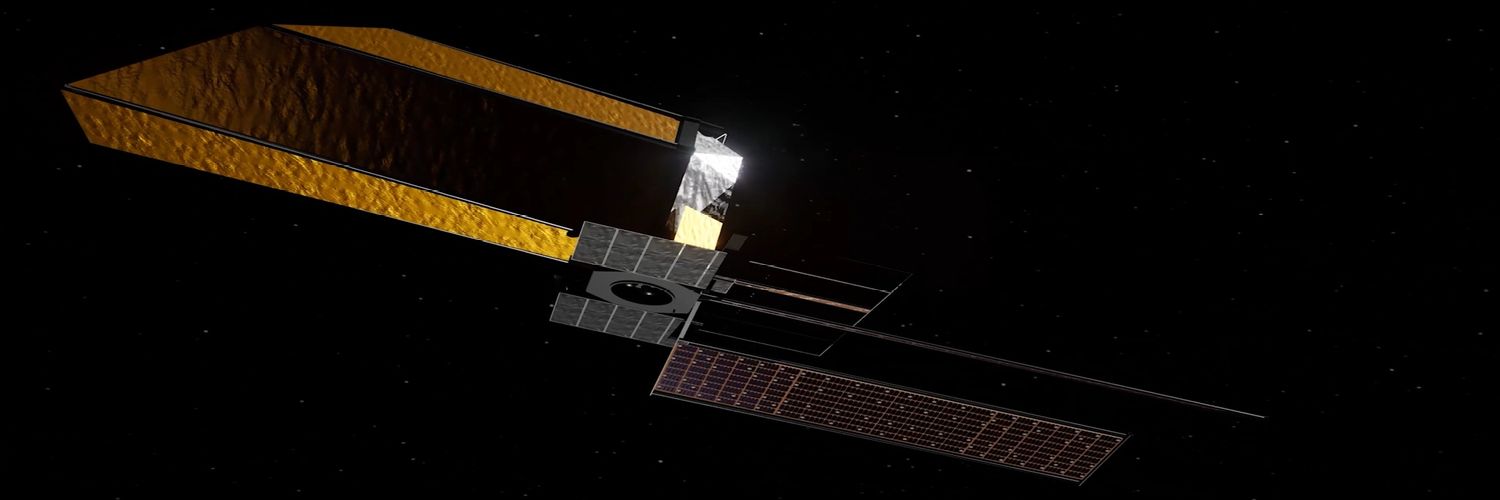
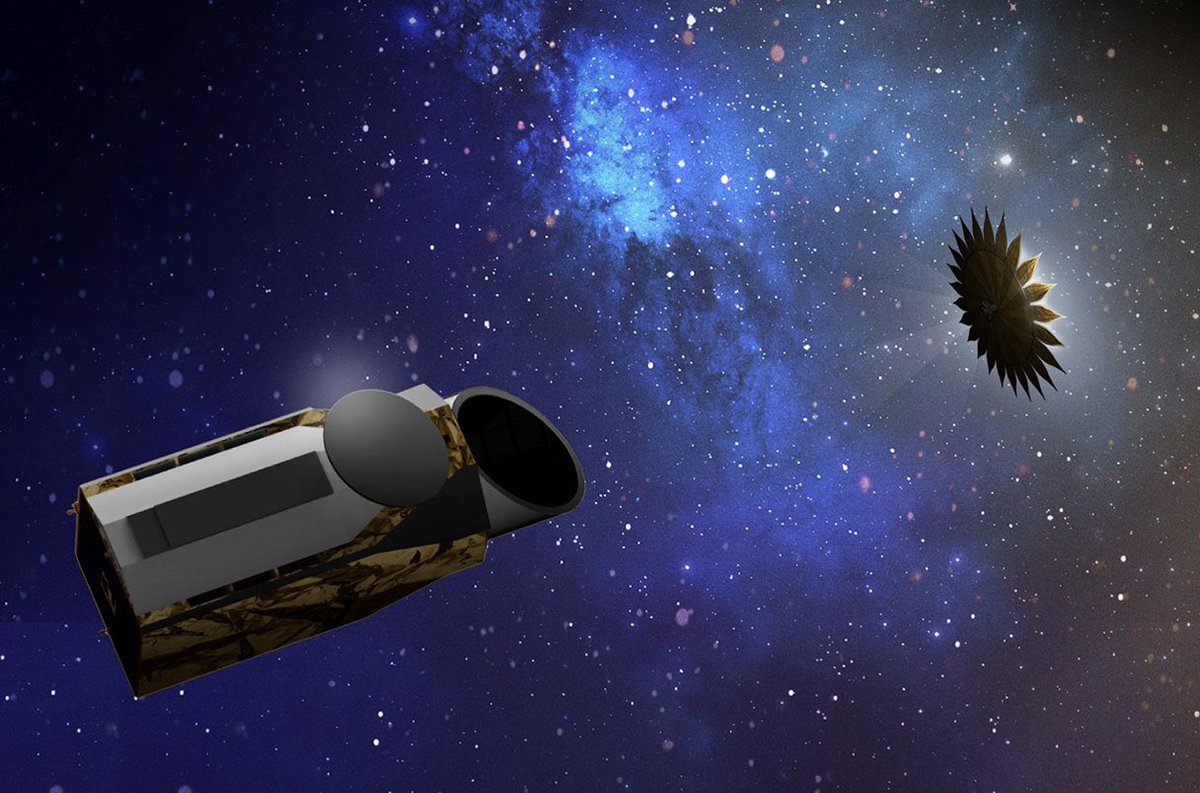
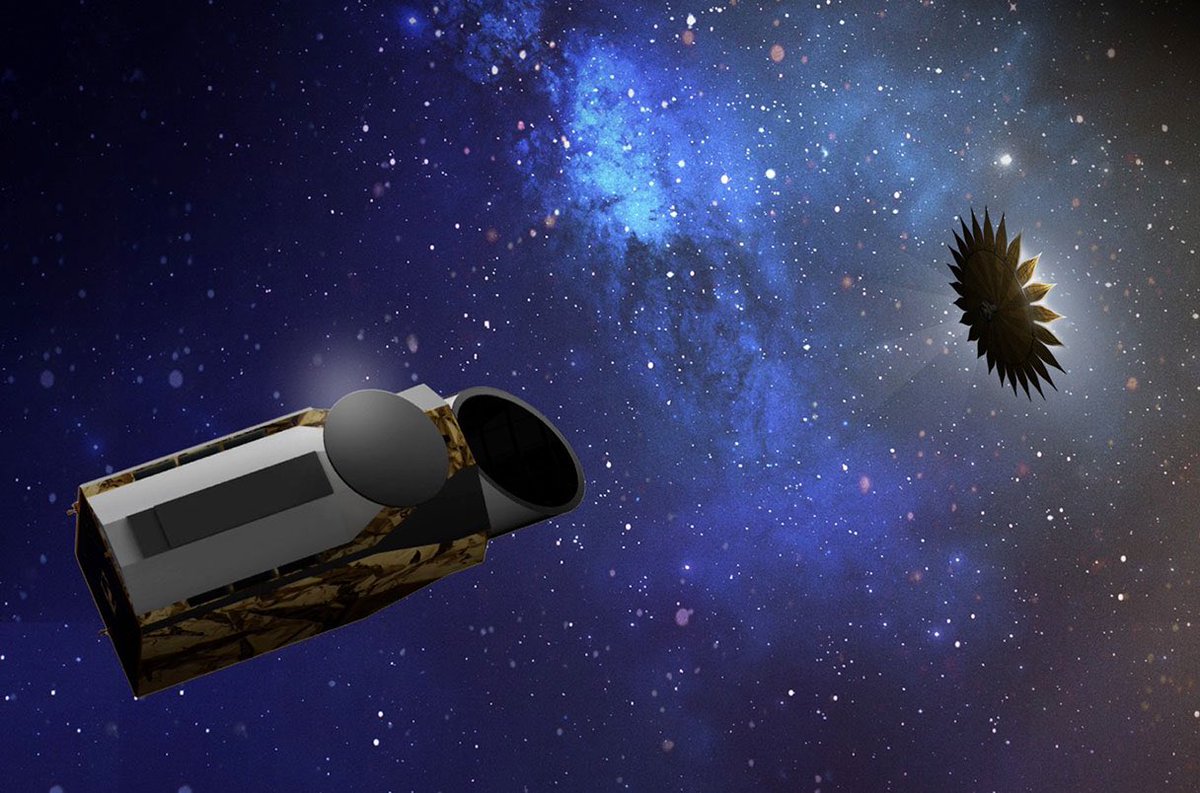
The Habitable Worlds Observatory is a next-generation telescope and currently starting to take shape, and aims to search for signs of life on habitable worlds.
Hello, world:
The @HabitableWorlds Observatory is a next-generation telescope and currently starting to take shape, and aims to search for signs of life on habitable worlds.
Join us on this journey of exploration and discovery! 💫✨
2025 marks 30 years since Michel Mayor and Didier Queloz announced 51 Pegasi b (23 Nov 1995), the first confirmed planet orbiting a Sun-like star.
In 1992, astronomers Aleksander Wolszczan and Dale Frail published a paper in the journal @Nature announcing the discovery of the very first confirmed planets outside the Solar System, orbiting an incredibly dense, rapidly rotating stellar corpse known as a pulsar (PSR B1257+12). While this discovery was a major breakthrough, it only confirmed the existence of planets orbiting a pulsar (a rapidly rotating neutron-star remnant), not around a normal, Sun-like main-sequence star. At that time, there was still no proven evidence of planets orbiting a star like our Sun.
That historic confirmation came three years later. In 1995, Prof. Michel Mayor and Didier Queloz made the first confirmed discovery of an exoplanet orbiting a solar-type star, known as 51 Pegasi b, using the radial velocity technique. Their discovery was published in Nature on 23 November 1995. This marked the first verified detection of a planet orbiting a “normal” star like our Sun and launched the modern era of exoplanet science.
This discovery started a revolution in astronomy, and the finds have kept rolling in ever since.
Since then, the number of known exoplanets has grown at a breathtaking pace as detection technologies and space missions have rapidly improved. As of late 2025, @NASA confirms over 6,000 exoplanets in the Milky Way alone, with the count constantly increasing as new discoveries are verified. Thousands more candidates still await confirmation, suggesting that trillions of planets may exist in our galaxy, potentially vastly outnumbering stars. All of this has happened in just under 30 years of exoplanet exploration—a remarkable scientific achievement.
In 2019, Michel Mayor and Didier Queloz were awarded the @NobelPrize in Physics “for the discovery of an exoplanet orbiting a solar-type star,” recognizing the profound impact of their 1995 discovery.
With every new discovery, scientists move closer to answering whether there are other planets like Earth that could host life as we know it.
(Image credit: L. Weinstein / Ciel et Espace Photos)
This next-generation space telescope will be the most powerful we've ever built, drawing on decades of innovation from the @NASAHubble, @NASAWebb, and the upcoming @NASARoman space telescopes.
NASA is building its most ambitious space telescope yet — the @HabitableWorlds Observatory (HWO), meant to search for planets that could support life — and maybe even life itself.
#HWO is still in early development, but it could change everything. 💫
Are we alone? To find out, we’re building the Habitable Worlds Observatory. This powerful space telescope uses proven technologies from @NASAHubble, @NASAWebb, and @NASARoman to look for signatures of planets that can support life — and maybe life itself. https://t.co/rKKDP1Slys
Building on the legacies of the Hubble, James Webb and Nancy Grace Roman space telescopes, the Habitable Worlds Observatory would search for and characterize habitable planets beyond our solar system. 🔭 🧪 ☄️ #HWO2025#HWO25
https://t.co/PrBGtWGtMU
This Saturday, July 1, @ESA's Euclid spacecraft is scheduled to lift off, shedding light on dark matter and dark energy—two of the biggest modern mysteries about our universe. We'll stream ESA's broadcast live on NASA TV starting at 10:30am ET (1430 UTC): https://t.co/OGAULAtEn6
.@HabitableWorlds Observatory (HWO) is set to launch in ~2040, bringing us closer than ever to detecting alien life! The HWO flagship mission is currently taking shape, and we can’t wait to finally answer the age-old question: "Are we alone in the universe?" 💫
.@NASA has finally chosen which flagship mission, like Hubble and #JWST, will launch in ~2040. Detecting alien life is now a reachable goal. https://t.co/q8Lcq4sy3C
A massive star has a beautiful destiny — on its way to becoming a black hole or neutron star, it’ll shed its outer layers in a brilliant supernova explosion. This week, we’ll be talking about these powerful cosmic events, how we study them, and how we’re connected to them.
The universe is full of wonders. It is a never-ending source of inspiration, reminding us there's always something new to learn, discover, and appreciate. From the intricate dance of the planets to the explosive birth of stars, every moment is a reminder of its beauty.
Discovery Alert! 📣
A second Earth-sized exoplanet is found hiding in a star’s habitable zone! A year there, one orbit, takes 28 days. It joins three other worlds in the system 100 light-years from Earth.
https://t.co/qCYoMQnKs3
The Habitable Worlds Observatory is the highest priority astrophysics space facility of the future!
And, this development will take advantage of new commercial technologies, esp big launch and servicing.
🚀🔭🌌
https://t.co/x0kztTDsFr
Flush with #JWST’s success, @NASA is now planning an optical telescope that would be just as big and have a grand new goal: looking for signs of life on Earth-like planets, perhaps by the early 2040s. https://t.co/k9AmTdg2s6