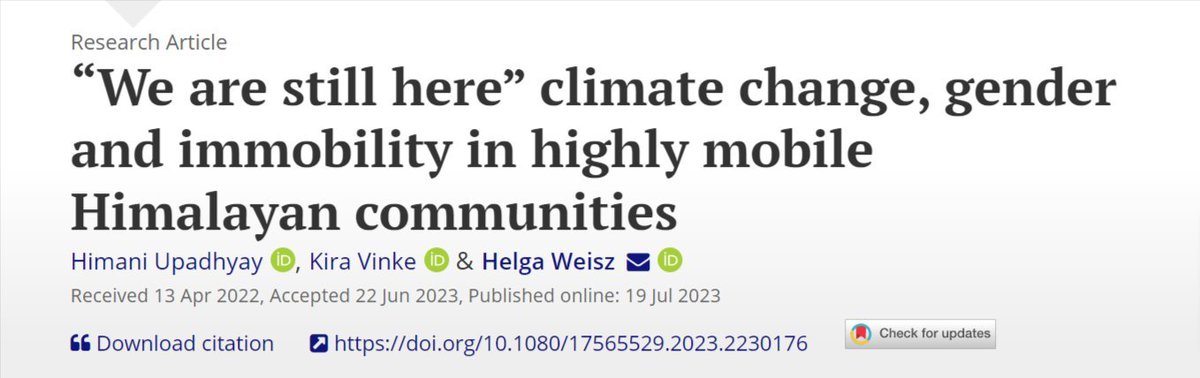
📢New article on immobility, gender in climate change-affected, highly mobile Himalayan communities in @ClimDevJournal, with great co-authors @KiraVinke and Helga Weisz
@EpiccPik@PIK_Climate@tandfonline
Full text:⬇️⬇️
https://t.co/FA7xVBC6zS
Here is what we ask and find🧵
⚡️⚖️a few snapshots from the landmark #ClimateJustice decision delivered today by the 🇪🇺European Court of Human Rights in Klimaseniorinnen v. 🇨🇭Switzerland
🧵a short thread focusing on the scope of substantive obligations of States...⬇️
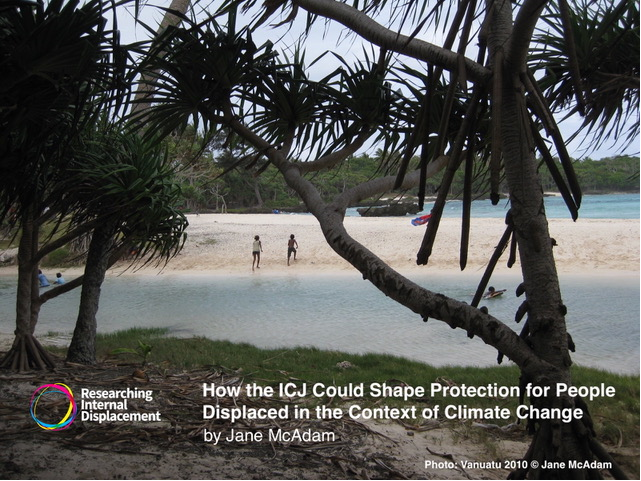
The International Court of Justice Advisory Opinion on states' obligations on climate change is promising, but its ability to address displacement remains unclear.
Groundbreaking piece by @profjmcadam@KaldorCentre based on work of @pisfcc#ICJAO4Climate
https://t.co/UL0mNJYdat
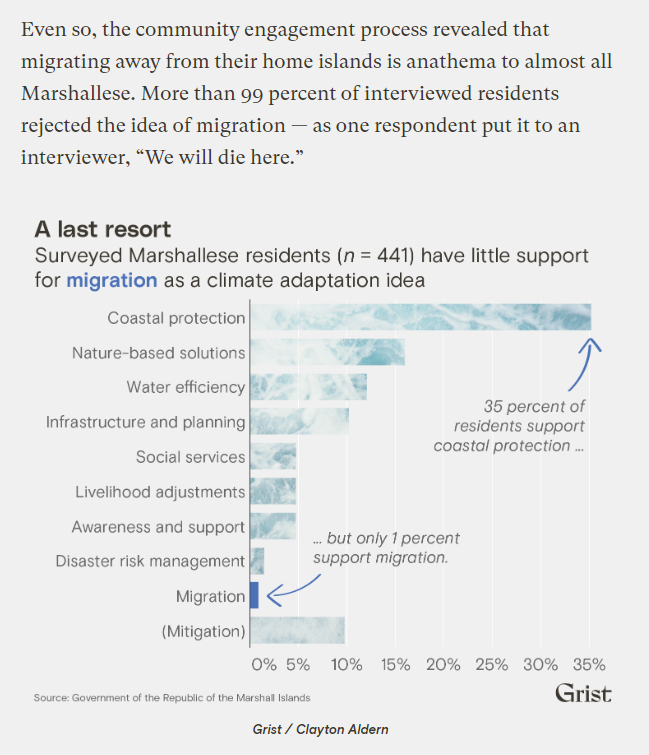
These numbers from a Marshall lslands gov't report are striking. Only 1% support migration as a climate adaptation strategy. There are a lot of ways we could interpret this... (1/n)
https://t.co/fpnUEr9RpT
"Even if Delhi were to reduce air pollution to national standards, residents would still stand to lose around 8.5 [years] of their life."
https://t.co/Sx4J6n1wry
While extreme rains, #floods and #landslides continue to dominate the news, across the Hindu Kush Himalaya, a quieter water crisis has been unfolding as springs, main water-source for millions, have dried up.
The losses caused by the disappearance of springs, while less sudden and visible than sudden-onset disasters, are no less consequential, as this film from Uttarkhand shows.
Without water, crops fail. Livestock die. Life, both for people and the more-than-human world, becomes impossible; and from India and Nepal to Bhutan and Bangladesh, villages have hollowed out as springs have run dry.
It doesn’t have to be this way. Across the region, ICIMOD, communities and local government have been coming together to bring springs back to life, deploying nature-based solutions and transforming the ways water is managed.
This world water week, we are calling for more local government decision-makers and communities to join with us to #BringSpringsBack
https://t.co/khFPkVpNYq
#WWWeek #Naturebasedsolutions #HIREAP #HKHSprings @FCDOGovUK@UKaid@MOFENepal@moefcc@MoCHTA@CHTDB@WorldWaterWeek@SikkimExpress
A new set of essays on #heat in South Asia @IJURResearch curated by @nha3383@lizaweinstein
I write about how unequal experiences of heat mirror existing matrices of differential #vulnerability
https://t.co/NhuPHjSINq
Migration: Ties to ‘home’ are key for Himalayan communities that stay despite climate risks | @aruna_sekhar w/comment from @HimaniUp@ritodhi_c@icimod Dr Amina Maharjan
Read here: https://t.co/OzvBqyafXw
Migration is complex. Coverage often looks at who *leaves* and climate explanations for so-called "ghost villages" in the Himalaya.
But who *stays* in the face of risks and why? I wrote about a new study led by @HimaniUp that turns the spotlight on communities who remain.
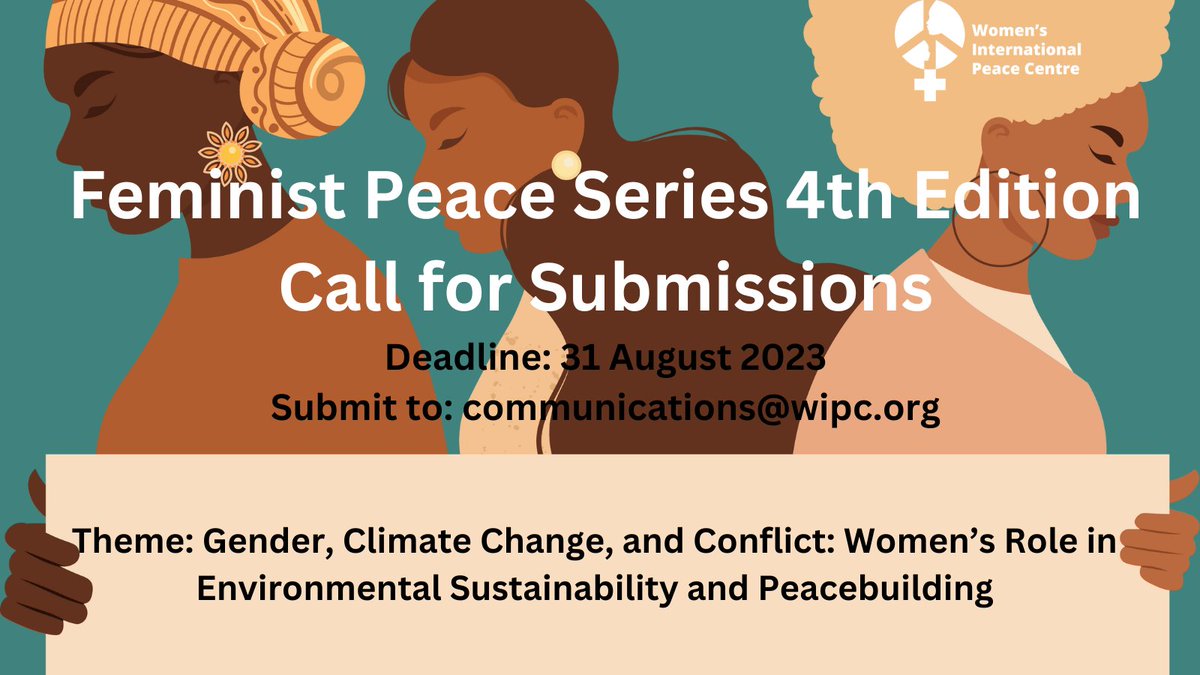
📢Calling for submissions for the Feminist Peace Series 4th Edition!
Theme: Gender, Climate Change, and Conflict: Women’s Role in Environmental Sustainability and Peacebuilding🌏
Submit ✍️Articles/Poems/Illustrations/Artwork/Photos to [email protected] by 31 August 2023
@HimaniUp Helga Weisz and I just published an article on how climate impacts and gender dynamics influence mobility in the Himalayas with @tandfonline ⬇️⬇️
@PIK_Climate@dgapev
https://t.co/tA3ZE5KBtn
Communities, whether staying voluntarily or involuntarily, struggled to adapt, seeking external support. Attention needs to be paid to groups whose vulnerability will potentially increase when they remain in place – especially women and the elderly.
📢New article on immobility, gender in climate change-affected, highly mobile Himalayan communities in @ClimDevJournal, with great co-authors @KiraVinke and Helga Weisz
@EpiccPik@PIK_Climate@tandfonline
Full text:⬇️⬇️
https://t.co/FA7xVBC6zS
Here is what we ask and find🧵
Boundaries of voluntary and involuntary get blurred when seen through a gender lens. Women express their wish to stay, but face mobility constraints from socio-structural conditions. Which raises the question that to what extent can women’s immobility be considered voluntary?
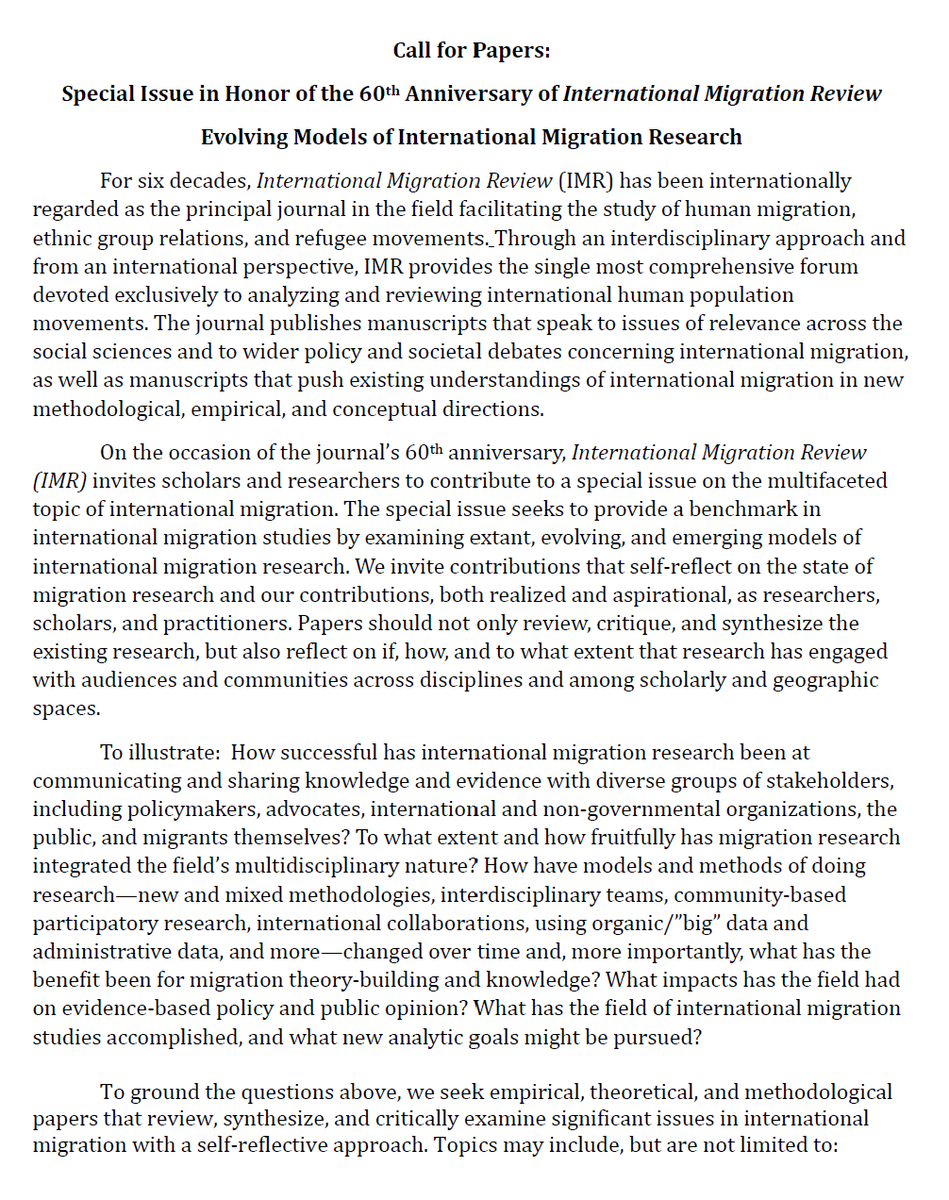
📢@IMRjournal 60th Anniversary Special Issue, "Evolving Models of International Migration Research," editors are Ellen Percy Kraly & me.
Consider submitting your work! More info here👇🏽