@US_SrAdvisorAF@SecRubio,
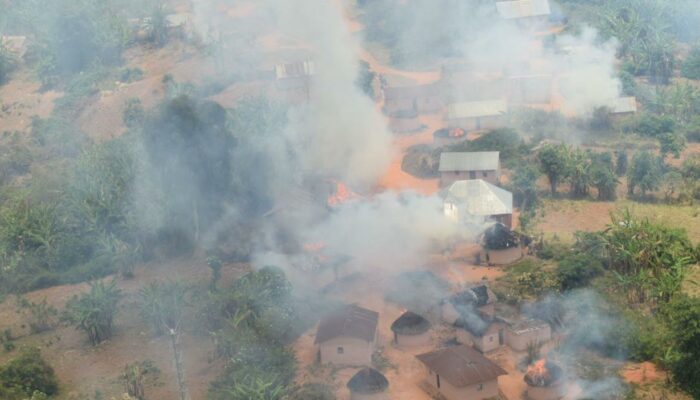
These are the devastating aftermath images from Minembwe General Hospital, where life-saving medicines and essential medical supplies have been destroyed. Today, the hospital has once again come under bombardment, further depriving an already besieged civilian population of the medical care it desperately needs.
This is not collateral damage; it is the destruction of the last lifeline for thousands of civilians trapped under siege. Every attack on a hospital deepens an already catastrophic humanitarian crisis and places innocent lives at even greater risk.
The continued bombardment of medical facilities demands immediate international condemnation, and accountability for those responsible (@Presidence_RDC@GeneralNeva). Commitments made under the Washington Accords are meaningless if attacks on civilians and essential healthcare continue without consequence.
#DRCongo#Minembwe
🚨 URGENT APPEAL FOR MINEMBWE — CONTINUE READING
@marcorubio@StateDept@US_SrAdvisorAF
As the Joint Oversight Committee welcomes new commitments to peace and expresses concern over drone strikes on civilians and the worsening humanitarian crisis in eastern DRC, the reality on the ground tells a different story.
While agreements are being signed to give the Banyamulenge and other civilians in Minembwe a chance to live in peace and dignity, violence continues unabated.
According to local sources, FARDC, together with Burundian forces, FDLR, and Wazalendo militias, continue attacks on Banyamulenge villages. Hospitals and civilian infrastructure have reportedly been damaged, and lifesaving medications stored in medical facilities destroyed—leaving mothers, newborn babies, the elderly, and the wounded without the care they desperately need.
Peace is not achieved through signatures alone. It is achieved when bombs stop falling, hospitals are protected, humanitarian aid reaches those in need, and civilians can live without fear.
The people of Minembwe are pleading for urgent humanitarian assistance and meaningful protection. The international community must ensure that the commitments made at the negotiating table are reflected in the lives of those trapped by the violence. Lives cannot wait.
@USAmbUN@USAmbDRC@MONUSCO@amnestyusa@jumuiya@DiplomatieTogo@_AfricanUnion@angola_Mirex@WilliamsRuto@KagutaMuseveni@PaulKagame@presidence_rdc@GeneralNeva
https://t.co/o9hBvJg3at
#DRCongo#Minembwe#Banyamulenge
🚨 URGENT ALERT: Attack on Students and Civilians in Minembwe
According to local civil society organizations in Minembwe, a Sukhoi-25 fighter aircraft operated by the Armed Forces of the Democratic Republic of Congo (FARDC) bombarded the center of Minembwe on June 12, 2026, while thousands of students were peacefully sitting for the TENASOSP national examination. Amid the panic, eighth-grade student Ndakize Ntungane reportedly suffered a fractured arm after being trampled by fleeing classmates.
The same sources report damage to homes and school buildings and describe the attack as part of a continuing pattern of drone attacks and violence targeting the Banyamulenge population in Minembwe, and surounding villages.
Under international humanitarian law, civilians and educational facilities are entitled to special protection. UN Security Council Resolution 2601 (2021) “strongly condemns attacks directed against civilians and civilian objects, including schools and educational facilities, as well as attacks and threats of attacks against students and teachers.”
We urge the international community to unequivocally condemn these attacks and to increase pressure on the governments of the Democratic Republic of Congo and Burundi to immediately cease attacks on innocent civilians, respect their obligations under international law, and support independent investigations to ensure accountability and the protection of vulnerable communities.
@realDonaldTrump@SecRubio, @US_SrAdvisorAF, @USAmbUN@UNHumanRights@SenatorRisch@RepJoeWilson@senatefrc@HouseForeignGOP@RepBrianMast@RepRonnyJackson@RepSaraJacobs@ChrisVanHollen@SenTedCruz@SenOssoff@PatrickMuyaya@kayikwambaT@onduhungirehe@SenGillibrand@MarshaBlackburn@SenatorHeinrich@BasedMikeLee@IsokoUSA@DougGasore@JulianPecquet
L’« ubwenge » (la prétendue « ruse des Tutsi ») renverrait à l’idée selon laquelle la vérité de Tutsi serait en réalité un mensonge, autrement dit une forme supposée de perfidie.
Le général Sylvain Ekenge, ancien porte-parole de l’armée nationale de la RDC, s’est appuyé sur cette théorie du complot de l’« Ubwenge » pour défendre l’idée selon laquelle « la femme tutsi est dangereuse ». À Kinshasa, en 2023, de nombreux débats animés par des conspirationnistes ont eu lieu dans le cadre de campagnes contre le Rwanda (comprendre : le pays des Tutsi). C’était une sorte d’éléphant conduit par des aveugles.
L’accusation d’« ubwenge » démontre que tous les moyens semblent bons pour anéantir les Tutsi. Les Tutsi sont des accusés avant les faits (coupables sans preuves). Raison pour laquelle de nombreux officiers militaires (Tutsi) sont incarcérés du seul fait qu’ils sont tutsi. D’autres officiers ont été écartés de leurs fonctions. Même face à des évidences, de nombreux Congolais refusent d’accepter une réalité dès lors qu’elle pourrait avantager les Tutsi, comme n’importe quel autre groupe. Étayons ces propos par quelques illustrations.
Les fameux empire hima-tutsi et bantu
Pour justifier le rejet des Tutsi ou du Rwanda, deux idéologies politiques apparemment opposées, mais en réalité complémentaires, ont été inventées : les fameux empires hima-tutsi et bantu. Ce dernier semble n’être qu’une pure création politique, un moyen de combattre une imaginaire menace qui menacerait les intérêts de l’ensemble des peuples dits « bantous ». Les Congolais se sont embarqués dans cette même idéologie de suprématie qui, pour les besoins de la cause, invente des empires opposés et irréductibles, en utilisant un langage anthropologique sujet à caution. Sur le plan sémantique, les Tutsi, comme les Rwandais, les Burundais, les Banyamulenge et les Banyarwanda, sont des Bantous. Le mot « bantou » désigne avant tout une classification de langues africaines. Le président burundais @GeneralNeva est aujourd’hui en en RDC, apparemment engagé dans une guerre d’alliances tribales entre prétendus « frères bantous », une motivation fondée sur des idées primitives.
Les Tutsi ou les Banyamulenge n’ont jamais évoqué l’existence d’un empire hima, aujourd’hui transformé en supposé projet de balkanisation. Ce terme est apparu dans des milieux extrémistes anti-tutsi au début de la guerre du FPR. À Uvira, certains acteurs politiques et membres de la société civile ont accusé les Banyamulenge de vouloir former un empire englobant l’Ouganda, le Rwanda, le Burundi et l’est du Zaïre. Aujourd’hui, cette idée s’étend même au Kenya avec l’arrivée au pouvoir de @WilliamsRuto . Ce dernier, étant Kalenjin, est perçu comme un Nilotique faisant partie de cette théorie du complot en RDC.
Pour s’opposer à l’évêque banyamulenge d’Uvira, Jérôme Gapangwa Nteziryayo, certains intellectuels d’Uvira et de Fizi ont directement lié son leadership de l'église catholique à cette thèse infondée. Les Banyamulenge ont beau expliquer que rien de tel n’existe dans leurs intentions, cette idée a trouvé un terrain fertile, au point de devenir un argument servant à justifier l’épuration ethnique en cours dans les Hauts Plateaux. Ces comportements, marqués par l’absence de rationalité, renvoient à l’expression « suivre les moutons de Panurge ». Il existe une crise profonde de l’éducation et du sens critique en RDC.
"Balkanisation" et la commune de Minembwe
Au Sud-Kivu, certains acteurs politiques comme Claude Misare, Justin Bitakwira, Omar Burakari et d’autres ont évoqué une prétendue « lesothisation » lors des mises en scène politiques autour du lancement officiel de la commune de Minembwe. Ils ont parlé d’une annexion de Minembwe au Rwanda. Géographiquement, cette hypothèse est impossible. Pour annexer Minembwe au Rwanda, il faudrait d’abord annexer Bukavu, Kamanyola, Uvira et de nombreuses autres localités. Les Banyamulenge se retrouvent ainsi contraints de prouver que l’accusation est fausse : ce n’est plus à l’accusateur, pourtant ignorant ou malveillant, de démontrer ses affirmations, mais à l’accusé innocent de se justifier.
Dehumanisation
Tous les messages de haine décrivant les Tutsi sous les traits d’animaux ou d’insectes ne sont pas de simples insultes, mais relèvent d’une représentation symbolique de ce que chaque animal ou insecte est censé incarner. Par exemple, durant la période de stigmatisation des Tutsi qualifiés d’« Inyenzi », cette caricature renvoyait à l’idée de capacités malicieuses, mais aussi à celle d’une aptitude à s’infiltrer et à vivre parmi les humains.
Le mythe de l'autochtonie
Les gouvernants congolais accusent les Tutsi/Banyamulenge d’avoir été accueillis en RDC tout en voulant ensuite « revendiquer » l’autochtonie. Les plus modérés parmi eux reconnaissent pourtant que les Banyamulenge vivaient en RDC avant 1885. Ils sont donc des Congolais d’origine. Il n’y a là aucune « ruse ». Toutefois, ils ajoutent un argument fallacieux : « quelques paysans vivaient dans les plateaux de Fizi, d’Uvira et de Mwenga, mais ils étaient peu nombreux ».
Ces extrémistes affirment qu’il s’agit d’« ubwenge » parce que les Banyamulenge n’auraient jamais rompu leurs liens avec le Rwanda. Mais de quel Rwanda parle-t-on ? Du royaume du Rwanda ? Des régimes de Kayibanda et d’Habyarimana ? Du pouvoir actuel ? Cet argument demeure difficile à comprendre, d’autant plus que la Conférence nationale souveraine avait déjà suggéré d’expulser les Banyamulenge avant même la prise de pouvoir du FPR à Kigali. Où serait donc l’« ubwenge » dans cet argument ?
Et pourquoi cette accusation ne vise-t-elle pas les Chokwe, dont les origines seraient angolaises ? Pourquoi ne concerne-t-elle pas les Banande du Nord-Kivu, apparentés aux Bakonjo d’Ouganda, avec lesquels ils partagent des liens historiques et frontaliers ? Pourquoi ne vise-t-elle pas les Babemba présents à la fois en Zambie et au Katanga, ou encore les Bayombe vivant en Angola comme en RDC ?
La tutsiphobie est une haine aveugle et une manipulation politique. Elle relève d’une forme de colonisation mentale, mais aussi d’une autre forme de racisme entre Noirs.
The drone strike in Mushaki constitutes a grave violation of International Humanitarian Law and raises serious concerns regarding the conduct of the Congolese government. Located approximately 20 miles from Goma and far removed from active frontlines, Mushaki was not an immediate zone of military engagement. The attack resulted in the deaths of 22 civilians and left hundreds more injured, prompting urgent questions about the intentions and strategic objectives behind Kinshasa’s actions.
Such conduct reflects a disturbing level of irresponsibility and recklessness that warrants unequivocal international condemnation, alongside calls for accountability on the part of President Félix Tshisekedi. Following the events of March 11, including the killing of a United Nations staff member in Goma by a drone strike, as well as the continuing drone attacks reported in Minembwe and Masisi, there is growing concern over an escalating pattern of violence against civilians and non-combatants.
In light of these developments, the United States and the broader international community should adopt a clear and unambiguous position in condemning these actions before the situation deteriorates further. No political or economic considerations, including ongoing mineral agreements with the United States, should place any government or leader above the rule of law and established international norms.
We therefore call upon the United States, in its leadership role within this conflict, to uphold higher moral and ethical standards in responding to these violations and in promoting accountability, civilian protection, and adherence to international law.
@StateDept@SecRubio@StateDept@US_SrAdvisorAF@HouseForeign@HouseForeignGOP@PatrickMuyaya@kayikwambaT@IsokoUSA@CranePrevention@PaulKagame@KagutaMuseveni@Presidence_RDC@TiborPNagyJr
🚨COORDINATED ATTACKS DEVASTATE BANYAMULENGE VILLAGES IN UVIRA (KUNDONDO) 🚨
Women and children are fleeing into forests as Banyamulenge villages in Kundondo come under attack.
Available information indicates that FARDC, operating with the Burundian military (FNDB), and supported by FDLR & Wazalendo militias, are conducting coordinated ground operations affecting villages including: Kukiziba, Mukanogo, Nyakirango, Mubijanda, Mukinyoni, Kajembwe & others.
Thousands of civilians, children, women, the elderly are displaced, hiding in forests with no shelter, food, or protection.
Civilians must be protected. Humanitarian access now. Attacks must stop.
#Uvira #DRCongo #ProtectCivilians #Banyamulenge #HumanRights #ForcedDisplacement
#Uvira #DRCongo #ProtectCivilians #Banyamulenge #HumanRights #StopAttacks
@marcorubio@StateDept@US_SrAdvisorAF@USAmbUN@USAmbDRC@MONUSCO@amnestyus@jumuiya@DiplomatieTogo@_AfricanUnion@angola_Mirex@WilliamsRuto@KagutaMuseveni@PaulKagame@IsokoUSA@MaishaRdc@wembi_steve@benbabunga@ScoviaMutesi
The U.S. mineral deal in the DRC: understanding how the political landscape will affect the agreement and the broader business environment.
The DRC and the U.S. reached an agreement in December 2025 to allow the United States access to critical minerals in the DRC. A key component of this deal is to facilitate investment by U.S. companies in the DRC’s mining sector. How will the DRC political landscape affect the deal and business environment?
Decaying and corrupted institutions
Corruption is endemic and the political system suffers from chronic issues of poor governance. The individual and private interests of government leaders dominate decisions and are often in direct conflict with government institutions and efforts to stabilise the country. The “politics of the belly”, as discussed by Jean François Bayart, is often the dominant objective of the political elite. The political spaces they occupy provide them access to the rapid accumulation of wealth, privileges and power, an accepted system of clientelism and personal and family prestige. This common and sophisticated environment of corrupted system hinders the mechanisms that enforce peace.
“Big man” politics.
There is a culture of cultivating public praise, including self-promotion and paying individuals to promote political figures on social media, as well as reliance on elite patronage. Politicians often use public displays of status to maintain loyalty and authority, transforming political relationships into patron-client networks. This reliance on “big man” politics often comes at the expense of substantive democracy and inclusive practice.
Ethnocentrism
The rhetoric of the political elite is usually unideological and divisive. The political class does not hesitate to resort to crippling the people by pinching the nation’s sciatic nerve in other words reawakening feelings of tribal sentiment. There is a well-established culture of manipulating public opinion, both nationally and internationally, using cunning and deceptive methods. The heated discourse in the national parliament provides the impression of being no more than endless theatrical sessions, where the vilest tribalists can attract positive public attention. The activities of the political leaders suggest that they are nothing more than a noisy crowd at a street market, and few concrete outcomes result. A taste for charm, false praises, seeking social status and glamour prevails over the political will to solve national problems.
The political elite often stoop to the manipulation of inter-ethnic animosity to enhance their political power. Conflict in the eastern region can be seen to stem primarily from inconsistencies and failures in governance and a prevailing culture of ethnocentric policies that exploit tribalism or other primitive forms of racism among the Black population. Members of hundreds of armed groups are motivated simply by the idea of protecting their communities against so-called “foreign invaders”, while identity and land issues become flashpoints with which to mobilise popular support or create political and economic grievances.
Rwanda rhetoric
Hatred against Rwanda is increasingly portrayed as a sign of patriotism and nationalism. The current communication strategy of the DRC focuses on shaping public opinion to view Rwanda as an aggressor and to use this narrative to justify structural failures.
The most mobilizing narrative is one centered on Rwanda. The current government has allocated a significant portion of its budget to the conflict with Rwanda. President Tshisekedi has mobilized much of the government’s resources to campaign against Rwanda and to engage various Rwandan opposition figures in exile, including Jean-Luc Habyarimana, the son of former Rwandan President Juvénal Habyarimana, who is associated with having contributed to the conditions that enabled the 1994 genocide against the Tutsi. There is a growing political economy surrounding campaign against Rwanda. Countries such as Uganda, Tanzania, Zambia, South Sudan, Angola, the Central African Republic, and Burundi do not have an attractive or mobilizing political profile in the DRC. However, campaigns targeting Rwanda resonate strongly in Kinshasa and are particularly effective in mobilizing public opinion.
Currently, the national radio and television (RTNC) in Kinshasa have become platforms for extremists and for the dissemination of hate speech and genocidal ideology targeting Tutsi and Rwanda, which is perceived by Kinshasa as a Tutsi-dominated country.
Financing compliance and legal standards
The business environment is characterised by weak compliance systems and a lack of an independent regulatory framework. The DRC is ranked 183 out of 190 in terms of ease of doing business. There are significant challenges in enforcing contracts, which makes banks reluctant to offer credit. Additionally, liquidity constraints lead to cash shortages and a continued reliance on non-digital systems.
In summary....
Investing in the DRC faces serious constraints in the business environment. Corruption is endemic, and institutions lack transparency in business dealings. Regulatory procedures are weak, and the judicial system is uncertain. In many key investment sectors, there are overlapping or conflicting contracts.
Ethnocentrism is prevalent among political actors and is reinforced by “big man” politics. Anti-Rwanda rhetoric often leads to the mobilization of the population for violence or contributes to the spread of a climate of hatred and ideological hostility.