🙌 Excited to share Bambu and our findings on the new long-read cDNA kit from Oxford Nanopore Technologies — featured at London Calling 2026.
Full story at the RNA 2026 Pre-Meeting Workshop, Montreal! 🇨🇦
@nanopore@RNASociety#longread
Super thrilled to share our labor of love from the Asian Skin Microbiome Program! Collected >3,500 skin samples, built metagenomic libraries w/ >70 billion reads and >10TB of data to study population heterogeneity in skin microbiome (200 adults, 18 sites) https://t.co/ZylbJMpvpw
🚀 Exciting News from Singapore! 🚀
Scientists at A*STAR's Genome Institute of Singapore (@astar_gis) have unveiled one of the world's largest long-read RNA sequencing datasets! 🌍🔬 This groundbreaking resource, known as SG-NEx, is set to revolutionize disease research by providing unprecedented insights into RNA complexity.
Key Highlights:
+ 750 million long RNA reads across 14 human cell lines
+ Enhanced detection of complex RNA features like cancer-related fusion transcripts
+ Freely accessible via the AWS Open Data Registry
This dataset will accelerate biomarker discovery and precision medicine, paving the way for next-gen diagnostics and therapies. Kudos to the team at A*STAR GIS - @JonathanGoeke, @chenying927, Andre Sim, Kristin Ma, Min Hao Ling, Nicolaï Hoffmann, Yuk Kei Wan! 👏🔬
Learn more: https://t.co/hhXG2TcFfD
#Genomics #PrecisionMedicine
🎉 Exciting News! 🎉
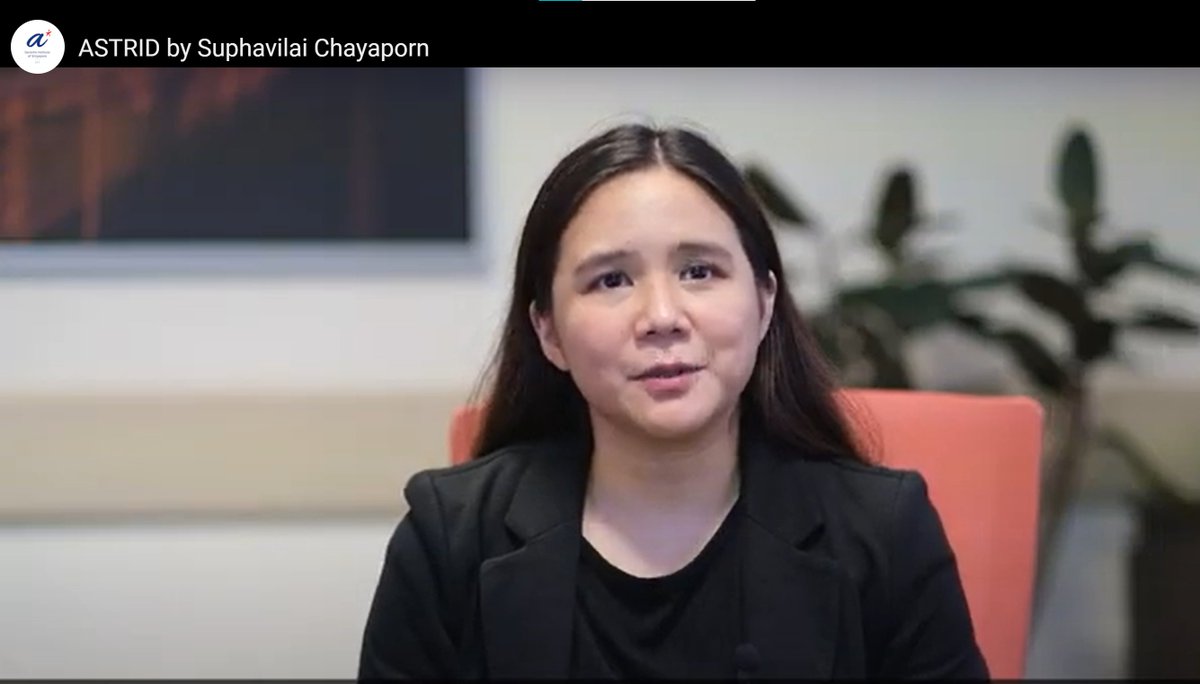
We are thrilled to announce that Dr. Suphavilai Chayaporn has been awarded the GIS Innovation Fellow FY24! 🏆
Dr. Suphavilai is spearheading an innovative project at GIS, aiming to develop clinical-grade metagenomic diagnostic systems for effective infectious disease detection and management in healthcare settings. 🌟
Check out her 1-minute pitch 🎥of the project here: https://t.co/lA4E8UnGhQ
📧 Interested in collaborating with Dr. @nokcs and the team? Reach out to us at [email protected].
#Innovation #Healthcare #Metagenomics #InfectiousDiseases #Collaboration
Congratulations to @JonathanGoeke, @chenying927 and our @astar_gis team on your SG-NEx project, providing a comprehensive resource that enables the development and benchmarking of computational methods for profiling complex transcriptional events at isoform-level resolution.
This Analysis presents benchmarking results from the Singapore Nanopore Expression consortium project, including a valuable resource of datasets generated from various long-read and short-read RNA sequencing technologies.
https://t.co/zfoDNFfUAJ
Want to learn more about the tricks and tips for generating ONT Ultra-long DNA? The T2T Consortium and UCSC SeqTech Center are hosting a Technology-focused Webinar next Thursday with a group of experts.
Register today: https://t.co/P2iIYhRDnP @aphillippy
We're sequencing a sample from a critically endangered hawksbill turtle live at NCM Singapore. Regine from NTU explains how sequencing is used to inform #conservation strategies for this population #nanoporeconf 🐢
Very happy to present our work on m6anet and single molecule m6a detection from direct RNA seq data at #nanoporeconf in Singapore! Here is the link to the paper:
https://t.co/HA462uuYYW
And repository: https://t.co/Yuj12pt3vf
High quality, haplotype-resolved, telomere to telomere human genomes is achievable using @nanopore only data. Exciting talk by Jianjun Liu from @astar_gis#nanoporeconf
During the RNA breakout, the panel discussed how direct RNA sequencing is the only method for detection of RNA base modifications, and how the new RNA Kit (RNA004) is providing much higher throughput #nanoporeconf
JJ Liu gave the first plenary talk at NCM Singapore today, asking, can you construct T2T genomes using a single platform? He shared duplex, ultra-long read and Pore-C datasets to answer that question with a resounding yes #nanoporeconf
SG-NEx (https://t.co/n190lCSdWg) now includes a short tutorial on how to perform long read RNA-seq transcript discovery and quantification with FLAIR, contributed by @TheBrooksLab!!
Our manuscript Bambu (led by @chenying927 and @Andresim8 and with @JonathanGoeke) is finally out here (https://t.co/9ahJJUzars)! Bambu presents a novel method that could accurately discover novel transcripts and perform context-aware quantification. 1/4