We are the Institute for Neurodegenerative Diseases @UCSF—Discovering therapies to treat brain diseases such as #CJD, #Alzheimer, #Parkinson, and #dementia
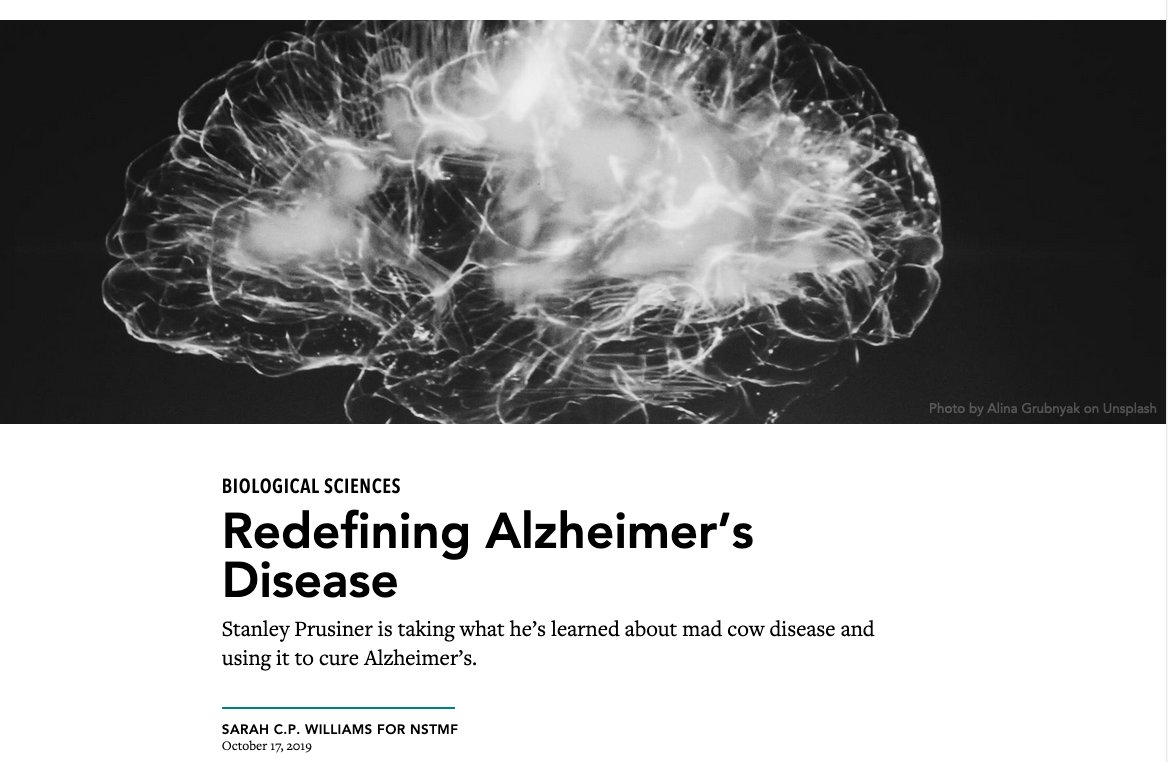
Our Director, Dr. Stanley Prusiner, was awarded a National Medal of Science by Barack Obama in 2009. Today, @NSTMF covers Dr. Prusiner's efforts to redefine Alzheimer's disease #alzheimersdisease#UCSF#science
https://t.co/YJcBzDgKoL
As we age, brain cells face a growing mess — including toxic clumps of tau protein. UCSF scientists found a cleanup crew that can remove tau before it clumps, hinting at new ways to prevent dementia. https://t.co/Hu1VRDCGY1
Excited to share our @CellReports article! We investigated how the loss of TBK1 function contributes to ALS and dementia using human stem cell-derived neurons and advanced proteomics. Many thanks to all co-authors for their great work and collaboration!
https://t.co/kQUVtI0GCq
In this study, we observed that a C9ORF72-ALS/FTD dipeptide repeat protein perturbs the phosphorylation of RNA binding proteins and STMN2 expression, and found that SRSF7 sustains STMN2 levels in induced neurons. Congrats to @JulieSmeyers and Karen! #ALS
https://t.co/Hr57fyZTbF
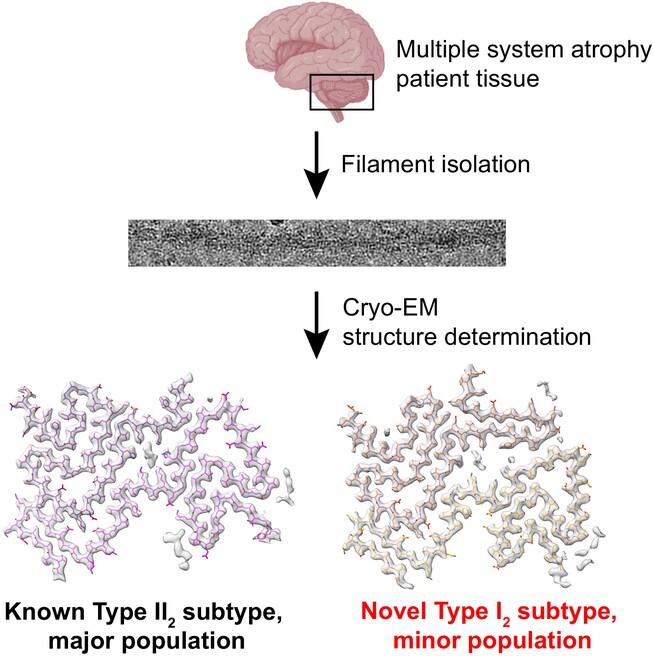
🧠 Multiple system atrophy (MSA) is a #neurodegenerative disease with α-#synuclein#amyloid filament accumulation in the brain.
This #cryoEM study reveals the structure of a new α-synuclein filament subtype in MSA
🖊 Gergory Merz @UCSF & team
➡ https://t.co/pPo5lzCyx7
Interested in learning how dyes might help in characterizing protein activity?
We're excited to share the development of a protein-adaptive DSF platform (paDSF), a dye-based method used to interrogate stability, dynamics, and ligand binding!
https://t.co/uTANww2Vwc
Excited to share the work done by @taiawu and Zach Gale-Day on DSFWorld: an online open-source software that streamlines the planning and analysis of DSF experiments!
https://t.co/T5g731xMfk
Proud to share this publication by our postdoc, Shweta Devi! It offers new insights into the interaction capabilities of the TPR domain to EEVD-like motifs in nonchaperone proteins.
https://t.co/fOcVT8Z9Y0
Excited to announce new funding from the NIA to investigate the connection between defects in protein homeostasis and neurodegeneration. #FTD#dementia#ALS
So proud to share this. Nick and the team did fantastic work characterizing of new filament fold of MSA! Along with being our first novel filament structure from the IND, it’s also my first corresponding author paper!
https://t.co/dbOC3pmYtC
Honored to be part of the first cohort of investigators funded by the Kissick Family Foundation & @MilkenInstitute Frontotemporal Dementia research program.
#endFTD https://t.co/rETK6AL5xB
Methods for high throughput discovery of fluoroprobes that recognize tau fibril polymorphs - from @proteins_emma @GestwickiLab @INDUCSF https://t.co/YY1C20jOrg
For its “Conversations with Giants in Medicine” series, @jclinicalinvest interviewed @INDUCSF Director, Dr. Stanley Prusiner. In the interview, Dr. Prusiner discusses his beginnings in science and the path leading to his discovery of prions and the Nobel Prize.
In this episode of JCI’s Conversations with Giants in #Medicine, @UshmaNeill talks with Dr. Stanley Prusiner @UCSF, the 1997 #NobelPrize winner in Medicine for his discovery of #Prions: https://t.co/3Cb84kgHhb
#Video: https://t.co/50fzZV7fwL
Most viewed in the last 7 days from @JAMANeuro:
Viewpoint describes the evidence for iatrogenic disease based on amyloid-β prions and the possibility that AD has an iatrogenic form wherein amyloid β and tau behave as prions that transmit the disease.
https://t.co/2P4Gx1CAuH
In a new paper, researchers from the Condello lab and Prusiner lab @INDUCSF describe the creation and characterization of a novel transgenic rat model to study human tauopathy.
https://t.co/BQH1ExJ62Z
Using a novel combination of optical microscopy and cryo-EM, the @SouthworthLab and Condello lab @INDUCSF found that tau filaments from Down syndrome adopt conformations identical to filaments from Alzheimer’s disease.
https://t.co/S5r4mMDeok
Excited to share our preprint:
#CRISPR i-based screen of #Autism Spectrum Disorder risk genes in #microglia uncovers roles of ADNP in microglia endocytosis and uptake of synaptic material
https://t.co/6VbzhkC8n0
Read more from first author @OMTeter below:
Are you interested in in vivo #CRISPR screens in mice to uncover mechanisms of #neurodegeneration?
🐭🧬🧠
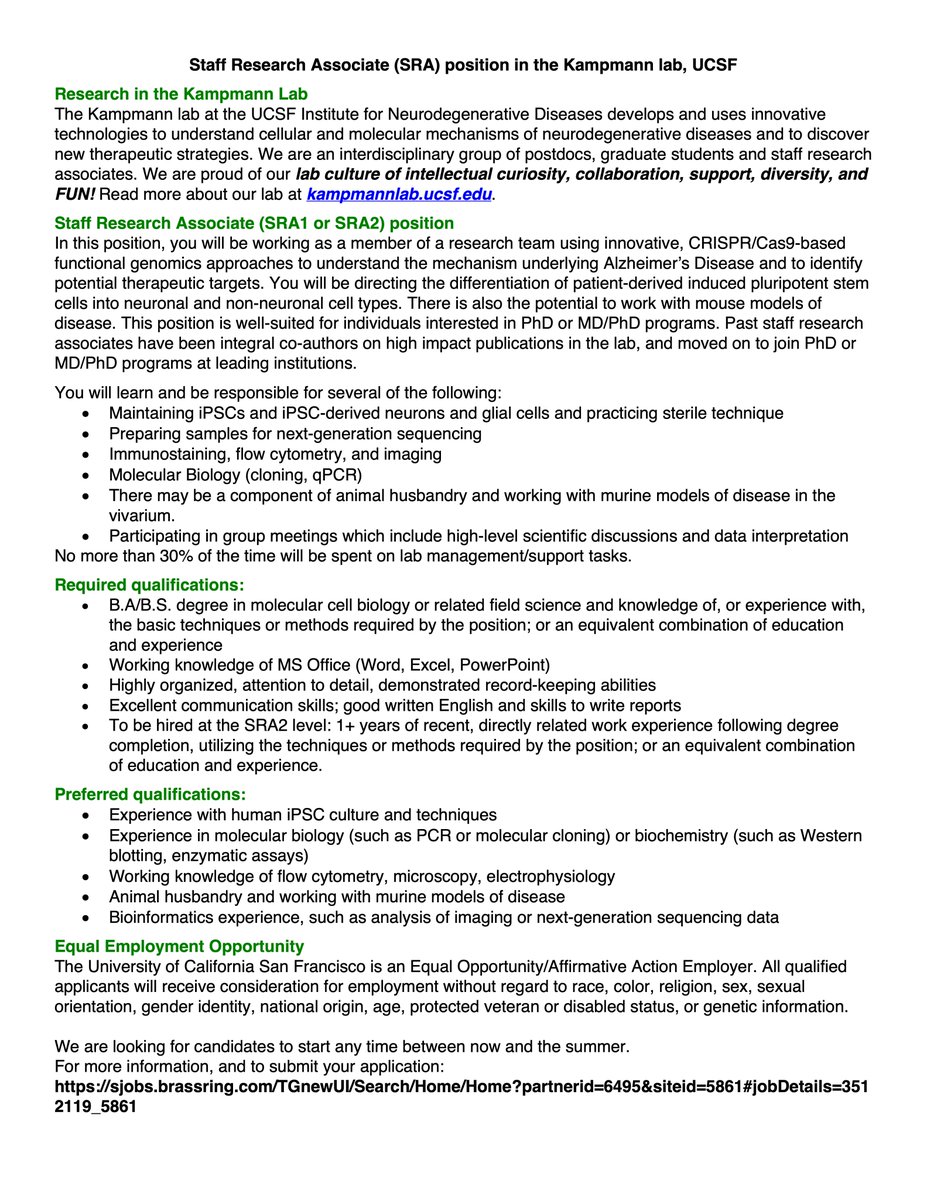
Apply for this SRA (technician) position in the @UCSF@KampmannLab:
https://t.co/DWxu2VgZtP
Great way to gain research experience before grad school!
Please RT/share!
The @KampmannLab at @UCSF is looking for staff research associates (technicians).
Great opportunity to gain research experience for 2 years before applying to grad school!
Supportive and diverse training environment.
Please RT - thanks!
Apply here:
https://t.co/sk22m2B50m