The future of AI compute doesn't run on hype.
It runs on real utility, real burns, and a network that gets stronger every time it's used.
The Incentive Dynamic Engine (IDE) is now live!
https://t.co/ggOg5dBdZw
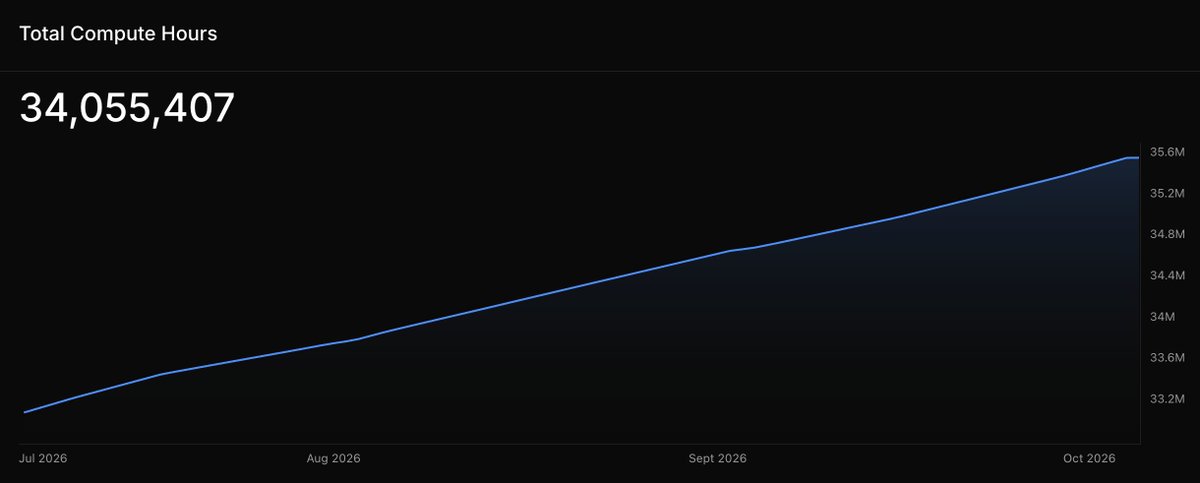
34M+ compute hours delivered.
Up from 33M in July.
No new data center required. Just GPUs that already existed, put to work.
@ionet lets you use what's built. And pay a fraction of hyperscaler prices while doing it.
62% of Americans back a pause on new AI data centers.
AWS's answer: a 3,000-word blog post.
The better answer: stop pouring concrete.
Millions of GPUs already exist. Many sit idle.
Use what's built before building more.
That's https://t.co/DCp3kvjsTY.
Your agent writes the code.
Then it tests it, picks a GPU, deploys the container, pays for it, and shuts it down.
Nobody had to file a ticket or get woken up at 2am.
That's what infrastructure built for agents looks like.
@ionet Agent Cloud.
https://t.co/m9KmDcb2ft
Only 13% of companies are on track with their AI initiatives.
Nearly three-quarters see positive returns.
But fewer than a third get past the pilot.
Pilots are cheap. Production is where the compute bill shows up.
That's the gap https://t.co/DCp3kvjsTY is built for.
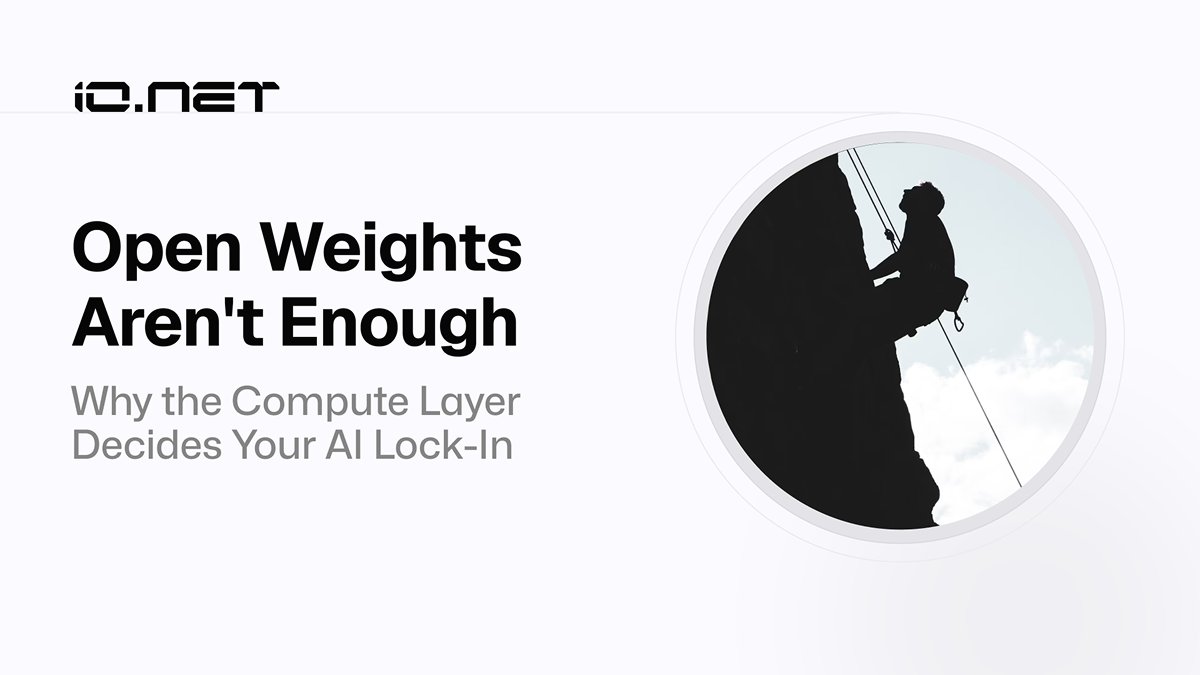
Open weights don't mean open infrastructure.
Run open models on hyperscaler GPUs and you're just swapping one lock-in for another.
It's the same vendor pricing, availability limits, and cost to leave.
The same 70B workload. Four GPUs. Twenty hours a day:
AWS on-demand: around $9,600 a month.
https://t.co/ZuybGWvjv9: $3,576 a month.
Open models and open compute is what https://t.co/ZuybGWvjv9 was built for.
The White House just renamed AI "Super Intelligence."
New name.
Same GPU shortage.
You can rebrand the model. You can't rebrand the costs or the waitlists.
Whatever you call it, it runs on compute. We're making sure it's available to the many, not the few.
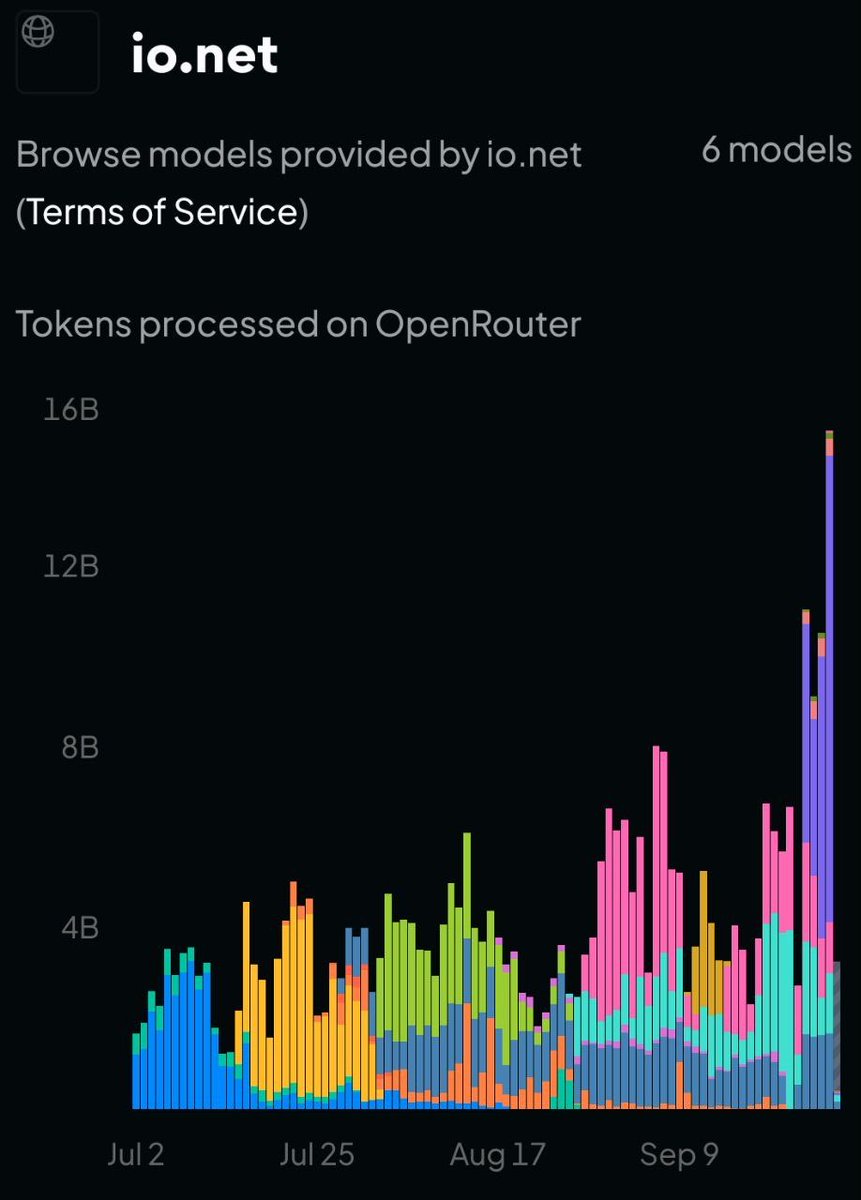
30x in under seven months.
500M tokens a day in March.
15B yesterday.
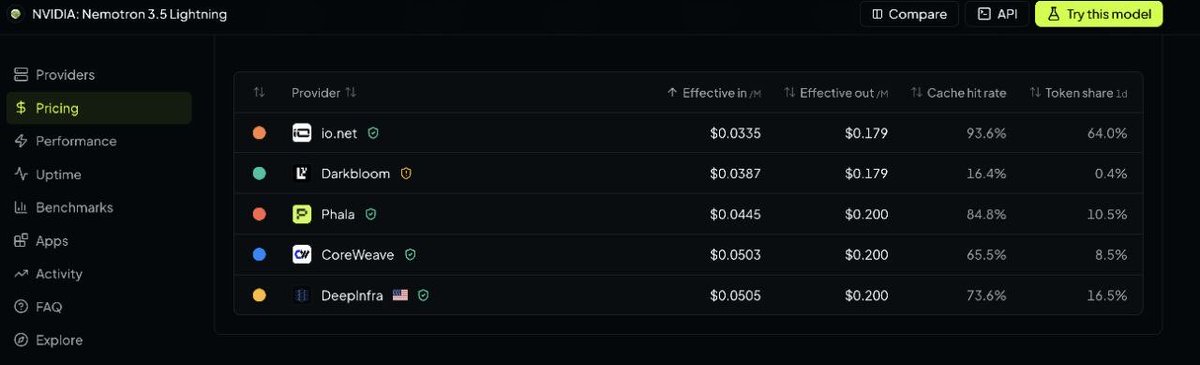
64% of Nemotron 3.5 Lightning token share on @OpenRouter, on an inference stack we built and run end to end.
Capable open models are here. Making them affordable at scale is the work. That's what our team is building.
500M tokens a day in March 2026.
15B tokens a day yesterday.
That is daily volume across @ionet hosted models on @OpenRouter, served on an almost same mix of H100, H200 and B300 GPUs since Day 1.
Along the way, we became day zero launch partners for open source reasoning models including @Zai_org, @Kimi_Moonshot, @Alibaba_Qwen , Nemotron, @MiniMax_AI and GPT OSS.
Nvidia has built something useful with the recent Nemotron 3.5 Lightning. A fast, capable and efficient open model, with weights, datasets and recipes that give teams like ours room to optimise.
Yesterday, the OpenRouter provider token share showed @ionet at 64% token share for Nemotron 3.5 Lightning, the largest provider share.
Effective prices per million tokens:
Input: $0.0335
Output: $0.179
Our volumes and price reflect both usage and affordability. We are serving this workload profitably on an inference stack built and operated end to end in house.
Our small team still runs two to three experiments every week. We track tool calling changes, frontier lab updates and what communities on vLLM and Sglang are discussing, then test what matters on our own workloads.
Demand changes with time zones and days of the week. Launch excitement fades. New providers arrive and price wars start. You get used to revisiting your assumptions.
With GPU rental costs rising, compute efficiency and reliable tool calling matter more. A low token price only helps if the task gets done correctly.
Open models are becoming capable enough to build around and economical enough to serve at scale. There is a lot of engineering behind making both true at once.
Thank you @NVIDIA and the Nemotron team, @OpenRouter and @alexatallah for allowing providers like ourselves to work seamlessly, and our engineers, who know how much work sits behind a neat row in a pricing table.
$31.6 trillion
That's what PwC estimates will be spent on AI infrastructure through 2050.
And you still can't get a GPU.
The AI compute crisis isn't just a chip shortage.
It's a coordination problem.
Capacity is reserved, idle, and siloed behind procurement cycles.
More chips alone won't fix that. That's why @ionet is building a different solution.
GPUs don't run on forecasts.
2 GW of US data centre capacity scheduled for 2026 hasn’t even begun construction.
And more than half the GPU servers sold between 2026 and 2028 may lack the power to run.
Hyperscalers are racing to buy more chips while struggling to bring new sites online.
There's another option.
@ionet makes underutilized compute from around the world available now. Not someday.
"There are no adults in this room."
That's a direct quote from an EU AI advisory board member.
Governments are years behind. Labs are writing their own rules.
But the teams building on top carry the risk.
The answer isn't waiting for either to catch up. It's greater participation, access, and transparency.
That's what @ionet was built for.
https://t.co/t4mXNaQi9E
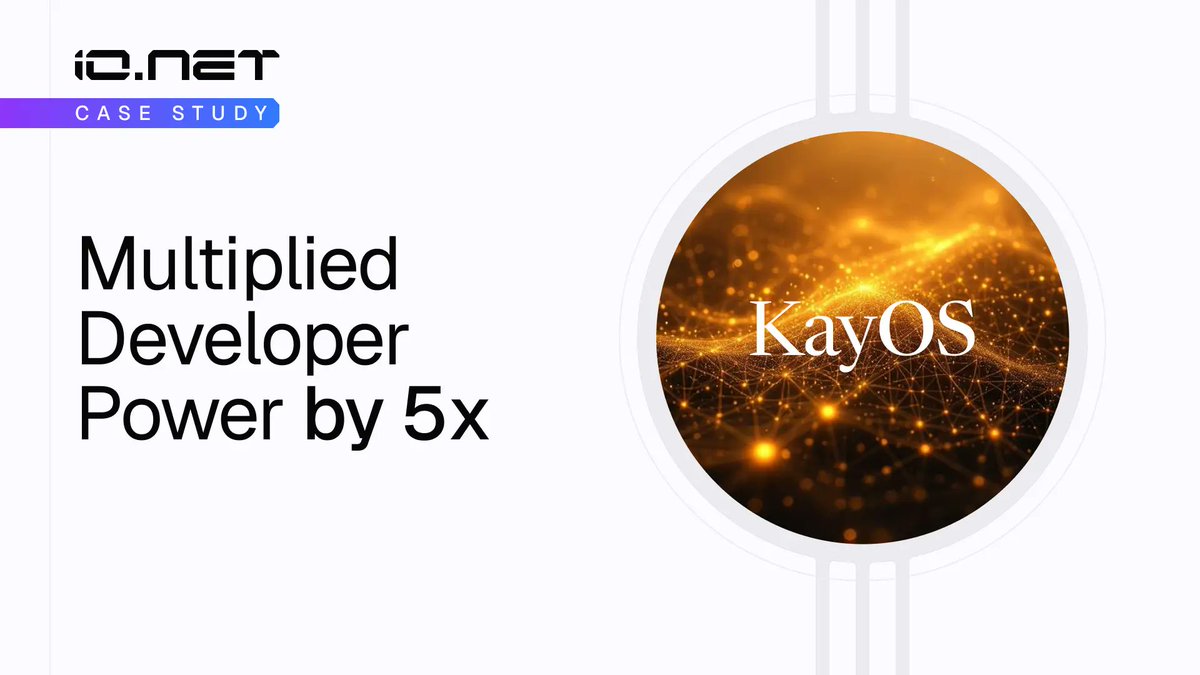
60% lower compute costs.
Same output, one unified API.
That's @kayos_ai, an AI startup running their entire agent stack on io.intelligence.
Previously they were spending $2,500/month per customer across a fragmented setup (Groq, Cerebras, Anthropic, OpenAI).
Now it's $1,000/month, zero rate limits, one provider.
This is what happens when compute stops being the bottleneck.
https://t.co/soZ3oA73Eq
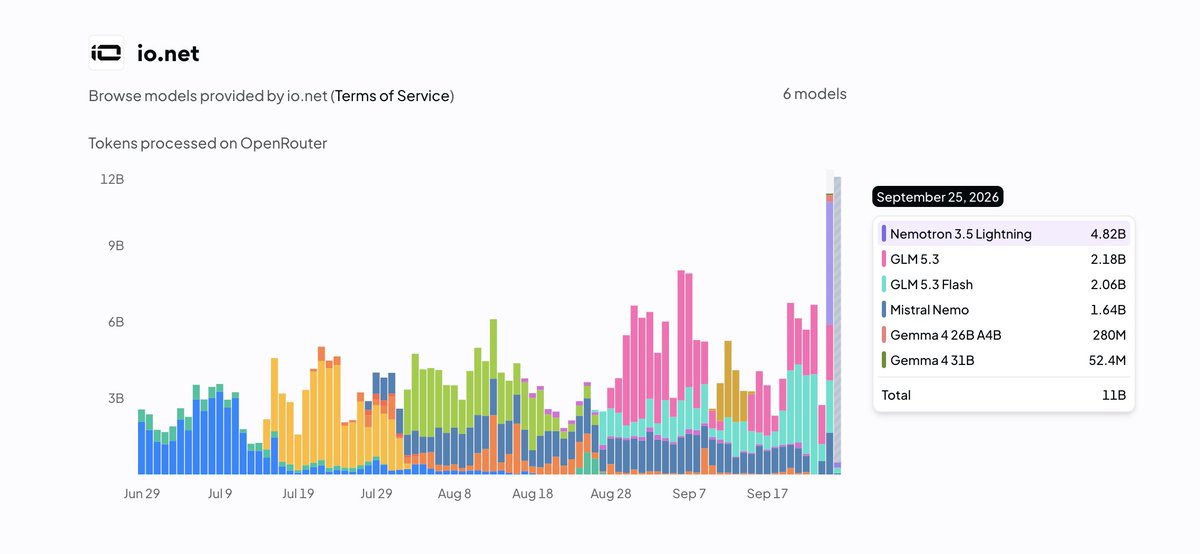
11 billion tokens.
In one day.
That's https://t.co/ZuybGWvjv9 on OpenRouter yesterday. Up from a few billion a day back in July.
Nemotron 3.5 Lightning alone processed 4.82B tokens. GLM 5.3 and GLM 5.3 Flash added another 4.24B combined.
This is what it looks like to have teams routing real workloads through https://t.co/ZuybGWvjv9, every single day.