Some products last 50 years. Most fail in 5.
The difference is rarely quality of materials.
It's these 5 design principles:
1. REPAIRABILITY
Products designed to be repaired last longer than those designed to be replaced.
The original Land Rover Defender, 1948 design, still in production variants today.
Every component was accessible with standard tools.
Compare to modern vehicles where the battery replacement requires dealer equipment.
2. OVER-SPEC AT THE START
Design to a higher standard than your worst expected case.
The AK-47 was designed to function at ±60°C, covered in sand, submerged in water.
It has a reported MTBF (mean time between failures) of 15,000 rounds.
Over-engineering for the extreme case creates reliability in the normal case.
3. STANDARD FASTENERS
Products that use proprietary screws become unrepairable when the company stops making them.
Products that use M4 bolts are repairable forever.
4. CLEAR FAILURE HIERARCHY
Design so the cheap part fails first.
A fuse blows. A shear pin breaks. A gasket leaks.
These are intentional weak points, engineered to sacrifice themselves before the expensive components fail.
5. THERMAL MANAGEMENT
More products fail from heat than from any other cause.
Electronics, motors, engines, batteries, all degrade faster when hot.
The products that last build heat dissipation in from the start, not as an afterthought.
Design for longevity at the start.
Retrofitting it later always costs more.
Going shopping? 🛒
Earn $AUKI for sending our robots annotated images of shelves from supermarkets, convenience stores, pharmacies, or DIY stores. More details below.
https://t.co/aXd0OVvIXY
Giving away 1 WB200 station device. ON ME.
The WB200 is the hardware that connects you to the @Wingbits network, track real aircraft, earn $WINGS daily.
To enter: ✅ Follow me ✅ Retweet this post
Winner announced in 72 hours.
ONE DEVICE. ONE LUCKY STATION OPERATOR!
Let's grow this network. 🛫
#WINGS #Wingbits #Giveaway #DePIN #Solana #ADSB
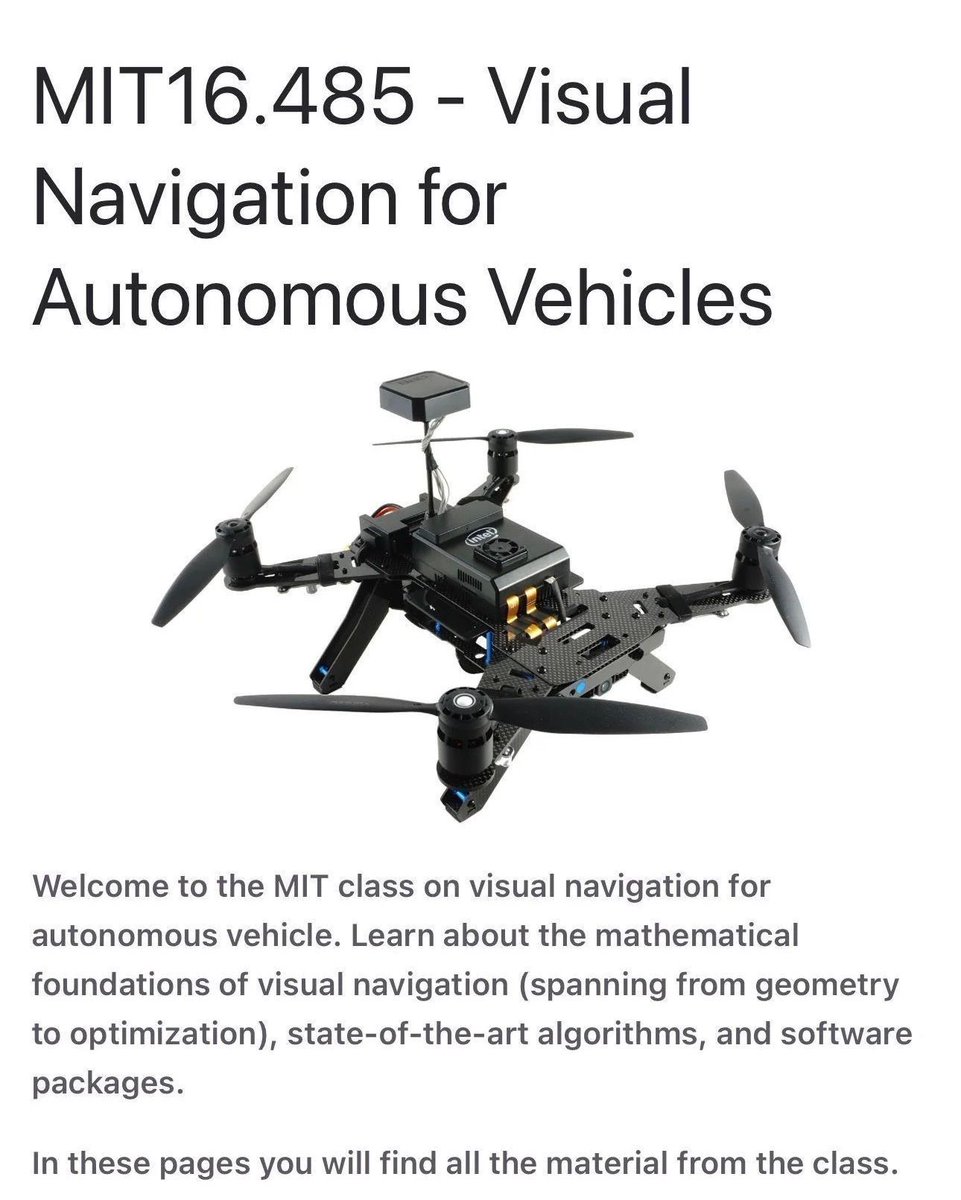
A full MIT course on visual autonomous navigation.
If you work on robotics, drones, or self-driving systems, this one is worth bookmarking‼️
MIT’s Visual Navigation for Autonomous Vehicles course covers the full perception-to-control stack, not just isolated algorithms.
What it focuses on:
• 2D and 3D vision for navigation
• Visual and visual-inertial odometry for state estimation
• Place recognition and SLAM for localization and mapping
• Trajectory optimization for motion planning
• Learning-based perception in geometric settings
All material is available publicly, including slides and notes.
📍https://t.co/Wt5mr6NPao
If you know other solid resources on vision-based autonomy, feel free to share them.
——
Weekly robotics and AI insights.
Subscribe free: https://t.co/9Nm01QUcw3
🚨 Someone built a tool that turns any website into clean data your AI can actually use.
Give it a URL. It crawls every page. Hands you back perfect markdown.
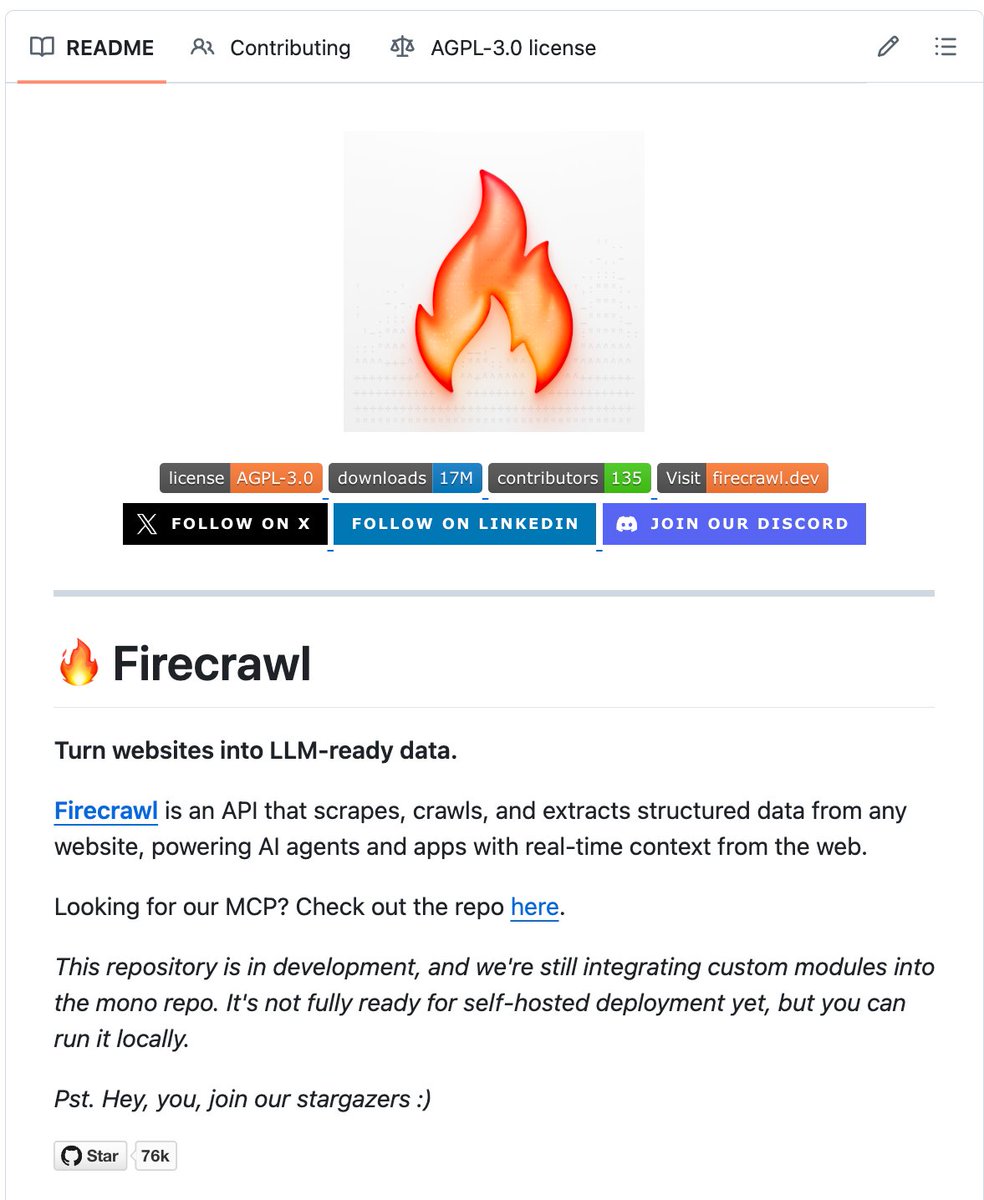
It's called Firecrawl. The web data API that every AI app has been missing.
Here's the problem it solves:
You paste a URL into ChatGPT. It hallucinates half the content. You try scraping with BeautifulSoup. You get HTML soup with ads, navbars, and cookie banners mixed into your data.
Firecrawl fixes this. One URL in. Clean, structured, LLM-ready data out.
No sitemap needed. No scraping scripts. No parsing headaches.
Here's what it does:
→ Scrape a single page into clean markdown
→ Crawl an entire website. Every subpage. Automatically
→ Extract structured data with a schema you define
→ Handle JavaScript-rendered pages (SPAs, dynamic content)
→ Bypass anti-bot protections
→ Output as markdown, HTML, or structured JSON
Here's why everyone building with AI needs this:
→ Building RAG? Firecrawl turns any documentation site into your knowledge base
→ Building an AI agent? Give it the ability to read any website properly
→ Doing competitor research? Crawl their entire site in minutes
→ Training a model? Convert hundreds of pages into clean training data
→ Building a search engine? Firecrawl is literally what Perplexica uses under the hood
SDKs for Python, Node, Go, and Rust. Integrates with LangChain, LlamaIndex, CrewAI, Dify, and more.
Self-hostable. Or use the hosted API.
100% Open Source. AGPL-3.0 License.
Nobody explains Computer Networking like this… 🌐
• Internet = networks talking to networks
• IP address = your device’s identity
• DNS = internet’s phonebook
• TCP vs UDP = reliability vs speed
• Router = traffic controller
• Firewall = security gate
• Latency = distance + delay
Networking isn’t memorization.
It’s understanding how data moves.
↻ Repost if networking finally makes sense
Define your Threat Model in 60 seconds (do it NOW):
Your 4 pillars
1. Who is the enemy? (doxxers, law enforcement, data brokers, nation-states?)
2. What do they want? (your location, wallet seed, chats, identity?)
3. What can they actually do? (phish you, subpoena logs, Pegasus-level spyware?)
4. What's the cost if they win? (money gone, freedom lost, life ruined?)
Write yours down. Revisit every 6 months.
#OpSec
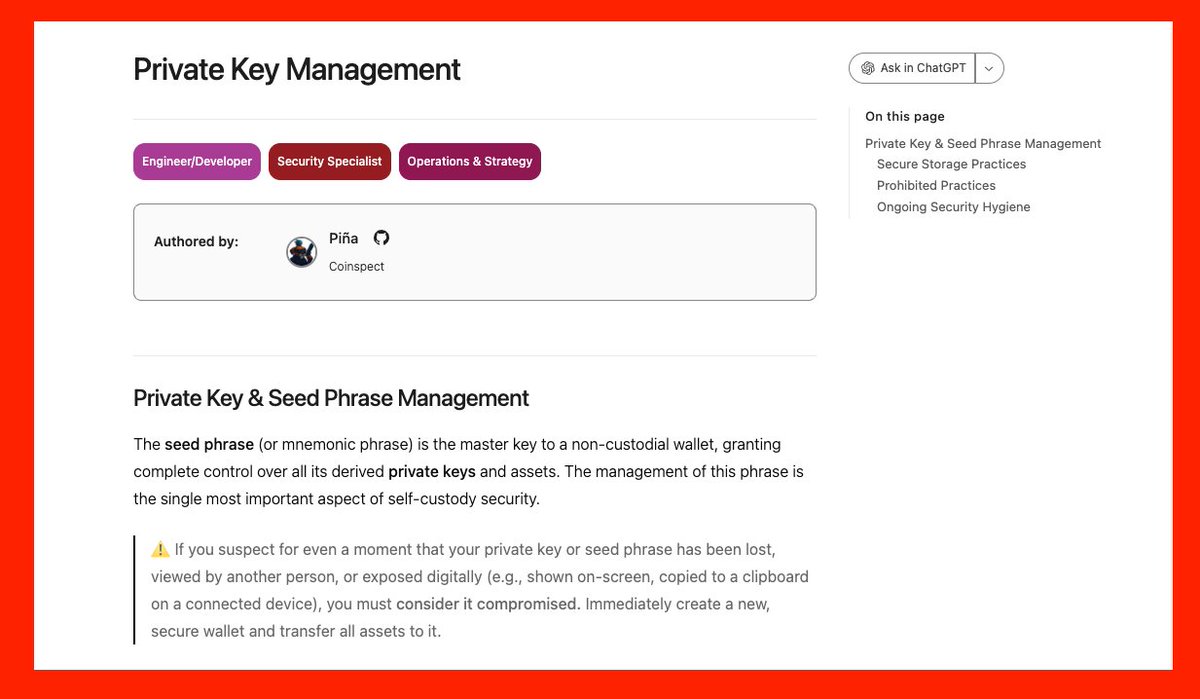
Just discovered the @SEAL_911 team has written an incredibly indepth bible on opsec and best security practices.
Covers all aspects of web3 security & hacks for individual use and corporations
View here: https://t.co/AqV3NE1QRS
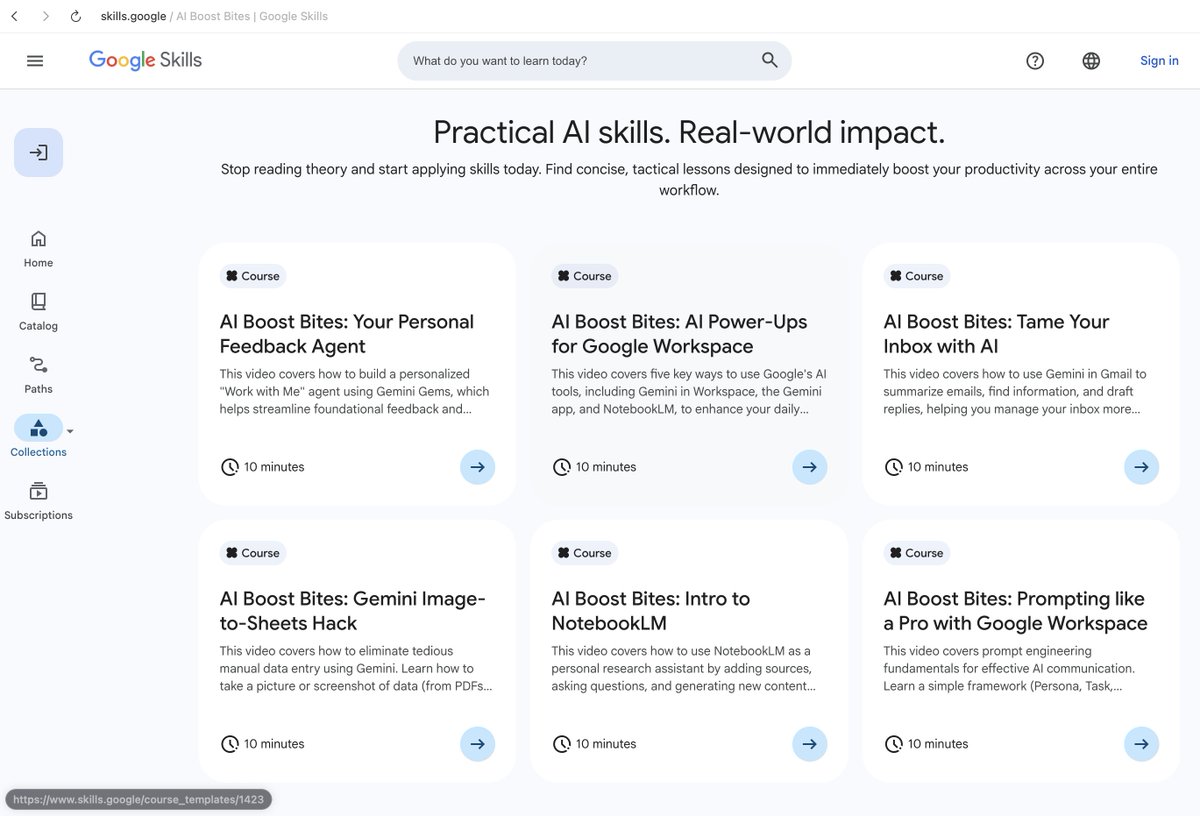
Google just made a $2,000 AI education free (and most people will still choose to stay illiterate).
They quietly launched Google Skills, a hub with 3,000 technical modules that replaces "prompting" fluff with actual DeepMind research workflows. You can now access the exact curriculum used to train their internal teams on transformer architecture for $0.
If you don’t use this, you’ll eventually complain about the people who did.