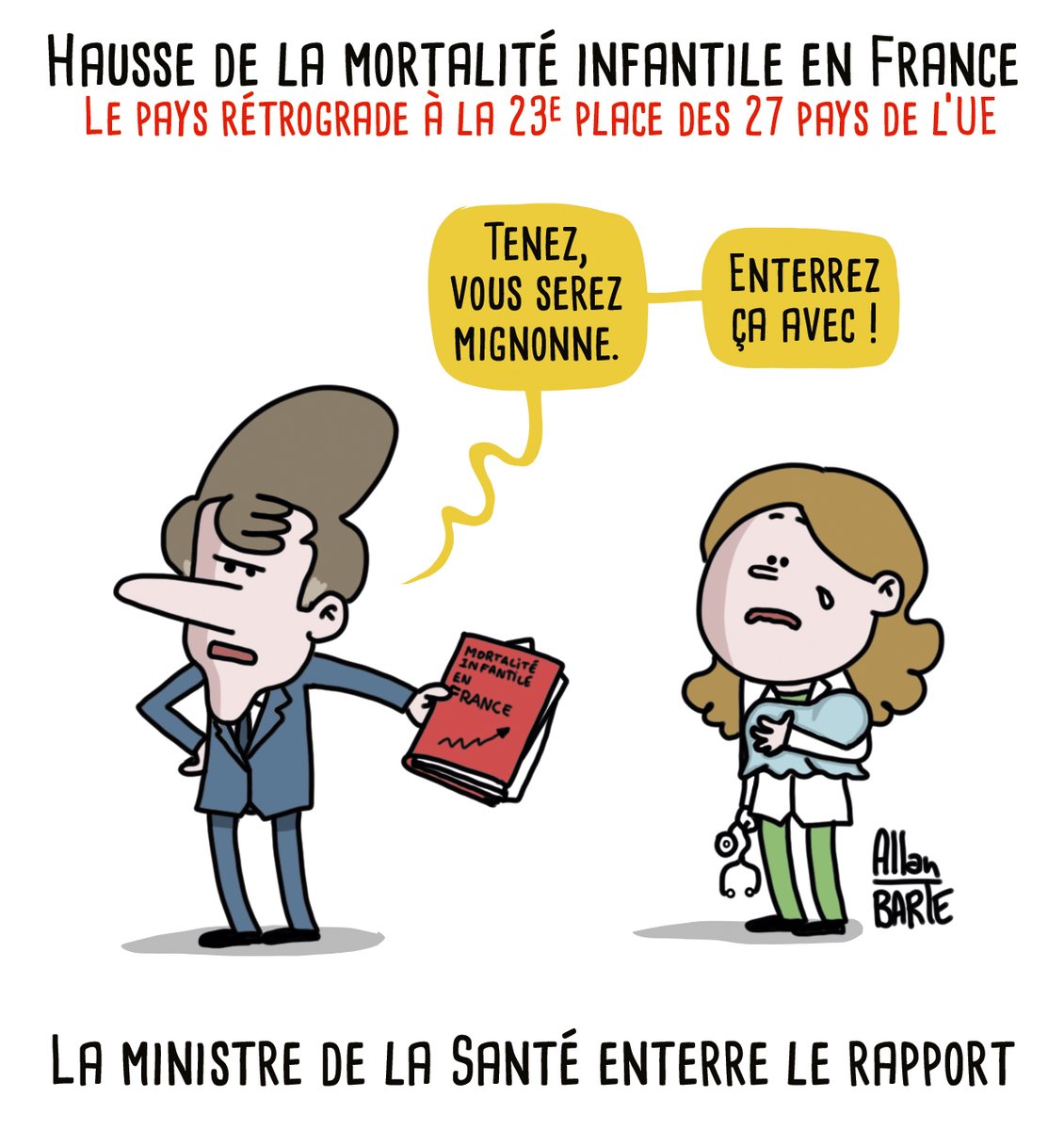
Le @canardenchaine met la main sur un rapport de 304 pages, analysant les causes de la hausse de la mortalité infantile en France.
La ministre de la Santé refuse de le publier.
Pour soutenir la lutte dessinée, engagée et indépendante :
▶️ https://t.co/0masgFkbV8
Its not Simcity, but business school students who were good at Civ V also turn out to be better planners, organizers, and problem-solvers in this small experiment.
A Danish scientist counted bugs on the same windshield, same road, same conditions, every year for 20 years. By year 20, 80% of the insects were gone.
In Germany, a group of volunteer bug scientists did something even bigger. They set traps in 63 nature reserves, not farms, protected land, and weighed everything they caught. Same traps, same method, 27 years straight. The total weight of flying bugs dropped 76%. In midsummer, when insects should be peaking, it was 82% gone. A follow-up in 2020 and 2021 checked again. No recovery.
In the UK, they literally ask drivers to count splats on their license plates after a trip. The 2024 count came back 63% lower than just 2021. Three years.
A 2020 study pulled together 166 surveys from 1,676 locations around the world. Land insects are disappearing at roughly 9% every ten years.
Here’s where it hits your plate. About 75% of the food crops we grow depend on insects to pollinate them, everything from apples to almonds to coffee. One 2025 study modeled what a full pollinator collapse would look like: food prices jump 30%, the global economy takes a $729 billion hit, and the world loses 8% of its Vitamin A supply.
Birds are already feeling it. North America has lost 2.9 billion birds since 1970. A study from just weeks ago found half of 261 bird species on the continent are now in serious decline, and the losses are speeding up in farming regions. The birds that eat insects lost 2.9 billion. The birds that don’t eat insects? They gained 26 million. That ratio tells the whole story.
One of the German researchers behind the 27-year study drives a Land Rover. He says it has the aerodynamics of a refrigerator. It stays clean now.
Destroying the @InternetArchive's @WayBackMachine would be the equivalent of the burning of the Library of Alexandria - one of the worst losses of knowledge in history.
Media giants are now threatening to do this.
We can't let this happen.
Pass it on.
Sci-Hub, the evil website that pirated 88M+ research papers and made them freely available has added another evil feature.
If you run a DOI and open a paper, Sci-Hub can give you similar and related papers.
Click on the three horizontal dots or the arrow and it will show you similar papers.
Don't do it.
Cancer kills because it's caught late. Adialante is changing that by making mobile MRI accessible — dropping its costs to hundreds per scan and wait times to hours. Annual cancer screening will be the norm.
Congrats on the launch, @ET_adialante &
@ManW_dePlan!
https://t.co/9HlPNjExdl
#EclaireurPublic - Comment est dépensé l’argent de votre commune ? Les associations Anticor et @DataForGood_FR ont développé un site, Éclaireur public, qui mesure la transparence des élus locaux.
👉https://t.co/0oZQXkOl6B
#AnticorPropose
https://t.co/hAWtf2nHUd
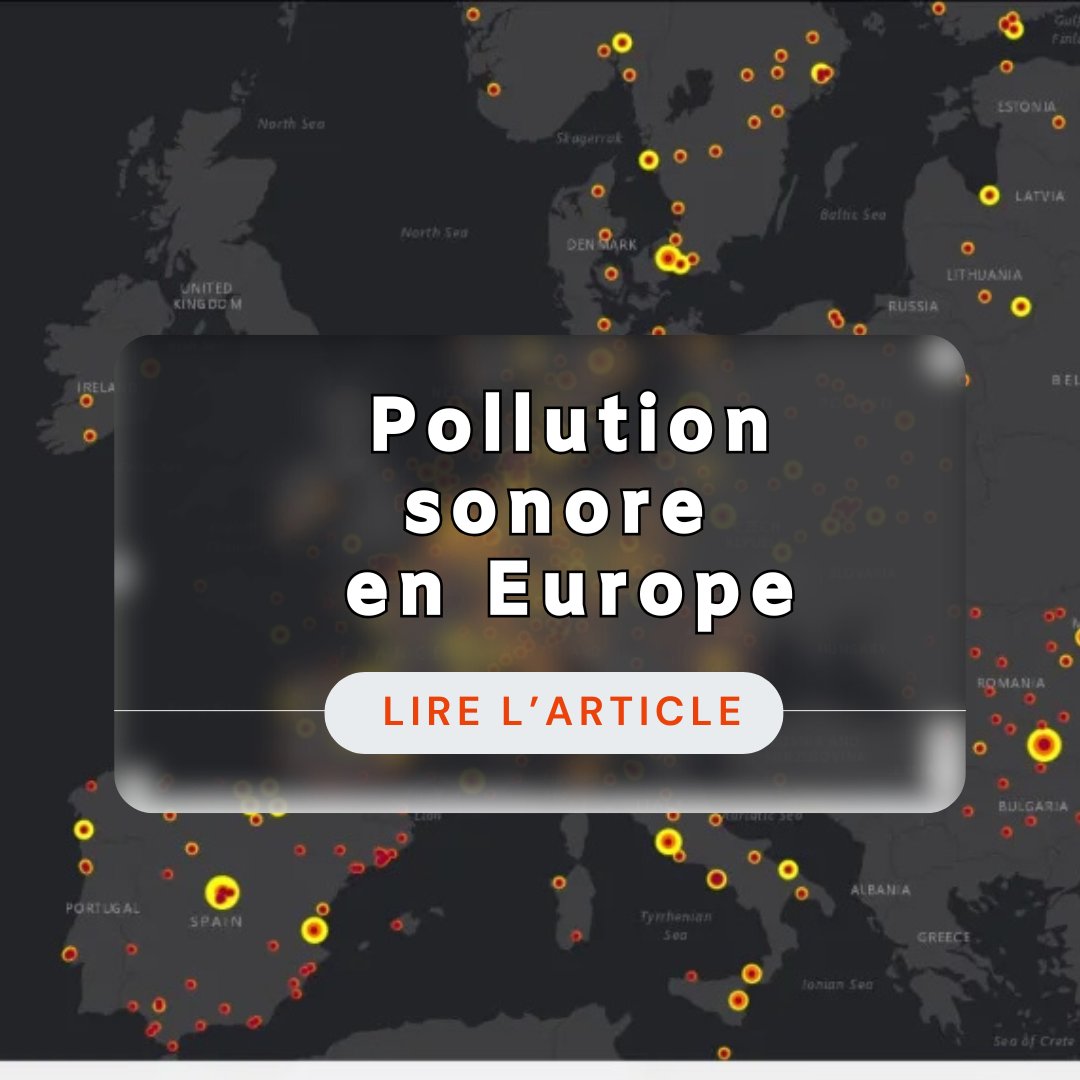
🔊 Pollution sonore en Europe : cartographier pour comprendre… et agir
Invisible, omniprésent, souvent banalisé : le bruit est un tueur silencieux.
En Europe, 1 personne sur 5 est exposée à des niveaux sonores nocifs, avec des impacts majeurs sur la santé, le bien-être et l’économie.
❤️ Stress chronique, maladies cardiovasculaires, troubles du sommeil, dépression, démence… 111 milliards d’euros par an : c’est le coût estimé du bruit des transports en Europe.
Face à cet enjeu, les pays de l’Union européenne s’appuient sur un outil clé : la cartographie du bruit, réalisée grâce aux SIG, notamment via des StoryMaps ArcGIS :
- Les principales sources de bruit (routes, rail, aérien, industrie) sont identifiées
- Les niveaux sonores sont analysés et comparés entre le jour et la nuit
- Les territoires et populations les plus exposés sont mieux identifiés afin d’orienter les politiques publiques
👉 Découvrez dans cet article des exemples européens montrant comment la carte permet de rendre visible l’invisible et de mieux comprendre les impacts du bruit.
https://t.co/g1yg7vp0Li
#PollutionSonore #SIG #Cartographie #SantéPublique #SmartCities #ArcGIS
Mme la présidente, @YaelBRAUNPIVET, ça fait des mois que les données des français... des mois que les données personnelles de millions de citoyens que vos députés représentent dans l'hémicycle dont pillées... bazardées sur le darkweb... et que quotidiennement des milliers de personnes sont arnaquées... sans aucune forme de sursaut national... sans aucune prise de parole forte de nos politiques...
Je suis ravi de voir votre soudaine implication. Et vous avez raison.
Mais allons plus loin ! Pourrions-nous avoir une commission pour se pencher sur ce sujet à l'Assemblée Nationale ?
Je parle presque quotidiennement de ces sujets.
Parfois je suis las de voir l'inaction de nos politiques...
Parfois je suis las de recevoir plusieurs messages de victimes sans que je ne puisse les aider... (pcq seul et disposant de très peu de temps et de moyens)
Parfois je suis las de voir que nos entreprises et administrations ne soient pas assez sensibilisées...
On se rencontre pour en discuter ?
Espérant que les choses changent, un gentil hacker et engagé très soucieux de notre souveraineté numérique, de la protection de nos données personnelles, mais surtout de nos libertés individuelles numériques.
Cybèrement vôtre,
SaxX ¯\_(ツ)_/¯
Ça fait plusieurs mois que je mentionnais un projet en rapport avec la science, et bien le voilà : https://t.co/OXZrrszXuF, un site collaboratif qui permet en un clic de voir le consensus scientifique sur une question (plus d'infos en dessous ⬇️)
Le 4 octobre 1945 naissait la Sécurité sociale, fruit du combat des résistants et des ouvriers. Depuis 80 ans, elle protège chacun·e d’entre nous « du berceau à la tombe », selon les mots d’Ambroise Croizat, ministre communiste et fondateur de la Sécurité sociale. 👇
Today, we are launching the first publicly available AI Scientist, via the FutureHouse Platform.
Our AI Scientist agents can perform a wide variety of scientific tasks better than humans. By chaining them together, we've already started to discover new biology really fast. With the platform, we are bringing these capabilities to the wider community. Watch our long-form video, in the comments below, to learn more about how the platform works and how you can use it to make new discoveries, and go to our website or see the comments below to access the platform.
We are releasing three superhuman AI Scientist agents today, each with their own specialization:
A general-purpose agent (Crow);
An agent to automate literature reviews (Falcon); and
An agent to answer the question “Has anyone done X before” (Owl).
We are also releasing an experimental agent, Phoenix, that has access to a wide variety of tools for planning experiments in chemistry. More on that below.
The three literature search agents (Crow, Falcon, and Owl) have benchmarked superhuman performance. They also have access to a large corpus of full scientific texts, which means that you can ask them more detailed questions about experimental protocols and study limitations that general-purpose web search agents, which usually only have access to abstracts, might miss. Our agents also use a variety of factors to distinguish source quality, so that they don’t end up relying on low-quality papers or pop-science sources. Finally, and critically, we have an API, which is intended to allow researchers to integrate our agents into their workflows.
Phoenix is an experimental project we put together recently just to demonstrate what can happen if you give the agents access to lots of scientific tools. It is not better than humans at planning experiments yet, and it makes a lot more mistakes than Crow, Falcon, or Owl. We want to see all the ways you can break it!
The agents we are releasing today cannot yet do all (or even most!) aspects of scientific research autonomously. However, as we show in the video, you can already use them to generate and evaluate new hypotheses and plan new experiments way faster than before. Internally, we also have dedicated agents for data analysis, hypothesis generation, protein engineering, and more, and we plan to launch these on the platform in the coming months as well. Within a year or two, it is easy to imagine that the vast majority of desk work that scientists do today will be accelerated with the help of AI agents like the ones we are releasing today.
The platform is currently free-to-use. Over time, depending on how people use it, we may implement pricing plans. If you want higher rate limits, especially for research projects, get in touch. @m_skarlinski, @andrewwhite01, @_tnadolski, Remo Storni, @semajazarb, @ludomitch, @MichaelaThinks, as well as @jasonjoyride and his team for making such fantastic videos of us!
La startup 🇫🇷 Mistral vient de révolutionner le traitement des documents (PDF notamment) par l'IA, avec un modèle OCR qui rend l'extraction de données complexes aussi simple qu'un appel d'API, avec des vitesses allant « jusqu'à 2 000 pages par minute ».
https://t.co/Uor2Yq0cND
DÉCOLLAGE du vol inaugural d’#Ariane6#VA262 depuis le Port spatial de l’Europe @EuropeSpacePort ce 9 juillet 2024 !
"Pilotage calme, trajectoire nominale" annonce le DDO.