1er pôle européen de recherche, de soins et d'enseignement sur les #maladiesgénétiques. L’Institut Imagine a pour mission de les comprendre et les guérir.
1/ Excited to share our paper in @NEJM today, reporting that autoantibodies neutralizing type I IFNs (autoAb-IFN) underlie the fatal case of H7N7 avian flu in the Netherlands 23 years ago! #AvianFlu#BirdFlu https://t.co/Dq2T1kusM2
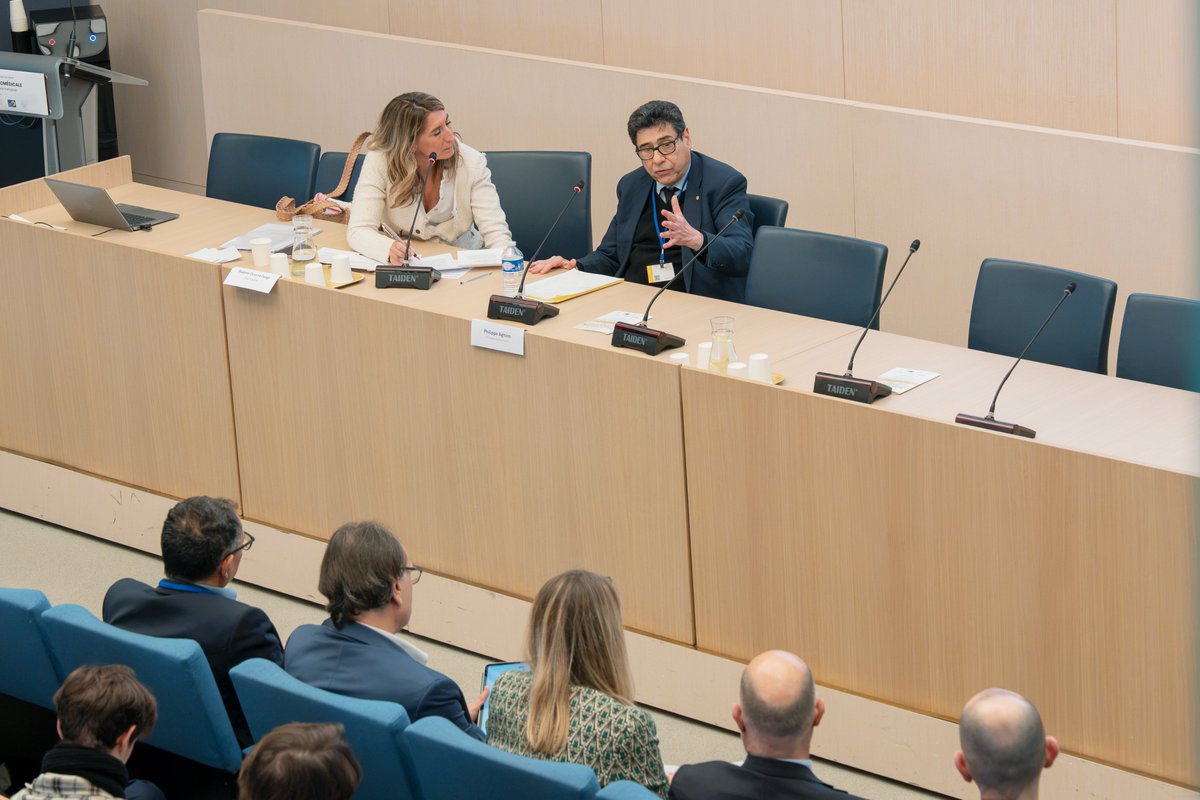
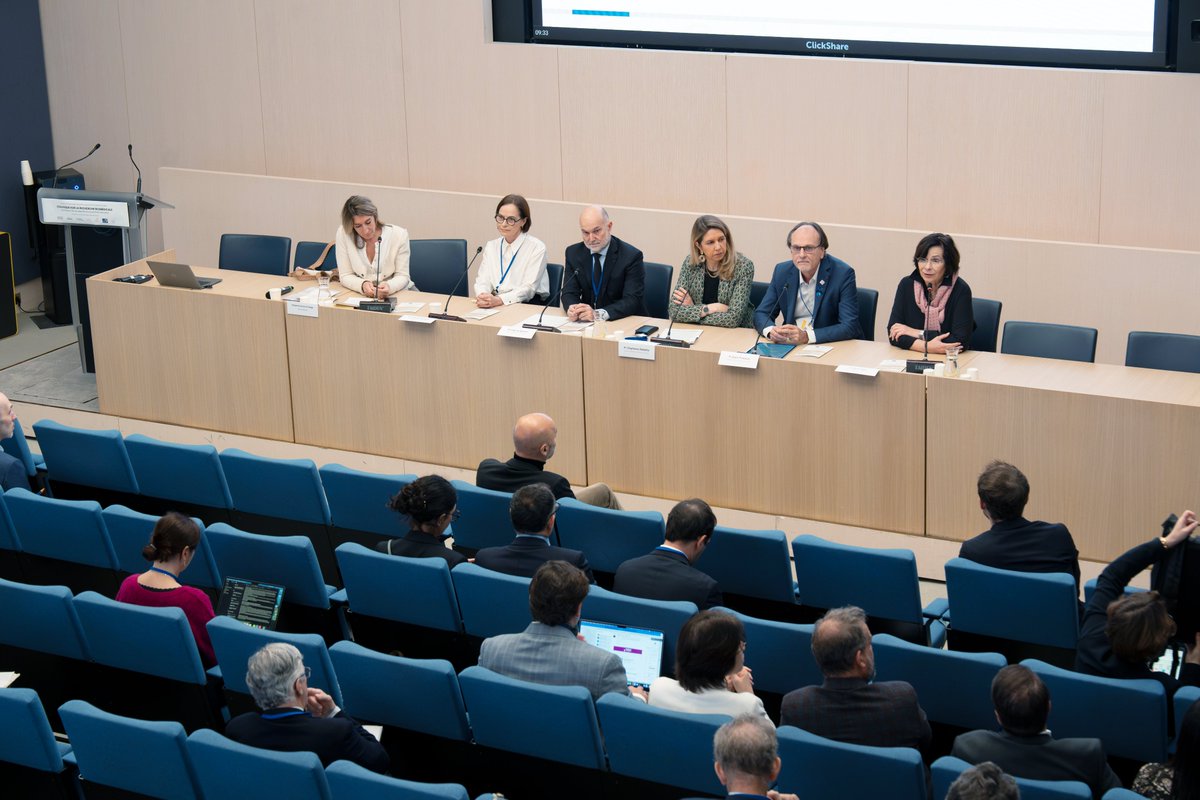
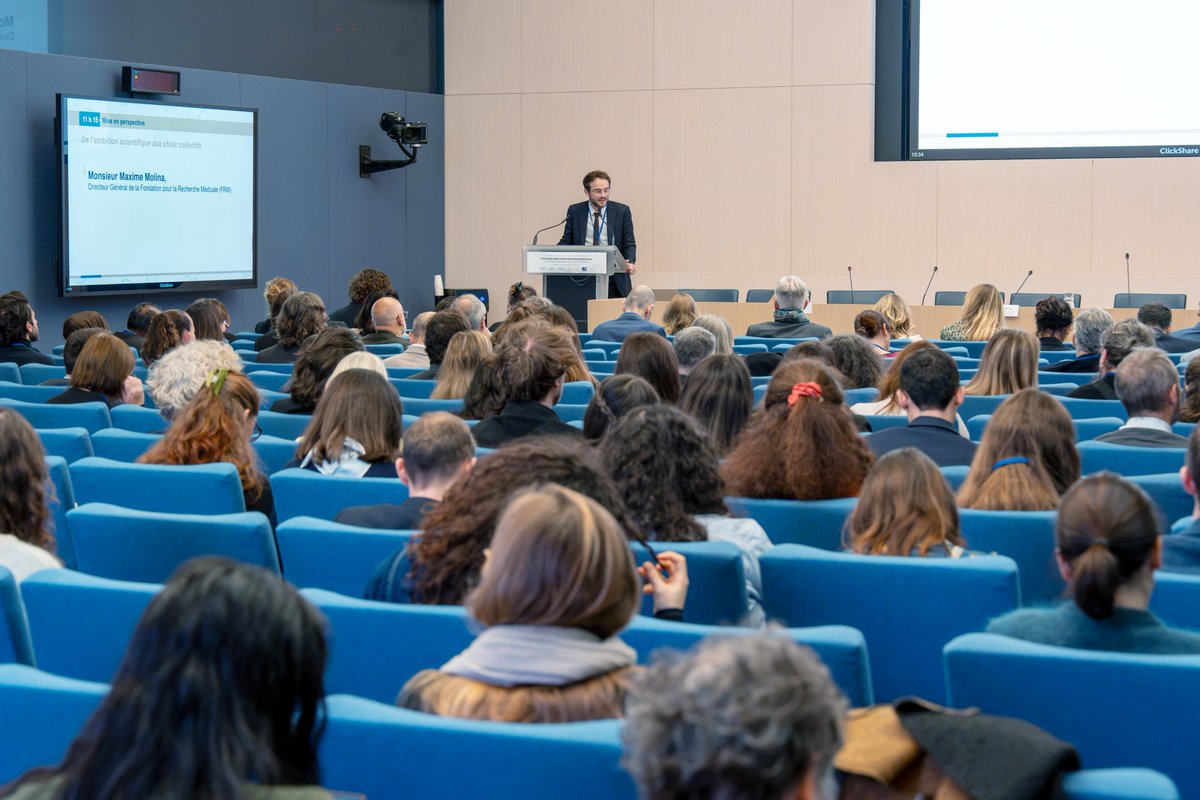
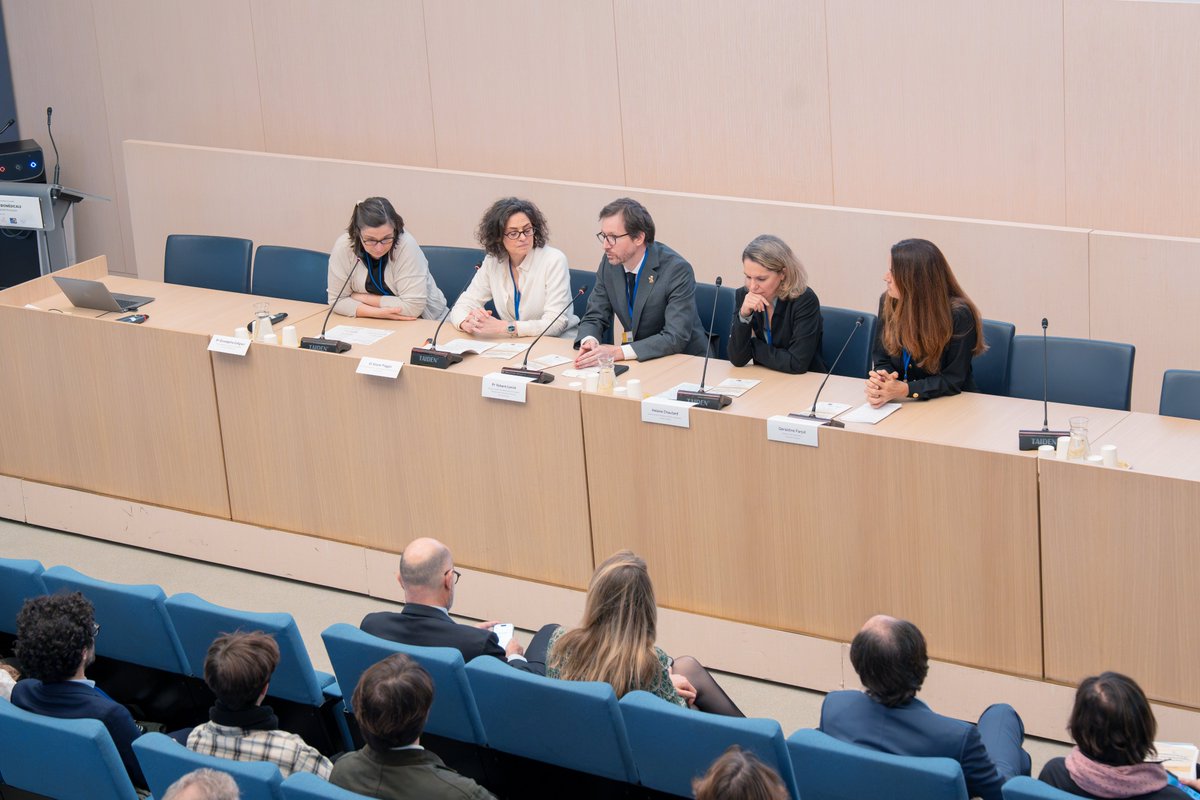
📸 Retour en images sur le colloque « Recherche biomédicale : les moyens de sauvegarder la souveraineté française »
Le 13 novembre dernier, @GustaveRoussy a eu l’honneur de co-organiser, au Sénat, en salle Clemenceau, un colloque qui a rassemblé près de 250 participants, sous le haut patronage de Monsieur @gerard_larcher, Président du Sénat.
Pendant une journée, dirigeants d’instituts, chercheurs, parlementaires, économistes et acteurs de la santé ont réfléchi ensemble aux priorités de la recherche biomédicale pour la prochaine décennie et aux moyens de préserver la souveraineté scientifique française.
🙏 Un immense merci :
• À nos partenaires co-organisateurs : l’@institutpasteur, l’@InstitutCerveau, l’@InstitutImagine et l’@institut_curie , en collaboration avec la @FRM_officiel.
• Aux parlementaires : Philippe Mouiller, Président de la commission des affaires sociales du Sénat, pour son introduction, ainsi que @fredvalletoux, Président de la commission des affaires sociales de l’Assemblée nationale.
• À Philippe Aghion, Prix Nobel d’économie 2025, pour son grand entretien sur les raisons d’investir dans la science.
• Aux représentants des grands organismes de recherche : Dr Muriel Altabef (@CNRS ), Pr Vincent Lebon (@CEAParisSaclay ), Pr Didier Samuel (@Inserm) et Nicolas Scotté (@Institut_cancer).
• À nos modératrices, Caroline Delage et Giuseppina Caligiuri, pour la qualité de leurs échanges.
Et aux équipes du Sénat pour leur accueil.
Notre conviction est partagée : faire de la recherche biomédicale une priorité collective. Cette journée est une étape importante, et nous poursuivrons ensemble ce travail dans les prochaines semaines.
Les essais cliniques de 2 labos en sont aux premiers stades et "les premiers résultats nous rendent très optimistes" : "On espère que ça va marcher, même si on reste très prudents."
J'en parle maintenant, car un appel aux dons pour l'institut @InstitutImagine a été lancé.
8/9
Connaissez-vous le syndrome de Rett ? Les fillettes malades "se retrouvent peu à peu emprisonnées dans leur corps, alors qu’elles comprennent parfaitement tout."
Avec un espoir : celui d'une thérapie génique contre cette "maladie très touchante".
Un fil ⤵️ @le_Parisien
1/9
Delighted to share the last paper of the lab, published in @ScienceMagazine , uncovering a new role for Golgi-derived vesicles and phosphoinositides in regulating mitochondrial fusion! 👇👇
https://t.co/yF4ASmK10g
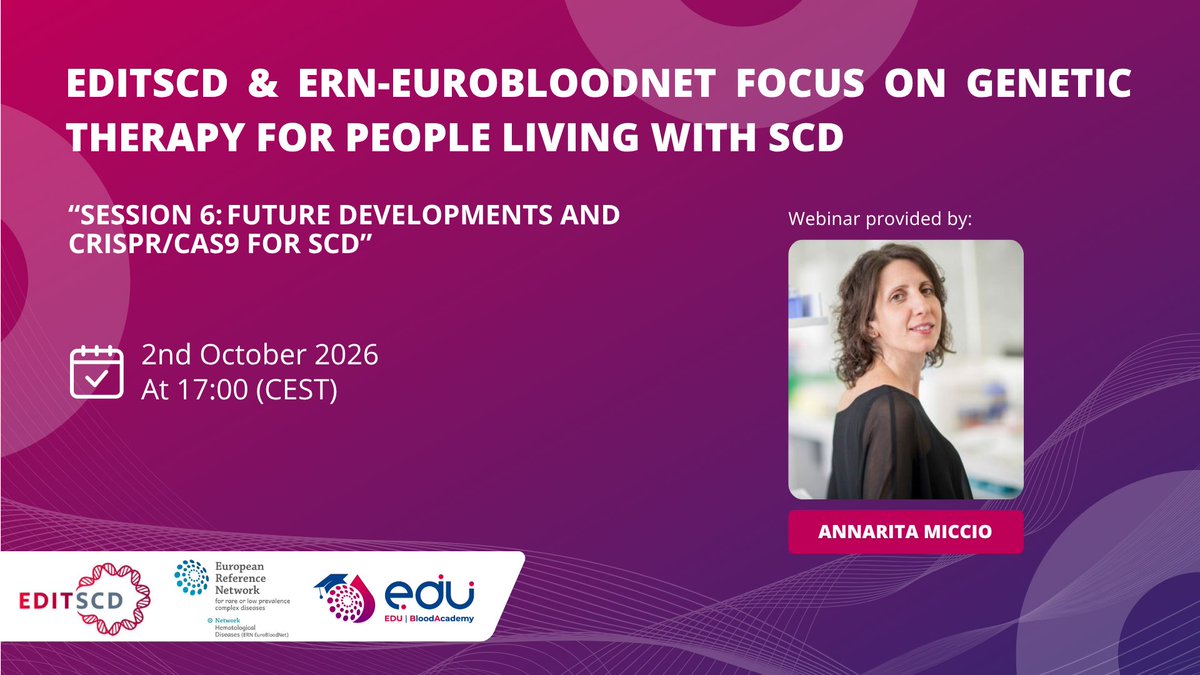
🚀It’s happening this week! Don’t miss Session 6: Future Developments and CRISPR/Cas9 for SCD, part of our topic in focus on Genetic Therapy for people living with SCD
Register now! https://t.co/7QpAVw7Jkq
One bold idea can change everything.
After discovering that some autoantibodies can cause severe COVID-19 disease, Paul Bastard is now leading team ATLAS to explore whether autoantibodies also influence cancer risk. The team's research could transform how we think about cancer prevention, detection and treatment.
Read Paul’s full interview at https://t.co/2OmyzaPcn3
📹 Includes footage from @InstitutImagine
1/ We are thrilled to share our new study on the risk of hypoxemic COVID-19 pneumonia in Myasthenia Gravis (MG) patients with autoantibodies (auto-Abs) neutralizing type I IFNs in @PNAS. https://t.co/SD1CndJOa8
2/ Paul Bastard at the @InstitutImagine leads the ATLAS team, an international effort funded by @CancerGrand/@CR_UK, with the support of the @BCRFcure), the Susan Wojcicki Foundation, and the Torrey Coast Foundation on Cancer Avoidance (https://t.co/8STRxH185p).
1/ We are thrilled to share our first @CellCellPress paper with the ATLAS team studying the role of antibodies, emphasizing autoantibodies in cancer (https://t.co/GHO8jPfhZk).
Why do some ‘super avoiders’ never develop cancer?
Team ATLAS has launched its global effort to uncover the answer.
In a new commentary published in @CellCellPress, the researchers propose that naturally occurring antibodies could help explain why certain individuals appear to have a natural resistance to cancer.
Supported by an expanded coalition of funding partners, including @BCRFcure and the Susan Wojcicki Foundation, alongside the Torrey Coast Foundation and @CR_UK, team ATLAS is investigating the immune mechanisms that may underpin this remarkable natural protection.
Read more about the team and funding partners supporting this work ➡️ https://t.co/glALPnqap5
With researchers from @InstitutImagine, @UTSWMedCenter, @EPFL, @cdi_labs, Uppsala University, @AarhusUni, @JohnsHopkins and @UniofOxford.
Mitochondrial proteotoxic stress induces metabolic rewiring in human microglia, marked by depletion of S-adenosylmethionine and lipid remodeling, ultimately leading to a #senescent phenotype, a new study of @InstitutImagine finds.
https://t.co/7OqiQfpTgw
Accueil des étudiants des universités médicales🇰🇿 de Karaganda, d’Astana et S.D. Asfendiyarov, participants à un stage de découverte, ainsi que des partenaires🇫🇷 de l’enseignement supérieur, de la #recherche & de la #santé⚕️👨🎓
Why are some people immune to cancer?
One of our new teams, ATLAS, is studying people who avoid cancer despite age, genetics or lifestyle risk factors, hoping to uncover what makes them different.
If we can unlock the secrets of cancer avoidance, we may be able to develop new strategies to stop cancer before it even begins.
Learn more about ATLAS 👉 https://t.co/x93Zx9pPZP
---
ATLAS is led by Paul Bastard, @InstitutImagine, and is funded by @CR_UK and Torrey Coast Foundation through Cancer Grand Challenges.
◼️ 𝐃𝐞́𝐜𝐞̀𝐬 𝐝𝐮 𝐩𝐫𝐨𝐟𝐞𝐬𝐬𝐞𝐮𝐫 𝐂𝐥𝐚𝐮𝐝𝐞 𝐆𝐫𝐢𝐬𝐜𝐞𝐥𝐥𝐢. Figure majeure de la pédiatrie et de l’immunologie moderne, il fut l’un des grands artisans de la recherche sur les déficits immunitaires rares et les ‘bébés bulles’, contribuant aux avancées décisives de la thérapie génique et de la médecine pédiatrique contemporaine. Ancien directeur de l’INSERM, professeur à l’Université Paris Cité et fondateur de l’Institut Imagine, il a consacré sa vie à rapprocher recherche fondamentale, innovation clinique et prise en charge des enfants atteints de maladies graves. 𝐍𝐞́ 𝐚̀ 𝐑𝐚𝐛𝐚𝐭, 𝐩𝐫𝐨𝐟𝐨𝐧𝐝𝐞́𝐦𝐞𝐧𝐭 𝐚𝐭𝐭𝐚𝐜𝐡𝐞́ 𝐚𝐮 𝐌𝐚𝐫𝐨𝐜, 𝐢𝐥 𝐞́𝐭𝐚𝐢𝐭 𝐦𝐞𝐦𝐛𝐫𝐞 𝐝𝐞 𝐥’𝐀𝐜𝐚𝐝𝐞́𝐦𝐢𝐞 𝐇𝐚𝐬𝐬𝐚𝐧 𝐈𝐈 𝐝𝐞𝐬 𝐒𝐜𝐢𝐞𝐧𝐜𝐞𝐬 𝐞𝐭 𝐓𝐞𝐜𝐡𝐧𝐢𝐪𝐮𝐞𝐬 et œuvrait depuis des années au renforcement des échanges scientifiques et médicaux entre la France et le royaume.▪️
Moreno-Corona, Kracker et al. describe WDR75 variants in a patient with B cell immunodeficiency and #autism. Their findings suggest that altered #ribosome biogenesis may contribute to this rare presentation. https://t.co/c7dcgcXA7j
#RareDisease@institutimagine@ValagussaAlice