Been practicing the discipline of not having to have the last word lately. There’s so much joy, peace, and fulfillment in this exercise. Might as well make it my guiding value.
BREAKING: LeBron James is signing with the Philadelphia 76ers on a two-year, $8 million deal with a player option, Klutch Sports Group and Klutch CEO and Game Over show host Rich Paul tells ESPN.
“Accept your market as it is, not as you want it to be”
Brilliantly put💡
First knock at the door of failure for founders building in African Markets is listening to the devilish urge of changing the way people live / work instead of improving it - making it more efficient.
When I moved back to Nigeria over a decade ago, I worked for VC-backed e-commerce platform @ShopKonga where I got a first-hand education into consumer behavior in African markets at scale.
Unlike the US where e-commerce meant paying in advance, online shopping at Konga generally meant customers placed orders but didn't pay for them until the goods arrived, were inspected, and ultimately accepted.
Of course, those orders could be rejected, too. And many were. Up to a third were returned if memory serves correctly.
That's part of why pay-on-delivery was referred to at the time as "the worst thing to happen to e-commerce in the country" and the "demon of Nigerian e-commerce."
Fast-forward ten plus years to today, and @Jumia_Group still relies heavily on that industry demon.
So I asked Jumia CEO Francis Dufay why pay-on-delivery is still necessary — in today's future-forward world of fintech, AI, and drones.
His response reflects a broader lesson about building in African markets that he later made explicit: Accept your market as it is, not as you wish it to be.
"There's a difference between our dreams and the market reality... We don't love [pay-on-delivery]... But we have to live with it... So, we embrace it."
Watch his answer in the video below 👇🏽
P.S. The full conversation from 2025 is on YouTube here ➜ https://t.co/pT3A7N9HzT
@tantineishere This is Gold. Thank you!
In fact, the idea of non- consumers / underserved markets is foreign to our entrepreneurs, yet that’s where value is to be captured. Products like “indomie” “Mobile money” have grown so big because they exactly were built to target the low-end footholds
“Don't be discouraged if what you produce initially is something other people dismiss as a toy. In fact, that's a good sign.”
Paul Graham on coming up with organic startup ideas:
Nope. You do kindness because it is who you are. If you are forcing it, their response will matter. If it is who you are, you do not know how to do life any different.
This is actually a brilliant idea, more so thinking of it from people’s earning patterns! A moto guy who makes 10k/day max will always struggle with clearing a 25k fine at a go. A pay as you earn option, within a set period of time, perhaps makes sense cc: @israb12@IremboGov
Ba Nyakubahwa @Rwandapolice nta kuntu mwatekereza kuri option yo kwishyura Fines mubipengeri? Kwishyura 50k imbumbe muri iyi economy biruhije mumutima nkinzira ijya Golgotha
A sltn like Kayko empowers SMEs & MicroSMEs to perform basic, yet very important accounting best practices, indirectly enabling’em to predictively manage inventories, and that, with a plug into RRA system for compliance. Why’d agentic AI be a better alternative @PascalMurasira🤔
Is an AI Agent truly the solution for Aline’s Jobs To Be Done though? Will she pay for it?
Aline & most SMEs are not online. What would be the agent’s source of data?
And if this’d require building a new model, which data would you train it with, and what’d be the cost vs ROI?
Last year, in July, I visited 21 out of Rwanda’s 30 districts.
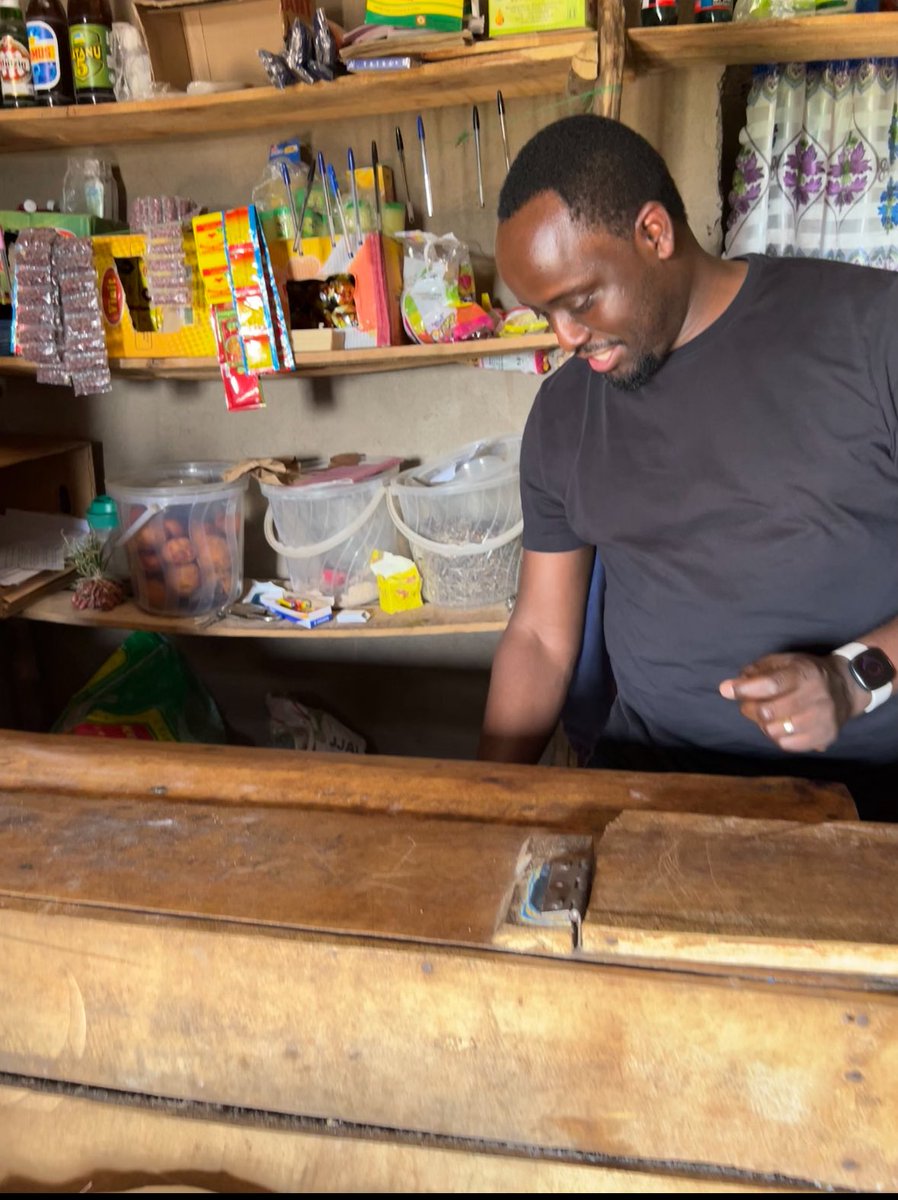
From busy town centres to remote trading posts, one thing stood out everywhere I went, the heartbeat of the local economy was the small kiosk.
These shops, often no bigger than a single room, keep communities supplied with rice, sugar, soap, MoMo, and cooking oil.
They’re where neighbours meet, where news is exchanged, and where livelihoods are built.
In Ruhango district, I visited Aline’s shop. Her kiosk is modest: a few shelves, a small counter, and a well-worn notebook where she records every sale by hand.
Payments are mostly in cash. When she runs out of stock, she often finds out only when a customer asks for something she doesn’t have.
It’s the same story across the country.
And yet… these “small” shops are the economy:
👉🏾 In Rwanda, +90% of private-sector businesses are micro or small enterprises.
👉🏾 They account for ~41% of private-sector jobs.
👉🏾 Across Africa, MSMEs generate 80–90% of employment and up to 60% of GDP.
Now imagine Aline, and thousands like her, equipped with AI that works without a smartphone or internet:
Such AI can help with:
•Inventory Forecasting via Basic Phone Calls: AI agents that call the shop owner once a week, ask a few questions in Kinyarwanda, and predict what stock will run out next.
•SMS-based Price Suggestions: Text alerts with optimal prices based on market trends and seasonal demand.
•Voice-based Supplier Orders: Call a number, speak your order in Kinyarwanda, and an AI system routes it to the nearest wholesaler for same-day delivery.
•Automated Customer Reminders: AI sends simple SMS updates to loyal customers (“Fresh bread has arrived” / “Cooking oil back in stock”).
•Cash-to-Digital Bridge: AI-assisted USSD menus that record transactions and build a credit profile without a banking app.
The Macro Impact?
•Rwanda’s GDP in 2024: ~US $14.25 billion.
•Retail trade adds about US $940 million annually.
•If 20% of Rwanda’s ~200,000 kiosks adopted basic AI tools and boosted profits by just 15%, the economy could see an extra US $428 million per year, about 3% of GDP.
That’s like adding a whole new industry… without building a single factory.
With AI, even the simplest, voice-powered kind, these shops can become engines of national growth.
Never thought a black egg existed! Here is one ;it is real! Kurotamago-they call it .From a vocanic crater in OWAKUDANI.Legend has it that you eat 1 you add 7 years to your life, you eat 2 you https://t.co/gz50m0UBFD three, your life span is cut.Wisdom advised me to eat NONE !!!
@bitew_mulu Yep! For any problem you wanna solve, the worst competitor isn’t one solving it in the same or better ways, but the one who benefits from the it’s existence. Unless the system unifies against such people, any solution will only work is if it still guarantees their interests.
@margentambi 100% spot on.
And added to that, once you attempt building some yourself, it forever shapes a fresh view / perspective on what supporting founders should / should not look like.
I didn't realize this till recently, but when big, bureaucratic organizations create incubators, the startups that come out of them are damaged from the start by focusing on big customers instead of the scrappy early adopters that successful startups usually sell to.