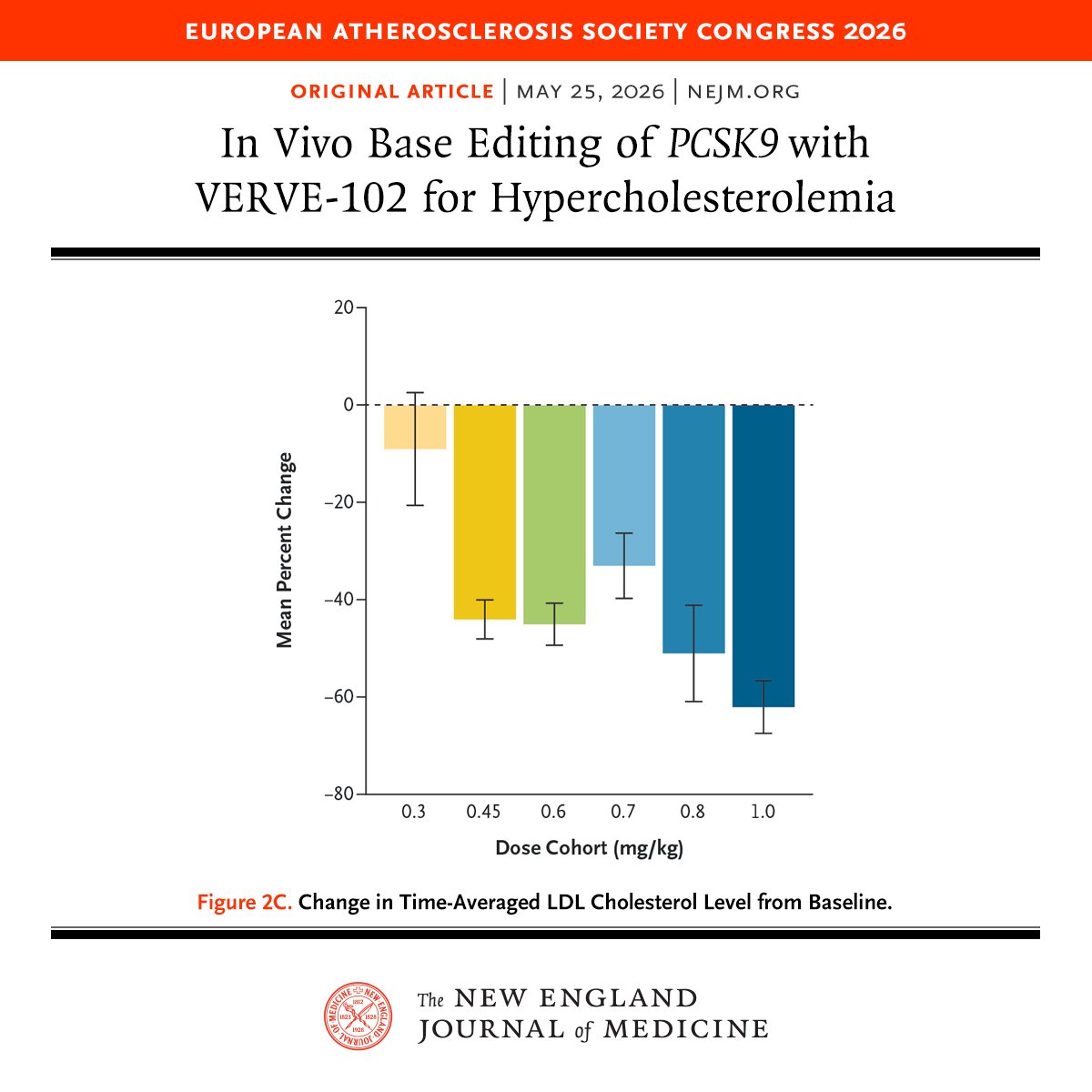
Presented at #EASCongress2026:
Vafai and colleagues report reductions in PCSK9 and LDL cholesterol levels and no dose-limiting toxic effects in persons with hypercholesterolemia treated with VERVE-102, a base editor targeting PCSK9. Full study results: https://t.co/l8eS1U9rb4
@EASCongress
1/14
Why can't you use direct oral anticoagulants (DOACs) in patients with mechanical valves (MVs)?
DOACs have been one of the most important advances in my career. And yet, the presence of a MV is one of the few contraindications.
The reason highlights the unique nature of thrombus formation in those with a MV and provides insights into the evolution of human hemostasis.
@sean9n In these patients though are you ever really using “antihypertensives” to treat BP? For me, the blood pressure is a resource that I can spend to treat their CHF / albuminuria / CAD
When I first started in medicine idea of not using arterial line in ICU patient was seen as crazy
I remember asking why we couldn't just use cuff for a few hours on particularly busy 30 hour call shift
Now we know that cuff BP would've been fine because of an amazing & bold RCT
https://t.co/nuzEqn7qTX
(1/x) Andromeda-Shock 2 was just published in JAMA and is the most important septic shock trial in the past DECADE.
They found that phenotyped resuscitation improves the composite outcome of mortality, vital support, and hospital LOS.
Here's how you can apply this protocol to your practice 👇
The AQUATIC trial may be the most definitive trial of #ESCCOngress
The common combo of ASA and OAC for pts with CAD/stent and AF is clearly been harming people. Lots.
MACE worse, Death worse, Bleeding way worse.
STOP THE ASA when on OAC
https://t.co/OSx0UKWPXe
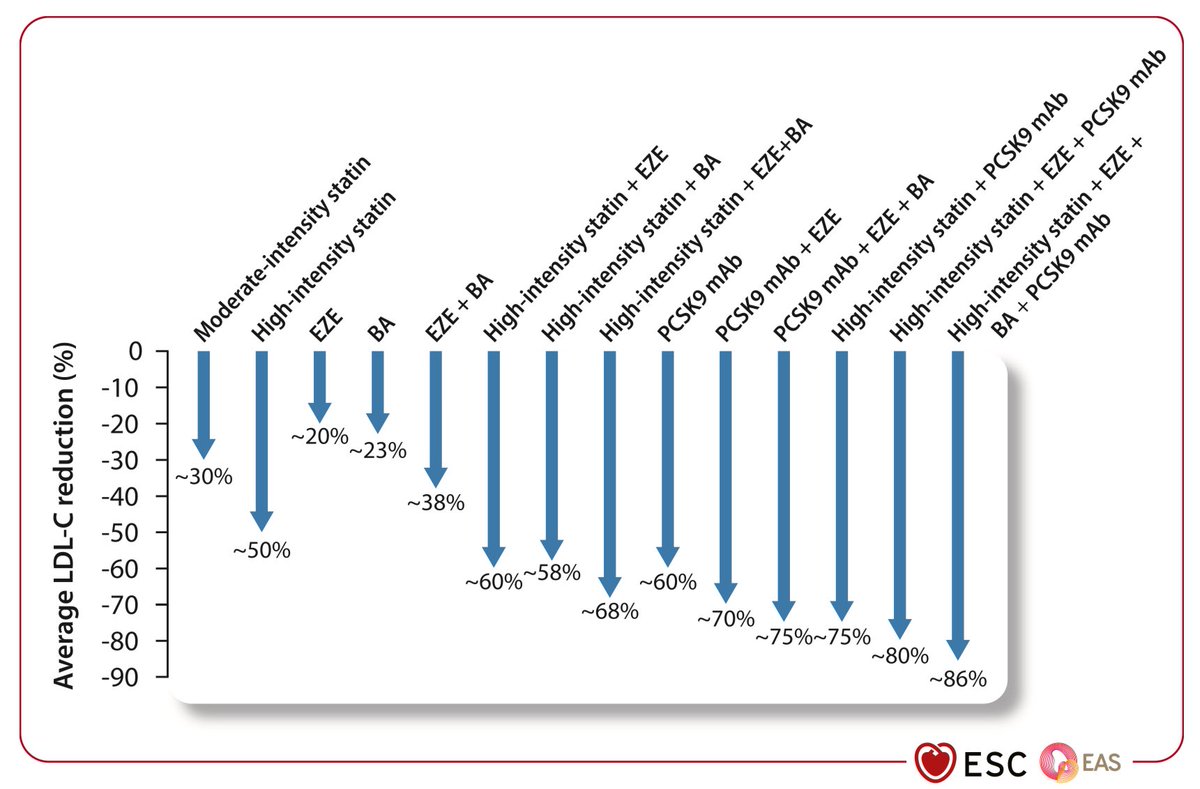
LDL-C average percent reduction with pharmacological therapy
via the 2025 ESC/EAS Focused Update on Dyslipidaemias
#ESCCongress2025#CVprev
https://t.co/LSZ4HXtQeb
@AnilMakam The more we can get generalists / internists comfortable with GDMT rapid up titration, hopefully the less need we’ll have for the fancier HF training as well!
Medicine focuses a lot on the question “will this help my patient” but not on the question “when will it help my patient.” The latter becomes important as we age. We’ve developed a “time-to-benefit” tool on https://t.co/pNX59QfR17 to help answer this question.
#FOAMed#meded
Just to illustrate the problem, here is something I see in the ED a lot. This is a MADE UP PATIENT reflecting trends, not an individual.
Man in his 70s coming in feeling weak for “a while.” Fell today.
No family doctor for 8 years.
Has been on the same medications ever since.
My new (long) video explains why looking for neuro S+S in dizzy patient is useful, how to use the HINTS exam and what to do with constant dizzy patients who don't have nystagmus. And I do a bit of GRACE-3 bashing. https://t.co/PZD6UCjm5i