🎉🎉 🥳 We are very excited to finally share with everyone our latest preprint on a fascinating bacteriophage infecting C. difficile, with 12 structures from a 23 MDa phage! and a few surprises along the way. Let us take you on a tour of phiCD508… A thread 🧵 1/9
🚨 Funded PhD Opportunity - Cryo-EM & Structural Biology (Sheffield, UK)
Study toxic bacteriophage proteins targeting drug-resistant Enterococcus. Training in cryo-EM, AlphaFold, protein biochemistry & infection biology.
🔗 Apply by 7 Jan 2026
More info: https://t.co/iOTW0DJnvI
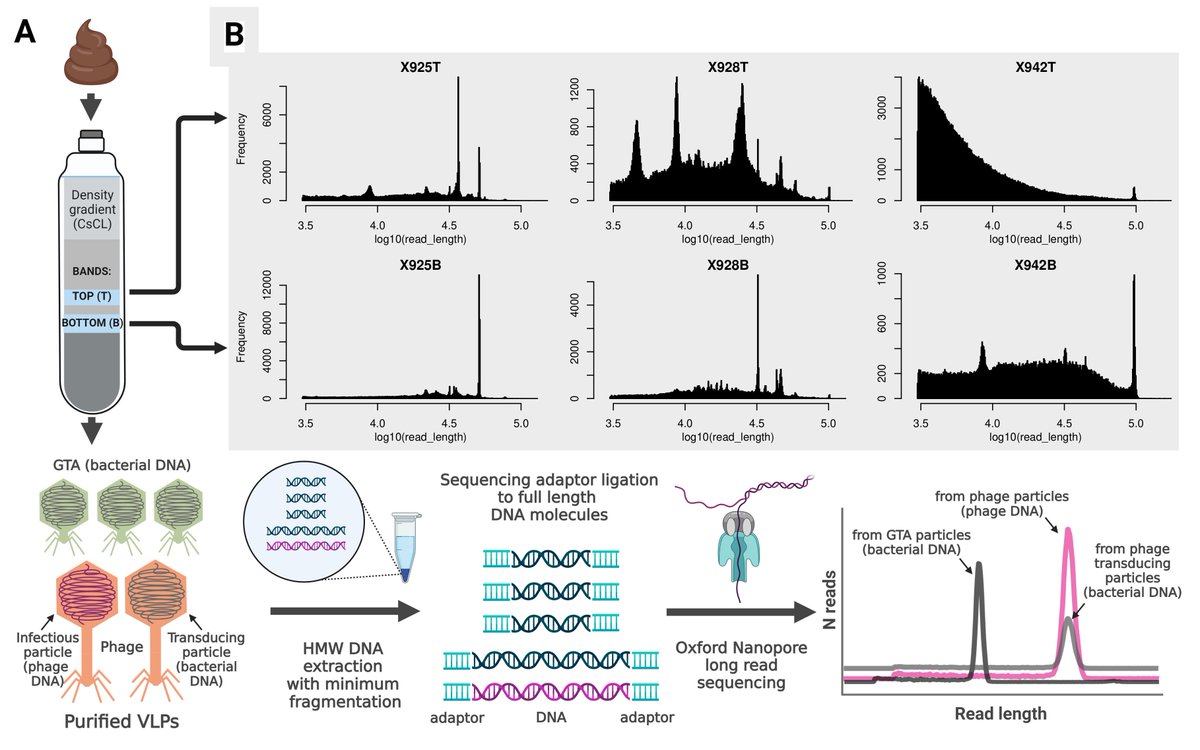
We have a fascinating preprint just out, revealing the widespread packaging of bacterial genomic DNA into capsids in the human gut:https://t.co/nuo0wLYRjh. Major denizens of the #microbiome implicated with broad potential impact on bacterial evolution and horizontal gene transfer
@thesteinegger @NAR_Open Really nice resource, congrats. Is there a way to search the database based on the phage host or function description e.g. all E.coli phage hypothetical proteins?
Check out our new preprint (https://t.co/jZ9MnTmBl0) describing widespread bacterial DNA packaging by #bacteriophages and gene transfer agents (GTA) in the human gut #microbiome. Many thanks to @PCMFogg, @JSamWilson, Pavol Bardy, and @colinhillucc for collaborating with us.
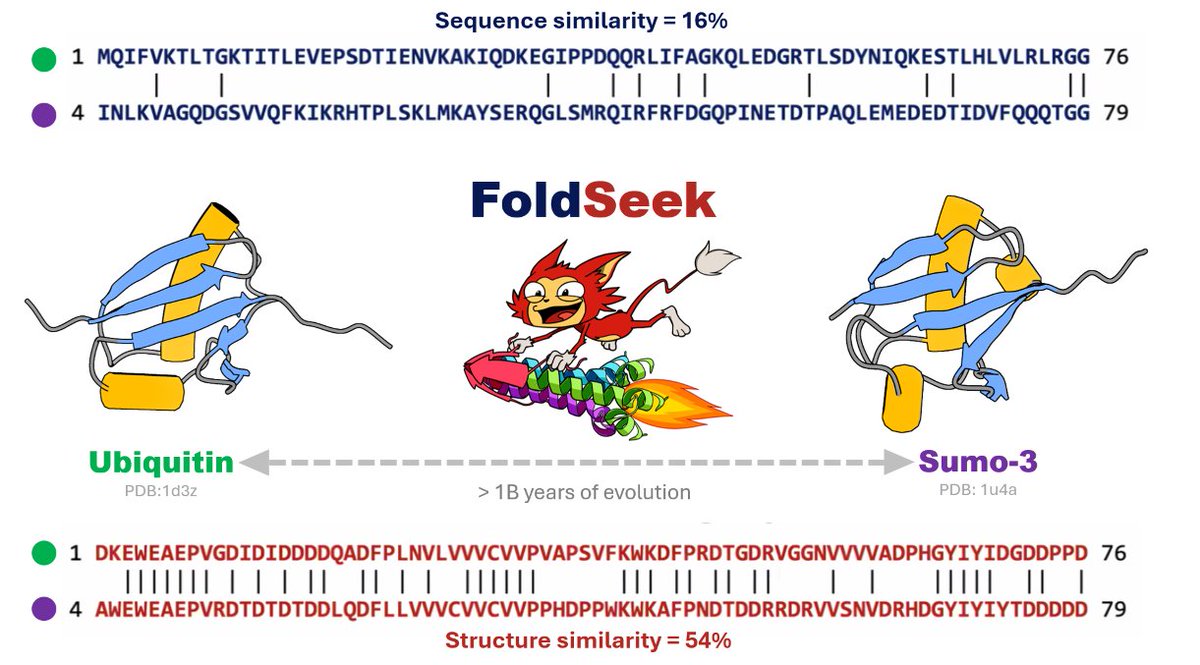
🧵one of my favorite tools: Foldseek (1/7)
We have traced the evo of species by comparing their proteins. We use models that assign a %similarity between seqs and confidently infer that 2 proteins are homologous if share ≥25% SeqSim. But what happens when it’s less than this?
🚀Announcing my first (co)first-author manuscript 🚀
"Cell attachment and tail contraction of S. aureus phage phi812"
🔗https://t.co/u26fawQZqJ
Check out the 🧵 to explore the structural details of phage interaction with Gram+ bacteria🤯
#PhageTherapy#Research#PhDlife
1/11
Excited to get started as a BBSRC Discovery Fellow at @ScienceShef in October. I'll be looking to understand how bacteriophages hijack their hosts and how we can exploit that understanding towards new antimicrobials 🔬🦠
Meet the 15 new BBSRC Discovery Fellows who are receiving a collective £6m of investment for early-career independent research.
The fellowship scheme, now in its 10th year, supports promising researchers who aspire to secure the future of biosciences.
https://t.co/Tu4Djsy2yZ
✨️ It's been a long time coming ✨️
https://t.co/VX330oPQC4
Really excited to finally be able to share the publication of my first first-author research paper in PLOS Biology today!
A Thread 🧵
Fully funded 4-year PhD position using cutting-edge fluorescence and electron microscopy to study the bacterial cytoskeleton. 🔬🦠🦴
Co-supervised by Martin Goldberg (Durham) and Yulia Yuzenkova (Newcastle).
Apply by 22 July!
https://t.co/78qqBkCSUw
In the USA in 1943 they produced a film 'Don't be a Sucker' about fascism.
It perfectly explains Nigel Farage, Suella Braverman, Tommy Robinson and the entire Right.
We present DRGN-AI for fast, ab initio cryo-EM reconstruction!
* learns a neural field from unposed images,
* designed for single-shot reconstruction of unfiltered datasets,
* finds new states missed by prior approaches!
Teamwork led by @ZhongingAlong
https://t.co/WjPStRkrnI 1/
We present a preprint about a “stargate” mechanism of the capsid opening required for genome delivery in members of the Microviridae family. See below for a short manuscript summary (1/9).
https://t.co/pYpM7T4rGy
@ArmrYshr Do you use particle set tool to split the particles into e.g. blue and red sets depending on which initial picking they came from (this makes sense as then each round of 2D classification only sees one copy of each particle?). If so how do you do this in the particle set tool?
@Milan_Gerovac@JoergLab@RobLavigne1@BoettcherCryoEM@Uni_WUE@Helmholtz_HIRI@Ko_chihara @laura241192 Do you think that some of the proteins identified in your sedimentation profiles such as HNH endonuclease (179) and DprA-like ...(207) are forming larger complexes with other proteins or are complexed with large fragments of DNA? Do you see anything in your t-SNE clustering data?