New study alert! Our team analyzed 100 patients with SIH and found that spine MRI diverticular patterns can reliably predict CSF-venous fistula (CVF) location — a crucial step toward more targeted & efficient myelography. Perhaps the holy grail of CVFs?
https://t.co/Jv89HYIZQb
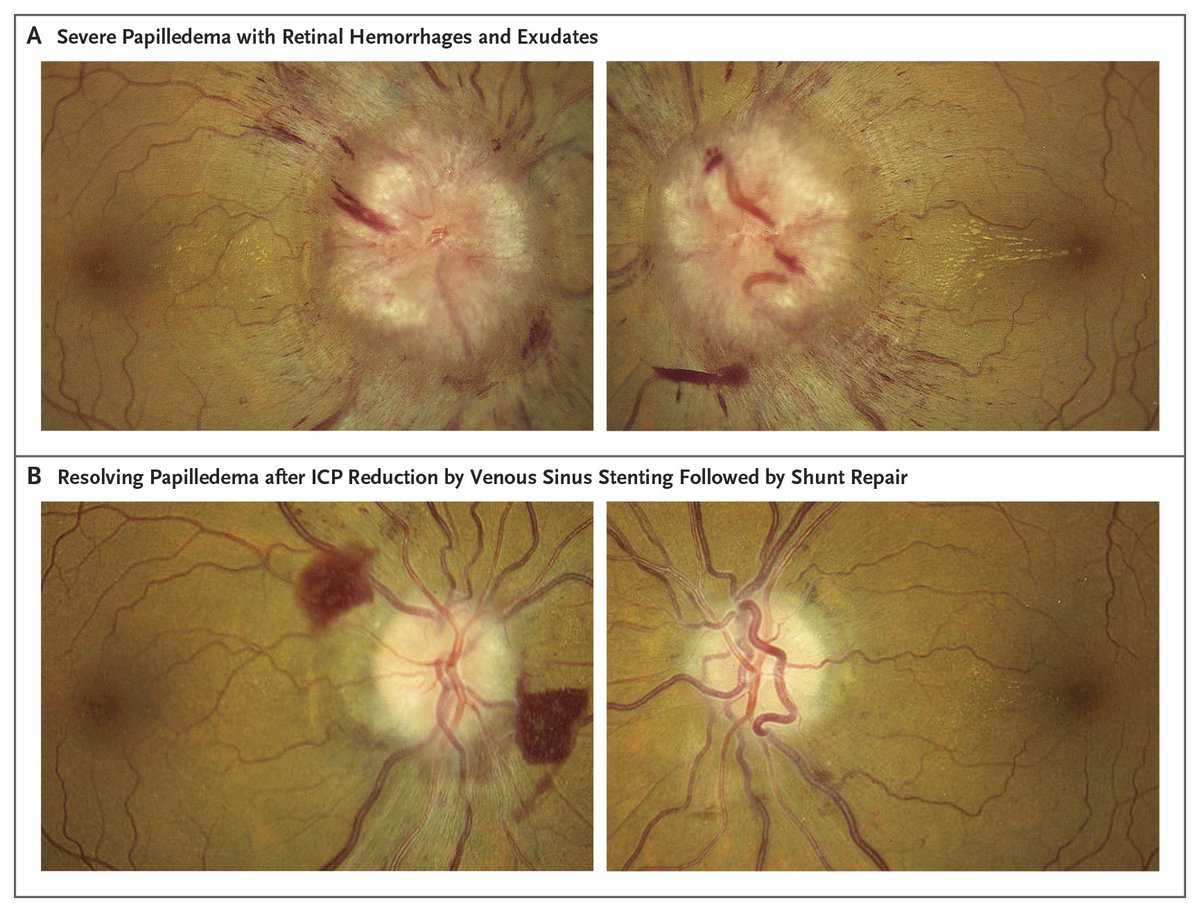
Idiopathic intracranial hypertension — high cerebrospinal fluid pressure most common in women of reproductive age with obesity — threatens vision. Treatment includes weight loss, medication, and surgery.
Learn more in the Review Article “Idiopathic Intracranial Hypertension” by Jonathan C. Horton, MD, PhD, from @ucsf: https://t.co/alUs13kzt3
���� #CallForPapers! Join our @FrontNeurol Research Topic: "Cerebral Venous Disorders: from Diagnosis to Endovascular Treatments."
We're seeking research on Cerebral Venous Outflow Disorders, #CVT, & novel neurotechnologies.
Learn more & submit: https://t.co/3N3EYp4g7M
🧠 How do you approach cervical carotid dissections associated with stroke? Labeyrie et al. show a technique that utilizes aspiration through a balloon guide catheter to expose the true lumen. Read more about it: https://t.co/BGiWyeMgsR
Thrombectomy is superior to Best Medical Therapy for LVO stroke w/ penumbra presenting Beyond 24 Hours: A Systematic Review and Meta-Analysis
https://t.co/y6lXcIwky1
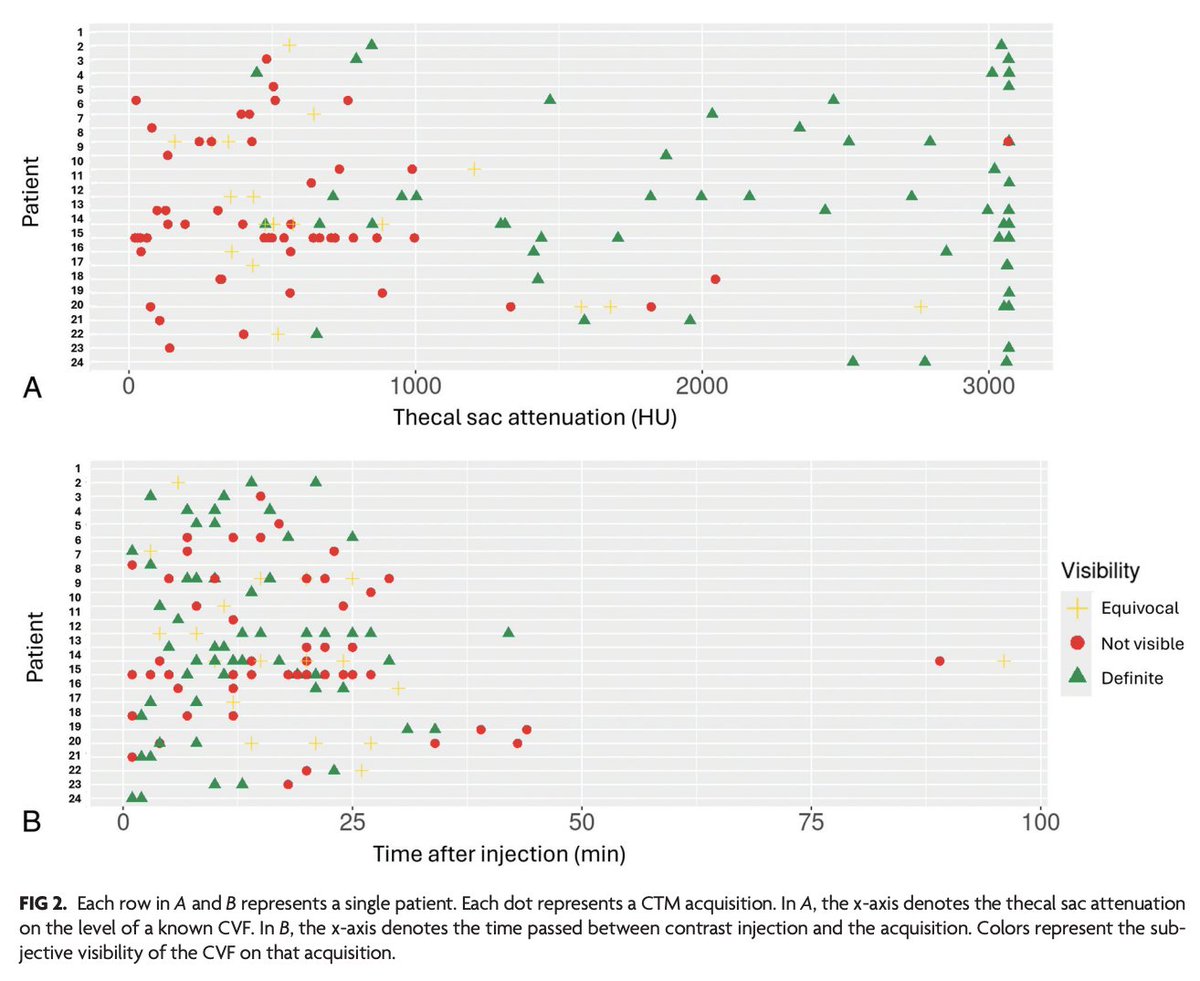
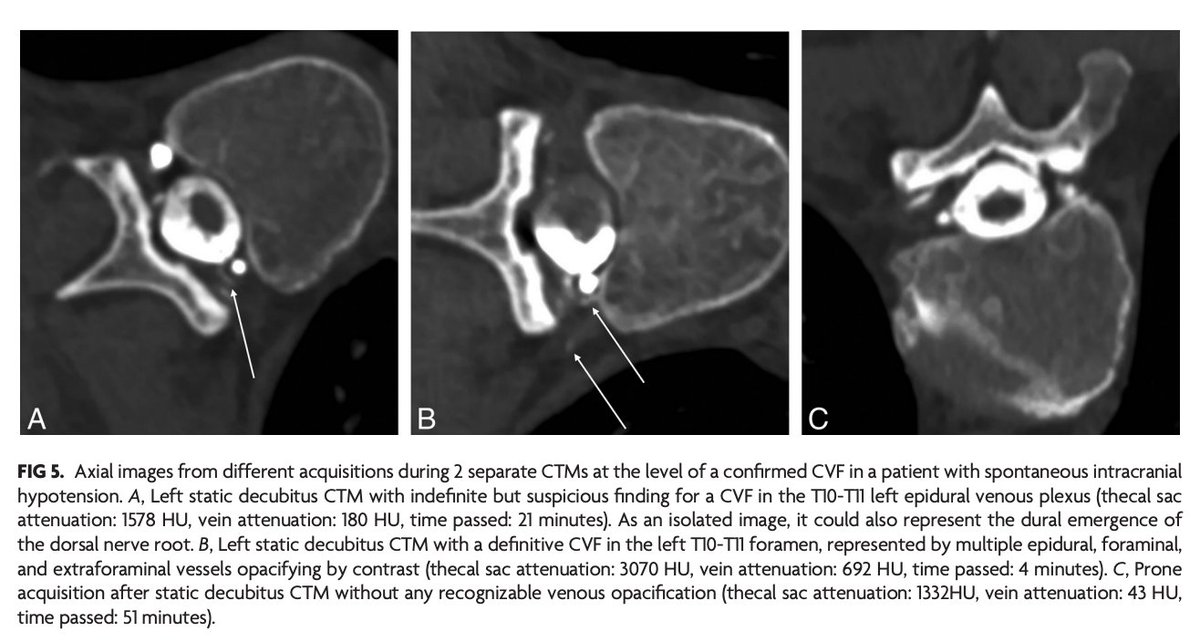
"Density and Time Characteristics of CSF-Venous Fistulas on CT Myelography in Patients with Spontaneous Intracranial Hypotension"
https://t.co/EpVxHbCozB
@The_ASSR@dgleao@TimAmrheinMD@PeterGKranz#CSFLeak
🧠📊 Help shape best practices! How do you manage antithrombotic therapy for carotid artery stenting in patients with atrial fibrillation? Share your expertise in our Survey – it only takes 10 min 📝 Participate now ➡ https://t.co/L6KJyN3QYs
#Neurointervention#ESMINT
The MEMBRANE randomized clinical trial demonstrated a significant treatment effect favoring MMAE with Tru-Fill nBCA over standard management alone for chronic subdural hematomas. The odds ratio favored MMAE in both the surgical and non-surgical cohorts. Reduced rebleeding, higher rates of complete resolution, lower rates of re-operation. Decreased mortality, and better outcomes.
@chriskellnerMD @jjmt_neuro @svinsociety@SNISinfo@WVURNI@MountSinaiNeuro@brainconferenc1@JNIS_BMJ@CNS_Update@brainconferenc1@JNIS_BMJ@JNISEditor
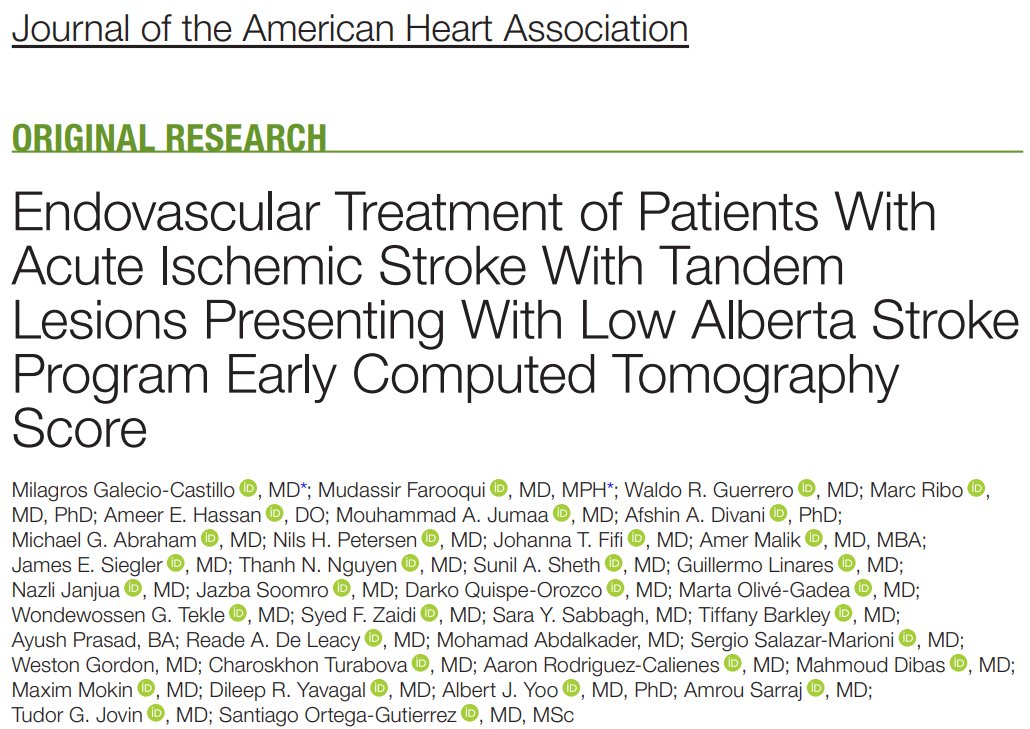
New insights on stroke care:"Thrombectomy in patients with acute ischemic stroke, tandem lesions, and low ASPECTS (2-5)"
Surprisingly, 30% achieved functional independence at 90 days 🧠
#Stroke#Thrombectomy
A 🧵by @LeonardoCruz_C 1/5
https://t.co/EGMvXtZghN
Great comprehensive review and recommended imaging algorithm for non-invasive imaging modalities for diagnosing pulsatile tinnitus
@YNIScommittee@esmintsociety@SNISinfo
https://t.co/FXuv7Me7I7
Key points: This is strong (RCT) evidence that interventional treatments for (osteoporotic compression) fractures do not increase the risk of adjacent fractures @bonehealthBHOF@MGHImaging@NeimanHPI#osteoporosis#osteopenia#VCF @EurRadiology https://t.co/kyHX90opW4
Make sure you're up to date! Revisit the top read JNIS articles of 2023 with the SNIS Standards and Guidelines Committee report on indications for thrombectomy in emergent LVO https://t.co/mSEVvzm5cE @Doctorjfred#strokecare
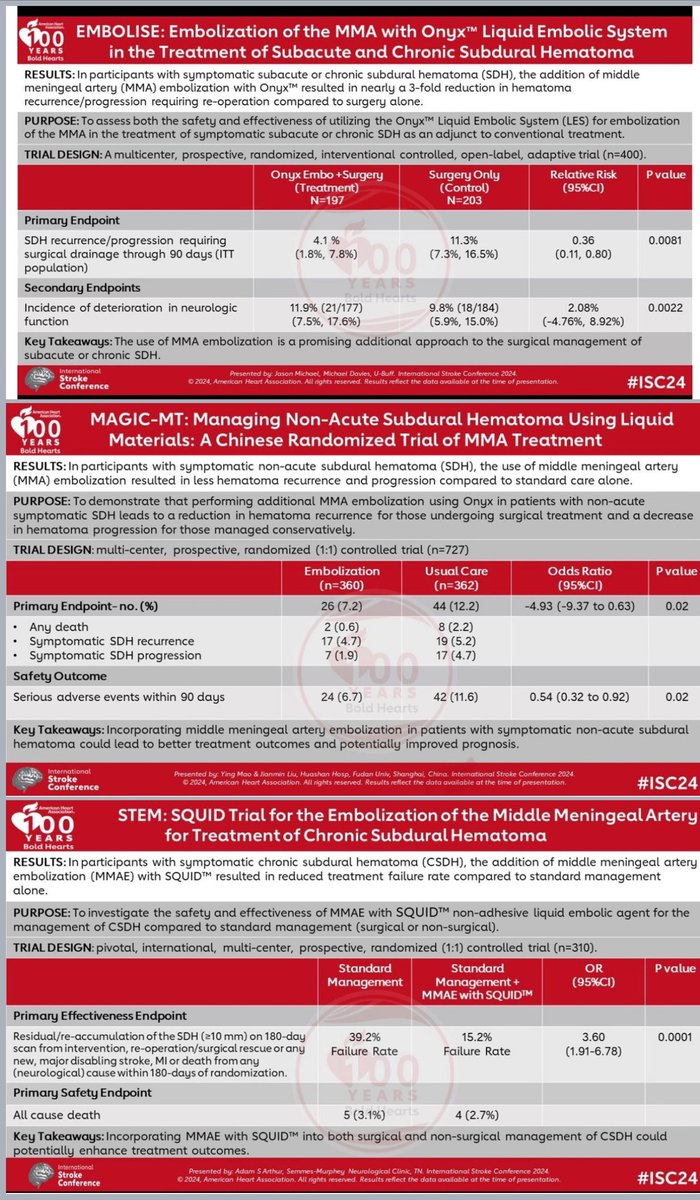
3 trials of MMA embolization (EMBOLISE, MAGIC-MT, STEM) for SDH presented #ISC2024 w impressive results summarized below. Thankful for opportunity to participate @JMDaviesMDPhD@_AdnanSiddiqui@Medtronic_NV & so many more!