Seen reporting that AI labs like Anthropic and DeepMind are quietly hiring philosophers. Yes, actual philosophy PhDs.
From shaping AI “constitutions” and alignment to tackling machine consciousness, these thinkers are wrestling with the big questions engineers alone can’t answer.
And they’re not stopping there. Historians, anthropologists, poets, novelists and lawyers are joining the fray to improve training data, ethics, and societal fit.
Who knew the humanities would stage a comeback in the AI age? (Uganda’s humanities-hating President Museveni wouldn’t take this well). The future isn’t just code; it’s values, culture, and wisdom too.
#AI #Philosophy #Tech
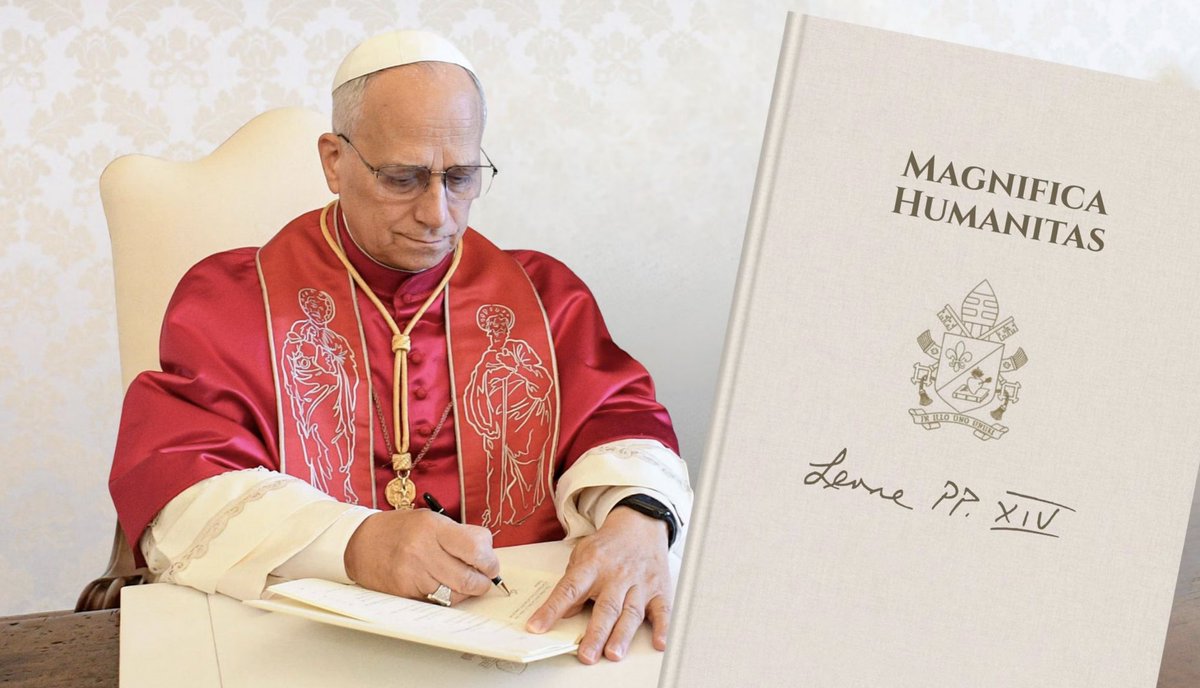
A post about Pope Leo XIV's encyclical on AI. Why the Pope is right, but perhaps not right enough.
Artificial intelligence is reshaping the world in front of our eyes: how we communicate, how we access information, how we work, how income and status are distributed among us, and soon how we fight and kill each other. Yet the public conversation about AI remains stuck on the minutiae of competition between labs, or on a false dichotomy between AI as a “stochastic parrot” with no real capabilities and AI as an alien superintelligence poised to take command of humanity.
The more important questions are about what we want from AI, and whether our current mindset, institutions, and control mechanisms are equal to the task of steering it toward our welfare.
It is refreshing, then, that a bold and powerful voice has weighed into this debate: Pope Leo XIV. As an economist who has long argued that technology is a matter of choice rather than fate, I find Leo’s intervention welcome and, on most points, on target. But on the most consequential question of what AI should actually be designed to do, Leo stops short.
Secular readers may bristle at the encyclical’s opening invocation of the Tower of Babel. They would be mistaken to stop reading there. Leo goes much further than most pundits, journalists and policymakers in the United States by recognizing that what happens to AI, and hence to humanity, is a under our control. There are multiple possible paths for AI, and which one we take will have sweeping consequences. He is also ahead of many commentators when he writes forcefully and unequivocally that “technology is never neutral, because it takes on the characteristics of those who devise, finance, regulate, and use it.”
These were the central themes of the book I wrote with Simon Johnson, Power and Progress: Our Thousand-Year Struggle over Technology and Prosperity. It is heartening to hear them taken up by a voice with Leo's reach.
The Pope is also right to question the current trajectory of AI in warfare and law enforcement. What was taboo only a few years ago – AI-driven mass surveillance, algorithms selecting targets for killing – has become routine. Many in Silicon Valley are now calling openly for a new military-algorithmic complex centered on AI as an instrument of American hard power. Leo captures something deep and too often ignored: “Any technology that facilitates attacks without seeing the face of human beings lowers the moral threshold of conflict.”
His call for the “disarmament of AI” follows directly from these observations. As he explains, disarming AI means “freeing it from the mentality of ‘armed’ competition, which today is not limited simply to the military context, but is also an economic and cognitive phenomenon.” His moral clarity in stating that “there is no algorithm that can make war morally acceptable” should be a warning to technologists rushing to design new weapons of mass destruction.
Underneath these specific concerns lies a more fundamental claim: that what is technically feasible is not the same as what is good for humanity, and that the difference depends on who controls the technology and what ideology and interests guide them.
Leo edges toward what I take to be the most important point about AI's future when he observes that “while AI promises to boost productivity by taking over mundane tasks, it frequently forces workers to adapt to the speed and demands of machines, rather than designing machines to work with those who work.”
But here he does not go far enough. He stops short of questioning the prevailing design philosophy of AI itself: a philosophy centered on mimicking human capabilities and automating human tasks, with the ultimate goal of artificial general intelligence (AGI) that can do everything a person can.
This philosophy rests on a mistake. It assumes that artificial intelligence and humanintelligence are fundamentally similar, and therefore machines should naturally take over whatever humans currently do. Yet these intelligences are fundamentally different.
Humans are “one-shot” learners. We form hypotheses from a few examples, mentally simulate possibilities, and refine our understanding through a social process of trial and error. This is how children learn language - imitating a few words, generalizing, and adjusting based on how others respond. We are not, however, very good at absorbing massive volumes of information or sifting through unstructured data for relevant patterns.
AI models are almost the opposite. They thrive on enormous training sets and excel at pattern recognition at scale. But they have, as yet, no genuine creativity, no real-world embodiment, and no capacity for trial-and-error learning grounded in interaction with the physical and social world.
When two things are different – you shouldn’t, and typically you couldn’t – use one to mimic the other. If you did, you would end up with suboptimal, disappointing results. It would have been a colossal mistake, and the Chicago Bulls’s legendary coach Phil Jackson would have gone down in the annals of basketball as one of the worst coaches in history, if he decided in the 1990s that because Michael Jordan was the better player, Jordan should mimic everything that Scottie Pippen and Dennis Rodman were doing in the team. The team went from championship to championship because these players worked together and complemented each other.
The same applies to AI and human skills.
The more productive path is complementarity – using AI to do what humans cannot, so that humans can do what they do best. An electrician aided by AI diagnostics, a nurse supported by AI in interpreting symptoms, a teacher using AI to personalize instruction for each student; these are the contours of a different AI future, one that raises rather than displaces human capability.
Optimists and industry insiders will respond that automation-first AI can still benefit everyone, provided redistributive policy keeps pace. But this argument has a poor track record. Forty years of digital automation have already concentrated gains at the top, hollowed out middle-skill work, and produced disappointing aggregate productivity growth. There is little reason to expect that an even more powerful round of automation, deployed by even more concentrated firms, will end differently. We can and must demand a different design.
The global stakes from the future of AI are even larger than those we can see around us in the United States. For the developing world, where billions still depend on the prospect of decent jobs as a path out of poverty, an automation-centric AI agenda is not merely suboptimal. It is simply transferring to foreclose the most important route to broad-based prosperity.
The biggest failing of today's AI industry is its refusal to recognize any of this. It is guided instead by an ideology of control (the industry’s own over humanity) and by a conviction that machines are uniformly better than humans.
As Leo rightly notes, this failure is enabled by the fact that a handful of companies now command the future of AI.
What we need is a combination of moral clarity and a serious, society-wide debate about what AI can do and what we want it to do. That debate must move beyond exhortation toward concrete choices: antitrust action against the dominant platforms, public investment in human-complementary AI, regulation of surveillance and autonomous weapons, and meaningful rights for workers and citizens over the data on which these systems are built.
The Pope's intervention makes such a debate a little more likely today than it was before.
It is now up to the rest of us to carry it further than he was willing to go.
JUST IN: Vatican announces that Pope Leo XIV’s first encyclical — titled Magnifica Humanitas, on the safeguarding of the human person in the age of AI — will be presented at 11:30am on Monday, May 25, in the Vaticanʼs Synod Hall, in the presence of the Holy Father.
Speakers at the presentation will include:
Cardinal Víctor Manuel Fernández, Prefect of the Dicastery for the Doctrine of the Faith;
Cardinal Michael Czerny, Prefect of the Dicastery for the Service of Integral Human Development;
Professor Anna Rowlands, Political Theology, including Catholic Social Teaching, and theological ethics of human migration, Department of Theology and Religion, Durham University, United Kingdom;
Christopher Olah, co-founder of Anthropic (USA) and head of interpretability research for artificial intelligence;
Dr. Leocadie Lushombo, Political Theology and Catholic Social Thought, Jesuit School of Theology / Santa Clara University, California.
Concluding remarks will be delivered by thel Secretary of State, Cardinal Pietro Parolin.
The presentation will also include an address by Pope Leo XIV.
Magnifica Humanitas was signed and dated on May 15, the 135th anniversary of the promulgation of Pope Leo XIII’s Encyclical Letter Rerum Novarum.
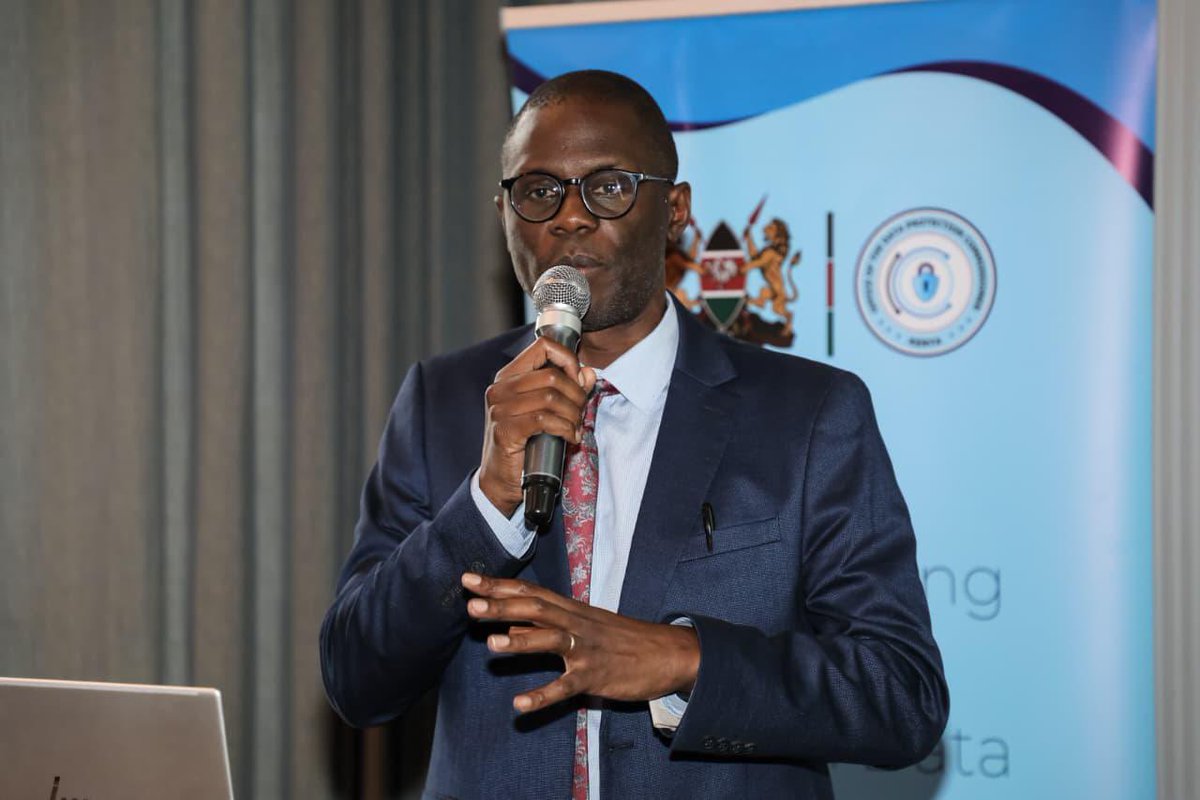
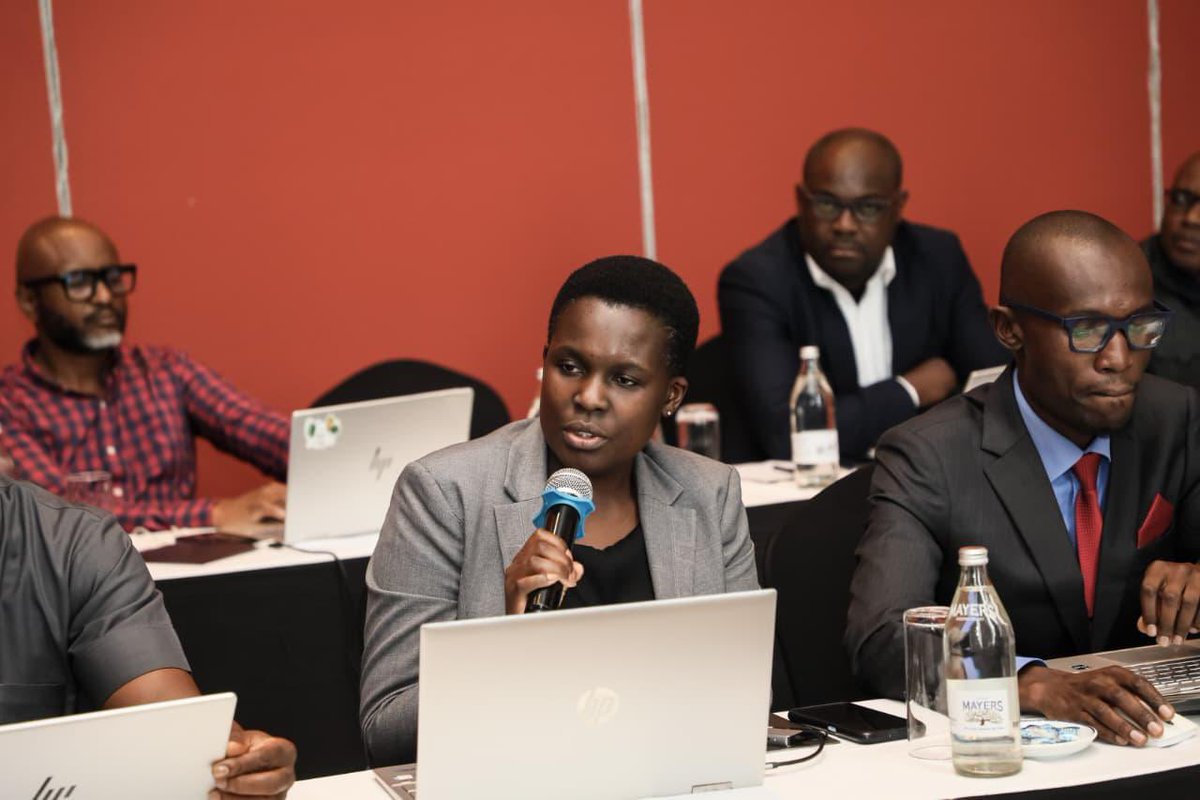
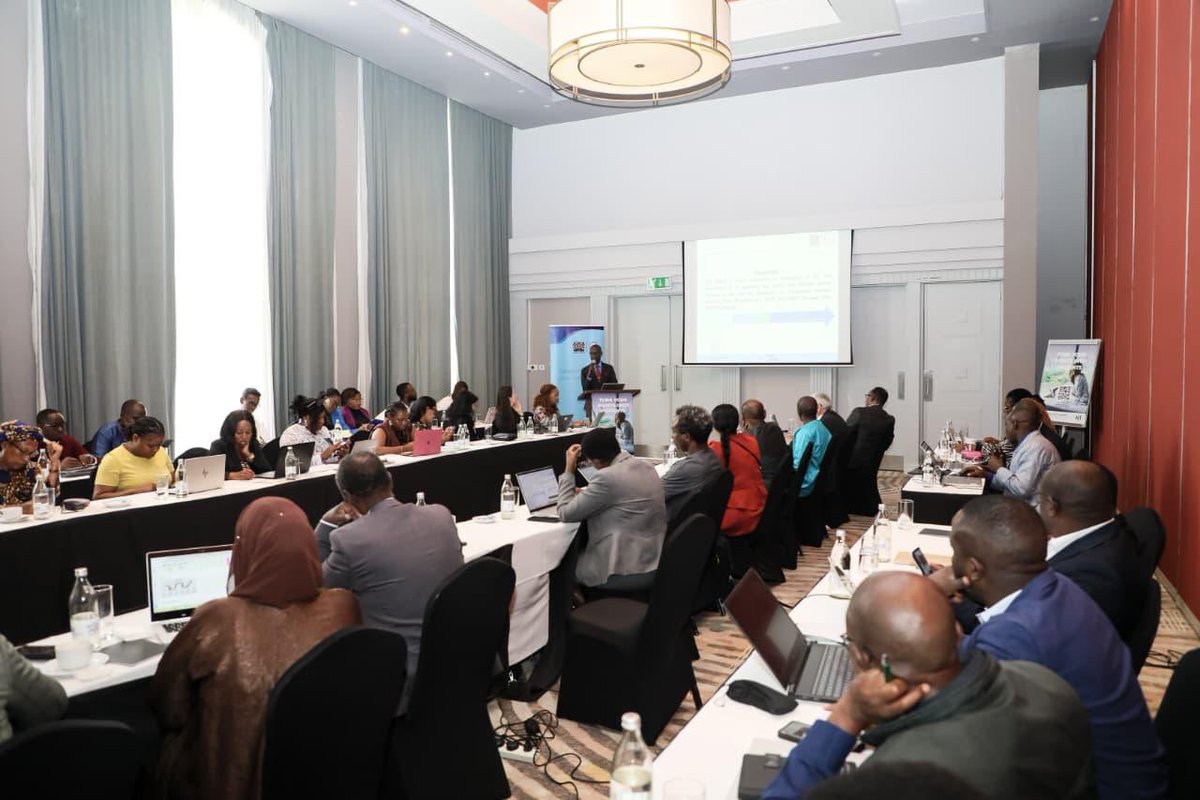
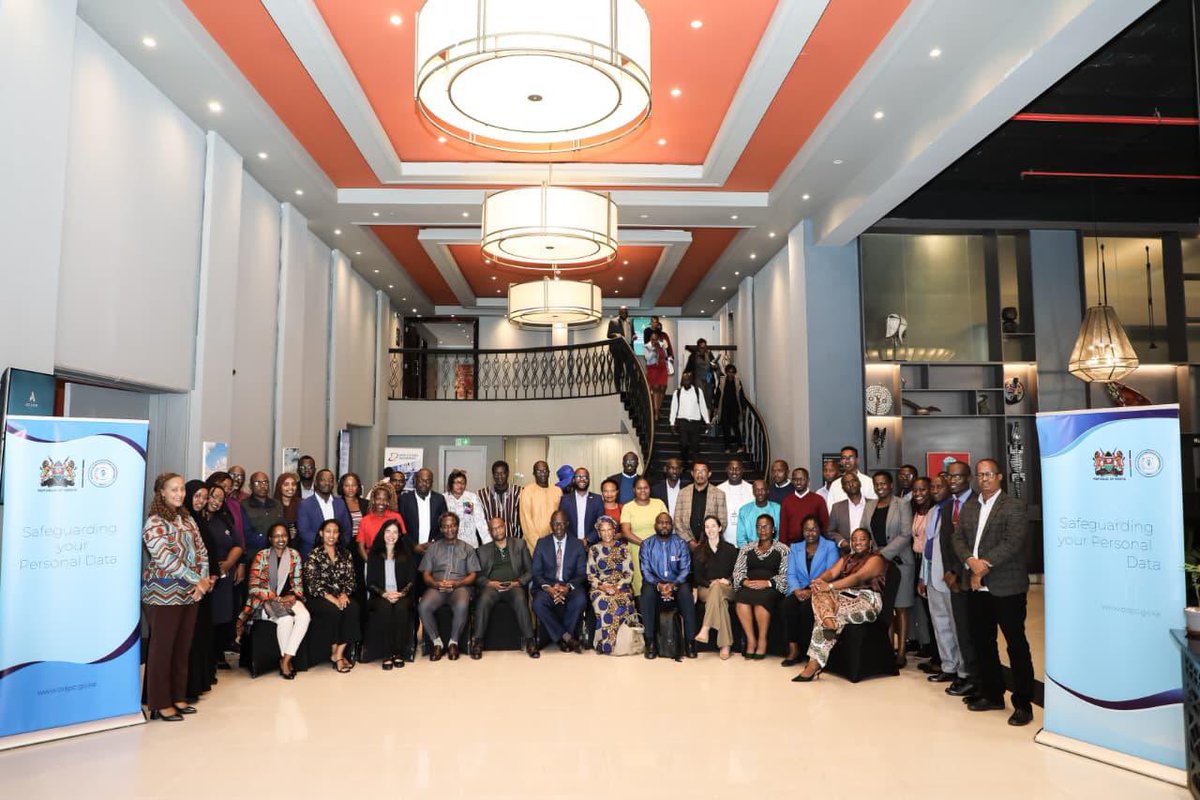
Honored to host the final phase of the Africa Data Protection Cross-Regional Peer Exchange Program in Kenya, bringing together data protection regulators from across the continent to exchange insights, share regulatory experiences, and strengthen collaboration on privacy and data protection.
The event was graced by Senior Deputy Data Commissioner John Walubengo @JWalu whose insights reinforced the importance of regional cooperation in advancing effective data protection frameworks across Africa.
The engagement highlighted the importance of African regulators working together to address emerging data governance challenges, strengthen enforcement frameworks, and build trusted digital ecosystems that support innovation and protect citizens’ rights.
Grateful to all participating regulators and partners for the insightful discussions and shared commitment to advancing data protection across the continent.
A Persian scholar finished a single math book in 9th century Baghdad that quietly became the foundation for every line of code running on Earth today.
I started reading about him at midnight and could not believe how many things in my daily life trace back to one man.
His name was Muhammad ibn Musa al-Khwarizmi. The book is called The Compendious Book on Calculation by Completion and Balancing.
Every time you say the word algebra, you are saying his book title. Every time someone says the word algorithm, they are saying his name. Both English words come from him. Both are Latin transliterations of Arabic and of his own identity. The man did not just contribute to mathematics. He named it.
Here is the part almost nobody tells you.
Al-Khwarizmi was born around 780 CE in Khwarazm, in what is now Uzbekistan. He moved to Baghdad and worked at a research institution called the House of Wisdom, which during the Islamic Golden Age was the single most important center of learning on the planet. The caliph al-Mamun hired the best mathematicians, astronomers, and philosophers from across three continents and put them in one building with one job. Translate, study, and produce new knowledge.
Al-Khwarizmi finished his book on algebra around 820 CE. The Arabic title contained the word al-jabr, which referred to one of the two operations he used to solve equations. When the book was translated into Latin in the 12th century, the Latin world did not have a word for what he had built. So they kept his Arabic word. Al-jabr became algebra. The discipline was named after a single Arabic word in the title of a single book by a single man.
The deeper insight is what he actually changed about how humans think.
Before al-Khwarizmi, mathematical problems were solved geometrically. You drew shapes. You measured them. You compared areas. The Greeks had built an entire mathematical tradition on visual proofs and physical constructions. It was beautiful and limited. You could not solve a problem you could not draw.
Al-Khwarizmi did something nobody had done before him at this scale. He said you could solve any problem using abstract symbols and rules. You did not need a shape. You needed a procedure. You moved terms across the equation. You cancelled like terms on both sides. You isolated the unknown. He invented the idea that mathematics is a manipulation of symbols according to rules, not a study of physical figures.
That single shift made everything that came afterward possible. Calculus. Differential equations. Linear algebra. Quantum mechanics. None of it works if math is locked inside geometry. He pulled it out.
The second thing he did is the one that changed how the world counted forever. He took the Hindu numeral system from Indian mathematics, refined it, and wrote a book introducing it to the Arab world. That system included the concept of zero as a placeholder, and a positional notation where the value of a digit depends on its location. Roman numerals could not do complex calculation. Hindu-Arabic numerals could.
When his book on numerals was translated into Latin as Algoritmi de numero Indorum, the word Algoritmi was just the Latin spelling of his own name. Europeans started calling the new method "doing algorism," then "running an algorithm." The word for the most important concept in computer science is literally his name in Latin.
The third thing he did is the part that should haunt anyone who works in tech.
His method of solving problems was systematic. Step one, do this. Step two, check that. Step three, if condition A, then do X, otherwise do Y. He wrote down procedures that could be followed by anyone, anywhere, who knew how to read. The procedure did not depend on intuition or genius. It worked because the steps worked.
That is exactly what an algorithm is. A finite, deterministic procedure for solving a problem. He did not just give us the word. He gave us the entire concept of programming a thousand years before there was anything to program.
When Alan Turing built the first abstract model of computation in 1936, when John von Neumann designed the first stored-program computer in 1945, when every engineer at Google, OpenAI, Anthropic, and DeepMind writes code in 2026, they are working in a paradigm that started with one man in Baghdad twelve centuries ago.
The strangest part is what happens when you walk into any tech office in San Francisco or Bangalore or Lahore today. Engineers say the words algebra and algorithm hundreds of times a day. They do not know whose name they are saying. Almost nobody can spell al-Khwarizmi correctly on the first try.
His original Arabic manuscript is preserved at Oxford. His book on Hindu numerals survives only in Latin translation. The Latin version was the textbook that taught medieval Europe how to count.
The man who built the foundation of the AI revolution did not live to see a calculator. He died around 850 CE, a thousand years before the first electric current was sent through a wire. The civilization he built mathematics for collapsed. The library he wrote in burned. His own grave is unmarked.
But every algorithm running on every machine on Earth right now still answers to his name.
When simulation becomes the norm, it weakens the human capacity for discernment. As a result, our social bonds close in upon themselves, forming self-referential circuits that no longer expose us to reality. We thus come to live within bubbles, impermeable to one another. Feeling threatened by anyone who is different, we grow unaccustomed to encounter and dialogue. In this way, polarization, conflict, fear and violence spread. What is at stake is not merely the risk of error, but a transformation in our very relationship with truth.
In 1948, a 32-year-old at Bell Labs published a paper nobody fully understood.
Engineers found it too mathematical. Mathematicians found it too engineering-focused. One prominent mathematician reviewed it negatively.
That paper - "A Mathematical Theory of Communication", became the founding document of the digital age.
The man was Claude Shannon. Father of Information Theory.
At 21, he wrote the most important master's thesis of the 20th century.
Working at MIT on an early mechanical computer, Shannon noticed its relay switches had exactly two states - open or closed. He had just taken a philosophy course introducing Boolean algebra, which also operated on two values: true and false.
Nobody had ever connected these two things.
His 1937 thesis proved that Boolean algebra and electrical circuits are mathematically identical, and that any logical operation could be built from simple switches.
Howard Gardner called it "possibly the most important, and also the most famous, master's thesis of the century."
Every digital computer ever built traces back to this insight.
At 29, he proved that perfect encryption exists.
During WWII, Shannon worked on classified cryptography at Bell Labs. His work contributed to SIGSALY, the secure voice system used for confidential communications between Roosevelt and Churchill.
In a classified 1945 memorandum, he mathematically proved the one-time pad provides perfect secrecy, unbreakable not just computationally, but provably, permanently, against an adversary with infinite power.
When declassified in 1949, it transformed cryptography from an art into a science. It laid the foundations for DES, AES, and every modern encryption standard.
At 32, he defined what information is.
His 1948 paper introduced one equation:
H = −Σ p(x) log p(x)
Shannon entropy. The average uncertainty in a probability distribution. The minimum bits required to encode a message.
Three things followed:
> He defined the bit - the fundamental unit of all information. His colleague John Tukey coined the name.
> He proved the channel capacity theorem, every communication channel has a maximum rate of reliable transmission. You can approach it. You can never exceed it.
> He unified telegraph, telephone, and radio into a single mathematical framework for the first time.
Robert Lucky of Bell Labs called it the greatest work "in the annals of technological thought."
Where his equation lives in AI today:
Cross-entropy loss - the function training every classifier and language model, is derived directly from H. Decision tree splits use information gain, which is H applied to data. Perplexity, the standard LLM evaluation metric, is an exponentiation of cross-entropy.
Every time a neural network trains, Shannon's formula runs inside it.
He also built the first AI learning device.
In 1950, Shannon built Theseus, a mechanical mouse that navigated a maze through trial and error, learned the correct path, and repeated it perfectly. Mazin Gilbert of Bell Labs said: "Theseus inspired the whole field of AI."
That same year he published the first paper on programming a computer to play chess. He co-organized the 1956 Dartmouth Workshop, the founding event of AI as a field.
The man:
He rode a unicycle through Bell Labs hallways while juggling. He built a flame-throwing trumpet, a rocket-powered Frisbee, and Styrofoam shoes to walk on the lake behind his house.
He called his home Entropy House.
When asked what motivated him: "I was motivated by curiosity. Never by the desire for financial gain. I just wondered how things were put together."
In 1985, he appeared unexpectedly at a conference in Brighton. The crowd mobbed him for autographs. Persuaded to speak at the banquet, he talked briefly, then pulled three balls from his pockets and juggled instead.
One engineer said: "It was as if Newton had showed up at a physics conference."
He died in 2001 after a decade with Alzheimer's, the cruel irony of information slowly leaving the mind of the man who defined what information was.
Claude, the AI model, is named after Claude Shannon, the mathematician who laid the foundation for the digital world we rely on today.
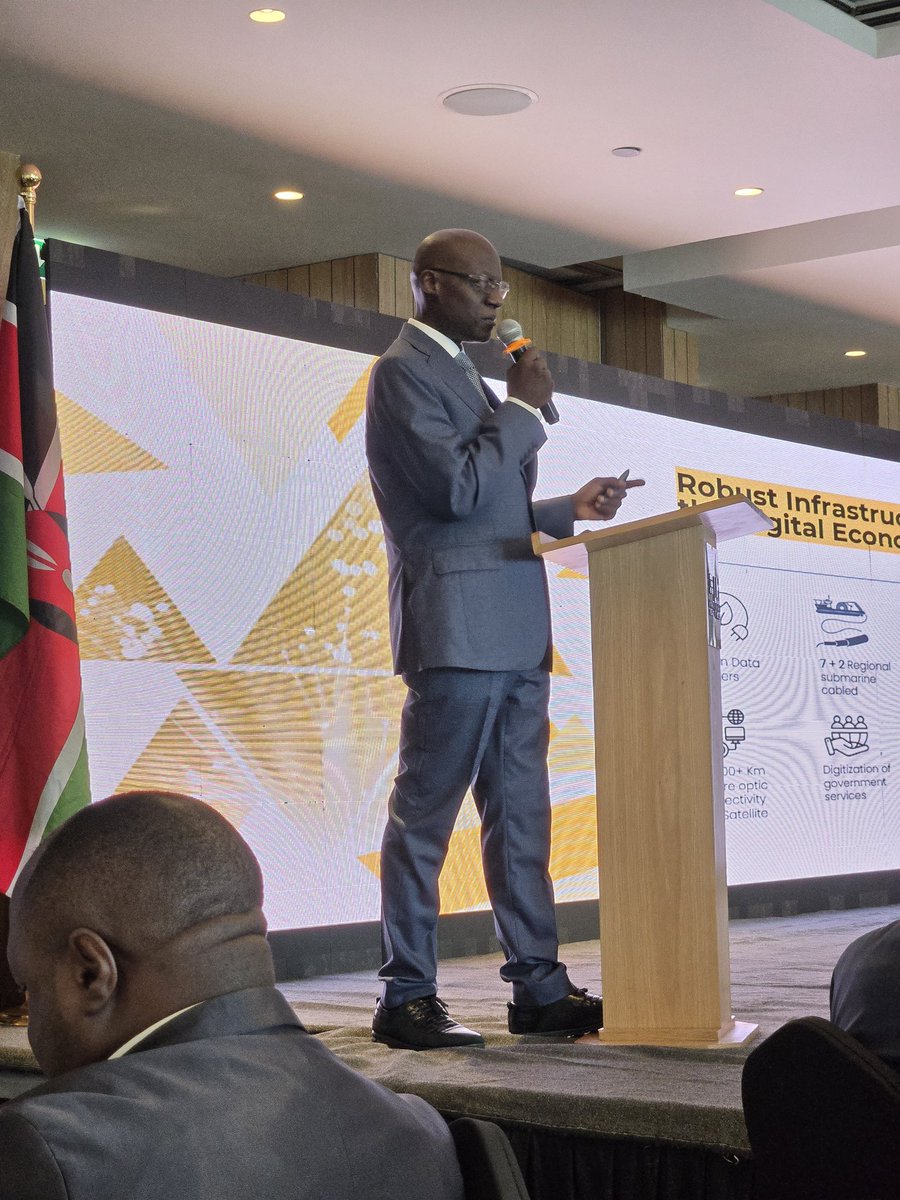
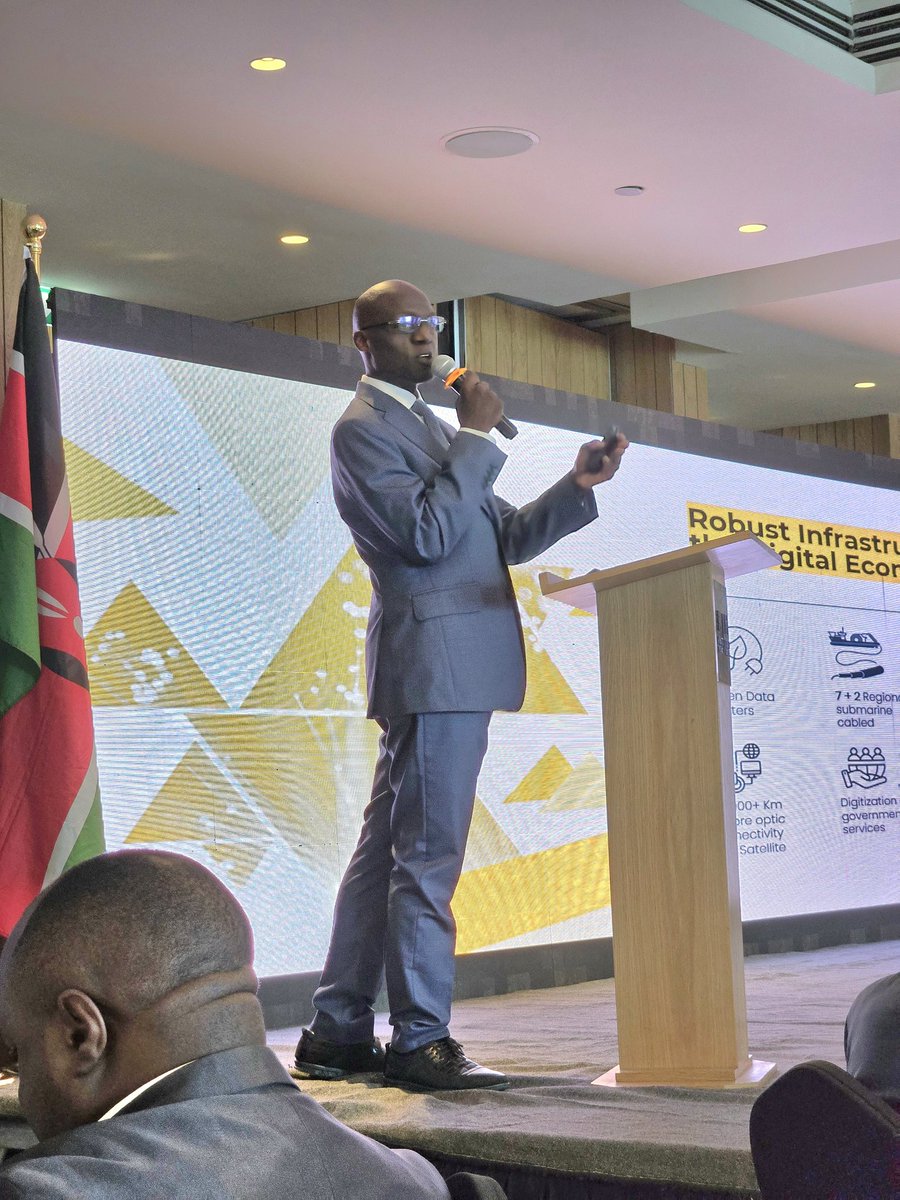
Ambassador Philip Thigo is closing out the EU Tech Business Offer Forum Kenya with a keynote that is doing something rare — it is making the room stop and listen.
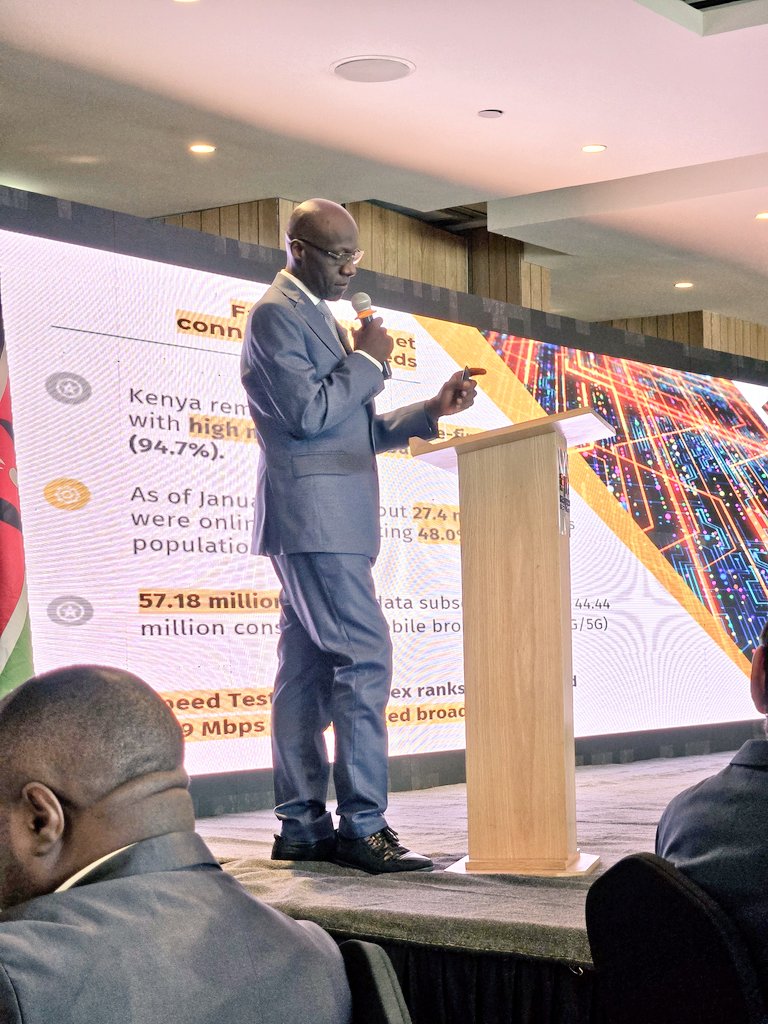
This is not a ceremonial close. Ambassador Thigo is unpacking Kenya's position as the undisputed leader on all things digital across the African continent, and backing it with data, trends, and a clarity of analysis that only comes from someone who has spent years working at the intersection of African digital policy, international development, and private sector technology from positions spanning the continent.
The picture he is painting is striking. Kenya is not merely ahead — it is setting the benchmark that the rest of Africa is measuring itself against. From mobile money and digital identity to connectivity infrastructure, e-government services, and now AI and software solutions, Kenya has consistently been the first to prove what is possible and the first to scale it. M-Pesa did not just change Kenya. It rewrote the global conversation about financial inclusion. The question Ambassador Thigo is posing is: what is the next chapter that Kenya writes for the continent?
His read on the EU–Kenya digital partnership is equally direct. The instruments are in place. The values alignment is real. What the partnership now requires is execution discipline — moving from forums and frameworks into funded, accountable, time-bound programmes that produce outcomes the continent can see and replicate.
The closing argument that stays with me: Kenya does not need to be convinced of its digital potential. It needs partners who match its ambition with equivalent commitment. Today's forum has been a strong step in that direction.
@EUinKenya #DigitalEU #TechBusinessOffer #GlobalGateway #EUInKenya #EUKenya50
@pthigo
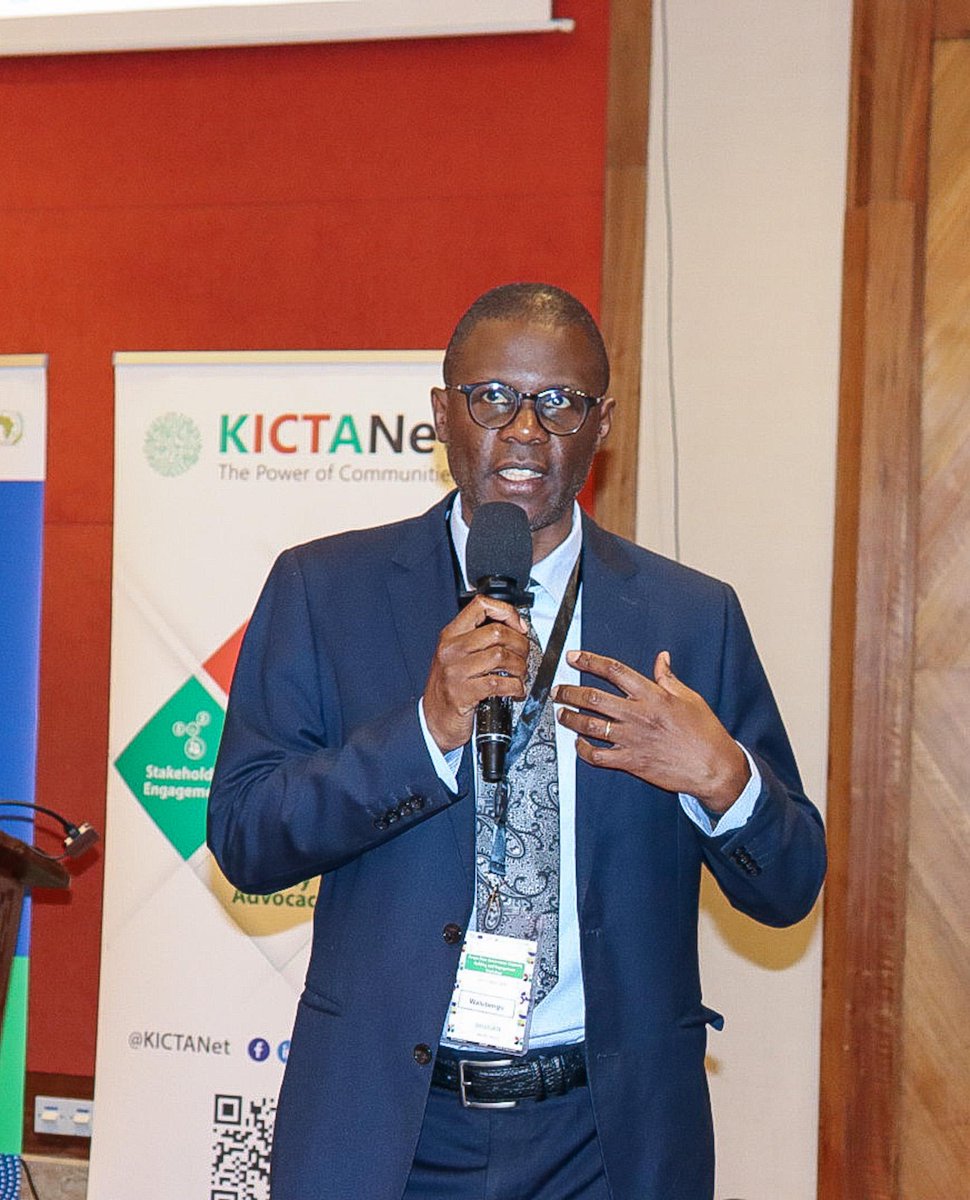
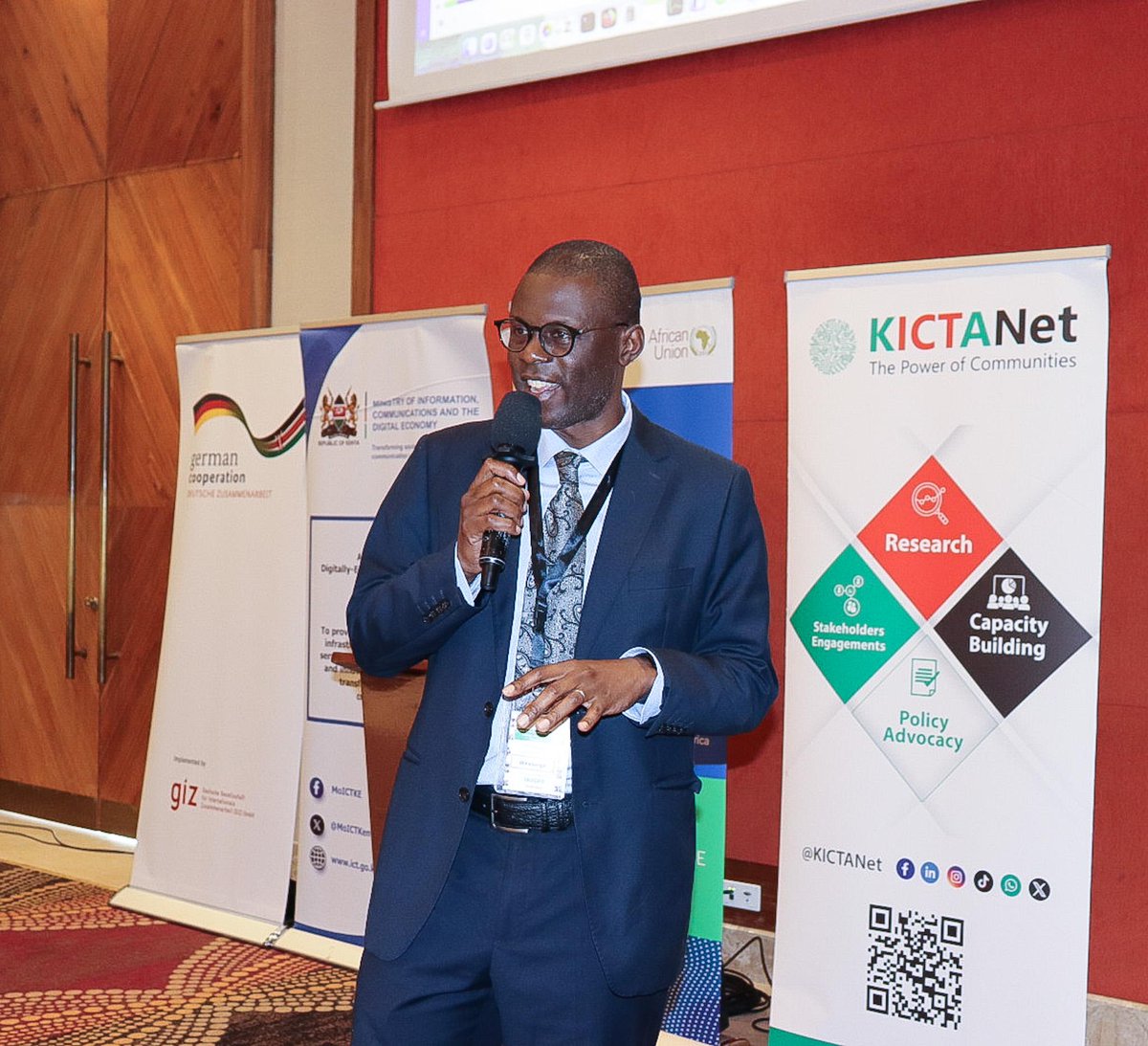
⚖️ The first session of the day set a strong tone and was highly interactive, with insights from John Walubengo ( @JWalu ) supporting the Office of the Data Protection Commissioner on : Compliance, Privacy & Risk Management.
He emphasized that the Kenyan Government must uphold legal and regulatory obligations while ensuring lawful processing of citizen data. Tools such as Data Protection Impact Assessments (DPIAs) help identify risks, design safeguards, and guide responsible decision-making.
💬 “Data governance is not just technical—it’s strategic. It safeguards trust, strengthens policy outcomes, and builds resilience in the digital era.” — John Walubengo
A great start to the day with meaningful discussions on protecting both institutions and citizens through strong data governance.
#DataGovernance #DataGovKe
^NM
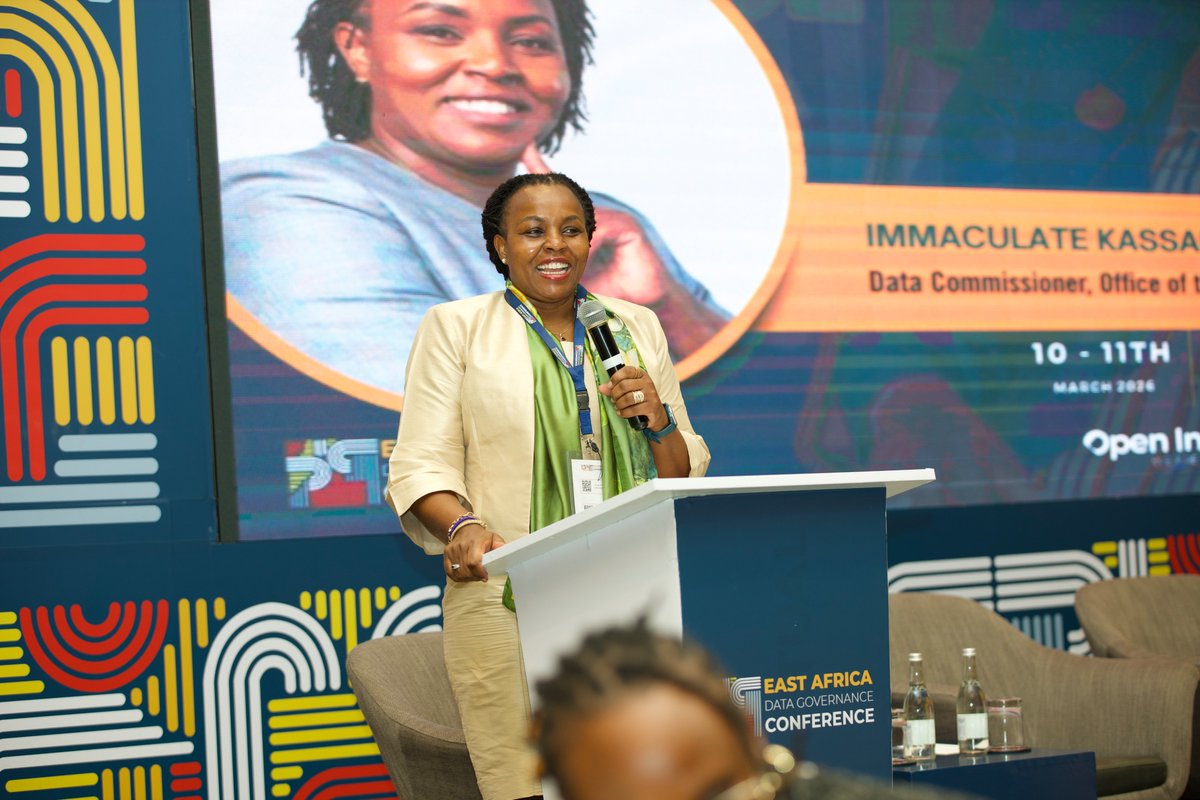
“Data protection is not a barrier to technological advancement; it is a key enabler of innovation. By safeguarding personal data and upholding privacy, it builds trust among users, institutions, and innovators, creating a foundation where technology can grow responsibly and sustainably.” - Immaculate Kassait, Director, General Office of the Data Protection Commissioner
Follow the live conversation:
https://t.co/xTD86q6tbG
@alkags , @ODPC_KE, @AmnestyKenya, @StrathCIPIT, @KCBInKenya , @TISAKenya, @SafaricomPLC, @pdpoUG , @ASSEKnews , @UNESCO@penmuri@VictorNdede@nyogude@EdnaKasozi
#EADataGov26 #DataGovernance #DigitalTransformation #OpenData #DigitalRights
🇰🇪 Kenya is taking data governance seriously and here’s why it matters for every citizen.
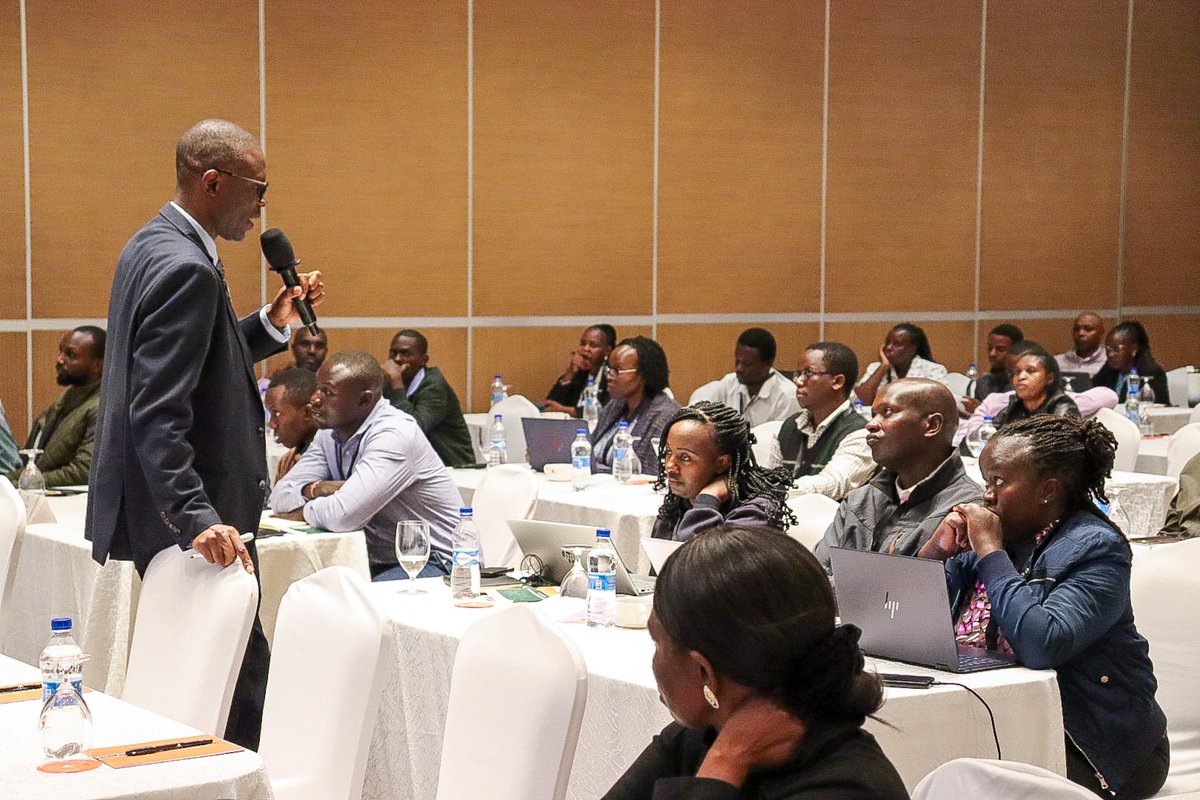
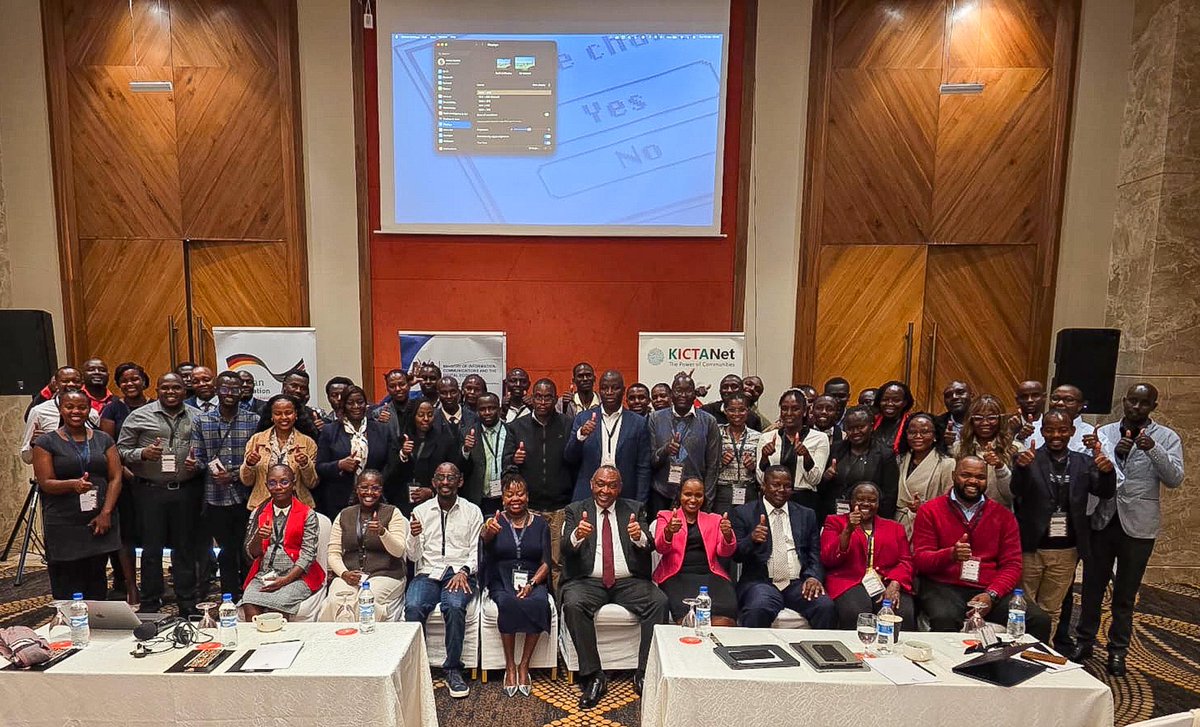
This week in Nairobi, over 70 government officers from across ministries are gathered for a 3-day Data Governance Capacity Building Workshop.
“The nations that thrive are those that treat data not just as information, but as a strategic national asset.”
Data fuels innovation, drives economies, and improves governance from how farmers plant crops to how the government delivers services.
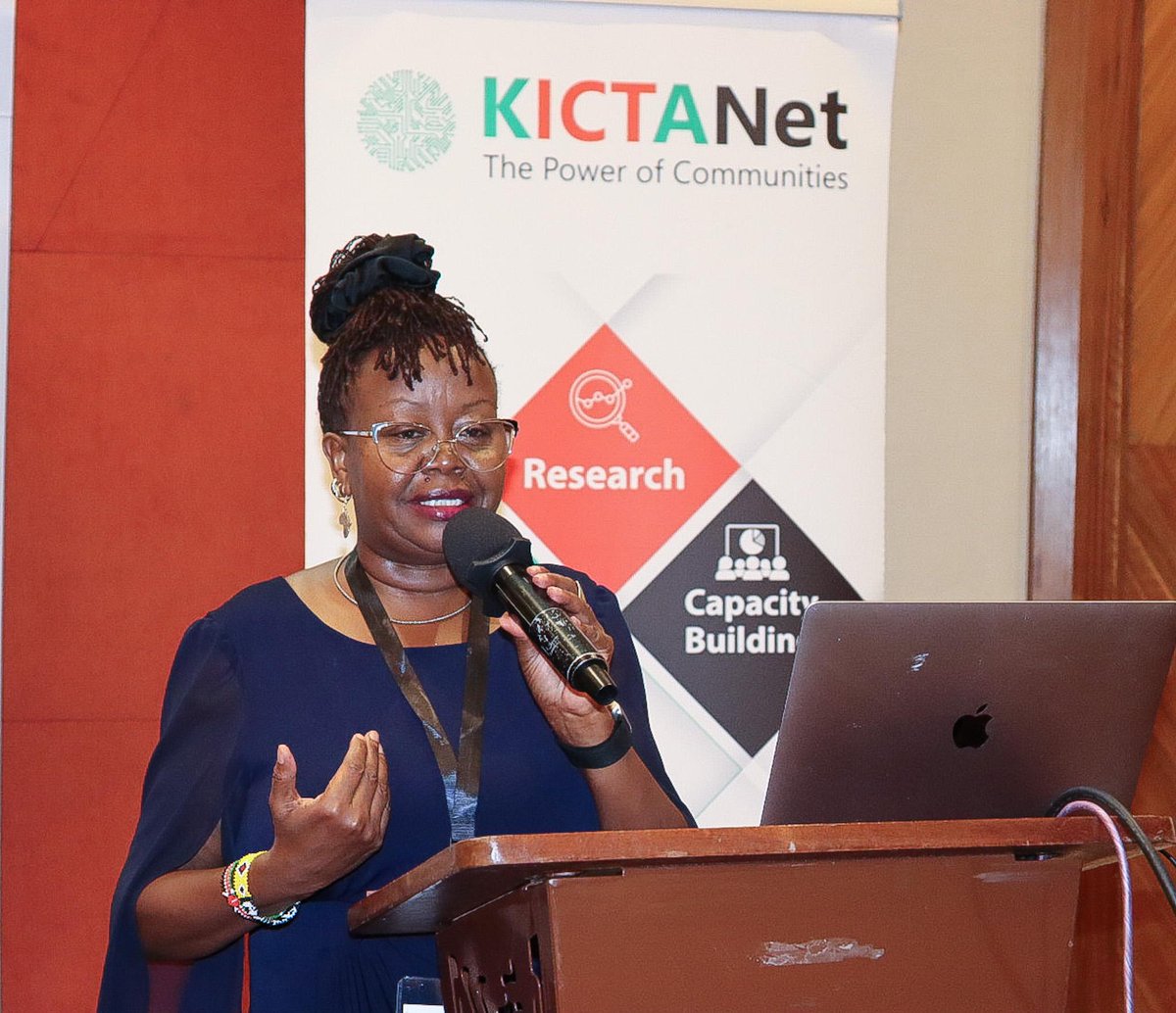
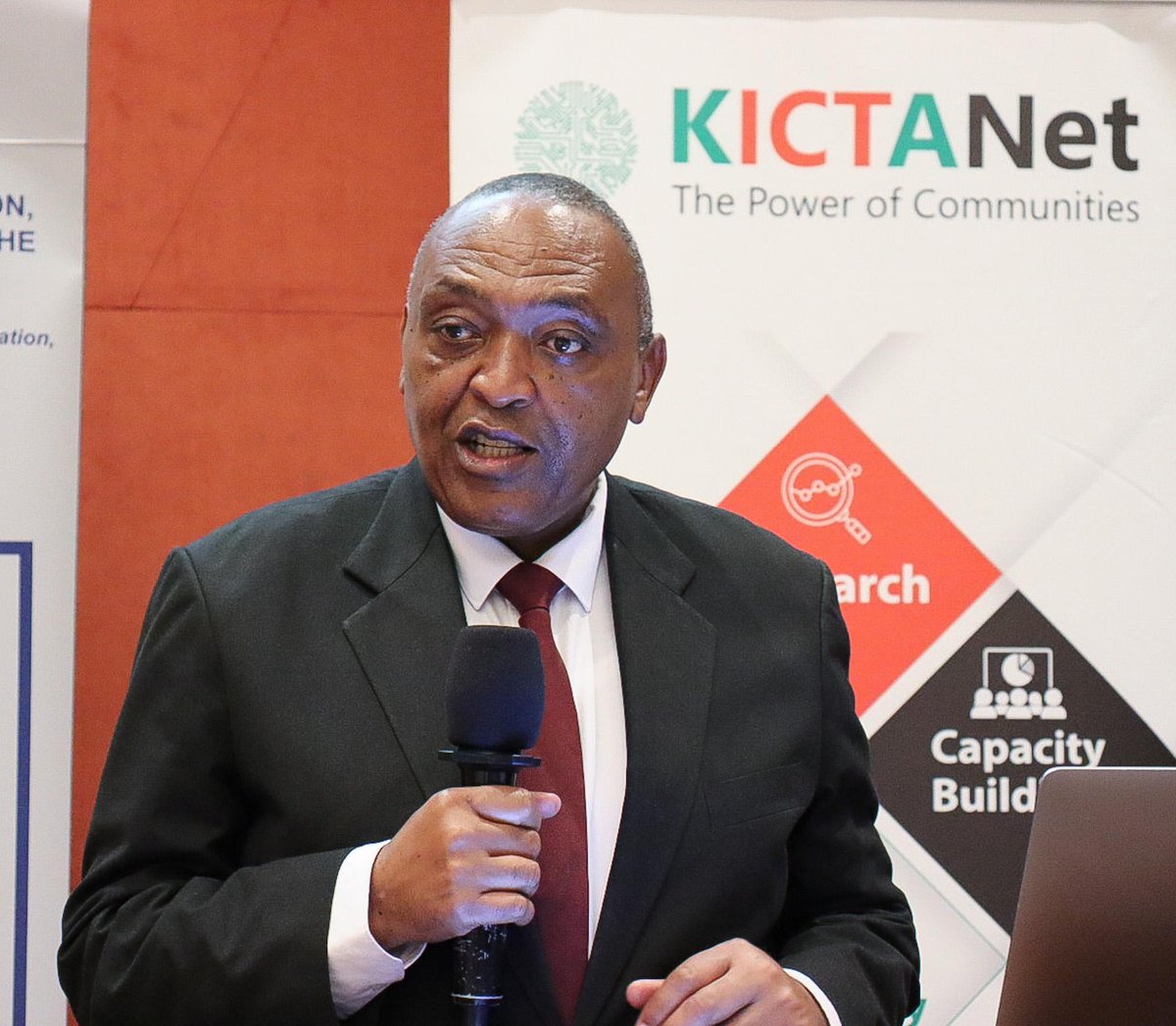
“AI is anchored in data; therefore, the issue of data becomes central to everything we do.” — Dr. Grace Githaiga, CEO KICTANet
📌 Key messages:
“Technology provides the tools, governance provides the direction.” — PS Eng. John Tanui (via Mr Emmanuel Kata)
“Kenya is positioning itself as a leader in Africa’s digital transformation.” — Tevin Gitonga, GIZ
Why this matters:
🔹 Kenya generates enormous volumes of government data daily without governance frameworks, that data cannot be trusted, shared, or fully leveraged.
🔹 The workshop equips public servants with tools for data quality, risk management, legal compliance under the Data Protection Act (2019), and institutional coordination.
🔹 It supports domestication of the African Union Data Policy Framework (AUDPF), adopted in 2022, positioning Kenya as a continental leader in responsible data use.
Kenya already boasts advanced data infrastructure: the Data Protection Act (2019), National AI Strategy 2025–2030, and Cloud Policy 2025. Now comes the critical work of building the human capacity to match that infrastructure.
Kenya is building data champions, one ministry at a time.
#DataGovKE #DigitalTransformation
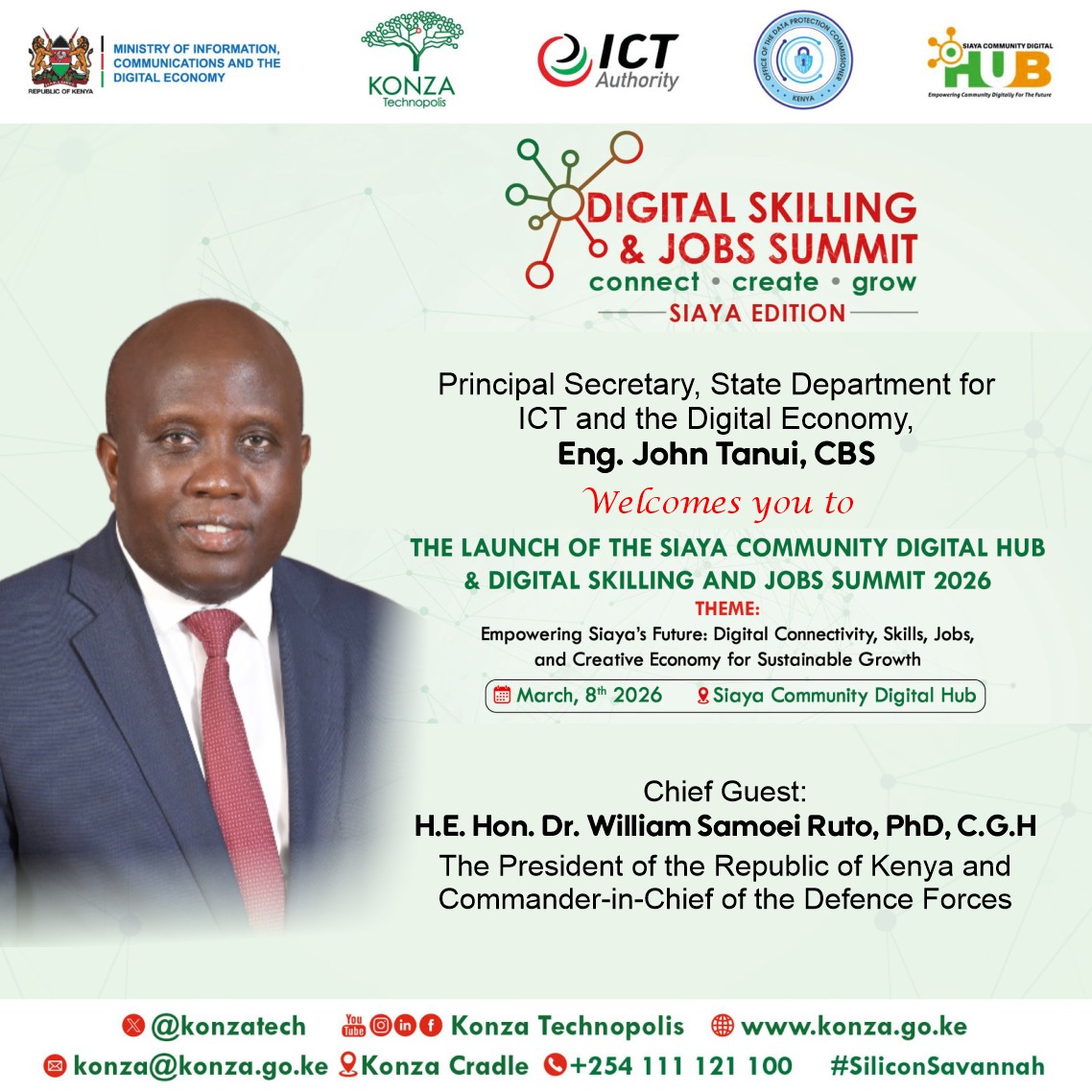
Kenya’s digital future continues to take shape.
Join us in Siaya for the launch of the Siaya Community Digital Hub and the Digital Skilling & Jobs Summit 2026.
The summit will bring together innovators, youth, and stakeholders to connect, create and grow through digital skills, jobs, and opportunities in the creative economy.
The event will be graced by H.E. Dr. William Samoei Ruto the President of the Republic of Kenya as Chief Guest.
📍 Siaya Community Digital Hub
📅 March 8, 2026
Join us for a Public Participation Dialogue for AI & Emerging Technologies
Kenya is poised to lead Africa in the fourth Industrial Revolution. To secure this position, the Government is developing a National Policy on Artificial Intelligence (AI) and emerging technologies.
As the Government develops the policy, your voice is essential in shaping a sovereign, inclusive and innovative digital future. Towards this, ASSEK in partnership with the Ministry of ICT and Digital Economy would like to invite you to a public participation webinar on March 5, 2026 3:00 pm to 4:30 pm.
🔗 Register here: https://t.co/FGBnw31N6o
🇰🇪 Kenya's young people have something powerful to say about Artificial Intelligence and it's time we listened.
Before the government finalises its national AI and emerging tech policy, a group of Kenyan teenagers sat down to share exactly what they want from AI and what they refuse to accept. Their voices challenge assumptions held in boardrooms and policy halls across the country. #KenyaAIPolicy https://t.co/68ftLeMmct
🚨 CyberGame Kenya 2026 – Invitation to Participate
Students, cybersecurity professionals, ICT practitioners, and tech enthusiasts are invited to take part in the CyberGame Kenya 2026 Edition, a cybersecurity challenge aimed at strengthening skills and enhancing our capacity to secure Kenya’s digital future.
Important Dates:
Challenge begins: 1st March 2026 at 3:00 AM (EAT)
Official Launch: 2nd March 2026 at 11:00 AM
Challenge ends: 10th May 2026
The competition will cover areas such as cryptography, malware analysis, forensic analysis, offensive security, security management, and open-source intelligence.
Eligible participants include students in tertiary institutions, universities, and industry professionals. I encourage all relevant participants to be available at the scheduled time and take part in this important initiative under the theme:
Securing Kenya’s Digital Future.
https://t.co/Qwj08uQTLX 🔐🇰🇪💻