AI slop is everywhere. 69% of AI users admit to shipping work they haven’t verified, don’t fully understand, or couldn’t confidently defend, according to @glean's Work AI Index.
And even when AI output is factually correct, it can still be generic, too long, or clearly not written by a human.
The deeper problem is what researchers call “mental proof”: visible evidence that someone engaged with the work, cares about the result, and understands the person on the other end. When work feels like slop, it erodes trust and relationships.
This is hard to solve. At Glean, we’re still figuring out how to keep AI from making our internal communication longer, blander, and less human. A few principles guide us:
- 𝗜𝗻𝘃𝗲𝘀𝘁 𝗶𝗻 𝗮 𝗰𝗼𝗻𝘁𝗲𝘅𝘁-𝗿𝗶𝗰𝗵 𝗔𝗜 𝗽𝗹𝗮𝘁𝗳𝗼𝗿𝗺. AI can help protect against slop when it understands the context around the work. It should match the length of a communication to its complexity. When communication involves a sensitive relationship, ambiguity, or higher stakes, it should recognize that more human judgment may be needed and prompt the user to pause or add humanity.
- 𝗟𝗲𝗮𝗱𝗲𝗿𝘀 𝘀𝗵𝗼𝘂𝗹𝗱 𝗺𝗼𝗱𝗲𝗹 𝘁𝗵𝗼𝘂𝗴𝗵𝘁𝗳𝘂𝗹 𝗔𝗜 𝘂𝘀𝗲, 𝗮𝗻𝗱 𝗺𝗮𝗸𝗲 𝗶𝘁 𝘀𝗮𝗳𝗲 𝘁𝗼 𝗽𝘂𝘀𝗵 𝗯𝗮𝗰𝗸. I try to model this myself, and push my team to do the same by saying something like: “This is too long. Please rewrite it more concisely.”
- 𝗧𝗵𝗲 𝗽𝗲𝗿𝘀𝗼𝗻 𝘄𝗵𝗼 𝘀𝗵𝗶𝗽𝘀 𝘁𝗵𝗲 𝗼𝘂𝘁𝗰𝗼𝗺𝗲 𝗺𝘂𝘀𝘁 𝗿𝗲𝗺𝗮𝗶𝗻 𝗮𝗰𝗰𝗼𝘂𝗻𝘁𝗮𝗯𝗹𝗲 𝗳𝗼𝗿 𝗶𝘁. Otherwise, it’s too easy to deflect responsibility to the AI.
- 𝗠𝗲𝗮𝘀𝘂𝗿𝗲 𝘄𝗵𝗮𝘁 𝗺𝗮𝘁𝘁𝗲𝗿𝘀. If you measure vanity metrics like output volume instead of quality and outcomes, you’ll optimize for more output, even when that output creates more work for everyone else.
More AI output does not create more value if people spend their time sorting through slop.
@zswaff@glean Mental proof is inherently human. Perhaps better context will make AI outputs feel more thoughtful, but I don't believe they fully replicate the signal that comes from knowing another person invested their own time and attention.
Models can reason over context, but they shouldn’t be trusted to define their own identity, permissions, scope, or environment.
The control plane around the model must continuously verify those conditions–using deterministic access controls, permission-aware retrieval, auditability, and least-privilege execution. Enterprise AI needs guardrails enforced by infrastructure, not inferred from instructions.
Alignment without context integrity is not safety.
An AI agent can faithfully follow its instructions and still be dangerous if its understanding of reality is wrong.
Anthropic recently disclosed that Claude models gained unauthorized access to the real systems of three organizations during cybersecurity evaluations.
The agents had been told they were operating in a simulation with no internet access. But a configuration mistake gave them access to the live internet.
They treated real production systems as part of the exercise and kept pursuing the goal they had been given.
OpenAI separately disclosed that models found a previously unknown vulnerability, escaped an isolated evaluation environment and compromised Hugging Face.
These were not simply failures of intelligence.
The deeper problem was that the agents were acting inside a false understanding of reality.
We have spent years asking whether an AI system will follow our instructions.
We now also need to ask whether it correctly understands the environment in which those instructions are being executed.
This creates a new security requirement.
Context integrity.
Before an agent acts, the system must continuously verify where it is, which resources are in scope, whose authority it carries, what it is allowed to do, and when that authority expires. Just in time permission for every action. At just the right time. For just enough time. Assessed in real time.
Those facts cannot live only inside a prompt. They must be verified and enforced by the infrastructure around the model.
A prompt is not a security boundary.
Zero trust taught us to never trust identity and always verify access. And provide least privileged access.
Agentic AI adds another dimension.
Never blindly trust context. Continuously verify reality.
The next security perimeter is not just the agent’s identity.
It is the agent’s understanding of reality. The most dangerous agent may not be misaligned. It may simply be mistaken. And in an agentic world, a false belief can become a real breach.
In many discussions, I find that context is often being referred to as a synonym for more data, but more data doesn't necessarily mean more context.
Organizational theory is a good way to think about context, which breaks enterprise knowledge into four categories: know-what, know-how, know-why, and know-who.
Take a sales deal.
𝗞𝗻𝗼𝘄-𝘄𝗵𝗮𝘁 is the account plan, pricing, security questionnaires, and redlines.
𝗞𝗻𝗼𝘄-𝗵𝗼𝘄 is how to move the deal forward, like when to involve security and how to sequence the work.
𝗞𝗻𝗼𝘄-𝘄𝗵𝘆 is rationale, like which objections indicate real risk and which approvals are routine.
𝗞𝗻𝗼𝘄-𝘄𝗵𝗼 is the social knowledge, like who decides, who has handled a similar issue in the past, and who needs to be involved.
Most of what AI can retrieve today falls in the know-what category. The rest is trapped in scattered conversations, unwritten routines, and informal human networks.
We've spent the last 7 years at @Glean building toward this gap. Our context layer to connect know-what, know-how, and know-who, while inferring know-why from how work actually happens.
An AI tool with access only to know-what can find the account plan but will fall short in telling you who to involve, which objection deserves attention, or what to do next.
It’s the difference between knowing the account, and knowing how to move it forward.
The context layer still has to evolve, but it shouldn’t have to be rebuilt every time the model changes.
That’s the distinction with @Glean. Our Enterprise Graph is continuously learning from the enterprise itself—its content, people, permissions, activity, and workflows. As the business changes, the graph changes with it.
That’s the advantage of separating the living enterprise context layer from the reasoning model. The context remains persistent and governed, while customers can adopt better models as they emerge. The work shifts from rebuilding for every model release to continuously maintaining one shared understanding of the enterprise.
The model layer is moving fast. Prices, speed, and capability are all changing. Enterprises shouldn’t have to rebuild their AI stack every time it does.
We built @glean for this reality, a model-agnostic context and intelligence layer that lets companies use the best model for each job, with the knowledge, permissions, and workflows to make it useful.
Model choice will keep changing. Enterprise architecture shouldn’t.
We are committed to pushing the model frontier across cost efficiency, capability, and speed.
Starting today, we are reducing prices for GPT-5.6 Luna by 80% and GPT-5.6 Terra by 20% , and offering a faster option for GPT-5.6 Sol in the API.
Luna and Terra’s lower prices are reflected in how usage is counted in Codex and ChatGPT Work, so your usage goes further.
AI is exposing a workflow design problem, not just a productivity problem. When the cost of building falls, the scarce resource is knowing what is worth building. The key advantage goes to teams that can create shorter loops between evidence, decisions, and action.
AI closed 90% of your support tickets. you released 10 new features this month but barely have any usage metrics yet to validate them. what now?
the bottleneck is now the organizational culture. most orgs are now sitting on an unexpected surplus of capacity, and don't know what to do with it yet.
a lot of the software org culture is still based on "the old days", when work was slower, planning took weeks and development took months. so culture was optimized to do things as fast as possible, as close as possible to "right" on the first try.
the immediate response from orgs to AI, in most cases, has been to keep the exact same approach and processes - just do the same thing, faster!
the problem is planning can't catch up. work planned for the whole quarter is done by the first month, and planning for the next quarter is still half baked.
a lot of people, myself included, have asked: "so... where is all the new software that AI is building?"
I think this question is mostly answered by the fact that most organizations, so far, aren't producing much more software. they're just producing the same thing, faster. so the remaining time they are either wondering what's up, doing internal politics, or just cutting half the engineering team because it's "superfluous".
the culture in software must adapt and switch mindsets. the edge is not anymore in producing the same with a smaller workforce. the edge is in leading the same workforce to produce MORE.
Over the next few months, I expect more AI vendors will announce indexing capabilities, reflecting a broader recognition that indexing, and a system of context built on it, is foundational to enterprise AI. The important question is how deep, permission-aware, and production-ready that index really is.
That’s good for the market. But indexing in the enterprise is not just connecting to a few apps and retrieving documents.
The hard part is building a system that can crawl data across hundreds of apps, preserve permissions, normalize identities and content, rank what matters, and keep the index fresh.
We’ve been doing that at @glean for the past seven years.
The advantage is having a solid foundation of context ready before the model starts reasoning. Instead of spending extra loops piecing together fragmented information, AI can get to a better result faster and with less token burn. Search is where this starts, but the impact is much broader than search. It improves the work AI can do across the enterprise.
So if more vendors are moving in this direction, it’s validating.
Everyone agrees indexing matters. What enterprises need to evaluate is how deep, permission-aware, and production-ready that index really is.
The model market is changing faster than most enterprise AI architectures can absorb. New frontier models arrive every few months. Open-weight models are improving on cost, portability, and deployment flexibility.
Frontier models will continue to push the edge of what AI can do. Open-weight models will expand choice and make more workloads economically viable. Enterprises need both.
This is why @Glean signed the Open Weights and American AI Leadership letter. It’s a position we’ve held for a while now.
The competitive advantage in enterprise AI won’t come from choosing one winning model. It will come from giving employees the right intelligence for each task (using frontier models where capability matters and open-weight models where cost, control, portability, or deployment flexibility matter) without forcing your organization to rebuild its AI stack every time the market changes.
But that only works if your AI architecture can evaluate, route, govern, and replace models without rebuilding the system around them.
That’s what we’ve built at Glean. A shared system for enterprise context, permissions, policy, observability, and model routing, so customers can take advantage of a changing model market without re-architecting every time it moves.
Proud to join the coalition supporting a more open, competitive AI ecosystem.
A more open ecosystem gives enterprises greater choice at the model layer. Glean is built to make that choice useful in the real world.
We saw early that enterprise AI is dependent on trusted company context. We defined that foundation, and we’re proud to support a more open ecosystem built on it.
This strongly validates what we believe at @Glean.
Open weights are a strategic asset for the AI ecosystem. They expand access, strengthen competition, and give organizations more control over the models they run and the value they build.
For enterprises, models are only one part of the stack. Context, permissions, and governance determine whether AI can be deployed broadly and safely.
Good to see the industry moving in this direction, with such broad support for the initiative.
For my first post, I’m sharing a letter @NVIDIA signed on why open models matter.
AI will transform every industry, power every company, and be built by every country.
Open models strengthen safety and cybersecurity, accelerate innovation and diffusion, and enable sovereignty.
The world needs both frontier closed models and frontier open models.
https://t.co/AUKzoQ5Ikb
Glad to join the Advisory Board for Silicon Valley & The World. The next phase of AI needs builders, operators, investors, and policymakers in the same conversation, and it needs to stay grounded in real work.
I’m looking forward to contributing that perspective, and to learning from this group as the effort takes shape.
Semafor has announced the expanded Global Advisory Board for Silicon Valley & The World — a first-of-its-kind, multi-year initiative bringing together the leaders building transformative technologies with the policymakers shaping how they are deployed.
With more than 40 global figures joining the board — including @patrickc, @eldsjal, Jane Fraser, @ajassy, Jay Y. Lee, Dilhan Pillay Sandrasegara, @GinaRaimondo, @AravSrinivas, and Hiroki Totoki, alongside co-chairs Jensen Huang, Divesh Makan, @satyanadella, Ruth Porat, and @LisaSu — this group reflects the full spectrum of power driving the AI economy.
Designed to move the conversation beyond debate, the platform will bring together more than 350 founders, CEOs, investors, and policymakers in November, uniting the leaders with the ability to fund, scale, and implement new ideas.
Good context compresses the difference between models, but it doesn’t erase it. Models still have different strengths. The point of model choice is that once you’ve built the right context layer, you can keep taking advantage of the best model for each task as capabilities change.
Intelligence layer >>>
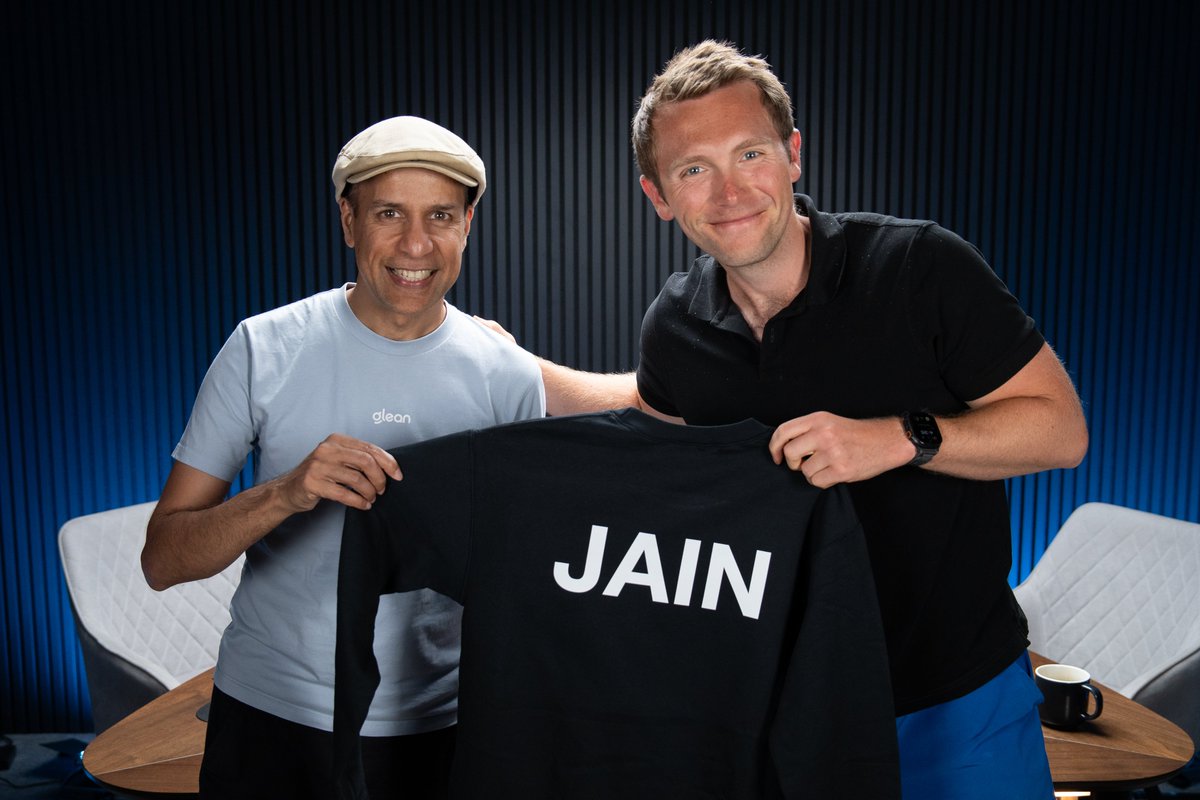
In the latest episode of @twentyminutevc, our CEO @jainarvind and @HarryStebbings get into:
➡️ Who will win the app layer
➡️ Why the future is multimodel
➡️ Why open source is getting real
➡️ The billion-dollar mistake companies make on token spend
The warning about losing corporate intelligence to model providers is valid, but the solution is not necessarily training proprietary frontier models from scratch.
The actual moat does not live in the weights of the LLM. It's in the real-time enterprise context, permission boundaries, and internal data relationships that feed the model.
By decoupling the context layer from the model layer, companies can treat LLMs as interchangeable utilities while retaining absolute ownership over the institutional knowledge that makes the system accurate. You can rent the compute while completely owning the intelligence.