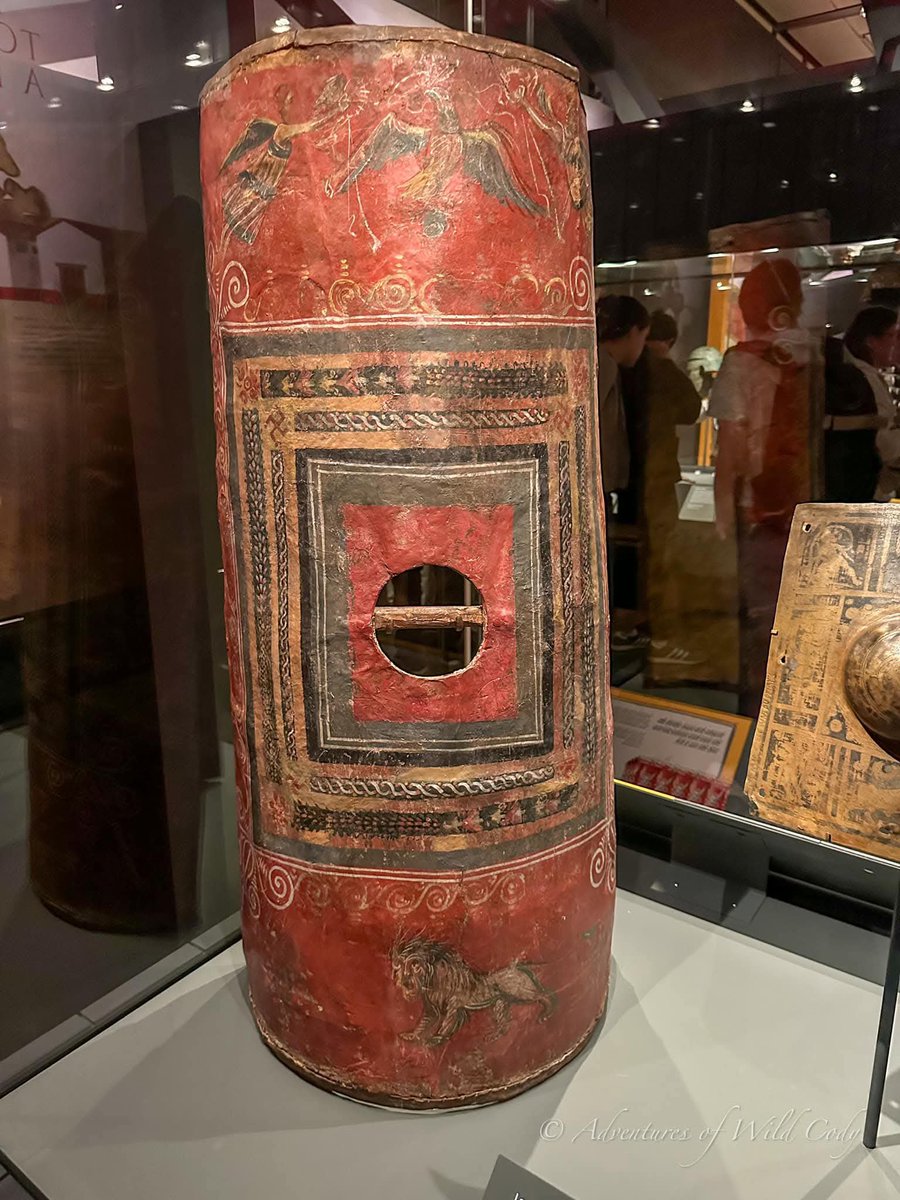
The Scutum of Dura Europos is the only surviving example of the famous rectangular shield carried by Roman legionaries. It was discovered in 1930s at the ancient city of Dura Europos in modern-day Syria, a Roman frontier settlement that became a battlefield in 256 AD when the city was attacked by the Sasanian Empire.
As enemy forces threatened the city walls, Roman soldiers rushed to reinforce their defenses. They packed earth and debris into the fortifications to prevent a collapsing wall from falling.
Among the materials sealed inside was a soldier’s shield.
For nearly 1,800 years, the wooden scutum remained hidden within the defensive structure, protected from the elements that would normally destroy such a fragile object. Unlike metal weapons or stone monuments, wooden military equipment rarely survives from the ancient world. The discovery gave historians an incredibly rare look at the equipment of ordinary Roman soldiers.
The shield still preserved traces of its original construction, including layers of wood, leather, and painted decoration. It revealed details about how Roman armies protected themselves during the empire’s final centuries.
A shield placed into a wall during a moment of crisis became a desperate message from a soldier who lived nearly two thousand years ago, and a forgotten battlefield preserved the only fully survived shield of Rome.
Yale University Museum
#drthehistories
NGC 2359, or Thor's Helmet Nebula, showcases a striking cosmic bubble sculpted by the wind of a brilliant, massive star located at its heart as it moves through the surrounding molecular cloud.
(Credit: ESO/B. Bailleul)
🚨: THIS IS NOT MILKY WAY GALAXY!
You’re staring at billions of stars in the Andromeda galaxy, captured by the Hubble Space Telescope—and almost every one likely has planets.
Let that just sink in.
Today 315AD The Arch of Constantine was finished & was commissioned by the Senate to celebrate the victory in 312AD of Constantine I over Maxentius at the Battle of Milvian Bridge. Its Situated between the Colosseum & the Palatine Hill. Its also the largest Roman triumphal arch.
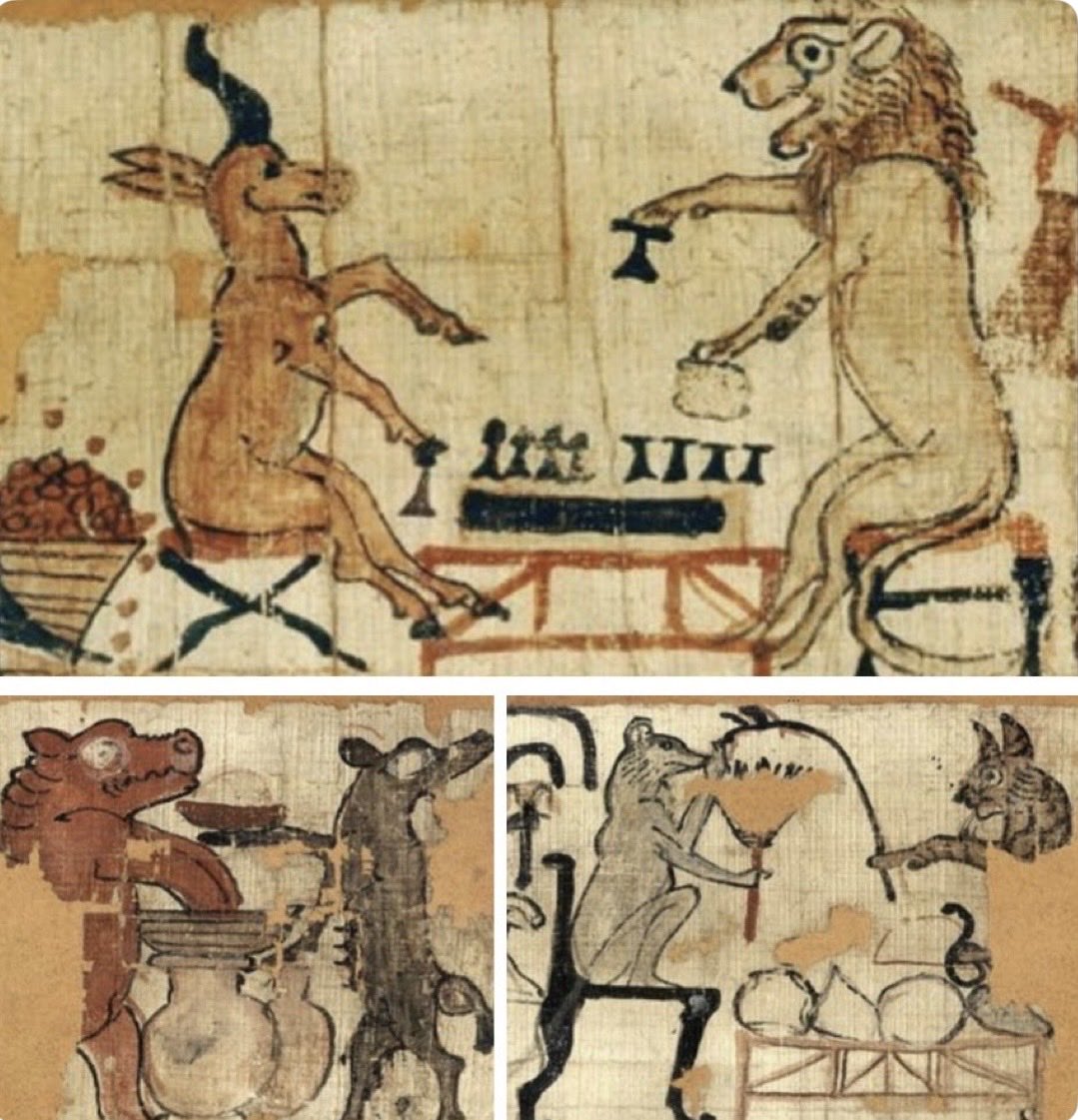
Whimsical painted scenes from a 3,200 year-old ancient Egyptian illustrated papyrus in which animals take on human roles.
A lion and gazelle play a board game (probably senet), a hippo and a canine brew beer, and a cat waits on a mouse!
📷 British Museum
#Archaeology
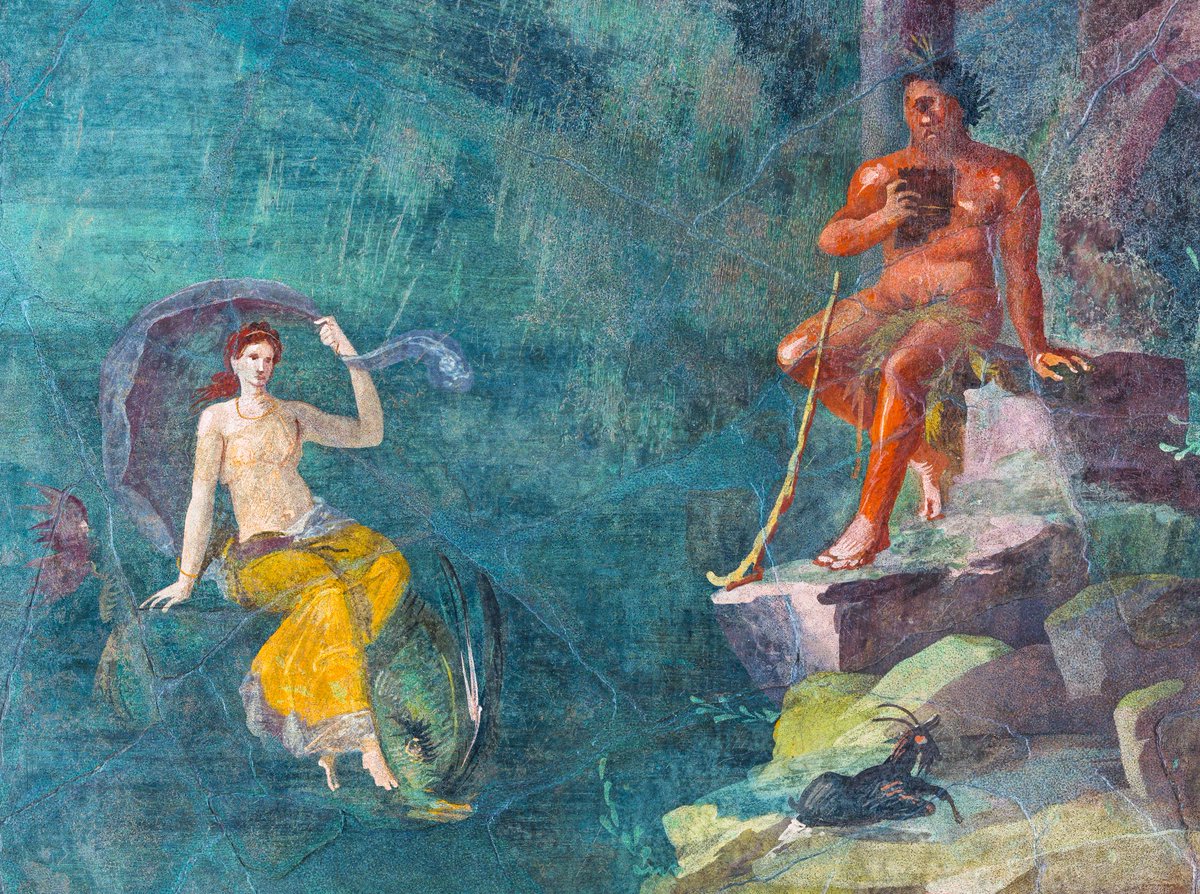
Detail of one-eyed Polyphemus playing the pipes for Galatea. The sea nymph is described by Ovid in Metamorphosis, 13:
'Galatea, whiter than snowy petals, taller than slim alder, more flowery than the meadows, friskier than a tender kid, more radiant than crystal, smoother than the shells polished by the endless tides.'
Last decade of the 1st century BC, Metropolitan Museum of Art
"Priapus of Rivery," a 1st Century AD, Gallo-Roman bronze statuette was discovered in 1771 in Rivery, France, and is currently housed in the Musée de Picardie in Amiens.
The figure is wrapped in a thick, hooded cape called a "cucullus"-typical attire for the cold, windy climate of Gaul. This hooded cloak calls to mind the genii cucullati, the local hooded spirits of the Celts. The statue’s upper section (head and cape) is designed to detach from the body like a lid. When this top piece is pulled up and removed, the neck of the torso underneath reveals a phallus (Priapus’s symbol). The bronze surface still bears traces of gold gilding, showing us that this figure was once shimmering and golden.
Priapus wasn’t a supreme Olympian god. Originally a minor Greek fertility deity from the town of Lampsacus, he was adopted by the Romans as the guardian of gardens, farms, and daily abundance.
In antiquity, statues of this farm protector were placed at the edges of gardens, often bearing threatening inscriptions: "What will Priapus do?"
#drthehistories
The Staffordshire Hoard is the largest hoard of Anglo-#Saxon gold and #silver metalwork yet found. It consists of almost 4,600 items and metal fragments, amounting to a total of 5.1 kg of #gold, 1.4 kg of silver and some 3,500 pieces of garnet cloisonné #jewellery#History#art
AO THROWBACK - Tollund Man is the naturally mummified body of a man who lived during the 4th century BC during the period characterised in Scandinavia as the Pre-Roman Iron Age.