super excited to share this “liquid photos” iOS app concept I’ve been working on! future user interfaces will feel a lot different than today
created at @AXL_Labs
This is one of my favourite things I have seen recently.
The price of oxygen on Earth is very low, the price of oxygen on the Moon is very high, the cost of transporting oxygen from Earth to the Moon is also very high. Too high.
The solution is to make oxygen on the moon.
If you’re looking for an engineering problem to apply yourself to, what you should start with is a price signal.
Where do you see a big pricing dislocation?
This can be a geographic dislocation, a temporal dislocation, an assembly dislocation, a process dislocation, an information dislocation, there are many things like this.
You then take the pricing disparity and you multiply it by the applicable volume to calculate the unrealised value.
If you bridge the dislocation you capture some of the value, usually 80% of the value goes to the user, 80% of the remaining 20% goes to your costs, and the last 4% of the unrealised value is the available profit. This is a crude rule of thumb, but it broadly works out this way.
Why do you need this price signal?
It tells you the resource constraints that you must operate inside of, to deliver your solution. It tells you the profit that you might expect to make, if you realise the unrealised value.
Making oxygen on the moon is a good example of this, but so is drilling oil, or fabricating microprocessing chips.
So you don’t really need to solve some hypothetical untested problem. The world is full of very real problems, with very calculable opportunities to realise value and make some money.
An industrialist is really just an engineer who gets their technical requirements from capital markets.
Please steal this and apply it. We will all benefit.
Why AI will not get cheaper from here.
iPhones have steep diminishing utility, what does that mean? It means your first iPhone has very high utility value to you, but if you buy 2 iPhones the second one has maybe 1 or 2% additional utility value.
Whereas if I buy RAM for my computer the additional RAM chips have quite high additional utility value.
Go to a restaurant and order a burger, and 3 burgers does not get your 3x the utility value. Burgers have steep diminishing returns, just like iPhones.
Books do not have steep diminishing returns, each book you buy has about the same utility as the other books you buy.
Somethings you buy, you only need 1 and it doesn’t matter who you are. Other things are different and more is more, where buying 2 is twice as useful and buying 3 is three times as useful.
Now wealthy people do not hoard collections of iPhone and burgers, but they do buy up books and stocks.
There are things with diminishing utility value, and there are things with linear utility value. There are even some things with exponential utility value, such as employees. A team is greater than the sum of its parts.
Now, whether the price of something goes up or down depends on its supply and demand.
But if we think of AI where do AI agents fit into this framework?
Do 2 AI agents have significantly more utility value than 1 AI agent? Yes.
So AI agents have either linear or exponential utility value. This means people with capital will buy more and more of them. This is very unlike the economics of the iPhone or the Big Mac.
This means the price of AI agents is not going to fall to converge on the cost of supply.
Instead the price of AI agents will converge on the value of utility that the agents deliver.
People who have $500 a day to spend will spend $500 a day. And people who have $500,000 a day to spend will spend $500,000.
AI is going to consolidate capital at the top and reverse the democratisation of wealth.
I also expect the same thing to happen with corporations. A dozen corporations are going to become 70% of the global economy.
Because that’s the structure of the math.
@comma_ai Cool! I will love to check out how the accomplished that. Would love to see if similar techniques could be used to bypass non-Toyota vehicles!
My parents did not tell me my name.
Nor my siblings.
Nor my cousins who lived with us, too.
No one in my family.
When I showed up at the South Carolina School for the Deaf at age three,
I did not know my name.
A few weeks after learning the names of things around me: apple, crayons, books... by using American Sign Language, which I learned effortlessly and quickly...
My teacher guided me to a full-length mirror in the classroom.
“Who is that girl? What’s her name?” he asked the girl in the mirror. Then he looked at me. “What’s your name?”
It was a teacher who told me my name.
I had just turned four.
#DeafAwarenessWeek2025
@ConsistInconsis Do you know what the relationship between the camera distance and the effective feature resolution is? In other words as the cameras get closer, how less effective is the difference between images?
I thinking in the medical domain where the imaging distance may be constrain
🚨 GIVEAWAY TIME
We’re giving away TWO Minimal Phones — one for you, one for someone you want to be more present with.
This is your sign to disconnect.
🧠 No noise. No doomscrolling. Just you.
🎁 To enter:
1. Follow
2. Like & RT
3. Tag someone you’d gift the second phone to
Ends in 7 days. Let’s go.
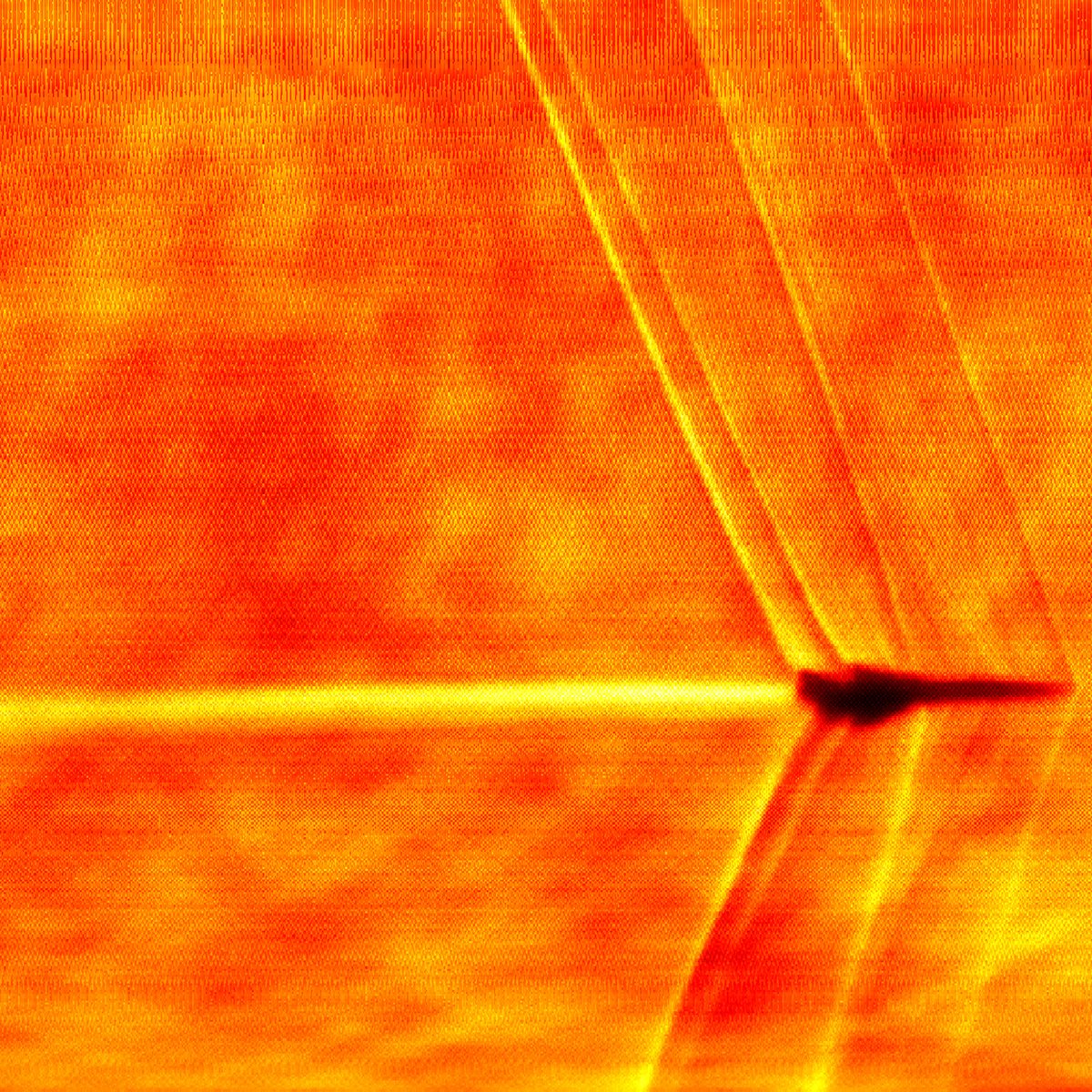
We nailed it.
During XB-1’s second supersonic flight, we partnered with @NASA to take this Schlieren image of XB-1 pushing through the air at supersonic speeds. Here’s the shot, captured by NASA teams on the ground. It documents the changing air density around XB-1 and the resulting shock wave—making the invisible visible.
Microsoft has released its own document parser for LLM use!
.
.
Introducing MarkItDown, a 100% open-source, one-stop solution for effortlessly converting any file to Markdown—perfect for text analysis, indexing, and more!
Here’s what makes it special:
↳ Converts PDF, Word, Excel, PPT, images, audio to markdown
↳ Extracts EXIF, OCR, and transcripts automatically
↳ Available via CLI, Python API, or Docker
↳ Offers LLM-based image descriptions
↳ Supports batch conversions
Link to the repo in next tweet!
_____
Find me → @akshay_pachaar ✔️
For more insights & tutorials on AI and Machine Learning.