Good news, everyone!
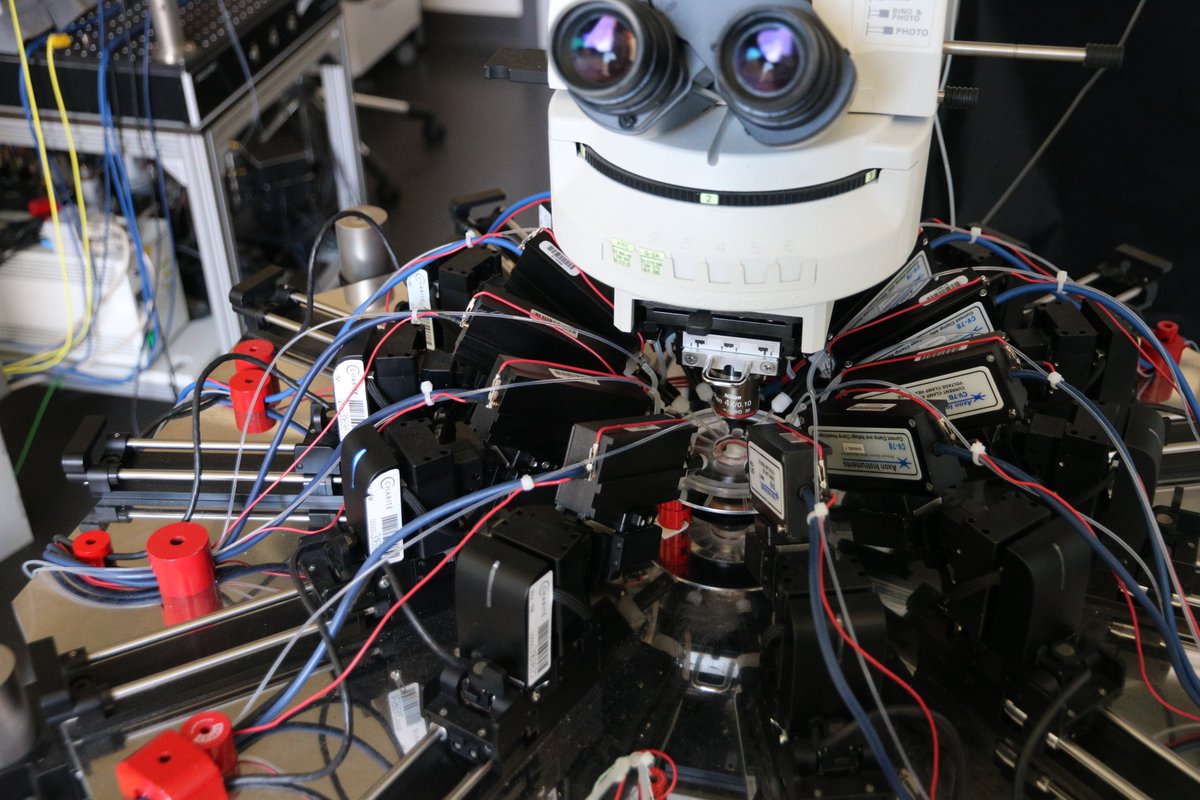
I've been awarded a DFG Sachbeihilfe to continue research @ChariteBerlin.
Hudge thanks to @LabSchmitz, @KremkowLab, Ursula Koch, and all the amayzing colleagues. Excited for more Neuropixels, axons, and little pushes in sensory processing. #DFG#Neuroscience
Herzlichen Glückwunsch, #SFB1315 Speaker Matthew Larkum (@mattlark)! Matthew ist vom @Tagesspiegel zu einem der 100 wichtigsten Köpfe der Berliner Wissenschaft 2024 gekürt worden: https://t.co/NV1EeTH6M8 @dfg_public
We grieve the passing of Dr. Yves Frégnac.
Yves has shaped the study of cortical processing and plasticity. He heralded interdisciplinarity and was one of the founding fathers of our institute.
Our thoughts go to his family and to his friends in the community and beyond. https://t.co/BGE4QGcg8g
Nature Communications
Experience of Euclidean geometry sculpts the development and dynamics of rodent hippocampal sequential cell assemblies
https://t.co/BSiBaLlk4Q
Most knowledge of sequence p/replay comes from single experiences. Now we reveal principles of generative coding enabling HPC to parallelize & bind time-compressed representations of 15 discontinuous experiences in single events in sleep @NatureNeuro: https://t.co/QnR5Tq3sc8 1/6
🧠 Curious about how neurons are wired in the human cortex?
Our @ScienceMagazine study tested over 7,000 connections and revealed key differences from rodents:
"Directed and acyclic synaptic connectivity in the human layer 2-3 cortical microcircuit". 🧵👇https://t.co/yUeQjbDSh7
#LIRE
"[inviter] les nations à revoir leur système éducatif au regard des progrès de l'IA en misant sur ce que les robots n'ont pas. A savoir la compassion, la créativité, les collaborations humaines ou les défis collectifs" @FrancoisTaddei@LesEchos
https://t.co/S0U4kfVeEn
@liviadehoz @gehrcaro For the record, she did the first prep having TCAs in the lab! Her PhD and her paper drove her away of this great project. #bestcolleague
Finally, out in PNAS: Thalamocortical long range axons can be detected extracellularly within the visual cortex, allowing for an efficient mapping of connectivity. All gratitude to @gehrcaro and @KremkowL in @ChariteBerlin with #Neuropixels https://t.co/LVh7unQ0e7
Hippocampus generates an internal model of Euclidean space based on a generative grammar. @usmanfarooq201 and I asked how much of the internal model and grammar are a priori (Nature) and what is contributed by postnatal geometric experience (Nurture): https://t.co/hhIZlKPGGs 1/5
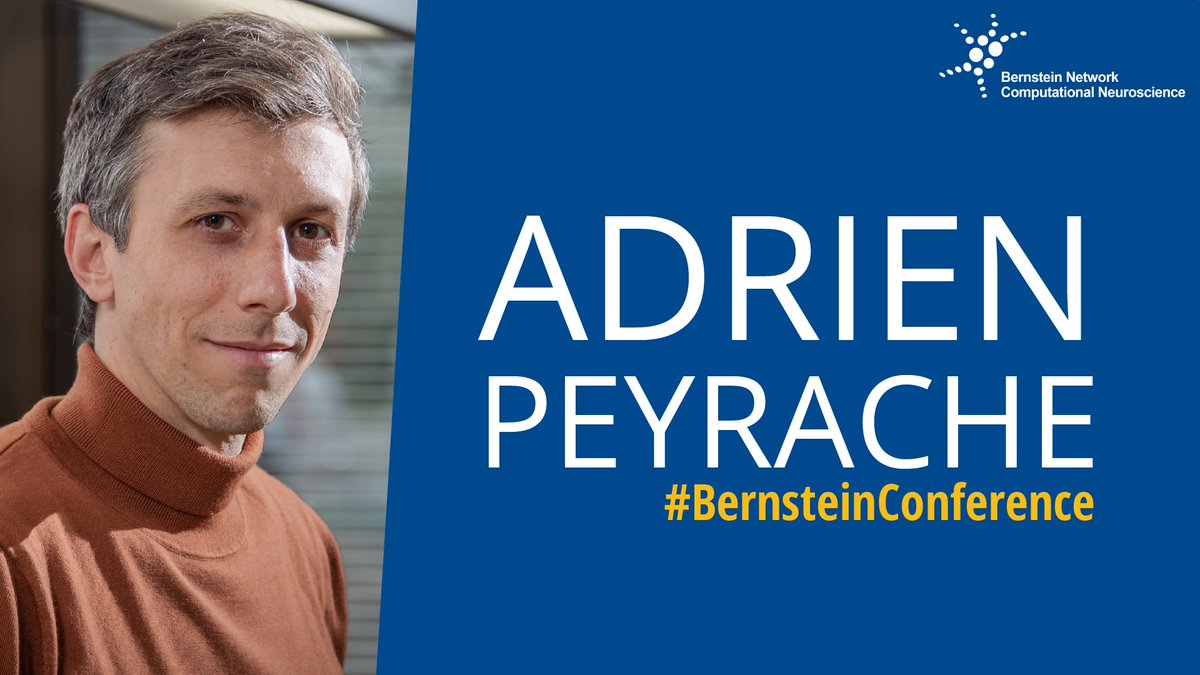
At the #BernsteinConference 2023, @apeyrache will talk about how cognitive maps form in the hippocampus and memories are replayed during sleep, both from a computational and experimental perspective.
Register now!👉https://t.co/DPNjjLrPOy
In today’s issue: results of a great collaboration and many discussions with Aman Saleem @Aman_sal summarising current knowledge on interactions between the rodent spatial and visual systems. Thanks for checking it out!
1/ In neuroscience, we hear a lot about oscillations and rhythms. But are all brain patterns oscillatory and can we know? In our latest preprint we propose a simple framework to interpret the frequency spectrum of neural recordings: https://t.co/QCSmR8tZXW
Please do check this amazing study from @kailun_teh in @KremkowL : How the retina organizes its connections to produce orientation map in the superior colliculus, this older "reflex" visual pathway.
Do spontaneous retinal waves play a role in establishing higher visual functions in the brain? Our new modeling study in @ScienceAdvances suggests that yes, retinal waves could establish an orientation map observed in the mouse superior colliculus (SC)
1/6 https://t.co/h5hd08BYiJ