I'm a cardiologist. Something just happened today that I genuinely did not see coming — and it could change the future of preventive medicine more than anything I've written about on this platform.
Midjourney — the AI company that became famous for generating images from text prompts — just announced a medical hardware division and unveiled a working prototype of a full-body scanner unlike anything that's ever existed.
It's called the Midjourney Scanner. And it works like this.
You step into a shallow pool of water. You stand on a platform that slowly descends — about two inches per second — through a ring containing roughly half a million tiny ultrasonic transducers, each the size of a grain of sand. Every one of them acts as both a speaker and a microphone, sending ultrasonic waves through your body from every angle and recording what comes back.
60 seconds later, you step out. The scan is done.
No radiation. No magnets. No claustrophobia. No IV contrast. Just sound, water, and an almost incomprehensible amount of computing power — roughly 2 petaflops processing 17 gigabytes per second of raw acoustic data — reconstructing a 3D map of your entire internal anatomy down to half a millimeter resolution.
Organs. Tissues. Blood vessels. Bones. Muscle. Fat distribution. All segmented by AI in real time.
As a cardiologist who has spent months writing about how the standard screening playbook misses the majority of future heart attacks — this is the technology I've been waiting for without knowing it existed.
Here's why this matters for the future of your heart.
Right now, getting a detailed look inside your cardiovascular system requires either a CT scan (radiation), an MRI (magnets, claustrophobia, 45-60 minutes, $1,000+), or a coronary CT angiogram (radiation, IV contrast, limited availability). These are powerful tools. I order them regularly and they save lives.
But they're reactive. You get them when something is already suspected. They're expensive. They're uncomfortable. And for most people, they happen once — maybe twice — in a lifetime.
Imagine instead: a 60-second scan with no radiation that you could repeat monthly or quarterly. Tracking cardiac structure over time. Watching body composition shift. Detecting changes in organ size, fluid distribution, or vascular architecture before symptoms ever develop. Building a longitudinal dataset of YOUR body that AI can analyze for patterns no single snapshot would reveal.
That's what Midjourney is building toward.
The company plans 50,000 scanners worldwide over six years, with capacity for a billion scans per month. The first location — the "Midjourney Spa" in San Francisco — opens at the end of 2027 with 10 scanners alongside saunas, cold plunges, and a gym. The scan costs a few dollars. The experience is designed to feel like wellness, not medicine.
The technology is built on Butterfly Network's ultrasound-on-chip platform — 40 modules per scanner — combined with Midjourney's own AI segmentation and reconstruction stack. David Holz, the founder, claims the system aims for image quality comparable to MRI in many aspects but at nearly 100x the speed with zero radiation.
Now the caveats — because I'm a physician and the caveats matter enormously.
This is a Gen 1 prototype. About a dozen people have been scanned so far. Current scan time is actually closer to 20 minutes, not 60 seconds — the system is bottlenecked by bandwidth and reconstruction algorithms. The 60-second target is aspirational for future hardware generations.
It is not FDA-cleared for diagnostic use. Midjourney is starting with body composition maps — a category below diagnostic imaging in the regulatory hierarchy. The path from "beautiful 3D body scans" to "clinically validated diagnostic tool that your cardiologist can act on" runs through years of clinical trials, comparative studies against MRI and CT gold standards, and FDA review.
No independent clinical validation has been published. The imaging claims come from Midjourney's own demonstrations. Comparative data against established modalities does not yet exist.
And the privacy implications of full-body internal scans at planetary scale — a billion scans per month — is a conversation that hasn't even started yet.
So I want to be precise. This is not ready for clinical medicine today. It may not be ready for years. Many ambitious medical hardware projects have failed in the gap between prototype and product.
But.
The fact that a working prototype exists — producing real segmented 3D anatomy from sound waves and compute alone — means the physics works. The engineering works. The question is no longer "is this possible" but "how fast can it be validated and scaled."
And if it is validated — if the resolution holds up against MRI, if the AI segmentation proves reliable, if the regulatory path clears — then what we're looking at is the most significant new imaging modality in 50 years.
For my entire career, preventive cardiology has been limited by the fact that seeing inside the body is expensive, slow, uncomfortable, and infrequent. We catch disease late because we image rarely. We image rarely because imaging is hard.
A 60-second, no-radiation, spa-based full-body scan that costs a few dollars would demolish every one of those barriers.
I've written about AI detecting inflamed arteries. About gene editing curing cholesterol. About GLP-1 drugs rewriting metabolic medicine. About cellular reprogramming reversing aging.
This is the missing piece: the ability to see inside every human body, routinely, safely, and affordably — so all of those interventions can be deployed before the disease arrives instead of after.
The company that taught AI to generate images from imagination just built a machine that generates images from the human body.
The future of medicine showed up today from the last place anyone expected.
Big ideas don’t need big budgets. Just great storytelling. From idea to execution, this short ad was created by a single creative in just one afternoon with Runway. Try it yourself at the link below. #MadeWithRunway
It's time to bring Haptics to the web 🫨
Create custom tactile patterns with strengths + durations for your web interactions.
Make your app feel as good as it looks ✨
→ https://t.co/DGz9Eu6nto
I wanted to say a few words about @Tesla and @elonmusk regarding their decision, announced during yesterday's earnings call, to end the production of the Model S and X in Q2 this year.
From the start, I have been a giant fan, investor and supporter of Tesla. I was the happy purchaser of the 2008 Roadster and 2012 Model S, both VIN #003. I continue to hold them in pristine condition until one day they go into either the (hopeful!) Tesla Museum or another tech or automotive museum. I still drive my 2010 Roadster and I have owned a number of Model S's and Model X's over the years.
As I once told Elon, the Model S (Motortrend's Car of the Year for 2012) goes alongside the PC, Mac, iPad and iPhone as the greatest consumer tech products ever created, in my opinion.
I recently upgraded my personal, older Tesla's with 2026 Model S's (Plaid and Long Range) and a 2026 Model X Plaid. They are all the best cars I have ever owned. I did this even knowing that the writing was on the wall that they would be discontinued as the sales numbers were a rounding error compared to the Model 3 and Y. I did buy a 2026 Model Y as well when it came out...it is an excellent car and at the price, a very good value.
Over the years, I also subsidized employees across my various organizations with a $7500 credit towards the purchase of a Tesla...and that was on top of the Federal EV credits when they existed. I am proud to have introduced 100s of people to owning Tesla vehicles, especially in the early days when the sales mattered.
While I will miss future versions of the S and X, I have no doubt that Tesla will continue to make great cars and the FSD is now amazing, so I have little doubt that whatever package the FSD is wrapped inside, it will be a great experience.
Elon always said that Tesla was intended to be more than a car company and today it is already a major player in renewable energy, manufacturing, software and well on its way to being a winner in robotics and whatever future areas of tech hold the most promise.
So farewell to the Model S and X, with gratitude for the many years of enjoyment and hello to the future!
Thoughts:
1. In the future, the probability something is generated entirely by AI will be inversely proportional to its intended lifespan.
2. For conceptually simple artifacts that are intended to have short lifespans, humans will still be involved just at a different level of abstraction. For example, I'm super excited about @Weavy_ai (Figma Weave) because it shows what's possible when you treat AI generation like clay to shape rather than the final output. Workflow building is a new skill to explore and learn.
3. If you intend for an artifact to have a long lifespan (ex: software, a novel, a movie), then AI might still aid you in your creative process. But you will bring great intention to the work. You will think through many different approaches. You will care about the smallest of details. You will lean into the craft. Because if you don't, it won't be good enough to last. It won't be noticed. It won't be loved. It won't matter.
4. Focusing just on software now... people don't like it when software changes. Everyone who has shipped a redesign knows this! So you might be generating new content within a piece of software frequently but of course you wouldn't redesign the fundamental UX of the software all the time. Users would hate it.
As a grounding metaphor, consider a house. Yes, you might change the photos and papers and magnets stuck to your fridge a few times a week. Once in a while, you reorganize stuff or move furniture around. After living in the house for a while, you maybe notice issues around how you use the space and — with great intention — embark on a remodel.
Some parts of the house, like the fridge, change a lot. But the overall structure of the house changes less. When asking what will be generated by AI, don't confuse the whole for the parts, the long lasting for the ephemeral.
5. It's intellectually interesting to think about whether a brand might want to adapt their software on a user by user basis. (Certainly individuals will be able to make more software for themselves if they are so inclined. For example, see Figma Make.)
That said, my strong gut right now is that we will not end up in a world where brands customize software on a per user basis.
People learn how to use software from other humans. Snapchat is a great example. For a new user, Snapchat is kind of confusing. You can see this as a design issue or an advantage... I argue it's an advantage.
By leaning into custom patterns and a learnable (but arguably non-intuitive) interface, the resulting network is a more intentional space. If you're young, you'll learn how to use Snapchat by watching your friends use Snapchat. And if you're older, well, you might not be the intended demographic.
6. To wrap up... we are in a world where the amount of software is growing at an exponential rate. If you want to win, design is the differentiator. Invest in design, craft, storytelling and a bold point of view.
Use AI as a tool, but don't expect it to build the next big thing for you on its own. Don't expect it to make something that no one has ever seen or imagined before. That's your job.
This is one of the cleverest stories in startups. For years we'd been worrying about how to finance the airliner. Then Boom realized that if they could build jet engines, they could build gas turbines, and fund the airliner with the profits.
Chevrolet has outdone themselves once again with their new profoundly emotional, pro-family Christmas commercial.
Chills from beginning to end.
This is what it’s all about. Be ready to cry.
I took delivery of a beautiful new shiny HW4 Tesla Model X today, so I immediately took it out for an FSD test drive, a bit like I used to do almost daily for 5 years. Basically... I'm amazed - it drives really, really well, smooth, confident, noticeably better than what I'm used to on HW3 (my previous car) and eons ahead of the version I remember driving up highway 280 on my first day at Tesla ~9 years ago, where I had to intervene every time the road mildly curved or sloped. (note this is v13, my car hasn't been offered the latest v14 yet)
On the highway, I felt like a passenger in some super high tech Maglev train pod - the car is locked in the center of the lane while I'm looking out from Model X's higher vantage point and its panoramic front window, listening to the (incredible) sound system, or chatting with Grok. On city streets, the car casually handled a number of tricky scenarios that I remember losing sleep over just a few years ago. It negotiated incoming cars in tight lanes, it gracefully went around construction and temporarily in-lane stationary cars, it correctly timed tricky left turns with incoming traffic from both sides, it gracefully gave way to the car that went out of order in the 4-way stop sign, it found a way to squeeze into a bumper to bumper traffic to make its turn, it overtook the bus that was loading passengers but still stopped for the stop sign that was blocked by the bus, and at the end of the route it circled around a parking lot, found a spot and... parked. Basically a flawless drive.
For context, I'm used to going out for a brief test drive around the neighborhood to return with 20 clips of things that could be improved. It's new for me to do just that and exactly like I used to, but come back with nothing. Perfect drive, no notes. I expect there's still more work for the team in the long march of 9s, but it's just so cool to see that we're beyond finding issues on any individual ~1 hour drive around the neighborhood, you actually have to go to the fleet and mine them. Back then, I processed the incredible promise of vehicle autonomy at scale (in the fully scaleable, vision only, end-to-end Tesla way) only intellectually, but now it is possible to feel it intuitively too if you just go out for a drive. Wait, of course surround video stream at 60Hz processed by a fully dedicated "driving brain" neural net will work, and it will be so much better and safer than a human driver. Did anyone else think otherwise?
I also watched @aelluswamy 's new ICCV25 talk last week (https://t.co/RdaM23kvez) that hints at some of the recent under the hood technical components driving this progress. Sensor streams (videos, maps, kinematics, audio, ...) over long contexts (e.g. ~30 seconds) go into a big neural net, steering/acceleration comes out, optionally with visualization auxiliary data. This is the dream of the complete Software 1.0 -> Software 2.0 re-write that scales fully with data streaming from millions of cars in the fleet and the compute capacity of your chip, not some engineer's clever new DoubleParkedCarHandler C++ abstraction with undefined test-time characteristics of memory and runtime. There's a lot more hints in the video on where things are going with the emerging "robotics+AI at scale stack". World reconstructors, world simulators "dreaming" dynamics, RL, all of these components general, foundational, neural net based, how the car is really just one kind of robot... are people getting this yet?
Huge congrats to the team - you're building magic objects of the future, you rock! And I love my car <3.
Two things I love coming together: Liverpool and Theme Park. From map to graphic - Nano-Banana is 🔥. Going to have to make a new isometric game, can't resist...
Absolutely love the outputs from this Prompt:
Photorealistic 3D cross-section of the Vltava river with the Charles Bridge in the foreground, highly-detailed, studio background, at sunset --ar 4:3 --s 100
Cheers ✨🤍
Watch Firefly land on the Moon! After identifying surface hazards and selecting a safe landing site, #BlueGhost landed directly over the target in Mare Crisium. A historic moment on March 2 we'll never forget. We have Moon dust on our boots! #BGM1
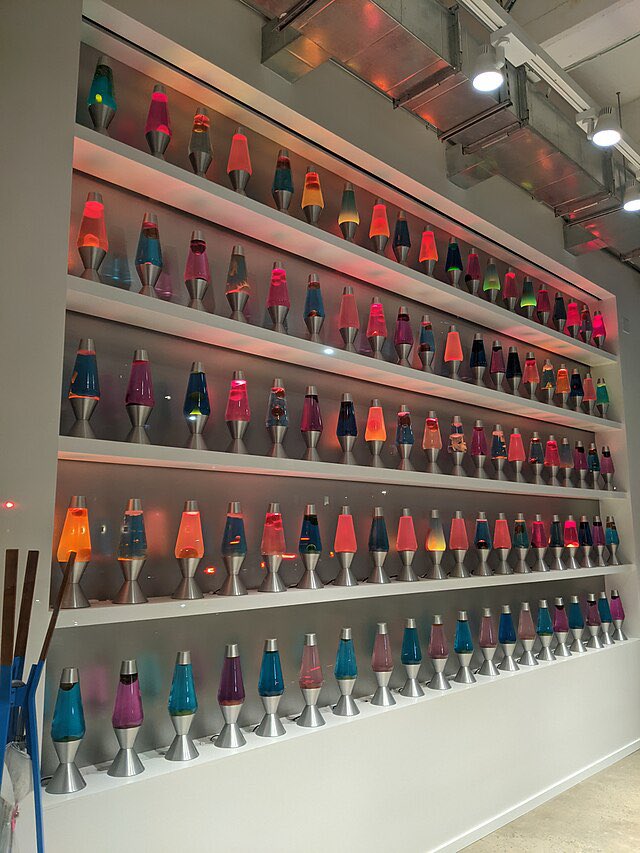
10% of international web traffic is protected by a wall of lava lamps in San Francisco which converts the changes in randomness of the bubbles into computer code.